Zoe Strimpel

Zoe Strimpel

Gen-Z mean girls are aggressive and progressive

From our UK edition

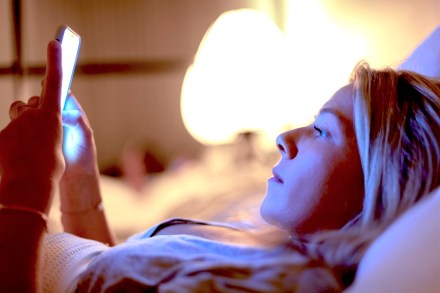
When Black Lives Matter created the figure of the Karen, it was a sign of that movement’s darker, bullying qualities. What exactly was wrong with a white middle-aged woman who asked to speak to the manager when things were unsatisfactory? The answer seemed to be in the white part and the woman part, and perhaps also in the middle-aged part. In short, the Karen was a racist, sexist, ageist construct, and as a middle-aged white woman myself, who makes her dissatisfaction known from time to time, I felt extra defensive. But if that original Karen caricatured the wrong person, then there are some modern female types that deserve closer scrutiny.
Italy is a land of beauty and death

From our UK edition

I was nine. It was Florence, in mid-July. My parents bravely led my younger brother and me through a day of sweaty sight-seeing. We had just been up and down the Duomo and were cooling ourselves with ice cream in an adjacent square when there was a hideous bang. At first, we thought it was an explosion. Then, as we passed the Duomo again a few minutes later, we saw something so grisly I still remember it with a shudder: paramedics trying to get a stretcher covered in a white sheet into the ambulance, and on the ground, a huge splat of what looked like spaghetti sauce. It took a moment for me to get my head around what that must be, and how it related to the bang, and then I couldn’t unwrap my head from it.

How to shop at Waitrose

From our UK edition

Over the years, I have spent a pretty penny on therapy. I have also spent a lot of money in Waitrose, of which there is a big branch that I like to call a ‘flagship’, very close to my flat. Of the two, therapy and Waitrose, it is probably Waitrose that has provided the most mental relief and has certainly been better value overall. Items may cost a bit more than they do at other supermarkets, but it’s free to enter the shop and there is no time limit on browsing, peering closely, or fondling the goods. Waitrose is not a shop that rewards a quick in and out, which is why I struggle to see the point of its Little Waitrose offshoots Waitrose has soothed me over the years in several ways.

I am a birthday dictator

From our UK edition

I am never allowed to forget that at my fourth birthday party I made clear my expectation to my mother and the gathered guests that I expected to win all the games. The logic was clear and to my mind (still) fair: it was my birthday and so I should win. When this wasn’t passed into law, there was some anger on my part. Why should Kelly and Kate take home the pass-the-parcel first prize, and gain recognition for being fastest at eating donuts hanging from a string? Apparently in my pretty white swirly dress with its pink satin sash, wielding a wooden spoon for a game of blind man’s buff I was destined to lose, I was quite the little despot – though ineffectual.

Ottolenghi has colonised British food

From our UK edition

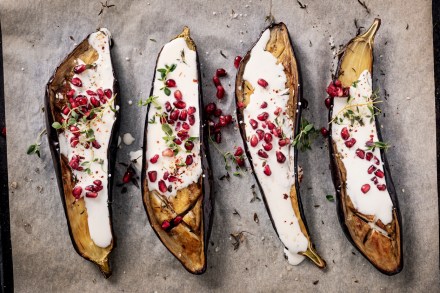
As far as chefs and food writers go, Yotam Ottolenghi has been pretty influential on my life – a life that revolves quite heavily around food. Choosing it, thinking about it, pathologising it, eating it and sometimes even cooking it. I was one of those who was delighted when supermarkets started stocking pomegranate molasses, rose harissa and Middle Eastern spices like sumac and za’atar, all courtesy of the seismic influence of the Jerusalem-born Ottolenghi and his Palestinian partner in crime, Sami Tamimi. The Ottolenghi deli is a cliché of noughties London food trends I had, like everyone else in 2010s centrist middle-class Britain, got my hands on his recipe books Jerusalem (2012) and Plenty (2011).

A beginner’s guide to baby gear

From our UK edition

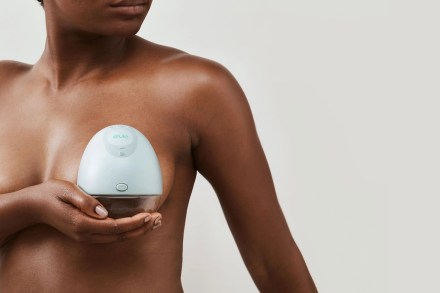
As an urban-dwelling, free-spirited 41-year-old with sleep issues and a whimsical trade – writing – having a baby posed many challenges. The chief of which has been having to constantly work with two other people: baby and baby-daddy. I vowed as the due date approached to get kitted up in ways that would feel reassuring, limiting the cannonball splash effect of the new arrival. Would I be able to spend my way out of the bits of ensnarement I feared most? The answer is: sort of. Here are the items that have got me closest to living my best self as a new old mum. Call it Mum and the City.  Sleep For this, there is one main big-ticket buy that can literally make the difference between insanity and misery and… ‘hey, this is kinda fun, even when she screams for three hours!

The Starmers are sexy

From our UK edition

I’d all but forgotten about David Cameron when he returned as foreign secretary under the last government, and the first thing I remembered about him, when he returned, was his chin. By which I mean its prim absence and how, combined with those thin lips and tiny mouth, more like a fish’s than a person’s, I have always found the man deeply unhandsome in a very Tory way. Starmer is the first prime minister since Tony Blair (sorry) with whom I would happily consider a saucy affair Now we have new leadership, and with it, a new paradigm of attractiveness. David Lammy, the new Foreign Secretary, is even less handsome than Dave but for different and therefore revitalising reasons.

Europe’s war on tourists is no laughing matter

From our UK edition

'Enough! Let’s put a stop to tourism!' So goes the slogan to be bellowed at a planned protest on 6 July in Barcelona. The city's mayor has pledged to drive Airbnb out of the city within five years by revoking more than 10,000 licenses for short-term tourist rentals. The announcement follows anti-tourist protests in Mallorca, and the Canary Islands which, like France’s indiscriminately angry gilets-jaunes, has begun with a specific beef that will likely become raggedy and riot-prone as times goes by. This year also saw the introduction of a tourist tax in Venice (reports suggest it’s completely unenforced), and clampdowns in Amsterdam, including a reported ban on the building of new hotels. Welcome to Europe's war on tourists.

The mysterious sex appeal of Nigel Farage

From our UK edition

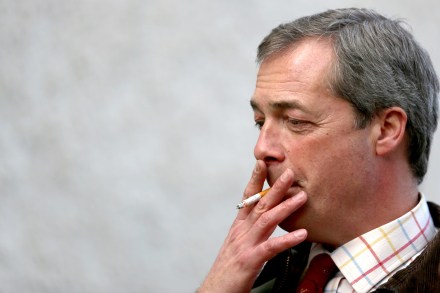
I remember sitting on the bus a few weeks into #MeToo and thinking all the men looked disengaged – buried in their phones or listlessly looking out the window. I imagined them thinking it just wasn’t worth it to look up lest they be accused of making unwanted advances. These days, I spend fewer mornings worrying about the fate of the red-blooded male. Nonetheless, it’s not rocket science to suppose that for a significant swathe of men – those who fear being publicly shamed or sacked – it really isn’t worth showing their appreciation of women.

Bridgerton’s big fantasy

From our UK edition

Bridgerton is an American fantasy of ye olde England – right down to the absurd if enjoyably playful not-quite colour blind casting and its insinuation that Regency London was peopled with an equal number of Bame and white aristocrats. Even the casting of Queen Charlotte, played by half-Guyanese actress Golda Rosheuvel, is an allusion to the dubious speculation that the real Queen Charlotte had African heritage and was in fact a woman of colour.  So the unspoken final frontier of oppression is also the most debilitating: not being hot Bridgerton’s beloved first season saw an explosively sexy performance from its male lead, an antisocial Duke played by the gorgeous British-Zimbabwean actor Regé-Jean Page.

The descent of the Cambridge ball

From our UK edition

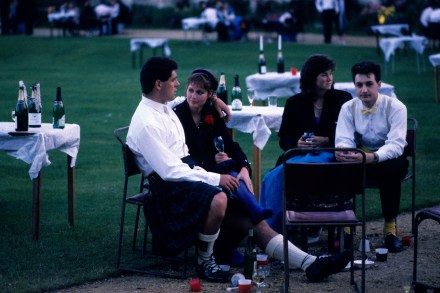
I went to quite a few May balls in my three years as an undergraduate at Cambridge. As an editor at the student newspaper I blagged my way into the top ones – Magdalene, Trinity and John’s – since they were stupidly expensive and even as a 20-year-old student I had the sense to feel it should be many years before anything to do with enjoyment was worth more than £20, let alone £100-plus. The university now packages its student experience, from the academic to the social, in the neurotic, righteous language of ‘safety’ and ‘inclusion’ The price certainly ensured a very high degree of pretentiousness – even by Cambridge standards – but it was impossible not to marvel at the splendour of the famous acts (Dizzee Rascal, Amy Winehouse) and the food and drink.

Why are men so offended by my hair?

From our UK edition

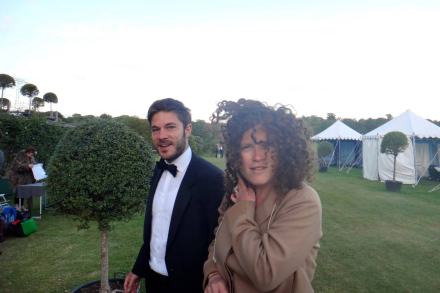
My annus horribilis was 1992. I was in fifth grade (aged ten) and had impulsively cut my hair short over the summer. I turned up to school with auburn ringlets billowing out and up from my head in a wavy sphere. Boy did it get the boys going: constant insults, including ‘Ronald McDonald’ (McDonalds’ clown mascot, known for his garish red hair), and heckling with the curiously racist insult ‘electric Afro woman’, shortened to ‘Zofro’. There was no laughing this off: it was a barrage, which came with volleys of burrs thrown at my hair and other projectiles. Only physical violence, months in, quietened it down: I had to kick a shrimpy but tenacious tormenter to the floor of the school bus. Have I ever brushed my hair? Ever washed it?

Why shouldn’t teenagers be allowed to use WhatsApp?

From our UK edition

For my thirteenth birthday, which coincided roughly with my Bat Mitzvah (the Jewish ceremony for entering adulthood), I had begged for – and got – my own phone line. This was so that I could talk for hours on the phone to friends I had seen all day, or possibly all weekend if they were at a different school, without tying up the whole family’s phone system. Friends would call and whoever picked up would holler to me that 'Lexie/Sarah/Jessica/Anna is on line two' and put the friend through. There would be a click and off we went, at liberty to gab privately for hours. I don’t actually remember spending much time on homework.

Britain should follow Germany’s lead in weeding out anti-Semites

From our UK edition

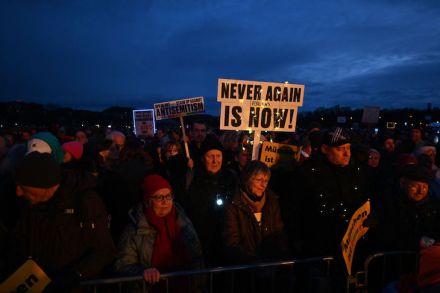
On the surface of it, Germany’s new pathway to citizenship sounds like a rare dose of sense from the one country in the Western world whose modern history means it still understands why Israel has a right to exist. One surefire short-hand for establishing who means us ill is by singling out those who mean our Jews ill The shake-up makes it easier to get German citizenship, allowing people to apply five rather than eight years after they arrive in the country – and just three years for those with good language skills.

I’m a hypochondriac. Even I’ve had enough of the anxiety epidemic

From our UK edition

Our age of mental hypochondriasis has some surreal, even comic, aspects. I recently met some Gen-Zedders who were actually competing over bagging psychological diagnoses. Unsurprisingly, ADHD was the gateway pathology for these young folk – prescription rates for hyperactivity have jumped a fifth in the last year to 230,000, with doctors claiming to be overwhelmed by adults demanding such labels be medically rubber-stamped.  Is my anxiety something I would want to lead with, as a core pillar of my identity? Between my Gen Zedders, the triumphant wielding of the ADHD diagnosis was swiftly followed by even more spirited claims to autism round the group, of which there has been a ninefold increase in diagnoses since 2015.

I ❤️ the NHS

From our UK edition

There is much to bemoan about the NHS, from the cruel entitlement of its junior doctors to its zest for hiring diversity and inclusion staff when many people can’t even see a GP. I have been a harsh and consistent critic for years. I don’t like the cultish, Big Brother vibes, the gawping black hole for funds that seem mismanaged, and I don’t like the socialism.  I had a caesarian section less than a fortnight ago. I’d have one again just for fun I still don’t like those things, but I have now seen the charm of the rackety NHS. Having a baby, I discovered the it’s generosity. I had a caesarian section less than a fortnight ago at UCLH in central London. I’d have one again just for fun.

Logan Roy is disgusting

From our UK edition

The other day I met a young woman wearing a crop top emblazoned with the words Waystar/Royco – the media conglomerate at the heart of Succession, HBO’s cult television drama about the nasty Roy family and their insane attempts at one-upmanship for control of their father’s company. It won Emmy and Golden Globe awards three years running for best drama, plus numerous extra gongs for the cast, making it – in my book – the most overrated piece of entertainment of all time.  Shouldn’t men like Logan Roy, and behaviour like Cox’s, be relegated to a distant era? What I disliked most about Succession, which I finally forced myself to watch this year, was the show’s star patriarch Logan Roy, played by gruff ex-RSC man Brian Cox.

The unbearable rudeness of the thumbs up emoji

From our UK edition

Years ago, in the midst of a dating spree that involved numerous encounters with erratic and callous young men, I often consulted my cousin. She’s a cool, emotionally controlled New Yorker who seemed to have an innate knowledge of how to seize and maintain power in sexual or would-be sexual entanglements. She often advised me to nix the wordy message I had planned, especially in response to an outrageous slight, like a last-minute cancellation with a crap excuse and an insincere apology, and send a single yellow thumbs up instead. This was the craftier, nastier update on the cumbrous and obscene big blue thumb from Facebook messenger. For those of us who panic at blankness, the thumb is psychological botulism Her advice was clever.

The rise of the Thomas Hardy guy

From our UK edition

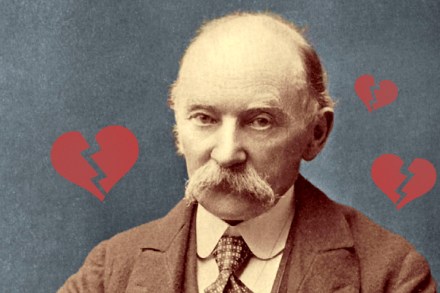
If I had to pick a king of women I’d call a draw between Vermeer, the 17th century painter, and Thomas Hardy, novelist and poet. Both had an outstanding capacity to take women’s interior lives seriously, to see individual women as distinct, intense and complex, and far from corresponding to any feminine stereotype. Whether it’s Vermeer’s young woman with a pearl necklace, Eustacia Venn in Hardy’s The Woodlanders or his mournful poems about his wife Emma’s death, these are moving, emotionally astute portraits. The pick-up artist movement, which began in the early 2000s, created its own breed of Hardys But while Vermeer seems to have been a decent husband, Hardy was not.

Retailers are hacking your brain

From our UK edition

While perusing bins on the John Lewis website, having heard great things about the Brabantia 60-litre, I noticed my stress levels rise – and it wasn’t just because the lid-up height meant the bin wouldn’t fit in my new cabinet. It was because for my whole shopping session there had been a dribble of information about how many other customers had put the items I was looking at in their basket in the last 24 hours, how many had bought them and how fast the stock supply was dwindling. Over on the M&S website, a mattress topper flashed a banner: ‘In demand! Sold 43 times in the last 48 hours’. My heart rate climbed and I felt my wellbeing plummet as a generalised, half-conscious sense of missing out for being too slow – a lifelong fear – crept over me.