Wynn Wheldon

Narrative drive

From our UK edition

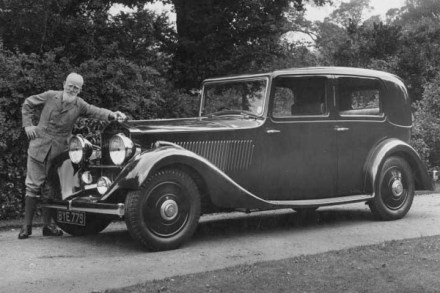
Michael Holroyd describes this tiny, charmingly pointless publication (On Wheels, Chatto, £9.99) not as a book but as an example of ‘nostalgic intertextuality’, which is a grand way of saying that it is a bit of this and a bit of that. The this is the part cars have played in his family’s history and the that is the part they have played in the lives of the famous biographer’s famous subjects. We learn that Holroyd’s father liked to drive his Zodiac with his miniature German police dog on his lap, and that the author’s wife Margaret Drabble ‘plumbed a special telephone into her car’.
Miami vice

From our UK edition

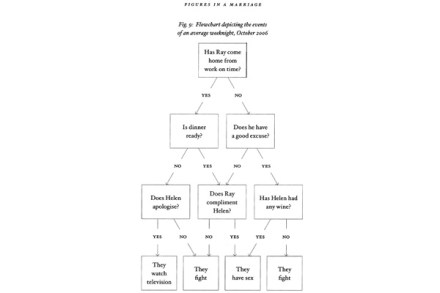
This is an exhilarating novel. Its general gist is that in a multicultural society so-called honour often trumps virtue, political expediency frequently wins out over inconvenient truth, and comforting illusion tends to be preferable to disagreeable reality. And assimilation is very hard, especially in Miami, where the entire story is set. The two central characters are Nestor and Magdalena, second-generation Cubans, who begin the book as a couple. Each has a difficult journey to its end, both have to combat monsters (Nestor literally) and both learn a little more about themselves and a lot more about the wider world as a consequence.

Pitch perfect

From our UK edition

It is fashionable, in the wake of all those rowers and cyclists and runners, abled and otherwise, who do what they do for something — glory, pride, joy of physical exertion?  — other than for money, to disparage football, and to regard it as somehow vulgar and its practitioners over-indulged. Despite the fairytale exploits of Chelsea and Manchester City at the end of last season, football is seen as having a lot of catching up to do. It is, after all, almost impossible not to be cynical about a sport that rewards its players so extravagantly. This book reminds us that football too has its virtues.

The Heart Broke In, by James Meek

From our UK edition

This is a big juicy slab of a book, as thrilling and nourishing as a Victorian three-parter.  It resembles its forebears thematically, too.  It asks a straightforward question: how does one know how to do the right thing when there is no moral foundation for our actions?  Where the Victorians had a forthright Christianity, modern secularism has no such set of rules, and its absence means that our notions of right and wrong have to be more or less made up as we go along. This is particularly true for Richie Shepherd. Formerly lead singer of The Lazygods, and now the producer of a TV show celebrating teen mediocrity, Teen Make-over, he is almost comically able to rearrange his vices as virtues.

Tricks of the trade

From our UK edition

If you are in the habit of reading short-story collections straight through you will not fail to notice the repetition of motifs in Ryan O’Neill’s playful debut. I’ve no doubt he would like you to, for his book is a set of variations on the theme of language. We meet tattoo artists, English teachers, readers of comics, short-story writers, parents uttering racist epithets (‘Chink’, ‘Abo’ ‘Goon’), translators and a failed novelist called Thomas Hardie; there are also maps, mail-order books, pornographic magazines and changes of name. Even buildings have last words: a ten-year-old headline outside a derelict newsagent, the walls of which were ‘a palimpsest of graffiti’.

A Gawain for our times

From our UK edition

As a subject for literature, virtue and its celebration is fairly unfashionable. This is particularly true in Britain, where we like to maintain ironic detachment. This perhaps explains why Robert B. Parker and his private eye, Spenser, have never found their way into regular dinner-party chat on this side of the Atlantic. In America, as this festschrift demonstrates, Parker is seen as the natural successor to Hammett, Chandler and Ross Macdonald, and Spenser the latest in a line that runs from the Continental Op through Sam Spade to Marlowe and Lew Archer. In his preface to the Fairie Queene Edmund Spenser wrote that his aim was ‘to fashion a gentleman or noble person in virtuous and gentle discipline’.

An enigma wrapped in a conundrum

From our UK edition

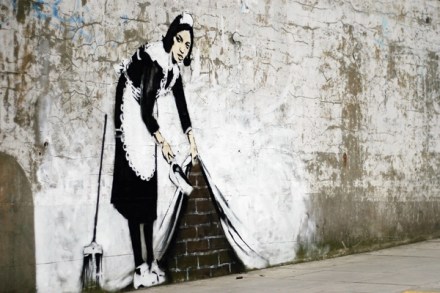
What to make of Banksy? Artist or vandal? Tate Modern holds no Banksys and, other than a redundant phone box that he folded in half and pretended to have reconfigured with a pickaxe, Banksy has never destroyed anything. So I ask my 15-year-old son what he knows of him: ‘He’s the guy who did the policeman with the Tesco bag, who does really cool graffiti, not lame stuff, and no one knows who he is.’ Actually, we do know who he is. His identity was discovered some years ago by the Daily Mail, an organ neither beloved nor believed by those who follow Banksy. But because the public loves a mystery I shall follow Will Ellsworth-Jones in his coy refusal to give the name away in this competent, broadly sympathetic and enjoyable book.

An ordinary monster

From our UK edition

While studying Buddhist trance in Cambodia in 1971 the ethnologist François Bizot was ambushed and imprisoned by Khmer Rouge rebels. In his previous much lauded and horrifying book, The Gate, he described his interrogation by the prison commandant known as Comrade Duch. In a variation on the Stockholm syndrome (in which captive grows attached to captor), Bizot and Duch developed, if not a friendship, then an intimacy. Duch, persuaded that Bizot was not a CIA agent, had him released, thereby saving the Frenchman’s life. Duch acted at no little risk to himself in so doing. Bizot was the only westerner to survive incarceration by the Khmer Rouge.