Wolfgang Münchau

Wolfgang Münchau

Wolfgang Münchau is a former co-editor of Financial Times Deutschland and director of Eurointelligence.

The Swiss-style Brexit delusion

From our UK edition

Rotation is the clearest sign of intellectual muddle. When Britain left the EU, some leave supporters thought they could negotiate a bespoke agreement that would give them all the benefits of membership but none of the obligations. Then it was the Swiss model. Remember Chequers? It was the beginning of the end of Theresa May. The deal she finally negotiated would have kept the UK in the single market and the customs union for several years. The deal that was finally adopted comes under the moniker of Canada: a classic free trade deal. Now the government is contemplating a rotation back to the Swiss model. After a predictable outcry following the reports in the Sunday Times, this has now been denied.

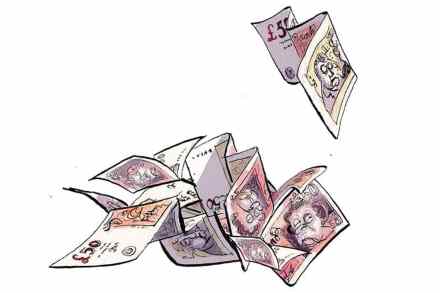
The UK is getting caught in an austerity trap

From our UK edition

The teenagers are once again in charge of UK fiscal policy. The teenagers are not the Chancellor and his team, but those who set the tone of the fiscal debate in the media and the financial markets. The reasons the Conservatives are now embracing austerity is the fear that higher interest rates will kill house prices. This is mad The teenage scribbler is usually a young, pro-austerity banker, with no formal education in economics or economic history. The scribbler pretends that whatever happens is happening for the first time. The scribbler was still on the playground when the previous generation of scribblers talked their governments into austerity. That was not so long ago.

Britain’s economic crisis is a warning to the world

From our UK edition

A falling exchange rate and rising bond yields are the typical characteristics of a financial crisis in an emerging market. Those who never forgave the UK for its decision to leave the EU like to remind us of this fact right now. But an emerging market crisis doesn't even begin to capture what is going on. This is a macro financial crisis story; EU membership is not the issue here. The UK had its independent macro policies when it was still in the EU. What is happening in the UK, and worldwide, is the realisation that fiscal and monetary policies have run out of our control. You can't have 4-5 per cent core inflation, 2 per cent interest rates, and an expansionary fiscal policy at the same time.

Cold War

From our UK edition

41 min listen

In this week’s episode:Can Russia turn off Germany’s gas?Wolfgang Münchau and Katja Hoyer discuss Germany’s looming energy crisis (0.51).Also this week:What are relations like between Boris Johnson and Prince Charles? The Spectator’s diary editor, James Heale joins Camilla Tominey from the Telegraph talk about the growing tensions between the Prime Minister and future King (19.56).And finally: Are sex parties becoming a cliché?Emma Sayle, CEO of Killing Kittens and James Innes-Smith, talk about the rise of sex parties and why they’ve become an open secret. (27.48)Hosted by Lara Prendergast & William MooreProduced by Natasha FerozeSubscribe to The Spectator today and get a £20 Amazon gift voucher: spectator.

Cold war: Putin’s plan to hold Germany to ransom

From our UK edition

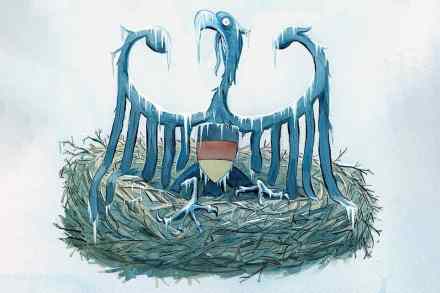
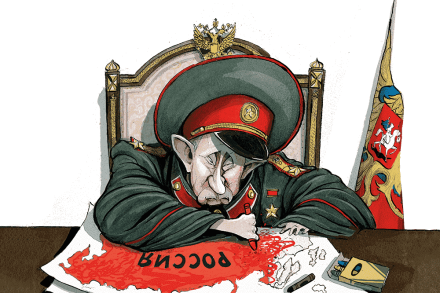
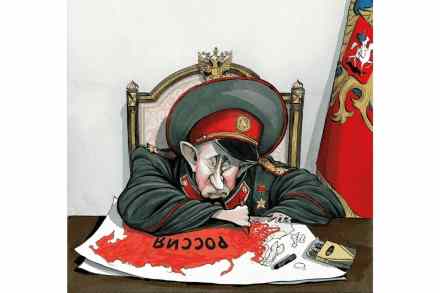
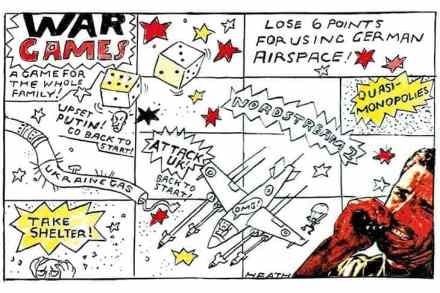
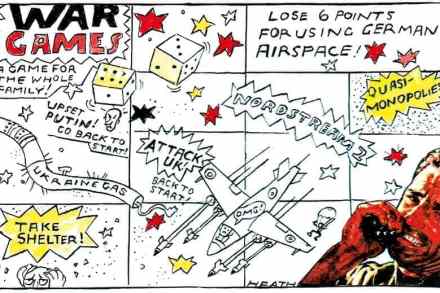
Russia has a long history of using the cold to defeat Europe. The winter of 1812 arrested Napoleon’s special military operation. Hitler’s troops hit the deep-freeze outside the gates of Moscow in December 1941. Now Vladimir Putin has the option to turn off the gas sent to Europe – a strategy against which Germany appears to have no defence. Gazprom, the monopoly supplier of piped Russian gas, has been giving Germany a taste of what life might be like, should Moscow play nasty. It recently halved the amount of gas sent through the Nord Stream 1 pipeline, using bogus technical excuses. Germany, which still relies on Russia for more than a third of its gas, is now realising it may have to cope with a total gas embargo – and a cold winter.

How Boris can cling on

From our UK edition

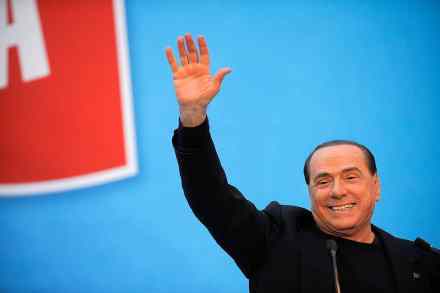
What is happening in the UK right now is similar to the later Berlusconi years, the opera buffa phase of Italian politics with bunga-bunga parties, and worse. Readers may remember Berlusconi’s infamous put-down of recession warnings in 2009, when he remarked that he was not worried because the restaurants were still full. I remember having a conversation with a senior minister in his cabinet at the time, who said it was absolutely clear that Berlusconi had to go, and it was just a matter of time. It took another three years. And it was the euro crisis that did it, an event still unforeseen in 2008. History never quite repeats itself. But the events of the last few days in the UK bring up some memories of that episode.

What makes the EU think it can run an army?

From our UK edition

The German political economist Benjamin Braun recently made an astute observation about the editorial position of a German newspaper - in fact, it is an observation about the German policy consensus in general. “Eurobond? Never, it’ll kill us all. Eurobomb? Bring it on.” Incomprehensibly, the EU is now discussing yet another field of political integration: a defence union. But the big task it set itself 20 years ago remains (to put it politely) incomplete. Amongst other things agreed in the recent two-day EU summit was the need to press ahead with defence strategic procurement and coordinating capability. There is a ‘Strategic Compass’ plan for an ‘EU Rapid Deployment Capacity of up to 5,000 troops’ and much more besides.

How Russia wins

From our UK edition

It is still too early to predict the outcome of the war in Ukraine. Russia has certainly solidified its position in the east and is making small military gains. What's become clear over the last few days is that Russia may, after all, be able to achieve at least some of its military goals. Here is an interesting, albeit disturbing, political scenario by Sabine Fischer, a senior fellow at a German foreign policy tank. She notes that the mood in Moscow itself has shifted. It is the Kremlin’s political calculation that the western nations will not sustain their massive financial and military support for Ukraine.

Are sanctions making Russia richer?

From our UK edition

Before the invasion of Ukraine, it was by no means certain that there would be a united response from the West. The sanctions imposed on Russia after Vladimir Putin’s annexation of Crimea in 2014 were fairly limited, especially from the European Union. Germany pressed on with the Nord Stream 2 gas pipeline to Russia. But now, America, Europe and much of Asia have been united in applying severe sanctions against Russian banks, companies and oligarchs. Three months on, it’s time to ask: are the sanctions working? The answer from the Bank of Russia’s balance of payment data for January to April isn’t reassuring. It showed that the sanctions are emphatically not working, at least not in the way that they were intended.

Olaf Scholz is tanking

From our UK edition

North-Rhine Westphalia is Germany’s largest state, almost as large as the Netherlands. It was a traditional SPD fiefdom during the time of Helmut Kohl, but in 2005 it became a CDU state. Surely, if the SPD was on the march, ready to turn Germany’s regional politics red as it did the chancellery in last year’s election, a state like North-Rhine Westphalia would return to the party? But the big news from yesterday’s federal state elections is that the SPD, the party of German Chancellor Olaf Scholz, scored its worst-ever result in Westphalia: less than 27 per cent of the vote. The CDU won with 35.5 per cent and will probably form a coalition with the Greens.

Olaf Scholz is becoming Putin’s most valuable ally

From our UK edition

If you think that Boris Johnson’s parties in Downing Street constitute a serious matter of state, you might want to take a look at what is happening in Germany right now. Olaf Scholz has been caught red-handed misrepresenting facts about weapons deliveries to Ukraine. Behind the scenes, he is busy frustrating efforts to help the country, while pretending to be outraged about Vladimir Putin’s aggression. Double games work until they don’t. His policies are now being exposed by the media. Scholz said on Tuesday that Germany and Ukraine went through a list of weapons deliveries, and that Germany planned to pay for them. Ukraine denied this. It said that there were no weapons on the list that it needed right now.

How Putin wins the war

From our UK edition

There was a revealing comment yesterday from Robert Habeck, the German economics minister. It is a comment that inadvertently suggests how Vladimir Putin will end up winning the war. Habeck said Germany would not agree to an import ban of Russian gas, oil and coal, because this would endanger the social peace in Germany. It is not clear whether he spoke for himself or the government. But as of now, we have reached the limits of meaningful sanctions. Germany ended Nord Stream 2 unilaterally. Germany raised its defence budget to 2 per cent of GDP, plus extra investments, again unilaterally. Germany reluctantly agreed to what turned out to be very limited sanctions on Russia’s exclusion from the Swift payment communications system. For now, this is it.

Germany’s attitude to Russia is changing. Does it go far enough?

From our UK edition

It’s hard to overstate the pace of the change now under way in Germany. A country that had been defined by its reluctance to deploy military force is now sending lethal weapons to Ukraine and promising €100 billion more in defence spending. The Nord Stream 2 pipeline, which would have ferried more Russian gas to Germany, has been abandoned. Germany has accepted Russia’s exclusion from the Swift banking system, in spite of the collateral economic damage. All of this adds up to the biggest policy shift that I can remember. Perhaps the most significant change is in the tone of German public debate. Take last weekend’s gathering of 100,000 on Berlin’s streets: it was not your usual anti-war protest.

Europe is painfully reliant on Putin

From our UK edition

Vladimir Putin declared war on Ukraine in the early hours of this morning, starting with a massive air attack from the north, south and east, targeting military and civilian infrastructure. This is the worst-case scenario. Putin's speech on Monday set the ideological groundwork. This morning he spoke again, calling Ukraine ‘our historic lands’. He said he was launching what he called a ‘special military operation’ with the goal, not of occupying the country, but of ‘demilitarising and de-Nazifying’ Ukraine. And Putin spoke too to us here in the West: To anyone who would consider interfering from the outside: if you do, you will face consequences greater than any of you have faced in history. All relevant decisions have been taken. I hope you hear me.

Sanctions won’t stop Putin

From our UK edition

The Lithuanian prime minister, Ingrida Šimonyte, put it well yesterday: 'the way we respond will define us for the generations to come'. The invasion of Ukraine started last night with Vladimir Putin’s order to send troops into eastern Ukraine. He had earlier recognised the breakaway provinces of Donetsk and Luhansk, which together constitute the Donbas region, as independent republics. The two self-proclaimed states declared their independence — something neither Kiev nor any other third country save Russia has yet recognised — following 2014 following the Maidan revolution. The US, UK and EU say they will announce fresh sanctions as early as today. What we know is that the technicalities have been drawn up.

How the Ukraine crisis ends

From our UK edition

Vladimir Putin does not think in the way the West does. Of course sanctions will hurt. But so what? He may be wrong in his strategic calculations, but he is not, as Boris Johnson claimed over the weekend, irrational. Putin is an old-school strategist. This is one of the reasons that sanctions will not have the desired impact. An import ban on Russian gas would definitely hurt the Russian economy, but that seems highly unlikely. Italian President Mario Draghi said on Friday that we should not touch gas. It is now the guy who sits in Moscow, rather than Draghi, who is willing to do ‘whatever it takes’. An import ban on the latest iPhones does not have the same deterrent effect as a continental gas shortage. Don’t fool yourself about the impact of sanctions.

Blair is right: Boris doesn’t have a plan for Britain

From our UK edition

What can Boris Johnson and the Tories learn from Tony Blair? While Labour's former leader remains deeply unpopular – and indeed ultimately fell over a grave misjudgement – he was the UK’s last successful prime minister. Gordon Brown, David Cameron, Theresa May and, now, Boris Johnson exist in his shadow. The PM would be wise then to look to Blair's rise to power – and his strategic approach to government – to learn some lessons. In a speech yesterday, Blair warned that:  Margaret Thatcher was the last Tory leader with an actual agenda 'There is a gaping hole in the governing of Britain where new ideas should be.' Blair is right.

In the pipeline: would Germany side with Russia in a conflict?

From our UK edition

If Russia were to invade Ukraine, would Germany side with the Russians? For most of our post-war history, that would have been an absurd question, but things are changing fast in Europe. In the wake of recent events, it would not be irrational for Vladimir Putin to bet that if push came to shove, he could count on German neutrality — or even support. The Ukraine crisis continues apace, with up to 100,000 Russian troops now gathered near its border. The obvious question is: what would happen if Putin were to invade? It would split the EU, exposing its energy dependence on Russia, ruin what is left of transatlantic relations and force Germany to choose sides.

Why Omicron may overwhelm the NHS

From our UK edition

What we know from the imperfect data we have is that Omicron is vastly more infectious but less virulent than the Delta variant. If the UK Health Security Agency is right in its modelling estimate that as of last Sunday, there were already 200,000 cases of Omicron in the country, compared to 60,000 confirmed and 40,000 suspected cases, we cannot exclude a mass pandemic of Omicron infections in the new year. At this rate, even a much milder virus would still overwhelm our hospital capacities. A study by Discovery Health, a South African private health insurance administrator, based on 211,000 positive test results, showed that the hospitalisation rate of Omicron is 30 per cent less than the previous variants.

Wolfgang Munchau, Andrew Watts, Hannah Tomes

From our UK edition

19 min listen

On this week's episode, we’ll hear from Wolfgang Munchau on the political situation in Germany. (00:49)Next, Andrew Watts on his year long battle against a parking ticket. (11:01)And finally, Hannah Tomes on her love of Baileys. (15:33)Produced and presented by Sam HolmesSubscribe to The Spectator today and get a £20 Amazon gift voucher:spectator.