William Cook

A stunning blend of simplicity and complexity

From our UK edition

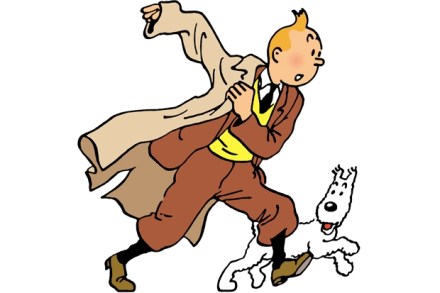
Reading Tintin when I was a child, in Britain in the 1970s, I always assumed Georges Remi’s creation was just a harmless bit of fun. However, when I went to Belgium I discovered, to my amazement, that over there they take him very seriously indeed (this year, a single Tintin picture sold for €2.5 million in Brussels). In Britain, the fearless reporter in the plus fours is a quaint juvenile amusement. In his native Belgium he’s seen as high art, and his creator Hergé (Georges Remi’s initials, backwards) is revered. The late Harry Thompson wrote a brilliant book about Tintin from the British perspective. It was informed and affectionate, but stopped short of adulation. Pierre Sterckx’s bulkier book belongs in the Continental camp.

Christmas markets

From our UK edition

Why the fuss about German Christmas markets? Surely they’re just schmaltzy shanty towns, full of stuff you’d never dream of buying at any other time? This tends to be my point of view until Advent… when I yearn to be back in Germany. Its motor industry may be mired in scandal, its football team may have lost to Ireland (Ireland!) but at least Christmas is one thing my cousins still do best. So where and when to go, and what to buy? Well, most markets run from the end of November until Christmas Eve. They’re great for handmade decorations and festive food and drink, but for Germans a weihnachtsmarkt isn’t just about shopping. It’s a place to meet up for a mug of glühwein and a bite to eat.

What is it about Bill Viola’s films that reduce grown-ups to tears?

From our UK edition

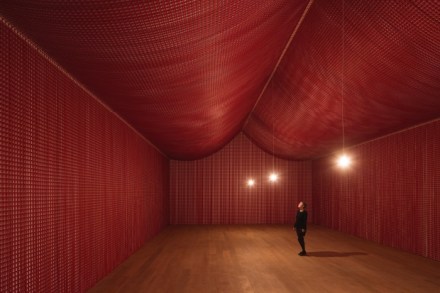
Even the most down-to-earth people get emotional about Bill Viola’s videos. Clare Lilley of Yorkshire Sculpture Park (YSP) seems close to tears as she takes me round his new show. Lilley is the show’s curator. She’s usually so matter-of-fact, but when she talks about Viola her eyes light up. When she took her two teenage daughters to his studio in Los Angeles, she tells me, they both cried when they saw his films. I like to think I’m made of sterner stuff, but when she leaves me in the Sculpture Park’s Underground Gallery, where Viola is on show, after a few minutes in there on my own I’m blubbing like a baby. What is it about Bill Viola that makes grown men (and women) weep?

Retracing The Thirty-Nine Steps in Buchan’s beloved Borders

From our UK edition

Like Richard Hannay, I had to run to catch the early morning train from London to Edinburgh. Thankfully, unlike Hannay, I wasn’t wanted for murder — I’d merely overslept again. As the train pulled out of King’s Cross, I fished out my old Penguin edition of The Thirty-Nine Steps, Hannay’s first — and most famous —adventure. Each time I reread it, I marvel at what a brilliant book it is — how modern it still seems, how easily it draws you in. As we raced through England towards Buchan’s beloved Borders, I rejoined Hannay on his mad dash across the country, urging him on in his heroic quest to save Britain from the beastly Hun. By the time I’d turned the final page, we’d already reached Berwick.

Hitler’s émigrés

From our UK edition

Next week Frank Auerbach will be honoured by the British art establishment with a one-man show at Tate Britain. It’s a fitting tribute for an artist who’s widely (and quite rightly) regarded as Britain’s greatest living painter. Yet although Auerbach has spent almost all his life in Britain, what’s striking about his paintings is how Germanic they seem. Born in Berlin in 1931, Auerbach was only seven when he came to England (his parents subsequently perished in the Holocaust). By rights, he should stand alongside British artists such as Peter Blake and David Hockney, yet his work feels far closer to German painters like Georg Baselitz or Anselm Kiefer. Auerbach is a one-off, a unique painter with a unique vision.

Hamburg

From our UK edition

‘What was it like growing up in Liverpool?’ a journalist asked John Lennon. ‘I didn’t grow up in Liverpool,’ he replied. ‘I grew up in Hamburg.’ My father grew up in Hamburg too, at the end of the second world war. The city had been bombed to smithereens. Cigarettes were the only currency, and my grandma had to trade her jewellery for food. When she met a British soldier who offered to take her to England, she grabbed this lifeline with both hands. If only she were alive to see her smart home town today. When the Beatles came here in 1960, they stayed in St Pauli, the dockside red-light zone. When I first came here in 1990, St Pauli was still sleazy. Now it’s the height of chic.

The Long view

From our UK edition

On the green edge of Clifton Downs, high above the city, there is a sculpture that encapsulates the strange magic of Richard Long. ‘Boyhood Line’ is a long line of rough white stones, placed along the route of a faint, narrow footpath. When Long was a boy, this was where he used to play. There are children playing here today. They pay no attention to Long’s new artwork. Already ‘Boyhood Line’ has melted into the scenery. Half a century since he rolled a snowball across these Downs, and photographed the wobbly line it left behind, it feels as though Long has come home. Richard Long was born here, in Bristol, 70 years ago.

Watching the next war

From our UK edition

Late last month, on a windswept plain near the Polish town of Zagan, the defence ministers of Poland, Germany, Norway and the Netherlands joined the Nato secretary-general, Jens Stoltenberg, to watch Nato’s response to Russia’s incursions into eastern Europe. The dramatic culmination of a week of military manoeuvres, Exercise Noble Jump was a spectacular show of force by Nato’s new VJTF brigade. More than 2,000 troops from nine countries fought a fierce mock-battle against irregular militia, with live ammunition. Huddled in the attendant press pack, struggling to insert my earplugs, this awesome demonstration felt like confirmation — if any were needed — that Europe stands on the brink of a new cold war.

Museum relic

From our UK edition

On 1 July, at a swanky party at Tate Modern, one of Britain’s museums will bank a cheque for £100,000, as the Art Fund announces this year’s Museum of the Year. Sure, the money will come in handy. Sure, the publicity will be useful. But this posh bunfight can’t disguise a growing sense that museums face an existential crisis. Cuts are one problem — some say the present round will take museums ‘back to the 1960s’. But they also face a more profound dilemma. In the age of Wikipedia and Google Images, what are modern museums actually for? When I was a child museums were my adventure playgrounds, but was my enthusiasm merely relative? After all, in the 1970s there really was very little else to do. Shops were shut on Sundays.

Antwerp

From our UK edition

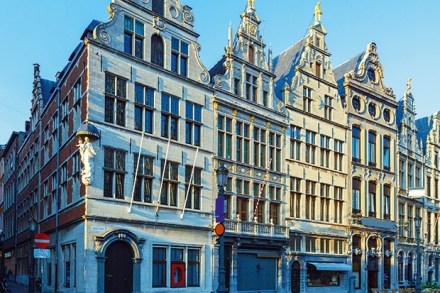
Napoleon didn’t think much of Antwerp. ‘Scarcely a European city at all,’ he scoffed. If only he could see it today. Ten years ago, Antwerp felt provincial. Now it feels like the capital of an (almost) independent state. ‘Jardin Zoologique’ it says outside the zoo, but that’s the only French signage you’ll see in this resolutely Flemish city. When they built the zoo, in 1843, Belgium was only 13 years old, and French was the official language throughout this mongrel nation. Now it only survives on a few old war memorials. ‘You’re in Flanders now,’ locals tell you, if you try to speak to them in French. Each time I come here, Antwerp seems more estranged from Belgium.

Are you sitting properly?

From our UK edition

Funnily enough, after my editor sent me these three books to read, my guts started playing up. Suddenly, food seemed to go straight through me. At first I wasn’t bothered, but when it didn’t get any better I began to worry. I went to see my doctor. She told me to bring her a piece of poo to see if they needed to stick a camera up my bum. I realise this is probably the last thing you want to know, but that’s the whole point about the gut: no one wants to talk about it, or even think about it, until something goes wrong. These books set out to break this taboo, and they’re full of fascinating things I didn’t know. I had no idea that reading about crapping could be so absorbing. It brings a whole new meaning to the term ‘toilet book’.

Bitten by the bug

From our UK edition

‘Good night, sleep tight, don’t let the bedbugs bite,’ my mother used to say when she tucked me in at night, which may be why, like the author of this book, I never thought bedbugs were real. ‘Bedbugs? Are you crazy? That’s not even a real thing,’ Brooke Borel told her father (a pathologist who specialises in skin conditions). But as Mr Borel told his disbelieving daughter, bedbugs are real all right. They even have a fancy Latin name: Cimex lectularius. So, having been bitten to buggery (moral: never share a flat with someone who bought a used futon off the internet) Brooke Borel did what virtually every journalist ends up doing, eventually, and wrote a book about her misfortunes.

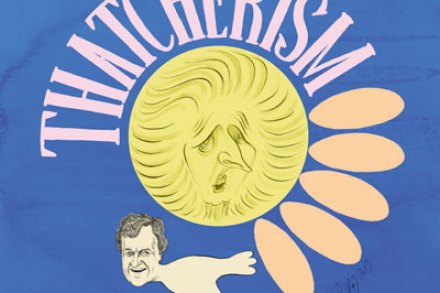
The Good Life – how a 70s sitcom became a Tory lodestar

From our UK edition

Hearing David Cameron's many references to the 'good life' may puzzle younger voters who did not grow up with Richard Briers and Penelope Keith's sitcom of the same name. The Prime Minister has a fond memory of popular culture of the 1970s: he recently announced his decision not to stand for a third term by quoting a Shreddies advert from the late 1970s (about three being two many) and says the only song he knows by heart is Benny Hill's 1971 hit 'Ernie (The Fastest Milkman in the West)'. So we ought not to be surprised about is talking about The Good Life, which ran from 1975 to 1978. When the writers John Esmonde and Bob Larbey came up with the idea for The Good Life, they were looking for a vehicle for Briers, who’d just turned 40.

Vienna is a crossroads of the world again – but something’s missing

From our UK edition

People get the wrong idea about Vienna and I blame Johann Strauss. His plinky-plonky waltzes have become the soundtrack to the city, cementing Vienna’s public image as a place of balls and carriages and cream cakes. It’s an image the tourist board is keen to cultivate, and it makes good business sense. Tour groups visit the Spanish Riding School and the Vienna Boys’ Choir, eat a slice of Sachertorte and depart contented. It makes for a happy holiday, but Vienna is much more interesting than that. Like a lot of stereotypes, Viennese clichés have some substance. Once upon a time, this was the mecca of modern music: Schubert was the local hero; Haydn, Mozart, Beethoven, Brahms and Wagner hung out here.

How Ridley Scott’s sci-fi classic, Blade Runner, foresaw the way we live today

From our UK edition

In 1977 a journeyman actor called Brian Kelly optioned a science-fiction novel called Do Androids Dream of Electric Sheep? The book’s author, Philip K. Dick, had been writing science fiction since the early 1950s. He was 49 years old, with 30 novels behind him. He had a cult reputation, but he barely scraped a living. Kelly only paid him $2,500, but Dick was happy with this windfall. He’d written this book for half as much, back in 1968. After five more years, and many rewrites, Dick’s book finally became a film. Directed by Ridley Scott and renamed Blade Runner, it’s now commonly — and quite rightly — regarded as one of the greatest science-fiction movies ever made.

The Heckler: how funny really was Spitting Image?

From our UK edition

Hold the front page! Spitting Image is back! Well, sort of. A new six-part series, from (some of) the team behind Fluck and Law’s puppetry satire show, will be broadcast on ITV this spring. Called Newzoids, it promises to provide a ‘biting look at the world of politics and celebrity’. Cue ecstatic reports in all the papers about how hilarious the original was, and how much we’ve all missed it. There’s only one problem with this analysis. Whisper it on Wardour Street, but Spitting Image wasn’t actually all that funny.

Where Van Gogh learned to paint

From our UK edition

In December 1878 Vincent Van Gogh arrived in the Borinage, a bleak coal- mining district near Mons. He was 25 years old. He’d failed to become an art dealer. He’d failed to become a schoolteacher. Drawing was just a hobby — an artistic career was the last thing on his mind. He’d come here as a preacher, full of evangelical fervour, yet he proved a failure at that too. The problem was, he was far too pious. He gave away everything he owned. These miners didn’t know what to make of him. They called him ‘the Christ of the coal mines’. After six months, he was fired. With nowhere else to go and nothing else to do, during the next 18 months Vincent taught himself the rudiments of draughtsmanship, anatomy and perspective.

The perfect job for Britain’s disenfranchised young men: boar hunting

From our UK edition

When I went to stay with my German cousin and he showed me the room where I’d be sleeping, the first thing I noticed were the hairy hides on the floor and the spears mounted on the wall. ‘Boar skins,’ he told me. ‘The forest is full of them.’ ‘And the spears?’ I asked him. ‘For hunting.’ I was intrigued. ‘Tell me more,’ I said. He didn’t need much prompting. Apparently, there’s not a great deal of skill involved - only nerve. A cornered boar will charge you. If you turn and run, you’ve had it. But if you stand your ground, they’ll impale themselves upon your spear.

How Kraftwerk did more to shape modern music than anyone since the Beatles

From our UK edition

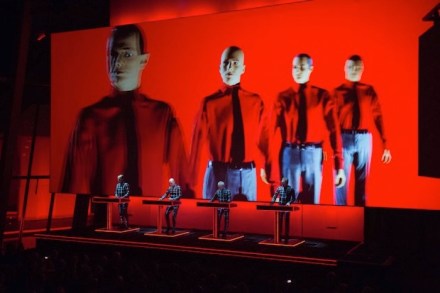
Normally, few things in life are quite so tedious as listening to a bunch of academics discussing pop music. However this week’s Kraftwerk Konferenz at Aston University may be the chinwag that refutes this rule. Why so? Well, speakers includes former Kraftwerk member Wolfgang Flur, plus Stephen Mallinder from Cabaret Voltaire and Rusty Egan of Visage - remember them? OK, so these real-life pop stars are still outnumbered by a host of earnest academics, delivering lectures with mind-numbing titles like ‘Kraftwerk and the Issue of Post-Human Authenticity’ and ‘Kraftwerk and the Cultural Studies of Cycling’. However if any band can withstand two days of pointy-headed discourse, it must be Kraftwerk.

The tragic tale of the Two Roberts is a story of two artists cut off in their prime

From our UK edition

In 1933, two new students met on their first day at Glasgow School of Art. From then on they were inseparable. They lived and worked together. They became lovers. They stayed together throughout their lives. They shone at art school, then came to London, where their robust paintings soon became very fashionable. Yet a few years later, just as quickly, their work fell out of favour. They became increasingly impoverished, dependent on friends for bed and board, but they never stopped painting — or loving one another. They were both prolific drinkers. By 1966, they were both dead.