Tom Goodenough

Tom Goodenough

Tom Goodenough is online editor of The Spectator.

Brexit won’t finish the EU, insist Merkel, Hollande and Renzi

From our UK edition

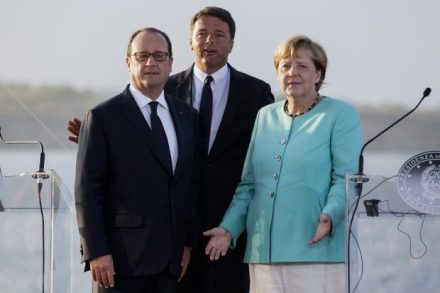
It's no surprise that Italy’s prime minister Matteo Renzi chose to host a press conference with Angela Merkel and Francois Hollande on an aircraft carrier; this was a piece of theatre designed to show the EU is fighting back. 'Many thought the EU was finished after Brexit,' said Renzi. Not so, he claimed. Instead, Britain's decision to leave the EU was the chance to 'write a future chapter' and 'relaunch the powerful ideas of unity and peace, freedom and dreams', the Italian PM insisted. All very well, you might think, but what does that mean? Defending the continent against the threat of Islamic terrorism was a key topic. Angela Merkel called for intelligence services across the continent to share more information to help fight extremism. So far, so sensible.
‘Sarko 2’ confirms his comeback

From our UK edition

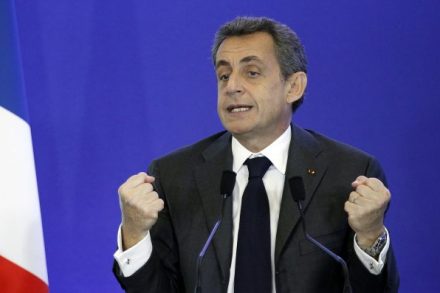
His comeback is being called ‘Sarko 2’. Now, four years after the former French President Nicolas Sarkozy lost out to Francois Hollande, Sarkozy has announced he will be running again in the country’s 2017 Presidential election. The announcement was not much of a surprise: Sarkozy has made no secret of his political intentions and has done much to try and generate publicity for himself (not least in being frequently spotted on the arm of his pop star wife). But Sarkozy is more than just a self-publicist and is proving himself shrewd in clawing back French public support. His key strategy is presenting himself as the safe pair of hands in a country reeling in the wake of a sequence of terror attacks which have left hundreds dead over the last 18 months.

Liz Truss confirms there will be a British bill of rights. But we still don’t know when

From our UK edition

It’s been over a month since Theresa May stood on the steps of Downing Street. And yet the process of finding out what will define her government is moving slowly. We’ve had snippets of the direction in which it won’t be heading: her decision to put the brakes on Hinkley Point, at least for the time being, shows she won’t be pursuing the Osborne agenda. This has, too, been backed up by reports today that she won’t press ahead with plans for regional mayors with the same fervour as the former chancellor. Yet we’ve had only limited glimpses of what May will be aiming to implement. The catchphrase ‘Brexit means Brexit’ has already become well worn and parroted repeatedly by the PM.

Kezia Dugdale backs Owen Smith. Here’s why it won’t help him beat Corbyn

From our UK edition

It won't come as much as a surprise to many that Kezia Dugdale, the Scottish Labour leader, has backed Owen Smith in the party's leadership contest. In July, Dugdale said that with Jeremy Corbyn in charge Labour faced being wiped out at the ballot box. As if that wasn't a clear enough indicator of who she would back, today she's confirmed it. Dugdale had this to say: 'Owen Smith gets my vote. I believe Owen can unite our party, and move us on from the divisions that exist under the current UK leadership of Jeremy Corbyn.' The sentiment is clear and Dugdale is one of the highest-profile elected female figures in the Labour party to come out against Corbyn. But as with Sadiq Khan's endorsement of Owen Smith, it's unlikely to help very much at all in helping Smith defeat Corbyn.

The Spectator podcast: The doom delusion | 20 August 2016

From our UK edition

It's August 2016 and the best time in human history to be alive. Well, at least that's according to Johan Norberg, who writes this week's Spectator cover piece on the new golden age. Never, he says, has there been less war, disease, conflict, discrimination or poverty. So why do we find that so hard to believe? On the podcast, Lara Prendergast is joined by Fraser Nelson and Johan, who says: 'What I've done is look at long-term data and statistics - everything from poverty, malnutrition, literacy to fatalities of war, the risk of dying in a natural disaster, the risk of being subjected to a dictatorship - and everything is improving.

Corbyn makes a half-hearted pitch to win over Tory voters

From our UK edition

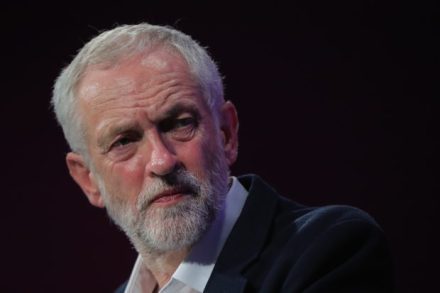
Can Jeremy Corbyn reach out to - and win over - Tory voters at a general election? It sounds like an unlikely prospect but that's exactly what the Labour leader pledged to do in the party's latest hustings last night. Corbyn said that his aim is to convince people 'by the policies we put forward...(including) some people who have been tempted to vote Tory' before. It certainly sounds as if Corbyn himself isn't wholly convinced by his statement, as many of those hearing it are unlikely to be either. An Ipsos Mori poll recently gave Corbyn a woeful net approval rating of -33, so it's true he needs to broaden his support base somehow.

The Spectator podcast: The doom delusion

From our UK edition

It's August 2016 and the best time in human history to be alive. Well, at least that's according to Johan Norberg, who writes this week's Spectator cover piece on the new golden age. Never, he says, has there been less war, disease, conflict, discrimination or poverty. So why do we find that so hard to believe? On the podcast, Lara Prendergast is joined by Fraser Nelson and Johan, who says: 'What I've done is look at long-term data and statistics - everything from poverty, malnutrition, literacy to fatalities of war, the risk of dying in a natural disaster, the risk of being subjected to a dictatorship - and everything is improving.

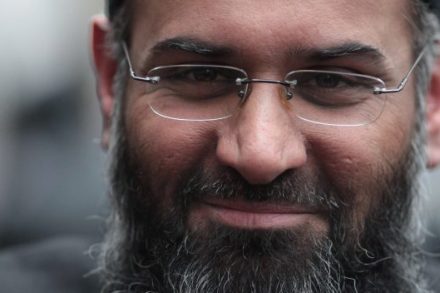
Why did the BBC give a platform to Anjem Choudary?

From our UK edition

Anjem Choudary's arrogance eventually led to his downfall. He was convinced he could stay one step ahead of the authorities by picking his words carefully. Until now, that is. The hate preacher finally came unstuck when he encouraged others to join Islamic State. Yet whilst his extremist rants were always marked with an alarming confidence, his manner belied a somewhat different reality: Choudary was a man with few followers. His appearance in YouTube videos inevitably showed him with a tiny handful of half-witted acolytes alongside him. His 'protests' were of a kind likely to be greeted with indifference by passers-by. So why have we all heard of Choudary? Many media outlets have questions to answer for giving him a platform in order for him to spout his views.

Will Theresa May finally stick up for EU workers’ rights?

From our UK edition

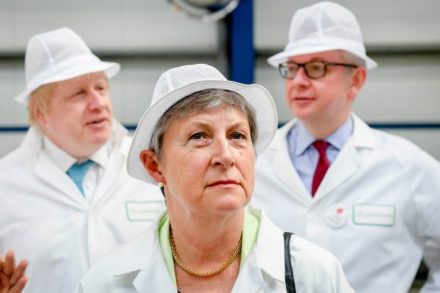
Theresa May has somewhat shamefully maintained her reticence over the rights of EU workers to stay in Britain after Brexit. But some in the 'Leave' campaign are continuing to pile pressure on the PM to do the right thing and give assurance to the 3.5million Europeans living and working in Britain. Gisela Stuart was clear throughout the referendum that these workers should not be booted out of Britain in the event of a 'Leave' vote. And in a campaign which painted few in glory, Stuart is an exception for actually sticking by what she said. Here's what she had to say this morning: 'I think there is no debate about guaranteeing rights, it's a question about what point does the Government become explicit that existing rights will be honoured.

Theresa May won’t be surprised Liam Fox and Boris are already battling it out

From our UK edition

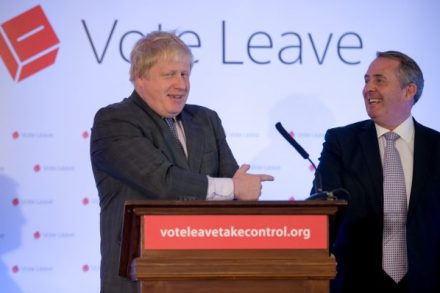
The dawn of a new government sparks a search amongst journalists for the flashpoints and tensions within it which are likely to bubble over. Just weeks after Theresa May walked into Downing Street, the source of that potential turmoil in her Government already seems clear. And if the revelation of the Prime Minister's intervention between Liam Fox and Boris Johnson is anything to go on, it looks like tension between the two may cause some trouble for the Prime Minister over the months and years ahead. Liam Fox sent a letter to Boris (copying in the PM) in which he made a power grab for some of the Foreign Office's remit to be transferred over to his Department for International Trade.

The Spectator podcast: The memory gap. Is technology taking over our minds?

From our UK edition

Smartphone ownership is predicted to hit 2.5 billion by 2019 and 60 per cent of internet traffic now comes through our mobile devices. But does the world becoming more reliant on handheld gadgets to guide us in day-to-day life come at a price? In her cover piece this week, Lara Prendergast claims that we are outsourcing our brains to the internet and that technology is taking over our minds. On this week's Spectator podcast, Lara is joined by Isabel Hardman, Charlotte Jee, Editor of Techworld, and Professor Martin Conway, head of psychology at City University.

Corbyn ally wins Labour’s Liverpool mayoral nomination

From our UK edition

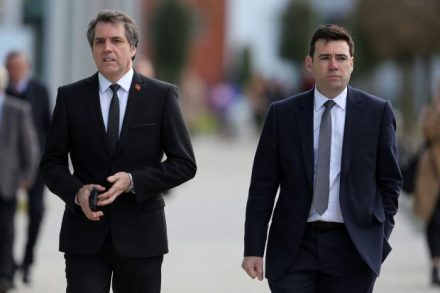
Labour has opted for Steve Rotheram to be their candidate in Liverpool's mayoral election. It's a big boost for Jeremy Corbyn, as Rotheram has been fiercely loyal to the Labour leader since Corbyn made him his PPS - essentially his right-hand man in Westminster - last September. He's stuck by Corbyn along the way, and Rotheram suggested after winning the vote amongst Labour members that it could well have helped him defeat current mayor Joe Anderson and Luciana Berger, amongst others, in today's vote: 'When we phoned people I think what potentially did have an impact was this underused and rare commodity in politics at the moment and that is loyalty.' Having won the Labour nomination, it now looks almost certain Rotheram will go the whole way and win the mayoral contest next May.

Lord Mandelson issues stark warning to Theresa May over Hinkley Point

From our UK edition

Yesterday, it was the Chinese ambassador threatening Theresa May over Hinkley point. Today, it's Lord Mandelson's turn. The Labour grandee said that for the Prime Minister to 'stretch out' the Hinkley hold-up any further than the end of September 'would be a mistake'. What was remarkable about Mandelson's warning on Today just now was its similarity to that issued by China's ambassador Liu Xiaoming. Xiamong didn't mention the 'B' word - Brexit - but it was the elephant in his piece in the FT yesterday when he suggested that at such a 'historical juncture' Britain needed China. Mandelson went somewhat further to say the referendum was an important factor in May's decision and that post-Brexit Britain was 'not in the happiest position'.

Did Donald Trump urge gun owners to use their weapons to stop Hillary?

From our UK edition

Just when it looks as though Donald Trump couldn't go any further with causing outrage, he opens his mouth. This time, the Republican candidate appeared to suggest that gun owners could do something about Hillary Clinton if she picked Supreme Court judges in favour of gun control. Here's what he said: 'If she gets to pick her judges, nothing you can do folks. Although the second amendment people, maybe there is. But I tell you what, that will be a horrible day.' The backlash was immediate: Clinton's campaign manager, Robby Mook, said that what Trump was saying is 'dangerous'; even the Secret Service popped up (on Twitter of all places) to say they were 'aware' of the incident.

Germany turns against EU-Turkey deal

From our UK edition

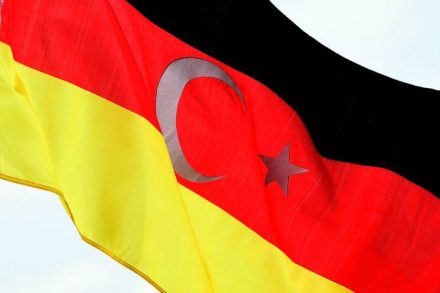
Is the tide in Germany turning against Turkey? It certainly seems to be. A poll today shows a majority of Germans favour ending the refugee deal agreed between the EU and Turkey back in March. The agreement has helped stem the flow of migrants flooding into Europe, making a repeat of the 1.1m people who arrived in Germany last year unlikely. But the deal came at a price: Turkey won a renewal of aid, the prospect of visa free travel for its people across Europe and the biggest prize of all - 're-energized' EU membership talks. Yet for all the bluster talked about the EU deal, it seems that many Germans are not happy with it and want it to end.

Andy Burnham named as Labour’s Manchester Mayoral candidate

From our UK edition

Andy Burnham has won the race to be named as Labour's candidate in the Manchester Mayoral race. The shadow home secretary's victory was certainly convincing - he won 50 per cent of the vote amongst Labour members; interim mayor Tony Lloyd got 28 per cent, whilst former minister Ivan Lewis won 19 per cent. So what now? Burnham had made himself something of a laughing stock recently with his flip-flopping about quitting the shadow cabinet. He drew derision for staying loyal to Corbyn, so at least after today he appears to have a bonafide reason at last for leaving the shadow cabinet.

Britain’s trade deficit will be a useful Brexit bargaining chip

From our UK edition

Britain's trade deficit - the difference between what we import and export - widened in the run-up to Brexit. Figures out today show that we imported £5.1bn more goods than we exported to the rest of the world. That gap widened by nearly £1bn between May and June, according to the ONS, in a picture which the Guardian have said is pretty 'ugly'. But there is a flip side. Firstly, these figures don't reflect anything about the referendum - they were compiled in the build-up to the June vote, so they tell us little about the impact of Brexit. Secondly, it's worth mentioning that whilst the deficit has, indeed, got bigger, Britain's exports also jumped in June by a billion pounds. That fact alone is worth celebrating.

China threatens Theresa May over Hinkley Point delay

From our UK edition

It was already clear that Theresa May's decision to review the Hinkley Point power plant had not gone down well in China. The nuclear plant upgrade is backed by billions of pounds of Chinese money and is also intended by Beijing as a key opportunity to showcase the country's nuclear technology. So when the delay to giving the go-ahead was announced in July, China responded to suggestions its technology could not be trusted with a veiled threat saying its government would not 'tolerate' such accusations. Today, that veil has been lifted even more as the country steps up its pressure on Theresa May to give the £18bn project the green light.

The Brexit tourist boom to Britain is on

From our UK edition

We were warned during the referendum run-up that Brexit could be a disaster for tourism. Much of the Project Fear medicine focused on what it might mean for British tourists heading overseas; the answer could be largely summarised as all doom and gloom. Abta, for instance, warned that ‘a Brexit could…affect the flow of trade and travel’. In short, the message was clear: Brexit was bad news for the travel industry. But what we heard less about was how the referendum might affect the numbers actually heading to Britain. Now, a month on from the June 23rd vote, we have the answer:  British tourism is booming. In July, bookings for flights landing in the UK went up by more than seven per cent compared to the month before the referendum.

Is Theresa May’s Scots Brexit charm offensive working?

From our UK edition

Theresa May has made wooing Scotland over Brexit one of her key missions. Her first trip as Prime Minister was up to Edinburgh to meet Nicola Sturgeon in order to reassure her that she was willing to listen to 'all options' following the referendum. It was an attempt to put out the fire started by Sturgeon in the hours after the June 23rd vote, when the Scottish First Minister said that Scotland did not vote for Brexit (despite two-in-five Scots having done exactly that). So far, May has been using the carrot rather than the stick to deal with Scottish dissent over the Brexit vote.