Tom Goodenough

Tom Goodenough

Tom Goodenough is online editor of The Spectator.

John McDonnell’s fight against capitalism steps up a gear

From our UK edition

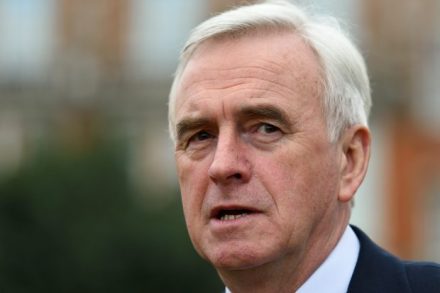
With Labour’s bloody leadership contest behind them, John McDonnell wants to get back to business. This is a man who lists 'fermenting the overthrow of capitalism' as his pastime on Who's Who. Now he is the Labour Party's shadow chancellor. So with the renewed Corbynista mandate, what now? Having picked the brains of Ed Miliband and others, he says a Labour government would be defined by its willingness to step in - but only gently - to help out business. For McDonnell, that plan to intervene would take the form of a mammoth spending scheme backed by a national investment bank pumped with £100bn.
Labour conference, day two: The Spectator guide

From our UK edition

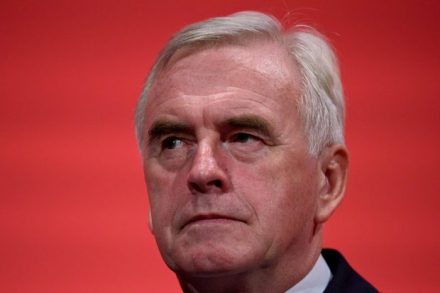
It's day two of the Labour Party conference. Here's the Spectator's guide to what to look out for today: Main conference: 11am: Shadow Chancellor John McDonnell’s speech Fringe events: 9am: ‘You can’t build peace with concrete: ending our relationships with Israel’s illegal settlements' Speakers include: Jeremy Corbyn (possibly); Emily Thornberry 12.30pm: Where Next for Britain in Europe? Speakers include: Chuka Umunna; John Mann 12.30pm: Brexit: Unite against racism and hatred Speakers include: Diane Abbott 12.30pm: How do Labour win the general election? Speakers include: Angela Eagle 2.30pm: The case for Labour to back electoral reform Speakers include: John McDonnell 5.30pm: What does Brexit mean for students?

Labour’s conference, day one: The Spectator guide

From our UK edition

Jeremy Corbyn promised to wipe the slate clean following Labour's fractious leadership race. Now that he's officially clinched victory, it's time for the party to try and do just that at Labour's annual conference, which kicks off at 11am today. Here, The Spectator has put together a guide of the main events to look out for. This is what's on today: 11am: Labour’s conference starts The NEC’s chair Paddy Lillis speaks shortly afterwards Fringe events: 5.

Jim O’Neill’s decision to quit gives Theresa May something of a headache

From our UK edition

Jim O’Neill, who was somehow overlooked in Theresa May's purge of the Osbornites, has become the first person to resign from her Government. A few weeks ago, the former Goldman Sachs chairman said he wanted assurances that she remained committed to the Northern Powerhouse agenda. It seems that no such undertakings were received. In his somewhat terse letter this morning, he had this to say: ‘I primarily joined however for the specific purpose of helping deliver the Northern Powerhouse, and to help boost our economic ties with key growing economies around the world, especially China and India and other rapidly emerging economies.

Is Boris worrying that Brexit will never happen?

From our UK edition

Theresa May has made one thing clear: Brexit mean Brexit. But when will the Prime Minister actually pull the trigger and invoke Article 50? Boris Johnson gave his take last night: 'The Government is working towards an Article 50 letter which as you know will be produced, probably, in the early part of next year. That's still subject for discussion but what is clear I think to our friends and partners in the EU is two broad principles: we are not leaving Europe; Although we are leaving the EU treaties, we do want to have the closest possible trading relationship and it's very much in their interests to achieve that... it's very much in their interests to do a great free trade deal with us, and I think that will happen.

Donald Trump’s chances of winning have never been higher

From our UK edition

There are 46 days to go until the US presidential election and the race is still tighter than anyone imagined it would be. Donald Trump is just 1.7 points behind Hillary Clinton nationally and you have to ask yourself: are these polls likely to understate, or overstate Trump's support? In the swing states, it's pretty even. In Ohio, Trump is five points ahead of Clinton and enjoys healthy support amongst working class whites, who back him by 26 points over Clinton. As Romney found, this is an unreliable base in an America with such rapidly-changing demographics but Hillary isn't enthusing the groups she had expected to woo. She is only three points in front of Trump amongst women voters (Obama was 11 points ahead in Ohio in 2012).

The Brexit bounce continues – ten forecasters up their predictions for 2016 growth

From our UK edition

The Brexit bounce continues. HM Treasury has today released forecasts of the economists it follows, as it does every month. Last time, there was a flurry of downgrades and forecasts of an immediate recession. Now, these forecasts are being torn up by everyone, including by the FT (although you can bet the FT won't report on the upgrades as eagerly as it did the downgrades). The average new forecast suggests GDP will grow by 1.8 per cent this year, far better than the 1.5 per cent forecast last month. This back to where the consensus was before the Brexit vote. The OECD, which had previously predicted "immediate" uncertainty after a Brexit vote, has today also upgraded to 1.8pc for this year, saying instead that the pain will be felt next year (it predicts 0.9pc growth).

Owen Smith all but concedes defeat in Labour leadership race

From our UK edition

There are still a few hours left in the Labour leadership race but judging by Owen Smith’s mood you wouldn’t know it. In an open letter to supporters, Smith has all but conceded defeat in the race. He described the summer contest as a ‘long and bruising’ encounter and went on to say that the ideas he suggested during the bloody leadership bout… ‘...will remain as relevant after this contest as they have been during this contest. They are part of my vision for Labour and Britain's future and whatever the outcome of this contest I will continue to make these arguments and do all I can to see us back in government.

Brexit U-turns: who is rowing back on their Project Fear warnings?

From our UK edition

In the run-up to the referendum, we were warned Brexit would unleash misery. George Osborne suggested a vote for Brexit would lead to a DIY recession. And numerous business bosses and the great and the good piled in to add their warnings to the doom-mongering. Yet in the weeks since the referendum, their predictions of chaos have not come true. What's more, many of those shouting the loudest about the consequence of Brexit are now furiously rowing back on their warnings. Here, The Spectator compiles the Brexit u-turns and referendum backtracking: In the aftermath of the vote, many major banks and financial institutions continued to warn that Brexit spelt bad news for the economy.

Tim Farron bangs the anti-Brexit drum as he reaches for the centre ground

From our UK edition

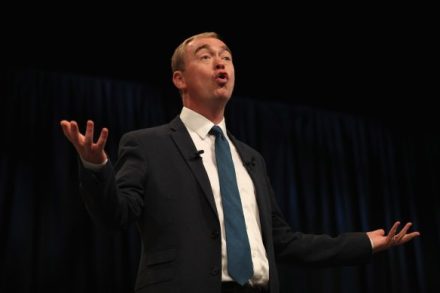
Tim Farron’s hardest task in his conference speech today was convincing people to actually listen. A test of how successful he was will be how soon into the 6pm news tonight he pops up on screen (following Brad Pitt and Angelina Jolie's reported split, the signs don't look good). So what did Farron do to try and get people to sit up? Banging the anti-Brexit drum was one of his main tactics. Farron promised... 'Not a re-run of the referendum, not a second referendum, but a referendum on the terms of the as-yet-unknown Brexit deal' The Lib Dem leader did, to be fair, do his best to empathise with those who voted to ‘Leave’ but instead he’s more likely to have left them rather wound up.

Labour’s internal battle is only just beginning

From our UK edition

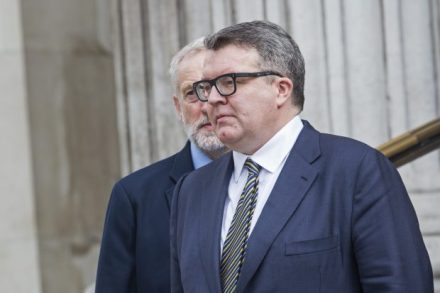
Not even Owen Smith is pretending that he'll defeat Jeremy Corbyn when the leadership election results are announced this weekend. Tom Watson, Corbyn's deputy, has told Today that it's time for healing, time to ‘put the band back together’. The band contains Corbynite 70s metal, McClusky backing vocals and Watson indie trash - not a sound that many voters find appealing. But Watson wants to sound supportive of its lead singer. In his interview with Today he said he'd be happy for Smith to fail and added that Corbyn would make a very good prime minister - with an important caveat: 'I think Jeremy could easily be a Labour prime minister, I think we’ve got to change what we do, how we campaign.

Jeremy Corbyn promises business as usual

From our UK edition

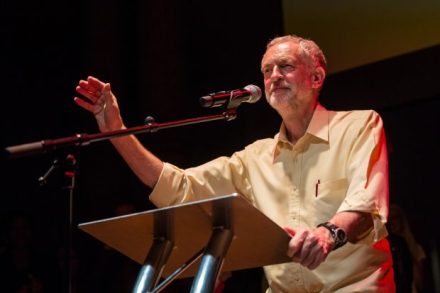
The big question in Labour's leadership contest is not whether Jeremy Corbyn will win, but how much he'll win by. There is, it seems, an inexhaustible supply of Corbynistas standing ready to join the party - so the moderates who had hoped that a formal leadership challenge would be a vehicle of deposing him have had to think again. Neil Kinnock said this weekend that he'll probably never live to see another Labour government. So Labour's only hope, for now, is that the 67-year-old Corbyn might change. During his interview on Today this morning we've been offered a taste of what his leadership will look like if (or, rather, when) he wins. The depressing news for Labour MPs is that it looks like it will be business as usual. But with a smiling face.

The Spectator podcast: The Brexit bounce | 10 September 2016

From our UK edition

On the morning of the 24th June, Britain woke to find its stock market shattered and its pound pummelled. It appeared – for a brief moment – like all the prophecies of the Brexit doomsayers, not least the Great Seer Osborne, had come true. But then, from the wreckage of that mid-summer morning, green shoots began to appear, and now, more than two months down the line, it seems that Britain has bounced back. In his cover piece this week, Ross Clark argues that the Remain campaign fell victim to the perils of believing their opinion to be ‘objective fact’, and that economic recovery has humiliated the Treasury, Bank of England, and the other grand institutions who swore that Brexit would leave us poorer. So is he right?

Wetherspoon’s boss is right to mock doomster economists over Brexit

From our UK edition

In the referendum run-up, we were inundated with warnings and messages of doom and gloom about the untold damage Brexit would unleash - and unleash immediately. It took a pub boss - Tim Martin, the founder of JD Wetherspoon's - to add a bit of perspective. Why, he argued, would consumer sentiment plunge of a majority voted Brexit and got what they wanted? Why, if we wouldn't actually leave the EU for two years, would the economy fall of a cliff? At the time, he was mocked for knowing nothing more than how to pull pints. But now, with the prophecies of economic woe having failed to materialise, it seems he was more on the money - a point he has made.

Theresa May makes her grammar schools pitch

From our UK edition

Theresa May spoke for almost half an hour before she actually mentioned the 'G' word: Grammar schools. But before she did so, the Prime Minister repeatedly uttered another word nearly a dozen times: meritocracy. May said she wanted Britain to become 'the great meritocracy of the world' and she said schools were the place to kick start that change. Her speech was a sometimes-reheated version of her first Downing Street address, but her message was clear: this is a bold shake-up of Britain's education system. The PM said grammar schools would be encouraged to grow and she vowed as well to kick over the obstacles in the way of new grammar schools opening. Yet it seems May spent longer justifying her policy than actually clarifying it.

Theresa May’s grammar school revolution starts today

From our UK edition

Theresa May made it clear when she became Prime Minister that she wanted to be defined by more than just Brexit. With the launch of her Government's policy on grammar schools this morning, today is the day she puts her money where her mouth is. After snippets of detail slowly saw the light of day this week, Theresa May's plans for selective schools are appearing to be much more radical and dramatic than many will have imagined. As well as the opening of new grammar schools, the PM will say that hundreds of comprehensive schools will be allowed to convert to a system of selecting their intake (so long as they pick a certain number from poorer backgrounds).

Theresa May’s grammar school plans provoke a mixed reaction

From our UK edition

Theresa May has told Tory MPs she won't 'turn back the clock' on grammar schools. But she also didn't rule out some expansion in the system of selective schools. How those two thoughts reconcile with each together will become clearer when the Government reveals its plans for school reform soon (this being Theresa May, we won't be expecting a running commentary). Yet even the scant details which have emerged so far have provoked a predictably mixed reaction. Shadow Education Secretary Angela Rayner said the plans were 'shambolic'. You can listen to her criticism here: And Alan Milburn, who chairs the government’s social mobility commission, is perhaps the most outspoken voice this morning. In the Guardian, he says that these plans would be 'disastrous'.

The Spectator podcast: The Brexit bounce

From our UK edition

On the morning of the 24th June, Britain woke to find its stock market shattered and its pound pummelled. It appeared – for a brief moment – like all the prophecies of the Brexit doomsayers, not least the Great Seer Osborne, had come true. But then, from the wreckage of that mid-summer morning, green shoots began to appear, and now, more than two months down the line, it seems that Britain has bounced back. In his cover piece this week, Ross Clark argues that the Remain campaign fell victim to the perils of believing their opinion to be ‘objective fact’, and that economic recovery has humiliated the Treasury, Bank of England, and the other grand institutions who swore that Brexit would leave us poorer. So is he right?

‘Serene’ Mark Carney tries to take credit for Brexit bounceback

From our UK edition

How does Mark Carney feel about his 'Project Fear' warnings in the run-up to the referendum? His mild-mannered nemesis Jacob Rees-Mogg probably wouldn't have been prepared for the Bank of England Governor's choice of words to describe his mood. Carney was 'serene' about how he handled himself before Brexit, he told the Treasury Select Committee this afternoon. But Carney didn't stop there: he also did his best to bait Rees-Mogg, who has clashed with Carney several times before at these hearings, suggesting the session was being wasted 'going through counterfactuals'. He then went on to slap down any suggestion from the Tory MP that his warnings had been 'dire'.

Let’s not overhype a free trade deal with Australia

From our UK edition

The best thing to say about the UK kicking off preliminary trade talks with Australia is that they're a start. In that they show Britain is looking to do business around the world, they're a welcome signal in the wake of the vote for Brexit. Given that some have taken the referendum to be a sign of Britain slamming the door shut, any talk which counters this false narrative is refreshing. Yet there's also a danger of overhyping the significance of such a deal. And it's worth reminding ourselves that signing such an agreement won't be the answer for all of Britain's troubles. The statistics make it clear that a trade deal with Australia would only cover a very small fraction of the UK's dealings with the rest of the world.