Toby Young

Toby Young

Toby Young is associate editor of The Spectator.

An injured hand has given me a glimpse of old age

From our UK edition

I first realised something was wrong with my hand last Thursday evening. I’d been invited by a friend to go shooting at his grouse moor in Yorkshire and the bedroom I’d been assigned had a stiff wooden door. After a hearty supper, I returned to my room and gave the door a shove with my shoulder to force it open. The next thing I knew I couldn’t move any of the fingers on my right hand. The following morning it was no better. Pulling on my plus fours, tucking them into a pair of woollen socks and fastening the garter ties was a work of colossal administration. As for the buttons on my shirt, I gave up after ten minutes and just pulled my shooting sweater over the top. When I arrived on the moor it quickly became apparent that I was destined to shoot even fewer birds than usual.

I’m a slave to my horse-chestnut tree

From our UK edition

Trying to work in my garden shed at this time of year is tricky. I will be crouched over my keyboard, face screwed up in concentration, when suddenly there’s a tremendous bang just above my head. Is it a bird? Is it a plane? No, it’s a conker falling from a horse-chestnut tree and hitting the roof of my office. It happens about once an hour, just infrequently enough to startle me every time. I’ve grown to hate this tree over the years. It isn’t just the astonishingly loud noise the conkers make. It’s also the damage the tree does to the lawn.

How I lost my Hungarian Vizsla, Leo, to the Dangerous Dogs Act

From our UK edition

Not everyone welcomed Rishi Sunak’s announcement last week that he would ban the XL Bully under the Dangerous Dogs Act. This American crossbreed is responsible for nearly half the deaths caused by dogs in the UK between 2021 and 2023 and hit the headlines recently after a video emerged of one attacking an 11-year-old girl, as well as several men, in Birmingham. Yet the Dog Control Coalition said outlawing them wouldn’t stop the attacks. ‘For 32 years, the Dangerous Dogs Act has focused on banning types of dog and yet has coincided with an increase in dog bites, and the recent deaths show this approach isn’t working,’ said a spokeswoman.

The myth of male privilege

From our UK edition

A few weeks ago I had a crack at coming up with my own sociological ‘law’ and my first effort went as follows: ‘The more progressive a country is when it comes to sex and gender, the more authoritarian it is when it comes to speech and language.’ I was thinking of Ireland which, having legalised abortion in 2018, is about to impose the most draconian speech restrictions in Europe. I now propose a second law: ‘Any group described as privileged is in fact marginalised; and any group described as marginalised is in fact privileged.’ A case in point is white men – and in particular cisgendered, heterosexual, able-bodied, middle-class white men – who are now at the bottom of the intersectional hierarchy of oppression in most professions.

Could I be pregnant?

From our UK edition

At the age of 59 I thought it was time to get my body thoroughly examined. So last week I trotted off to a health clinic in west London. Not surprisingly, I got a mixed report. Mostly As and Bs, a couple of Ds, and several must-try-harders. The health check consisted of an hour with a man in green hospital scrubs, who I think was a nurse, followed by an hour with a female doctor. It was all trundling along nicely – my weight and BMI were both within the ‘healthy’ range – when something unexpected happened. After attaching electrodes to my body for the purposes of carrying out an ECG, the nurse asked me if I was pregnant. ‘I’m sorry?’ ‘Are you pregnant?’ he repeated.

I knew I was right about private schools

From our UK edition

The Hunstanton Lawn Tennis Tournament has become an annual fixture in the Young household. Known as ‘Wimbledon-on-Sea’, the week-long competition takes place on the Norfolk coast in August and attracts hundreds of entrants. I’m not a contestant myself, but my two youngest are and five years ago my wife won the ladies’ doubles, meaning she’s now much in demand with the Norfolk silver foxes hoping to enlist her as their mixed doubles partner in the junior vets. This year she got as far as the semi-finals, which pleased the 59-year-old KC she was playing with, and was the runner-up in the women’s round robin. Don’t be fooled into thinking Caroline is Hunstanton’s answer to Annabel Croft.

The appalling hypocrisy of Peter Wilby

From our UK edition

According to the ancient proverb, if you sit by the river for long enough you will see the body of your enemy float by. That happened to me earlier this week when I discovered the fate of Peter Wilby, a former editor of the New Statesman and the Independent on Sunday. In 2018, when I was forced to resign from a government job over old tweets, Wilby wrote an article saying my public humiliation had come as no surprise to him. Apparently, I’d made a career out of ‘denigrating women, homosexuals, disabled people, ethnic minorities and anybody on benefits’, and ‘disgraced’ the memory of my dead father. ‘At one stage he was more or less addicted to both alcohol and pornography,’ he said. That piece cut me to the quick.

Who fact checks the fact-checkers?

From our UK edition

Last week, a retired physics professor called Nick Cowern said it was time to get tough with ‘climate denialists’. ‘In my opinion the publication of climate disinformation should be a criminal offence,’ he posted on Twitter. He was ridiculed, but what sounds ludicrously over-the-top today could easily become the norm tomorrow. At least four EU member states have made it a criminal offence to spread disinformation – Hungary, Lithuania, Malta and France – and others including Ireland are preparing to do the same. In the UK, the Online Safety Bill will introduce a new false communications offence. I have a dog in this fight since I run a news publishing website that’s frequently accused of spreading false information about climate change.

Am I allowed to make fun of women’s football? 

From our UK edition

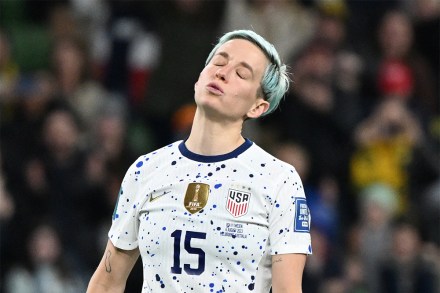
I’m loath to write about the current Fifa World Cup because criticising women’s football is textbook ‘misogyny’ – at least, that’s what Sadiq Khan thinks. The centrepiece of his recent ‘Have a word’ campaign is a video of young men discussing the women’s Euros, with viewers encouraged to press a button saying ‘Maaate’ when a line is crossed. The idea is to nip such behaviour in the bud before it escalates into violence. One particularly noxious youth describes the Euros as a ‘joke’, clearly marking him out as a potential rapist. She made a complete horlicks of her spot-kick, firing the ball over the crossbar But is that really evidence of ‘misogyny’?

What does a supercomputer say about QPR’s chances?

From our UK edition

The football season gets under way again on Saturday – or at least it does if your team isn’t in the Premier League, which starts a week later. My beloved Queens Park Rangers are off to Vicarage Road to take on Watford and I’ll be there with my three sons to cheer them on. We ‘did the double’ over the Hornets last season – the only team we beat home and away – so there’s a smidgen of hope. But there are also plenty of reasons to be pessimistic, and not just about the opening game. Last season we conceded 71 goals, the second worst defensive record in the league According to Opta, a British sports analytics company, QPR are going to finish dead last in the Championship.

Why Barbie deserves the backlash

From our UK edition

Being the CEO of a massive corporation isn’t easy. You’re expected to grow the company, increase profits and boost the share price – the traditional responsibilities of a top hat-wearing capitalist. But at the same time, you need to align your company with the ‘values’ of a hyper-liberal global elite, e.g. anti-racism, trans rights and net zero. Contrary to the rhetoric of business school professors and management consultants, these agendas don’t always complement each other, and too much emphasis on one risks alienating those who care about the other. Get it wrong and you can come a cropper, as Dame Alison Rose, the recently departed CEO of NatWest, has discovered.

I’m a holidaymaker… get me out of here!

From our UK edition

Reading about all the travel chaos, I began to regret my summer holiday plans. Wouldn’t it have been more sensible just to stay in Acton? But Caroline and I had arranged to go to Ibiza fora friend’s birthday party the weekend before last; then, after returning to London, we were due back in the Balearic Islands, this time with the kids. There was no turning back. The first thing to go wrong was that our British Airways flight to Ibiza from Heathrow was cancelled. Not that BA notified us. The first inkling I had that something had gone awry was when I tried to check in using the BA app the night before and it said that wouldn’t be possible.

In praise of Milan Kundera

From our UK edition

The Czech-born writer Milan Kundera has died, at the age of 94. Four years ago, Toby Young wrote this tribute to Kundera. I was surprised to learn that the novelist Milan Kundera celebrated his 90th birthday on Monday. I had no idea he was still alive. He has taken up residence in that old people’s home that many former luminaries of western culture now occupy — the one with the sign above the door saying ‘Forgotten, but not gone’. In Kundera’s case, his decline into obscurity is probably connected to the fall of the Berlin Wall. The Czech émigré was all the rage in the mid-1980s when he was a critic of his country’s brutal regime. Now that the Soviet Union and its satellite states are a distant memory, he seems less relevant.

I expected more from Caitlin Moran

From our UK edition

I first met Caitlin Moran at Julie Burchill’s flat in Bloomsbury. This was in the early 1990s and she was a precocious teenager who’d written a play and published a few pieces. Julie had asked her to write for the Modern Review, a magazine I co-owned with Julie and her then husband Cosmo Landesman, and Caitlin’s stuff was really good. After that, she became a kind of junior member of our gang and I remember liking her a great deal – she was warm and funny and didn’t seem remotely intimidated by older, more experienced journalists. It was obvious that she was going to have a brilliant career.

Why Europe riots

From our UK edition

36 min listen

This week: In the magazine we look at the recent protests in France. The Spectator's Douglas Murray argues that racism is not the problem but that a significant chunk of the unintegrated immigrant population is. He is joined by Dr Rakib Ehsan, author of Beyond Grievance: What the Left Gets Wrong about Ethnic Minorities, to investigate why Europe riots. (01:16) Also this week: Journalist Ivo Dawnay and The Spectator’s associate editor Toby Young discuss the plight of 'politically exposed persons' in the magazine this week. This is of course in light of the news that Nigel Farage has had his bank account closed, with many speculating he has been 'debanked' simply because of his political views and associations.

How do you solve a problem like debanking?

From our UK edition

As I sat down to write this column, an old friend let me know he’d just been ‘debanked’. That is, he’d received a letter from his high-street bank notifying him it was closing his accounts. ‘Following a review, we’ve made the decision that you will not be able to bank with us any longer,’ it said, not even bothering to put the word ‘difficult’ before ‘decision’. It contained no detail about this ‘review’ or why, on completing it, the bank had decided to close his accounts. The only thing he can think of is that he used to be a high-ranking member of the Brexit party. He was told he had until 27 August to make alternative arrangements.

Young’s First Law of free speech

From our UK edition

I’ve always been envious of journalists who give their names to ‘laws’, as in O’Sullivan’s First Law: ‘All organisations that are not actually right-wing will over time become left-wing.’ So I’m going to take a stab at articulating Young’s First Law and it is this: ‘The more progressive a country is when it comes to sex and gender, the more authoritarian it is when it comes to speech and language.’ Ireland is about to pass a new hate speech law that will be the most draconian in the EU The Republic of Ireland is a case in point. Until recently, Ireland was one of the most sexually conservative countries in Europe. Same-sex marriage wasn’t legalised until 2015 and abortion was illegal until 2018.

How should schools handle ‘furries’?

From our UK edition

Last weekend an audio recording emerged of a 13-year-old girl being called ‘despicable’ by her teacher at a school, run by a Church of England trust, in East Sussex for refusing to respect a classmate’s decision to identify as a cat. The teacher told her she would report her to a senior colleague and she would no longer be welcome at the school if she continued to express the view that ‘if you have a vagina you’re a girl and if you have a penis you’re a boy’.

Did the BBC silence lockdown sceptics?

From our UK edition

Did the BBC breach its own impartiality rules by keeping critics of the government’s pandemic response off the air during the first lockdown? I first made that accusation in 2020 in a witness statement I submitted to the High Court in an effort to challenge Ofcom’s ‘coronavirus guidance’, which I argued was a factor in the BBC’s one-sided coverage. The attempt failed, with Ofcom able to convince the court that its guidance only cautioned against broadcasting ‘harmful’ content. Part of my evidence, which I remember being slightly embarrassed to submit, was that my invitations to appear on the BBC had dwindled to almost nothing since I’d become a critic of lockdown policy.

I’ve been radicalised by Just Stop Oil

From our UK edition

Last month I went to Lord Frost’s superb lecture for the Global Warming Policy Foundation about the harm net zero will do to the British economy. He pointed out that the government is completely unrealistic about the economic cost of the policy, which former energy minister Chris Skidmore claimed last year could boost GDP by up to 2 per cent, thanks in part to cheaper household energy bills. (As Frost said: ‘Good luck with that.’) This is even more Pollyannaish than Labour’s energy review in 2003, which at least acknowledged that achieving a 60 per cent reduction in carbon emissions by 2050 would cost 2 per cent of GDP.