Toby Young

Toby Young

Toby Young is associate editor of The Spectator.

If level-headed Oxford graduates are voting Green, what hope is there?

From our UK edition

I’m disappointed that Ed Balls’s suggestion that the Office of Budget Responsibility should audit the parties’ manifestos was never taken up, not least because we will never know what Robert Chote thinks of the Green party’s claim that all its proposals are ‘fully costed’. Believe it or not, this includes the commitment to spend £45 billion on loft insulation in the next parliament. It’s quite something, the Greens’ manifesto. No doubt you’ll have already read about some of their more reasonable measures — such as the ‘complete ban on cages for hens and rabbits’ and the insistence that ‘UK taxpayers’ money is not used for bullfighting’.

Miliband vs Millwall

From our UK edition

I’ve been trying to think of a good football analogy to describe the battle between the two main parties as the general election approaches. One suggestion is the second leg of a Champions League game, with the Conservatives having won the first leg by one goal to nil. If we assume that the Tories are playing at home, that means Labour have to score two goals to win, whereas all the Tories have to do is not concede. Last week’s debate certainly felt like that, with Cameron playing a tight, defensive game and Miliband trying to score at every opportunity. The Conservative leader ended up winning on aggregate because the Labour leader failed to find the back of the net. But a Champions League match suggests two teams of real quality, which is where the analogy breaks down.

Ed Miliband couldn’t care less about education reform

From our UK edition

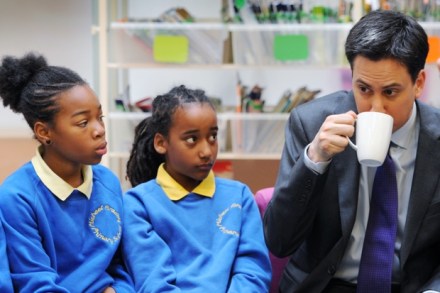
The editor of The Spectator isn’t the only person thinking about the prospect of Ed Miliband becoming the next Prime Minister. Eighty educationalists have signed a letter in the Daily Mail today warning about the danger of a future Labour government curtailing academy freedoms. They’re concerned about Ed Miliband’s pledge that Labour would reintroduce 'a proper local authority framework for all schools' – which sounds a lot like placing all taxpayer-funded schools back under local authority control. The letter-writers flag up two freedoms they are particularly concerned about: the freedom that academies and free schools have to set their own pay and conditions and the freedom they have over the curriculum. They’re right to be worried.

Lefty myths about inequality

From our UK edition

As a Tory, I’ve been thinking a lot about inequality recently. Has it really increased in the past five years? Or is that just scaremongering on the part of the left? By most measures, there’s not much evidence that the United Kingdom became more unequal in the last parliament. Take the UK’s ‘Gini co-efficient’, which measures income inequality. In 2009/10, it was higher than it was at any point during the subsequent three years. Indeed, in 2011/12 it fell to its lowest level since 1986. Data isn’t available for the last two years, but there’s no reason to think it has exceeded what it was when Labour left office.

How (and why) we lie to ourselves about opinion polls

From our UK edition

A strange ritual takes place on Twitter most evenings at around 10.30 p.m. Hundreds of political anoraks start tweeting the results of the YouGov daily tracker poll due to be published in the following day’s Sun. Some of them are neutrals, but the majority are politically aligned and will only tweet those results that show their party in front. I often wonder what the point of this is, even though I’m guilty of it myself. It’s not as if anyone is going to see the tweet and say, ‘Ooh, I wasn’t going to vote Conservative, but now that YouGov has them two points ahead I’ve changed my mind.’ I can think of only two sensible reasons for doing this, both quite weak. The first is it has a mildly demoralising effect on your opponents.

I’m working to make education fairer. But I’m still not sure what ‘fairer’ means

From our UK edition

Civitas has just published an interesting book called The Ins and Outs of Selective Secondary Schools. Edited by Anastasia de Waal, it’s a collection of essays by the usual suspects in the never-ending argument about grammar schools. De Waal points out that the two sides have more in common than you’d think. In particular, they share a common goal, which is to sever the link between a child’s socio-economic status and attainment. In 2009, according to the OECD, the variance in the scores of British children in the Pisa international tests in maths, reading and science that could be explained by their backgrounds was 13.8 per cent. By this measure, the best-performing region in the world is Macau (2 per cent) and the worst is Peru (27.5 per cent).

Could my son Charlie become a Premier League footballer?

From our UK edition

My son Charlie was scouted by QPR last week. I say ‘scouted’, but that’s not quite accurate since he’s only six. Rather, a man claiming to be a member of the club’s coaching staff suggested I bring him along to the QPR pre-academy in Willesden. At first, I was suspicious. The man in question teaches football at the local leisure centre and I was worried that this ‘pre-academy’ would turn out to be an expensive, fee-paying affair with no official links to QPR. When the man first introduced the idea, I had to ask if he’d got the right boy. Charlie’s quite small for his age and not exactly lion-hearted.

My plan for Question Time: mug up and fail anyway

From our UK edition

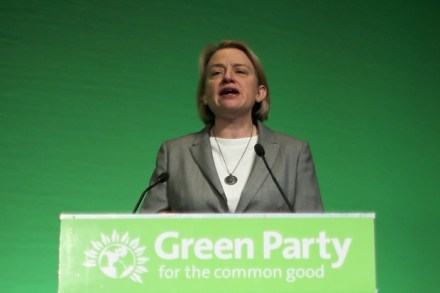
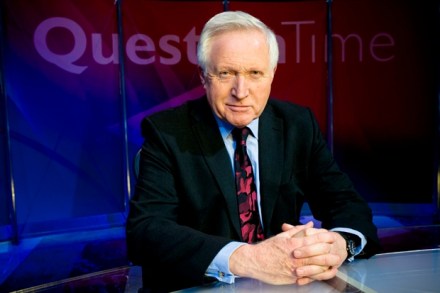
I was invited on Question Time this week, which gave me a few sleepless nights. Natalie Bennett’s disastrous interview on LBC was a reminder that appearing on a current affairs programme in this febrile pre-election environment can be a bit of a minefield. Admittedly, I’m not the leader of a political party but that’s no guarantee I won’t make a fool of myself — a moment that will be preserved for ever on YouTube. There are no opportunities for glory on Question Time, but plenty for embarrassment. The most you can hope for is to get through the experience in one piece. By now you may well have seen what happened — but I am writing this on Tuesday evening, full of nerves. My biggest fear is that someone might ask a ‘funny’ question.

If you think Britain’s corrupt now, watch what happens if we ban second jobs for MPs

From our UK edition

Last year, I had an exchange with Hugo Rifkind on Twitter in which I bet him dinner at Clarke’s that his father would stand down before the next election. My reasoning was that, at the age of 68, his dad wouldn’t want to serve another five years in the Commons and would be happier in the Lords. I hadn’t anticipated he would depart as a result of a cash-for-access scandal. I’ve always rather fancied running in Kensington myself. Rifkind has a majority of 8,616, which makes it a safe seat, and it’s only a 15-minute cycle ride from my house. But I’m not going to throw my hat into the ring because I still have numerous responsibilities in connection with the three schools I’ve helped set up.

I don’t know why I’m against tax avoidance (and I bet you don’t either)

From our UK edition

On the face of it, the moral case against tax avoidance seems pretty straightforward. If you’re a UK taxpayer and benefit from public goods and services, then you should pay your fair share of tax. If you’re paying less than that, then you’re a free rider. You’re breaking the social contract. But what do we mean by ‘fair share’? The standard defence of tax avoidance is that it’s perfectly legal — if it wasn’t, it would be tax evasion — and the social contract only obliges people to obey the law, not to pay more tax than they have to. To maintain that people are morally obliged to pay an additional amount of tax, over and above what they’re legally required to pay, is a tricky position to defend.

Immigration, not money, will improve Scotland’s most deprived schools

From our UK edition

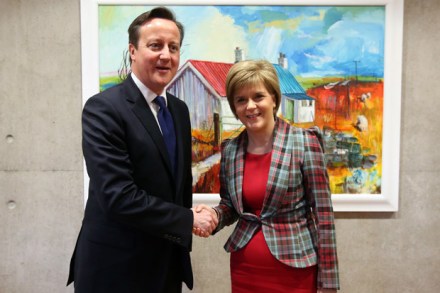
I suppose we should be thankful that Nicola Sturgeon has acknowledged there’s a problem with Scotland’s public education system, even if she’s hit upon the wrong solution. Earlier this week, the First Minister announced that the Scottish -government would be trying out its version of ‘the London challenge’, a programme carried out by the last government, to address the chronic underachievement of Scotland’s most deprived children. In the past, the SNP has deflected criticisms of its education record by pointing out that Scottish 15-year-olds did marginally better than their English counterparts in the 2012 Pisa tests. But the difference between the two groups is minuscule and both have declined dramatically since Pisa first started testing in 2000.

Like Arthur Daley playing Garry Kasparov: why I won’t miss Harry Redknapp

From our UK edition

I can’t say I’m surprised by the departure of Harry Redknapp. Since I started supporting Queens Park Rangers in 2008 we’ve gone through seven managers — 13 if you count the caretakers. Indeed, it’s a miracle he’s lasted this long. The club was relegated during his first term in charge and we only returned to the Premier League thanks to a last-minute goal by Bobby Zamora in the play-off final against Derby at the end of last season. I was at that match and Derby were easily the better side. If Harry had been sensible, he would have announced his retirement after that game and gone out on a high. But what Enoch Powell said of politicians is also true of football managers: their careers always end in failure.

Like Arthur Daley playing Garry Kasparov: why I won’t miss Harry Redknapp | 4 February 2015

From our UK edition

I can’t say I’m surprised by the departure of Harry Redknapp. Since I started supporting Queens Park Rangers in 2008 we’ve gone through seven managers — 13 if you count the caretakers. Indeed, it’s a miracle he’s lasted this long. The club was relegated during his first term in charge and we only returned to the Premier League thanks to a last-minute goal by Bobby Zamora in the play-off final against Derby at the end of last season. I was at that match and Derby were easily the better side. If Harry had been sensible, he would have announced his retirement after that game and gone out on a high. But what Enoch Powell said of politicians is also true of football managers: their careers always end in failure.

Come on, Tristram Hunt, if you think you’re hard enough

From our UK edition

For a brief moment earlier this week, I thought education might become an issue in the general election campaign. The Commons Education Select Committee’s lukewarm report on the government’s academy and free school programmes was leaked to the Guardian on Monday and the accompanying story claimed that Labour hoped to open a ‘second front’ following the ‘success’ of its attacks over the NHS. ‘It is undeniable that the last Labour government dramatically improved school standards in secondary education,’ said Tristram Hunt, the shadow education secretary. ‘But the progress that we made… is being undone by a government that is obsessed with market ideology in education.

Page 3 was harmless. Here’s why I’ll miss it

From our UK edition

‘I for one would be sorry to see them go,’ wrote George Orwell. ‘They are a sort of saturnalia, a harmless rebellion against virtue.’ He was writing about the seaside postcards of Donald McGill in 1941, but his defence of them and their ‘enthusiastic indecency’ could equally well apply to Page 3. Orwell’s argument was that McGill’s caricatures of women, ‘with breasts or buttocks grossly over-emphasised’, gave expression to ‘the Sancho Panza view of life’. There’s a fat little squire in all of us, he thought, although few of us are brave enough to admit it. ‘He is the unofficial self, the voice of the belly protesting against the soul,’ he wrote.

Was it us wot won Page 3 back?

From our UK edition

The Sun was being widely credited last night with having pulled off a brilliant bit of trolling, first appearing to kill off Page 3, then resuscitating it a week later. If the paper’s intention was to make its feminist critics look ridiculous, it succeeded. The triumphalist reaction of the anti-Page 3 campaigners, patting themselves on the back for having achieved a tremendous victory, now looks very silly indeed. A good example is this tweet by the Labour Party, quoting its glorious deputy leader: https://twitter.com/UKLabour/status/557590384998506496 But was that the Sun’s intention? I’m not so sure. One of the reasons the Sun hasn’t dropped Page 3 before now is the worry that it would lose some readers to the Daily Star as a result.

Je suis Page 3

From our UK edition

Here is a preview of Toby Young's Status Anxiety column from this week's Spectator, out tomorrow... ‘I for one would be sorry to see them go,’ wrote George Orwell. ‘They are a sort of saturnalia, a harmless rebellion against virtue.’ He was writing about the seaside postcards of Donald McGill in 1941, but his defence of them and their ‘enthusiastic indecency’ could equally well apply to Page 3. Orwell’s argument was that McGill’s caricatures of women, ‘with breasts or buttocks grossly over-emphasised’, gave expression to ‘the Sancho Panza view of life’. There’s a fat little squire in all of us, he thought, although few of us are brave enough to admit it.

Archbishop John Sentamu is wrong about free schools on every count

From our UK edition

John Sentamu, the Archbishop of York, has never been shy about courting publicity. He frequently churns out controversial opinion pieces for the red-tops and, just in case they don’t receive enough attention, he’s in the habit of re-issuing them as 'press releases'. (You can see a list of the most recent here). He has opinions on almost everything, from same-sex marriage (against) to William and Kate’s decision to live together before their wedding (in favour). But with his latest outburst about free schools, the tabloid bishop has jumped the shark. Free schools, according to Sentamu, only benefit the well-off and divert millions of pounds from more deserving neighbouring state schools.

David Sedaris was right: litter is a class issue

From our UK edition

David Sedaris is my new hero. Not because he’s such a funny writer, but because he’s obsessed with litter. He told a group of MPs last week that he spends up to five hours a day picking up fast food containers and fag ends around his home in Pulborough, west Sussex. Thanks to his unstinting labours, he’s become a local hero and has had a rubbish lorry named after him. I’ve some way to go before I qualify for such an honour, but I do my bit. For instance, on Monday I spent an hour clearing the litter from the flowerbed outside the West London Free School in Hammersmith. This was rubbish left by passers-by, not the pupils. Sedaris said what infuriated him the most were crisp packets tied into a knot and stuffed into soft drink cans, but I can trump that.

The misguided bid to turn Alan Turing into an Asperger’s martyr

From our UK edition

When I first heard the story of Alan Turing in my late teens I made what must be quite a common mistake. I concluded that his conviction in 1952 for committing a homosexual act was indefensible in light of his immense contribution to the war effort. The fact that he was forced to undergo a course of hormonal ‘therapy’ which led to his suicide two years later underlined just how badly he was treated. The British authorities should have been erecting statues to him, not hounding him to his death because he was attracted to other men. The reason this was a mistake is because I’d made a connection between Turing’s war record and the injustice of persecuting him for being homosexual, when it would have been equally wrong if he’d been a conscientious objector.