Toby Young

Toby Young

Toby Young is associate editor of The Spectator.

The Public Accounts Committee report is pure Labour propaganda

From our UK edition

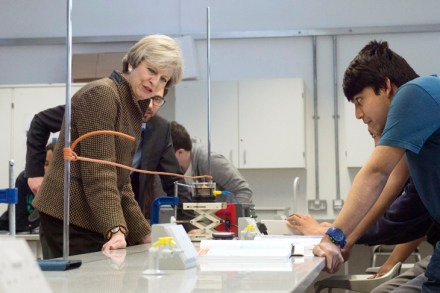
On the Today programme this morning I debated Meg Hillier, the Labour chair of the Public Accounts Committee which has just issued a damning report on free schools. The report is wrong in almost every particular. It says the free schools programme offers 'poor value for money', but earlier this year the National Audit Office pointed out that free schools cost a third less than new schools built under Labour’s Building Schools for the Future programme. The report says many free schools are in 'inadequate premises' and 'the learning environment' is 'less effective'. In fact, 29pc of those inspected by Ofsted so far have been ranked ‘Outstanding’ compared to 21pc of all schools, and their exam results are top of the class.

The real victims of this snap election? The bankers’ wives

From our UK edition

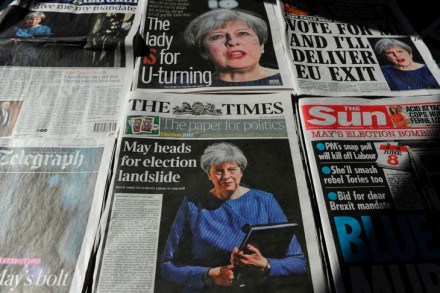
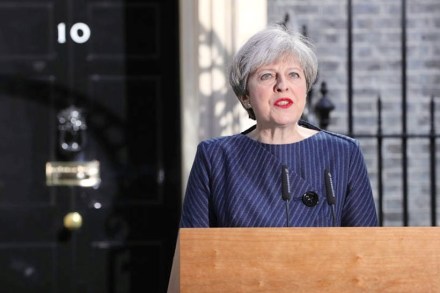
The people I feel most sorry for in the wake of Theresa May’s shock announcement are not moderate Labour MPs, nor even the pollsters, who really will be in trouble if they get another election wrong. No, it’s the bankers’ wives of west London. If the EU is going to be the No.1 issue in the campaign, and the Tories are standing on a pro-Brexit platform, how will the poor dears vote? On the one hand, they were very, very angry about the outcome of the EU referendum and, even today, they’re not above buttonholing leavers at cocktail parties and giving them the hairdryer treatment. They regard David Cameron as criminally negligent —‘How could he let this happen?’ — and Theresa May as a ‘turncoat’.

This snap election’s real victims? Bankers’ wives

From our UK edition

The people I feel most sorry for in the wake of Theresa May’s shock announcement are not moderate Labour MPs, nor even the pollsters, who really will be in trouble if they get another election wrong. No, it’s the bankers’ wives of west London. If the EU is going to be the No.1 issue in the campaign, and the Tories are standing on a pro-Brexit platform, how will the poor dears vote? On the one hand, they were very, very angry about the outcome of the EU referendum and, even today, they’re not above buttonholing leavers at cocktail parties and giving them the hairdryer treatment. They regard David Cameron as criminally negligent —‘How could he let this happen?’ — and Theresa May as a ‘turncoat’.

Why Parcs life is not for me

From our UK edition

Against my better judgment, I agreed to go to Center Parcs for an Easter weekend break. We chose the one in Sherwood Forest, not because of any sentimental attachment to Robin Hood, but because it was the most inexpensive. Even then, it was hardly cheap: £804 for three nights and that didn’t include breakfast. First, the good news. I was sceptical about the website’s promise of free Wi-Fi, imaging it would be similar to the ‘free Wi-Fi’ on Virgin Trains, but it actually worked. The connection speed was impressive, as good as my set-up at home, and it didn’t matter where you were in the resort, as far as I could tell. My guess is they’ve stuffed routers into every nook and cranny.

Meritocracy isn’t fair

From our UK edition

I’ve just made a programme for Radio 4 about the populist revolts that swept Britain and America last year. Were they predicted in a book written by my father, Michael Young, almost 60 years ago? I’m thinking of The Rise of the Meritocracy, a dystopian satire that imagines a 21st-century Britain governed by a highly educated technocratic elite. Eventually, the intellectual and moral hubris of these Masters of the Universe is too much for ordinary people and they’re overthrown in a bloody revolution in 2034. It often surprises people to learn that my father’s critique of meritocracy was underpinned by his belief that human differences are rooted in genetics, a view many on the left associate with neo-liberal economics and the libertarian right.

The bawdy and beautiful game

From our UK edition

I can barely contain my excitement. The Easter break is nearly upon us and I will soon be heading off to an exotic locale where I can cast off my work-soiled garments and rediscover earthly pleasures. I will spend my time eating, drinking and singing, sure in the knowledge that no one will judge me because I’ll be surrounded by members of my elite metropolitan tribe. I’m talking, of course, about Pride Park, home of Derby County FC, where I’ll be travelling to an away game on Friday with 1,000 fellow QPR fans. This fixture clashes with a private party being thrown for my friend Barry Isaacson, once the most powerful British executive in Hollywood. Not so long ago I wouldn’t have missed that for the world.

Should conservatives fear new working-class support? Some clearly do

From our UK edition

In America, an argument has broken out among journalists, writers and intellectuals in the aftermath of the presidential election about whether Trump’s white working-class voters were decent, upright citizens let down by the supercilious liberal establishment or whether they were, in Hilary Clinton’s words, a racist, sexist, homophobic basket of deplorables. The curious thing about this debate is that the defenders of Trump’s supporters are, for the most part, left--wingers, like the Berkeley sociologist Arlie Russell Hochschild, who spent five years chronicling a depressed blue-collar community in Louisiana, while those who disparage them as ‘in thrall to a vicious, selfish culture whose main products are misery and used heroin needles’ are conservatives.

The liberals and the deplorables

From our UK edition

In America, an argument has broken out among journalists, writers and intellectuals in the aftermath of the presidential election about whether Trump’s white working-class voters were decent, upright citizens let down by the supercilious liberal establishment or whether they were, in Hilary Clinton’s words, a racist, sexist, homophobic basket of deplorables. The curious thing about this debate is that the defenders of Trump’s supporters are, for the most part, left--wingers, like the Berkeley sociologist Arlie Russell Hochschild, who spent five years chronicling a depressed blue-collar community in Louisiana, while those who disparage them as ‘in thrall to a vicious, selfish culture whose main products are misery and used heroin needles’ are conservatives.

The weird ways in which people avoid cleaning up after their dogs

From our UK edition

One of the most important debates in Britain’s history took place in Westminster earlier this week. The issue was absolutely critical to our future and will affect not just the current inhabitants of these islands, but future generations too. I’m talking, of course, about the discussion in Westminster Hall on Tuesday night about how best to dispose of dog waste. Should we place it in little black plastic bags or use the ‘stick and flick’ method, i.e. find a stick and flick it into the undergrowth? At this point, I would love to update readers about the fate of Leo, the Young family’s Hungarian vizsla, but I can’t for two reasons. The first is that my children have forbidden it.

Victory in sight for the free schools revolution

From our UK edition

I’m not surprised the Chancellor allocated more money for the free schools policy in the Budget. It’s not an exaggeration to say it’s the most successful education policy of the last 25 years. To begin with, free schools have proved to be a cost-effective way of meeting the need for additional places. This was underlined in the National Audit Office’s recent report on school capital, which said that on a like-for-like basis, they cost 29 per cent less than new schools built under Labour’s ‘Building Schools for the Future’ programme. Given that the Department for Education has estimated that we will need 420,000 additional places between 2016 and 2021, it makes sense for as many of these as possible to be in new free schools.

It’s never good news when I trend on Twitter. The Oscars was no exception

From our UK edition

When Kingsley Amis won the Booker prize for The Old Devils in 1986, he said that he had previously thought of the Booker as a rather trivial, showbizzy sort of caper, but now considered it a very serious, reliable indication of literary merit. It was a joke, evidently. Indeed, when he said it during his acceptance speech he grinned from ear to ear, just to make it crystal clear that he was being ironic. But it didn’t do any good. In a BBC round-up of the events of the year, the presenter said that Amis had won the distinguished literary prize in spite of having previously disparaged it. This was portrayed as a brilliant bit of sleuthing on the presenter’s part, as if his own dogged research had exposed Amis’s ghastly hypocrisy.

Why didn’t I listen to the Old Devil?

From our UK edition

When Kingsley Amis won the Booker prize for The Old Devils in 1986, he said that he had previously thought of the Booker as a rather trivial, showbizzy sort of caper, but now considered it a very serious, reliable indication of literary merit. It was a joke, evidently. Indeed, when he said it during his acceptance speech he grinned from ear to ear, just to make it crystal clear that he was being ironic. But it didn’t do any good. In a BBC round-up of the events of the year, the presenter said that Amis had won the distinguished literary prize in spite of having previously disparaged it. This was portrayed as a brilliant bit of sleuthing on the presenter’s part, as if his own dogged research had exposed Amis’s ghastly hypocrisy.

The most politically correct Oscars ever?

From our UK edition

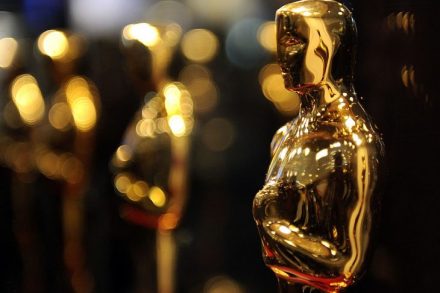
Last year, the Oscars came in for quite a bit of criticism within the American film community. The problem wasn’t that the nominees were too worthy, or the speeches too long. Nor was it that some of the best films of 2015 – Star Wars: The Force Awakens, The Martian, Steve Jobs – were snubbed. Nor did anyone complain that the picture that received the most nominations – The Revenant – was a three-hour snorefest starring the finger-wagging environmentalist Leo DiCaprio. No, the reason for all the grumbling was that the 88th Academy Awards weren’t politically correct enough.

Will my inner party animal roar back to life?

From our UK edition

According to a front-page story in the Times earlier this week, your personality does change over the course of your lifetime. A study carried out by Edinburgh University found that the personalities of a group of people in their seventies had changed significantly since they were schoolchildren in the 1950s. Traits like perseverance, self-confidence and originality changed ‘beyond recognition’, according to the study’s leader Dr Mathew Harris. He was surprised, because the conventional wisdom among social psychologists is that these characteristics remain stable over a person’s lifetime. At first glance, my own personality would appear to bear out these findings. Between the ages of 14 and 40 I was something of a hell--raiser.

Can I bear to sack the digital babysitter?

From our UK edition

I was astonished to discover in conversation with another dad last week that he and his wife intended to introduce a screen ban over half term. Not limiting their children to something reasonable like two hours a day. But a blanket ban. How on earth will they cope — and by ‘they’ I mean him and his wife, not their two kids? It’s not as if they’re going on a family cycling holiday on the Dalmatian Coast. No, they’ll be spending this week at home in Acton. The poor buggers will be forced to play Monopoly Empire from first thing in the morning till last thing at night. When I hear talk of screen bans, it makes me want to set up a National Association for the Prevention of Cruelty to Adults. Maybe it’s worse if you’ve got four kids.

GCSEs and the arts of lobbying

From our UK edition

For the past six years or so a variety of arts organisations have been campaigning against the English Baccalaureate, or the ‘EBacc’, as it’s known. To meet this standard, schoolchildren have to get grade C or above in seven GCSEs (Eng lang, Eng lit, maths, two sciences, a humanity and a foreign language) and, according to the campaigners, this means students have been turning away from arts GCSE subjects such as music, drama and dance. They claim that since the EBacc’s introduction by Michael Gove, arts education has been decimated. Now, I have some sympathy for the lobby groups making this argument.

Rebel with a dodgy cause

From our UK edition

I feel conflicted about Jon Platt, the parent at the centre of the court case about unauthorised school absences. On the one hand, there’s much to admire. When he was fined £120 by Isle of Wight Council for taking his daughter on a trip to Disneyland during term time, he decided to fight back. He got the decision overturned in magistrates’ court, the council appealed to the High Court, the lower court’s decision was upheld, and the council then appealed to the Supreme Court. Yet in spite of this gruelling legal process, Mr Platt hasn’t backed down. When interviewed on television, he seems genuinely angry about being told when he can and can’t take his children on holiday.

Would I still hate actors’ rants if they all agreed with me?

From our UK edition

I feel a bit sorry for Piers Morgan. On Tuesday, Ewan McGregor was due to appear on the sofa with Piers on ITV’s Good Morning to talk about the Trainspotting sequel, but he failed to turn up. Later, the actor explained on Twitter that it was due to the journalist’s remarks about the women’s marches that took place last weekend, in which he described some of the participants as ‘rabid feminists’ and suggested he should organise a men’s march in response. I had a similar experience about five years ago when the actor Matthew Macfadyen pulled out of an interview he was due to do with me.

A myth that keeps growing and growing

From our UK edition

I had lunch recently with an assistant head of a leading independent school and he told me about their ‘growth mindset’ work. He was excited about this and he’s by no means exceptional. Eton, Wellington and Stowe have all enthusiastically embraced it, as have thousands of state schools. Highgate Wood, a comprehensive in north London, says on its website that ‘growth mindset is the cornerstone of our learning ethos’. I hesitate to call growth mindset a ‘fad’ because that implies it lacks the imprimatur of academic respectability when the opposite is true. The term was coined by Carol Dweck, a professor of psychology at Stanford, who made a startling discovery in the course of researching children’s cognitive performance in the 1970s.

Why we need more universities

From our UK edition

In 1961, shortly after getting a job as a lecturer at Cambridge, my father had an idea. The faculty buildings, he discovered, were largely unused for six months of the year. The colleges, too, were empty. Why not create two Cambridges, one for term time and one for the holidays? Unlike the Cambridge of dreaming spires and glittering prizes, the second would be for ordinary people who’d missed out on the chance of a university education — labourers, tradesmen, clerks, housewives. It wouldn’t be a place of privilege and over-indulgence, but of hard-working people eager to soak up knowledge. And instead of propping up the English class system, it would turn it on its head. When he presented this proposal to the university authorities he was met with near universal derision.