Toby Young

Toby Young

Toby Young is associate editor of The Spectator.

I’m recovering – but I glimpsed the coronavirus cliff edge

From our UK edition

So I’ve had the virus. Or rather, I think I have. Ordinary mortals can no longer get tested by the NHS unless they’re admitted to hospital and I was nowhere near that point. I self-diagnosed, based on having some of the symptoms, and took to my bed. Needless to say, Caroline is convinced the whole thing was a sham to avoid doing the housework, which has increased exponentially during lockdown thanks to four kids and no cleaner. Now that I’m out of bed she’s exacting sweet revenge. I first developed a temperature on Tuesday 24 March, along with chills, a headache, a blocked-up nose and fatigue. A tickle at the back of my throat, but no persistent dry cough, so perhaps it was just seasonal influenza.
Britain needs Boris, the extraordinary man I’ve known for 35 years

From our UK edition

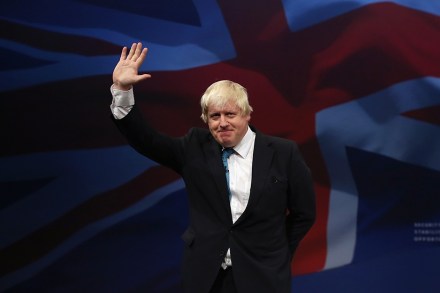
As I write, Boris Johnson is in intensive care at St Thomas’ Hospital, battling with coronavirus. For someone with such an unwavering belief in his own destiny, this must be profoundly difficult. He is a man who’s beaten the odds over and over: to become mayor of London in a Labour city, to lead the Leave campaign to victory in the teeth of overwhelming opposition, to become prime minister in spite of all his personal baggage, and then to win the largest Conservative majority since 1987. Here is a man who cannot stare into the jaws of defeat without grabbing hold of victory with both hands. Yet the odds of him triumphing in this case keep narrowing.

Dissent over coronavirus research isn’t dangerous – but stifling debate is

From our UK edition

One of the paradoxes of the coronavirus crisis is that the need for public scrutiny of government policy has never been greater, but there’s less tolerance for dissent than usual. I’m thinking in particular of the work of Professor Neil Ferguson and his team at Imperial College London, which has done so much to inform the government’s decision-making. Remember, it was Professor Ferguson’s prediction last month that an extra 250,000 would die if the government didn’t impose extreme social distancing measures that led to the lockdown last week. Anyone questioning Professor Ferguson’s analysis is likely to be met with a tsunami of opposition.

How Oxford taught the no-platformers a lesson

From our UK edition

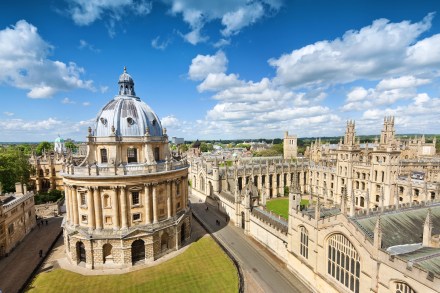
Three weeks ago Amber Rudd travelled to Christ Church, Oxford, to speak to students about her experiences of being a female politician. She was there at the invitation of the UNWomen Oxford UK society, which had organised a number of events in the run-up to International Women’s Day on 8 March. But half an hour before she was due to appear, Rudd was told the event had been cancelled. Nothing to do with coronavirus, which had not yet swept the country. Rather, it was because a number of students had protested about the ex-Conservative MP being allowed to speak. Rudd had been no-platformed. The society published an apology on its Facebook page, but not to the former home secretary.

Quarantine with our new puppy will send me barking

From our UK edition

When the news leaked at the weekend that the government was considering telling those aged 70 and over to self-quarantine for 12 weeks to protect them from catching coronavirus, I began to worry about my elderly neighbours. How will they get essential supplies, particularly if the supermarkets’ home delivery services get backed up? What if they’re not on Netflix and have gone through all their box sets? Who will walk their dogs? It was time to summon up that famous Dunkirk spirit and create a network of volunteers willing to muck in until the crisis is over. A bit of googling revealed I was far from alone in thinking this. Turns out, neighbourhood groups across the country have set up WhatsApp groups to look after vulnerable people during the epidemic.

Cartoonists have a right to free speech

From our UK edition

I’m no fan of Steve Bell, the Guardian cartoonist. I can’t say I’ve ever laughed at one of his squibs, which are witless and crude. Some would call him ‘fearless’, but he just seems cruel and over the top to me. When the Guardian finally puts him out to grass, which surely won’t be long, he will disappear into the inkwell of history. But having said all that, I would defend to the death his right to produce his tasteless cartoons, as well as the right of his newspaper to publish them. Last week, the Guardian printed a Steve Bell caricature of Priti Patel sitting next to Boris in the House of Commons that was widely condemned as ‘racist’. The reason?

My night in A&E left me worried about the NHS’s coronavirus response

From our UK edition

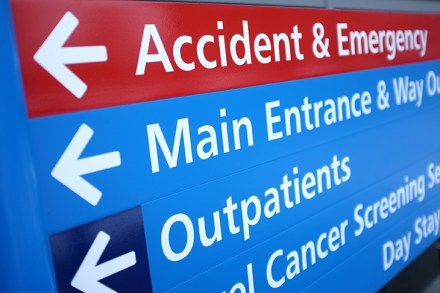
I wish I shared the Prime Minister’s confidence about the ability of the NHS to cope with coronavirus. ‘I have no doubt that with the help of the NHS and its incomparable staff, this country will get through it – and beat it,’ he said on Sunday. Not if my experience in A&E last week is anything to go by. I wasn’t keen to visit A&E in the midst of the current crisis, obviously, and had it been my own health I was worried about I would have stayed in bed. But it was Sasha’s, my 16-year-old daughter. She was pushed down some stairs at a party (not deliberately) and one of her fake fingernails got bent back, ripping her actual nail off its nail bed. She was complaining about the pain and it looked infected so I called 111 and asked what to do.

Why the Free Speech Union is taking on an Oxford college

From our UK edition

The Free Speech Union has submitted a letter of complaint to the Rector of Exeter College after the Oxford history professor Selina Todd was barred from addressing a conference at the college on Saturday. Todd was stopped from speaking about the women's liberation movement at an event that she had helped organise after trans activists complained about some of her views.  The Rector, Professor Sir Rick Trainor, has acknowledged the letter and said the matter will be investigated under the College’s complaints procedure.

How far should we go to defend free speech?

From our UK edition

This week sees the official launch of the Free Speech Union — an organisation that stands up for the speech rights of its members. It’s my baby, but a number of people have come on board as directors, including Douglas Murray and Professor Nigel Biggar. I’ve also had a lot of help behind the scenes from people who got in touch after reading about it in this column. I was on the Today programme on Monday to talk about it and have done a number of interviews since. By the time you read this, I’ll be recovering from the launch party, scheduled for Wednesday night. So far, it’s going pretty well.

Ganging up on Israel

This article is in The Spectator’s March 2020 US edition. Subscribe here. At the end of January, the owner of Hull Kingston Rovers — an English rugby club that plays in the multinational Super League — wrote to the Catalans Dragons, a French club in the same competition. He explained that he would sue for damages if Hull experienced any financial loss as a result of the Dragons’ decision to sign the Australian player Israel Folau: ‘For example, if a title sponsor withdraws, or external investment is not secured, or quantifiable reputational damage is caused to the brand of Super League and its members.’ According to one source, ‘nearly all’ the Super League clubs felt the same way.

israel folau

Here comes Bloomberg

From our UK edition

39 min listen

This week, has Mike Bloomberg blown his presidential hopes with a disastrous TV debate (00:50)? Plus, has the BBC really gone downhill (12:05)? And last, Toby Young reveals all about his first stand up comedy gig (26:30).

Why on earth did I volunteer to do stand-up?

From our UK edition

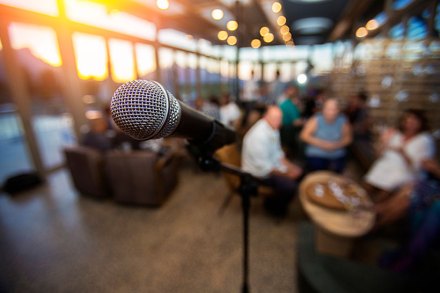
It was on my ‘bucket list’, but that doesn’t mean it was a sensible thing to do. Climbing Mount Kilimanjaro is something I’d like to do before I die as well, but at the age of 56 and with the lung capacity of a broken windsock I probably shouldn’t attempt it. In this particular case, though, all I was risking was public humiliation and I know from experience — lots and lots of experience — that I can survive that. So I decided to do it. I would try my hand at stand-up comedy. This particular story begins last year at the Backyard Comedy Club in Bethnal Green.

Even the Oscars after-parties have lost their shine

From our UK edition

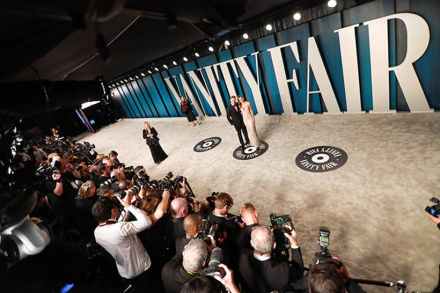
Reading about the Oscars this week, I couldn’t help thinking back to a time when they actually meant something. When I lived in America in the mid-1990s, the Academy Awards were described as ‘the gay Super Bowl’ which, although it sounded flippant, acknowledged their cultural significance. And judging from the number of people who watched them, the Oscars were a big deal. In 1998, the year Titanic won Best Picture, 55 million Americans tuned in. This year, the Oscars attracted an average of 23.6 million viewers, an all-time low. Not so much the Super Bowl as Bristol Rovers vs Southend United on a rainy Tuesday night. The parabolic decline of the Vanity Fair Oscars party makes for a good case study in what has gone wrong.

Labour won’t win voters back by denigrating Britain’s past

From our UK edition

They never learn, do they? Lisa Nandy, the dark horse candidate in the Labour leadership race, has demanded the word ‘empire’ be expunged from OBE honours and replaced with ‘excellence’ because the reference to Britain’s imperial past offends people from black, Asian and minority ethnic backgrounds (BAME). This would mean its full name would become the Most Excellent Order of British Excellence. ‘The self-confident, empowered country I will lead will be one that is different,’ Nandy announced at a hustings in Bristol. ‘Where people like Benjamin Zephaniah can accept the Order of British Excellence, not reject the Order of the British Empire. That celebrates those who built us, not seeks to alienate them.

Climate doomsayers keep putting sell-by dates on their credibility

From our UK edition

I was slightly surprised when Greta Thunberg announced at Davos that we had eight years left to save the planet. As long as that? Admittedly, that’s four years less than Alexandria Ocasio-Cortez, who put it at 12, although, come to think of it, that was last January, so presumably she now thinks we’ve got 11 years left. But some doomsayers have been much less optimistic. According to Peter Wadhams, a Cambridge professor interviewed in the Guardian in 2013, Arctic ice would disappear by 2015 if we didn’t mend our ways, while Gordon Brown announced in 2009 that we had just 50 days to save the Earth. Then again, playing the long game can also catch up with you.

George Orwell would have been a Brexiteer

From our UK edition

I’ve been reading a new biography of George Orwell that’s been published to coincide with the 70th anniversary of his death. Many books have been written about him, including at least six biographies, so there isn’t much new to say. Instead, author Richard Bradford focuses on what Orwell would have thought about the contemporary world and which aspects of it he would have disliked. Some of the items on Bradford’s list are predictable: China’s surveillance state, Donald Trump’s ‘-alternative facts’, Islamo-fascism. But the thing that would have really got Orwell’s goat, apparently, is our departure from the EU.

So you’ve been canceled. Here’s how to fight back

In April 2017, a group of students at Dartmouth College met with Dr David Bucci to complain about sexual harassment in the department of psychological and brain sciences that he chaired. The allegations didn’t sound particularly grave — none of the students complained of rape, for instance — but Dr Bucci flagged it up with the Title IX office even so. It was that office’s responsibility to follow up sexual harassment complaints and it duly did, suspending three professors and mounting several investigations. You can imagine Dr Bucci’s surprise, therefore, when seven female students named him in a lawsuit they filed against Dartmouth 19 months later, accusing him of ignoring the original complaint.

canceled cancel culture

The delusion of the born-again Brexiteers

From our UK edition

As 31 January looms, I’ve been thinking about how to bring the country back together again after we’ve left the EU. How can those who’ve spent the past three-and-a-half years fighting Brexit tooth and nail be persuaded to accept Britain’s new status? Bear in mind that many of them occupy highly influential positions — as Supreme Court judges, for instance. The last thing we want is for them to sabotage our post-Brexit future in an attempt to prove they were right all along. However, I had an encounter at a Christmas party with Lionel Barber, the outgoing editor of the Financial Times, that made me think a Truth and Reconciliation Commission may not be necessary.

2019 was not a good year for freedom of speech

This article is in The Spectator’s January 2020 US edition. Subscribe here. ‘Crisis? What crisis?’ That’s often the response of complacent academics when people like me draw attention to the erosion of free speech on campus. For instance, Lee C. Bollinger, the president of Columbia University, wrote an essay for the Atlantic last June entitled ‘Free Speech on Campus is Doing Just Fine, Thank You.’ But is everything rosy in the groves of academe? I thought I’d take this opportunity to look back on the year gone by and see if 2019 was a good or bad one for intellectual freedom in American higher education.

freedom

I’ve found the perfect family film (eventually)

From our UK edition

As a member of Bafta, I get sent about 75 ‘screeners’ during the awards season, which is always a treat at the end of the year. I was particularly excited about it this time because of the makeshift home cinema I’ve set up in our playroom. I had fantasies of sitting in there with Caroline and the four kids, munching popcorn as we worked our way through the Bafta hopefuls. However, getting everyone to agree on a film to watch is always tricky in the Young household. On Christmas Eve, my recommendation was a French animated feature called I Lost My Body, which charts the adventures of a hand that’s become separated from its owner.