Toby Young

Toby Young

Toby Young is associate editor of The Spectator.

Laurence Fox is a political force to be reckoned with

From our UK edition

From the moment I started criticising the government’s handling of the coronavirus crisis people have been urging me to start an anti-lockdown party. The idea would be to run candidates in the local elections in May, particularly in those areas that have been under almost permanent lock and key for the past six months, such as Leicester. They might not win, but they could bleed enough support from the Conservative candidates to make the government think twice about its ‘forever lockdown’ policy. But I’ve resisted. For one thing, I don’t have the time. Running the Free Speech Union and posting daily updates to my Lockdown Sceptics blog, as well as trying to earn a living as a journalist, means I’m already working 14 hours a day.

The creep of internet censorship

From our UK edition

Kristie Higgs, a 44-year-old school assistant, didn’t realise that criticising the sex education curriculum at her son’s school on Facebook would get her fired. For one thing, her account was set to ‘private’, so only her family and friends could read it. For another, she was posting under her maiden name, so no one could connect her with her employer. Finally, the school that sacked her for expressing these views wasn’t actually her son’s, but another one altogether. This seems a pretty clear case of a person losing her livelihood for dissenting from progressive orthodoxy. Kristie’s case is being heard at an employment tribunal in Bristol this week. The dispute relates to two Facebook posts from two years ago.

I admit it: I was wrong to back Boris

From our UK edition

A friend emailed me earlier this week in despair about the Prime Minister. ‘Boris reminds me of a hereditary king — Edward II or Henry VI — who is so staggeringly incompetent that he must be removed before doing too much damage,’ he wrote. ‘I felt the same way about May but Boris is worse.’ He is not the only person feeling like this. It pains me to say it, but I too have given up on Boris. The final straw was hearing him talk about his plans to create an army of ‘Covid marshals’ last week — Britain’s very own, curtain-twitching version of the Stasi. What on earth happened to the freedom-loving, twinkly-eyed, Rabelaisian character I voted for? Oliver Hardy has left the stage, replaced by Oliver Cromwell.

Being a do-gooder did me no good at all

From our UK edition

Michael J. Sandel, the Harvard political philosopher, has a lot to answer for. Some armchair psychologists think the reason I turned away from journalism to become a free-school evangelist in 2009 is that I wanted to make my late father proud. He helped set up the Open University, among other things. No doubt there’s something in that, but it was also testimony to the influence of the charismatic Harvard professor, under whom I studied for a year. Sandel is a sort of secular Quaker and was always urging his students to eschew the temptations of worldly success and embrace the common good. That was the path to true happiness. So thanks a lot, professor. I blame you for that disastrous wrong turning.

The best leader we never had

From our UK edition

I spent Monday afternoon with The Wake Up Call, a new book by John Micklethwait and Adrian Wooldridge that lambasts the West for its grotesque mismanagement of the coronavirus crisis. Despite an upbeat chapter towards the end, in which they dust off the standard menu of reforms, it makes depressing reading. They contrast the cack-handed response of the authorities in countries like America, Britain and Italy with those of China, Singapore and South Korea and conclude that, absent a political miracle, the world will soon resemble the 17th century again, with Europe beset by war and corruption and Asia in the ascendant. There’s a good deal in the book to disagree with.

The BBC’s future is hanging by a thread

From our UK edition

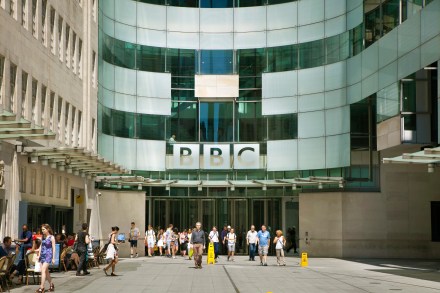
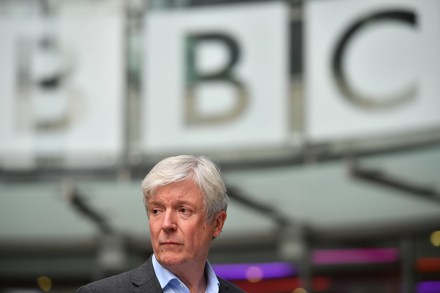
Reading the speech Tony Hall gave to the Edinburgh Television Festival, I was struck by his upbeat, confident tone. The outgoing director-general of the BBC talked about how its reporting of the coronavirus crisis had brought its core mission as a public service broadcaster into sharper focus and boosted its popularity, particularly among 16- to 34-year-olds. He said his goal when he arrived at the BBC was to reach a global audience of 500 million by 2022, its centenary year, and this target has now been revised upwards to a billion by the end of the decade. ‘But it needs extra investment from government and that bid is with them right now,’ he said. Doesn’t Tony Hall realise that the BBC’s future is hanging by a thread?

Make America Normal Again

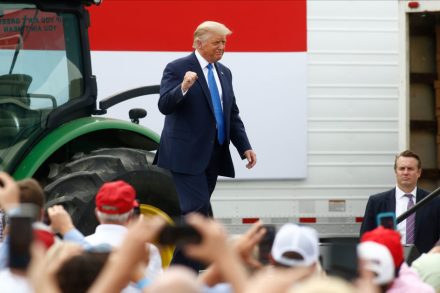
To win in November, Trump should seek inspiration from President Alexander Lukashenko, the 65-year-old autocrat who has ruled Belarus since 1994. He trounced his liberal opponent in the presidential election in August with 80 percent of the vote. I’m not suggesting Trump emulate Lukashenko’s methods. Among other things, the man dubbed ‘Europe’s last dictator’ disqualified his three main political opponents at the beginning of the race, imprisoning two of them. He has never won an election with less than 75 percent of the vote, although none have been found to be free and fair by the Organization for Security and Cooperation in Europe (OSCE), an election monitoring body.

make america normal again

Spare a thought for next year’s A-level students

From our UK edition

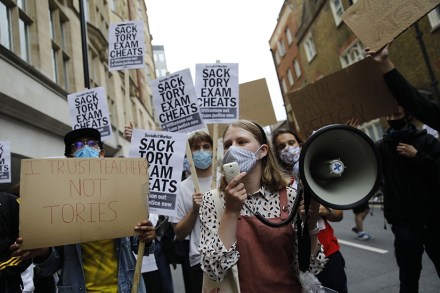
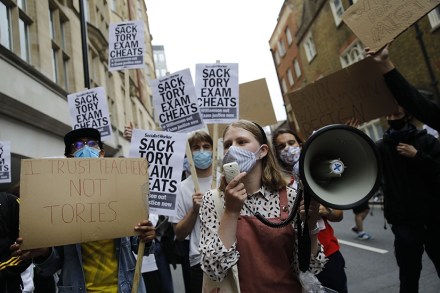
Three years ago I was contacted by an official at the Department for Education to see if I was interested in becoming a non-executive director of Ofqual, the exams regulator. There have been times since when I’ve regretted turning down that offer, but this week was not one of them. Ofqual was given the unenviable task of awarding A-level and GCSE grades to students in England who, thanks to the lockdown, had not sat their exams; and it was inevitably criticised by those children and their parents who felt they should have done better, not to mention various enemies of the government who treated Ofqual as a proxy for Gavin Williamson, the Education Secretary.

Matt Hancock will regret appointing Dido Harding

From our UK edition

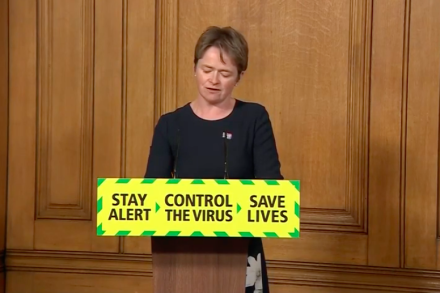
It seemed at first that Matt Hancock was scrapping Public Health England in a bid to save his own political career. But the hapless Health Secretary appears to have bungled even this elementary piece of political theatre. He has appointed Baroness Harding as the head of the new National Institute for Health Protection. Dido Harding?!? The Conservative life peer’s main claims to fame are presiding over the muddled response to a cyber-attack that affected tens of thousands of customers when she was chief executive of TalkTalk and heading up the government’s test-and-trace programme. To date, the programme has proved almost comically disastrous. The much-heralded app developed by NHSX has now been abandoned – who could have seen that one coming?

Douglas Murray, Steve Morris, and Toby Young

From our UK edition

19 min listen

On this week's episode, Douglas Murray reads his column on how if everything is racist, then nothing is; Reverend Steve Morris campaigns for the return of the British holiday camp; and Toby Young on his new dating website for lockdown sceptics.

I’ve started a dating site for lockdown sceptics

From our UK edition

I started a dating site last Sunday. Not words I ever thought I’d write, but I’ve become a kind of den mother to a large group of people who believe the risk of coronavirus has been exaggerated, and it dawned on me that this could be a useful service for them. The idea is that if you’re a Covid realist you don’t want to go out with a hysteric who thinks the lockdown is being eased too quickly and frets about a ‘second wave’. You probably wouldn’t even be able to arrange a first date, let alone manage a kiss at the end of the evening. What you need is a ‘safe space’ where you can meet potential partners who share similar views. It all began in April when I started a blog called Lockdown Sceptics.

The proof that free speech in universities is in peril

From our UK edition

About 18 months ago, I attended a debate at Policy Exchange, the think tank founded by Nick Boles, Francis Maude and Archie Norman, on whether there was a free speech crisis at British universities. One panellist, Professor Jon Wilson of King’s College London, vigorously denied that any such problem existed. Various people pointed to examples of right-of-centre academics being no-platformed — Charles Murray, Amy Wax, Linda Gottfredson — but that was scarcely conclusive. It was anecdotal evidence, not hard data. The same cannot be said any more. This week, Policy Exchange published a paper by three academics — Remi Adekoya, Eric Kaufmann and Tom Simpson — which proves beyond reasonable doubt that free speech is in trouble in the higher-education sector.

How to get into a club and on to a plane

From our UK edition

Disaster struck the Young family last Friday. My 12-year-old son Charlie woke up with a temperature. Ordinarily, that wouldn’t matter, but we were in the Dolomites and due to fly back to England from Venice later that day. On the flight out, we’d all had our temperature checked with an infrared thermometer pointed at our foreheads, and there was a similar policy in place at Marco Polo airport for our return journey. Would Charlie’s fever mean none of us would be allowed to board the plane? And would we be interned in some ghastly Travelodge for 14 days? The responsible thing would have been to remain in Italy until Charlie recovered, just in case he had the virus.

My plans for a Covid inquiry

From our UK edition

The public inquiry into the government’s handling of the coronavirus crisis has already started. Not the official one, which won’t get under way until next year, but the unofficial ones. First out of the gate was the Sunday Times on 24 May, followed by the New Statesman and, last week, the Financial Times. In addition, there will be ‘inquiries’ by other newspapers and magazines, parliamentary select committees, television and radio programmes, think tanks and universities, scientific and medical journals. Few will be able to resist blaming the UK’s higher-than-average death toll on the government’s failure to lock down earlier.

We’re all thought criminals now

I’m disappointed that Bari Weiss has resigned from the New York Times and not just because she was one of the few voices of reason on the paper. A while ago, I flew to New York at Bari’s request to be interviewed by her for a forthcoming profile of a group of maverick writers and intellectuals in what was billed as a follow-up to her famous piece on the ‘Intellectual Dark Web’ — a kind of Junior College branch. Among those to be featured were the African American essayist Coleman Hughes; the Australian editor-in-chief of Quillette, Claire Lehmann; and the Swedish columnist Paulina Neuding. We spent an enjoyable afternoon together at the Times building on Eighth Avenue, having our photographs taken and being wined and dined by Weiss in the boardroom.

bari weiss anti-semitism

Spectator Out Loud: Christopher Snowdon, leading article, Toby Young

From our UK edition

21 min listen

Christopher Snowdon on Britain's lost demographic; this week's leading article on the Government's mixed messaging; and Toby Young on why he's in Jeffrey Epstein's little black book. Subscribe to The Spectator's first podcast newsletter here and get each week's podcast highlights in your inbox every Monday.

How did I end up in Epstein’s little black book?

From our UK edition

Every time Jeffrey Epstein is in the news, I start getting calls from strangers wanting to scream abuse at me. This happened a lot when the billionaire financier was found dead in his jail cell last year after being arrested on sex trafficking charges, and it has started again following the arrest of his ex-girlfriend Ghislaine Maxwell a couple of weeks ago. The reason is that my contact details were in Epstein’s ‘little black book’, and whenever his name pops up some kindly soul takes it upon themselves to post a picture of the relevant page, which shows my mobile phone number, on Twitter. I may have to change my number, so frequent have the calls become. On one level, it’s quite flattering.

Does the curriculum really need ‘decolonising’?

From our UK edition

Layla Moran, the Lib Dems’ education spokesman, has written to Gavin Williamson urging him to do something about ‘systemic racism’ in schools. ‘Changes to the history curriculum, such as learning about non-white historical figures and addressing the darker sides of British history honestly, are a vital first step to tackling racism in our education system,’ she wrote. ‘This chasm in information only serves to present students with a one-sided view of the events in history.’ I’m not sure Moran knows very much about how the education system works. For one thing, Williamson cannot dictate how history is taught in free schools and academies — they don’t have to follow the national curriculum.

We’re facing a tsunami of censorship

From our UK edition

It’s open season on mavericks and dissenters at the moment. If you publicly challenge any of the sacred nostrums of the social justice left and you work in a school, a college, a university, an arts company, a public broadcasting organisation, a tech company, a charity, a local authority or, indeed, Whitehall, you are at risk of being cancelled. How do I know? Because in February I set up the Free Speech Union to protect those being targeted in this way and in the past month we’ve been contacted by people in all of these fields who have either been fired, suspended or are ‘under investigation’ for having said or done something controversial, usually on Facebook or Twitter. And by ‘controversial’ I don’t mean they’re guilty of hate speech.