Toby Young

Toby Young

Toby Young is associate editor of The Spectator.

The day Boris tried to bribe me

From our UK edition

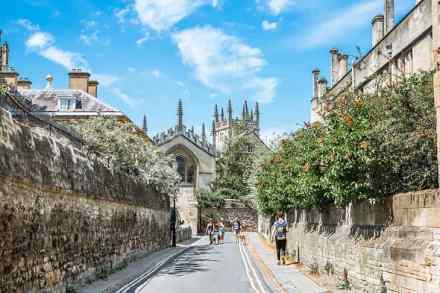
It’s not every day that a future prime minister offers you a bribe, but that’s what happened to me 38 years ago. I was the editor of Tributary, a satirical magazine at Oxford, and Boris wanted me to pass on the editorship to him. He conveyed through an intermediary that if I did him this favour he would invite me to lots of parties. That was notable for two reasons. First, it was unnecessary — Boris was the only applicant for the job. Second, Boris hates parties. It would be ironic if partygate is the cause of his downfall, since a love of late-night carousing is one of the few vices the Prime Minister doesn’t suffer from. He would have been cajoled into attending any social gatherings in Downing Street, forced to show his face to please his wife or staff.

Why don’t I come with a trigger warning?

From our UK edition

Last week brought the news that some universities have attached more ‘trigger warnings’ to certain books, concerned that students may find their contents offensive and upsetting. No, we’re not talking about Lolita, American Psycho or The 120 Days of Sodom. The works judged too disturbing for young people of a sensitive disposition include Oliver Twist, Nineteen Eighty-Four and Harry Potter and the Philosopher’s Stone. I’m not making that last one up. The English department at the University of Chester has included it as a set text on its Approaches to Literature module and cautioned students that it may ‘lead to some difficult conversations about gender, race, sexuality, class, and identity’.

Why Neil Young’s Spotify boycott is a mistake

From our UK edition

When Neil Young issued his threat to Spotify – get rid of Joe Rogan’s podcast or remove my music from your platform – he was probably hoping a chorus of other musical artists would weigh in behind him. After all, Spotify paid a reported $100 million to Rogan for the exclusive rights to host his podcast and, given that each episode attracts 11 million listeners, it must be quite a money spinner for the music streaming service. I’m sure Young’s music does alright on Spotify, but from a purely commercial point of view it was a no-brainer. Thankfully, only Joni Mitchell seems to have joined Young’s boycott so far, and that’s the most significant thing about this episode, not Spotify’s decision to side with Rogan.

The Highway Code to hell

From our UK edition

I did a speed awareness course on Monday. For the uninitiated, you have the option of doing one of these if you’re caught speeding and want to avoid getting three points on your licence. It only lasts two and a half hours and there’s no test at the end, so it’s a no-brainer, although you have to do it again if you’re spotted playing on your phone at the back. I’ve never heard of anyone choosing the three points instead. Like most people forced to undergo this humiliation, I was convinced I had nothing to learn. We all know about the laws of motion: the faster you’re going, the longer it takes to stop. And, inevitably, I found myself silently correcting the poor English of the two trainers.

I got Covid (again) – is it time I got jabbed?

From our UK edition

I got Covid a couple of weeks ago. Second time for me, which was annoying because I’d told Caroline that natural immunity provided better protection than the vaccines. She’s the only member of our household who’s been jabbed and began to feel quite smug as we all tested positive, one after another. It didn’t matter how much data I presented her with showing how quickly vaccine effectiveness against Omicron wanes, not least because I couldn’t prove I’d got Omicron. As far as she was concerned, I’d lost the argument.

The unexpected brilliance of Don’t Look Up

From our UK edition

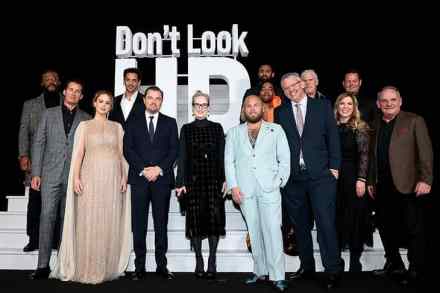
I wasn’t looking forward to seeing Don’t Look Up, the new satirical film on Netflix. It’s about a couple of American scientists who discover a giant ‘planet-killing’ comet that’s going to collide with Earth in just over six months. They try to warn the world about this existential threat but no one takes them seriously, from the President of the United States on down. Some people half- listen, but then get distracted by gossip or greed or lust, and when they do engage they come up with excuses, like pointing out the science is only 99.78 per cent certain, not 100 per cent, so why don’t we just ‘sit tight and assess’? Or maybe we can solve the problem with technology?

My plan for the Turner Contemporary

From our UK edition

I learnt a horrible new word during the holidays: Twixmas. It refers to the 27-30 December period and has its roots in the word ‘betwixt’, although why anyone would refer to those dates as ‘betwixt’ Christmas and New Year rather than ‘between’ is beyond me. Caroline, who now works in travel, introduced me to it and the reason it came up is that she booked an Airbnb in Margate for precisely those dates. This was to be our Twixmas holiday. Not ideal because there were QPR games on the 27th and the 30th, one of them in Bristol, but by criss-crossing the country in our VW seven-seater I made it work. First the good news. Margate is actually quite nice.

Some (tentative) reasons to be cheerful in 2022

From our UK edition

Someone sent me a job advert recently for a Junior Research Fellowship at Queen’s College, Oxford. It states: ‘The Queen’s College embraces diversity and equal opportunity. Applications are particularly welcome from women and black and minority ethnic candidates, who are under-represented in academic posts in Oxford. The more inclusive we are, the better our work will be.’ Nothing particularly objectionable about that, although when the college says it aspires to be more ‘inclusive’ it doesn’t mean it wants conservatives to apply, even though they are among the most under--represented groups at Oxford.

The good and bad news about the Online Safety Bill

From our UK edition

If you care about free speech, the just-published report of the Joint Committee on the Online Safety Bill – a cross-party parliamentary committee composed of six MPs and six peers – is a mixed bag. This is the Bill which began life as a White Paper under Theresa May. Its aim? To make the UK the safest place in the world to go online. It will achieve this by subjecting social media platforms and internet search engines to state regulation, empowering Ofcom to impose swingeing fines on companies that fail to observe a new ‘duty of care’. Let’s start with the good news.

Let’s not become Scotland

From our UK edition

The Law Commission has published a string of recommendations following its recent consultation on changes to hate-crime laws in England and Wales. As expected, the last one proposes that all existing hate-crime laws, as well as the new ones the commission would like to create, be swept up in a single Act of Parliament, much like the Hate Crime and Public Order (Scotland) Act. Readers will recall that this Act means freedom of expression is now in greater peril in Scotland than anywhere else in Europe. In some respects, what the Commission is proposing isn’t as bad as the Scottish law.

Why punish a scientist for defending science?

From our UK edition

As a defender of free speech, I sometimes feel like a man falling through a collapsing building. Just when you think you’ve finally reached rock bottom, the floor gives way again. That was my sensation last week when I read about the disciplinary investigation of Professor Garth Cooper by the Royal Society of New Zealand. For background, Professor Cooper is about as eminent as you can get in his field. He is professor of biochemistry and clinical biochemistry at the University of Auckland, where he also leads the Proteomics and Biomedicine Research Group.

I’ve become a social pariah – just for having children

From our UK edition

When Caroline and I got married in 2001, having four kids was not only fashionable, it was the socially responsible thing to do. Countries with declining populations like Japan were storing up problems for themselves, with labour shortages and tax shortfalls on the horizon — and Britain was at risk of going the same way. Having lots of kids was practically a duty if you were in a stable relationship and you both had postgraduate qualifications, as we did. Our offspring were likely to contribute more in taxes than they received in benefits, thereby offsetting the cost of the growing underclass. We were so convinced of our moral righteousness that we actually looked down our noses at professional couples who stopped at two and thought of them as ‘selfish’.

The day I became a prize contrarian

From our UK edition

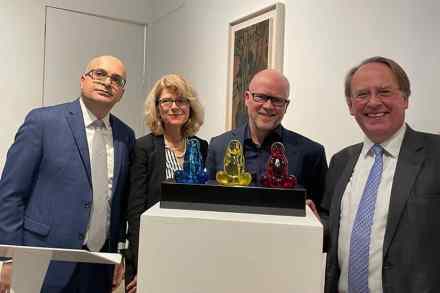
Something rather unusual happened to me a few weeks ago: I was shortlisted for a prize. Not the GQ Men of the Year — shock! — but the Contrarian Prize. This is an award given to people who’ve exhibited ‘independence, courage and sacrifice’ in British public life. Previous winners include the headmistress Katharine Birbalsingh, the economist Patrick Minford and the human rights lawyer Clive Stafford Smith. Quite distinguished company, in other words. On 11 November I was invited along to the Bernard Jacobson Gallery in St James’s by Ali Miraj, the creator of the prize, for the award ceremony. Naturally, the first thing I did was look around to see which of the other people on the shortlist were there.

Racism, cricket and the problem with ancient allegations

From our UK edition

Last week, the former England cricket captain Michael Vaughan revealed that he’d been accused by another cricketer — Azeem Rafiq — of having said something racist to him and two other Asian players 12 years ago. According to Rafiq, when Vaughan was playing for Yorkshire in 2009 he said to the three as they walked out on to the field together to face Nottinghamshire that there were ‘too many of you lot, we need to do something about it’. Vaughan categorically denies saying this and it’s difficult to evaluate the veracity of the accusation because Rafiq hasn’t made it against him publicly.

Sky Sports is ruining my football season

From our UK edition

When I promised my 13-year-old son, Charlie, that we would go to as many QPR games as possible in 2021-22 to make up for not going to any last season, I hadn’t anticipated that the match schedule would be in a constant state of flux thanks to the capricious, all-powerful tyrant that is Sky Sports. It makes trying to plan your life more than a few weeks ahead impossible. For instance, I booked an eye-wateringly expensive three-day break for the whole family in Margate from 27 to 30 December, meaning we would be in London to watch the Boxing Day fixture against Bournemouth at home and miss only one game on 29 December.

Why lockdown sceptics like me lost the argument

From our UK edition

I’m optimistic that the government won’t implement ‘Plan B’, let alone impose another lockdown — but not because sceptics like me have won the argument. Why do I say that? Because the public debate is about whether another lockdown is necessary, with the participants on both sides taking it for granted that non-pharmaceutical interventions are an effective way of suppressing infections. For at least a year, sceptics have been arguing that these don’t work, pointing to numerous research studies showing that the rise and fall of infections in different regions of the world has no correlation with stay-at-home orders, mask mandates, business and school closures, etc. But this argument has fallen on deaf ears.

Virtue signalling is really status signalling

From our UK edition

A £19,000-a-year London day school was in the news this week because it has started instructing its pupils about ‘white privilege’ and ‘microaggressions’. Apparently, St Dunstan’s in south London, which boasts Chuka Umunna among its alumni, teaches its well-heeled students that the royal family bolsters expectations of ‘inherited white privilege’, asks them to ‘explore’ why Meghan Markle faced ‘additional challenges’ compared with Kate Middleton when she married a prince, and tells them why it’s important for the National Trust to examine the colonial past of its country houses and links to the slave trade. I was surprised this story attracted so much press interest.

‘Retain and Explain’ won’t end the culture wars

From our UK edition

I’m sympathetic to Oliver Dowden’s formula for defusing culture-war disputes about statues of controversial historic figures: ‘retain and explain’. That is, don’t pull statues down, but make it clear that their remaining in place doesn’t signify approval of everything the people they represent did. Provide the public with a helpful summary of their lives and works, the good as well as the bad, so we can make a rounded assessment and, hopefully, judge them by the standards of their times as well as of our own. Unfortunately, the ‘explanatory panel’ that has just appeared beneath the statue of Cecil Rhodes on the facade of Oriel college falls somewhat short of this ideal.

Who let the dog out?

From our UK edition

Caroline and I are just back from a weekend break in Scotland and, nice though it was, I hadn’t realised how difficult travelling anywhere is at the moment. We had originally planned to drive, but the fuel crisis put paid to that, so we had to book a last-minute flight. EasyJet from Luton to Edinburgh was £475.92 for the two of us — ye gods! — and three days in the mid-stay car park was a whopping £128. To cap it all, the bus that takes you from the car park to the airport wasn’t running — Covid, obviously — so we had to walk about half a mile carrying our luggage. We stayed with some friends in the Highlands for a couple of days and I went stalking — but needless to say I buggered that up.

The thrill of running late

From our UK edition

‘Dad, why is it that whenever we go anywhere, we’re always running to catch a train?’ asked Charlie, my 13-year-old. This was just over a week ago and Charlie and I, along with 16-year-old Ludo, were running from the Holiday Inn Express in Birmingham to Snow Hill station in the hope of catching the 7.25 p.m. to the Hawthorns. Miss that and we’d be in trouble because the next one wasn’t until 7.57 p.m. and we’d be late for kick-off. We were there to watch QPR play West Brom and the match started at 8 p.m. Charlie’s right.