Toby Young

Toby Young

Toby Young is associate editor of The Spectator.

My approach to wine? Wishful drinking

From our UK edition

I fancy myself as a bit of an oenophile and during the lockdowns, when my local branch of Majestic was forced to close, I joined The Wine Society and started buying wine from a variety of online sellers such as Vivino and Goedhuis & Co. The upshot is that I get three or four emails a day from these companies and have become an expert in deconstructing their sales patter. The common theme is to coddle the self--deception of the buyers that they aren’t full-blown alcoholics – heaven forfend! – but are obsessed with wine for some other, entirely respectable reason. For instance, Goedhuis is currently promoting a ‘platinum selection for the Jubilee weekend’ on the assumption that its customers are going to be hosting garden parties this bank holiday.

Beware the wrath of middle-class homeowners

From our UK edition

‘Apocalyptic’ food shortages, gas and electricity bills soaring, wages not keeping pace with inflation… it’s beginning to look like we’re heading for major outbreaks of civil unrest this summer. As a resident of the London Borough of Ealing, which witnessed some of the worst rioting in the capital in 2011, I’m getting a little concerned. Not for myself and my family, you understand, but for the muggers, car thieves and burglars who prey on the middle-class residents. Will they be all right? The educated bourgeoisie has developed an irrational fear of civilisational collapse, having been taught by books and films like The Road and Mad Max that gangs of marauding thugs will rule the roost in a post-apocalyptic universe.

The courage of Katharine Birbalsingh

From our UK edition

Five years ago, I put my friend Nell Butler in touch with Katharine Birbalsingh, Britain’s most outspoken headmistress. I was hoping Nell, who runs a TV production company, would persuade Katharine to let ITV make a documentary about Michaela, the free school she opened in 2014 and which she’s led ever since. I was director of the New Schools Network at the time, a free schools charity, and was convinced there could be no better advertisement for the controversial educational policy. At the time, Michaela had yet to be inspected by Ofsted and didn’t have any exam results, but knowing Katharine as I do, and having visited the school a few times, I had no doubt it would succeed.

How not to understand the Brexit referendum

From our UK edition

Simon Kuper’s Chums: How a Tiny Caste of Oxford Tories Took Over the UK is a wonderful compendium of anecdotes about Oxford in the 1980s, one of the best of which concerns a lecture he attended by the Marxist theorist Terry Eagleton just after the fall of the Berlin Wall. Eagleton dismisses the collapse of the communist regimes across Eastern Europe as a minor source of annoyance that has no bearing on the validity of his beliefs. A student on Kuper’s right takes notes throughout and at the conclusion of the lecture reads his summary: ‘Presumably ironic.

A bonfire of the quangos should start with the College of Policing

From our UK edition

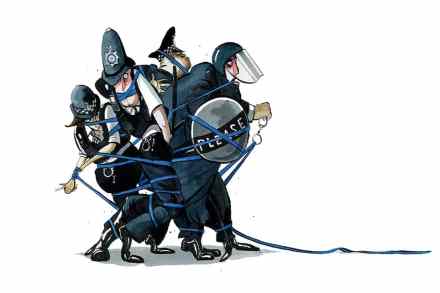
I welcome Jacob Rees-Mogg’s recent announcement that he intends to reignite David Cameron’s ‘bonfire of the quangos’ in his capacity as minister for government efficiency. I’m sure many Spectator readers will have a particular quango, or arm’s-length body, they’d like to incinerate and I hope they write to him with their suggestions. I’d like to nominate the College of Policing, which is responsible for overseeing the police in England and Wales. The college made headlines last weekend when it emerged that it had urged the 43 different forces to ‘decolonise’ their training materials in order to recruit a more diverse workforce.

There’s no one better than Boris

From our UK edition

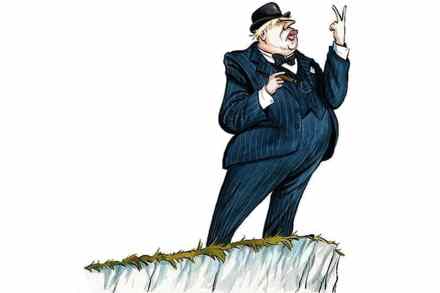
Eighteen months ago, I wrote a column for this magazine saying I regretted having been such a Boris enthusiast for the past 40 years. As a lockdown sceptic, I was disillusioned by his role in the greatest interference in personal liberty in our history. Where was the mischievous, freedom-loving, Falstaffian character I’d grown to love? Oliver Hardy had turned into Oliver Cromwell. Mercifully, Roundhead Boris was a temporary aberration. Indeed, the furrowed-browed, finger-wagging Prime Minister of those endless Downing Street press briefings turned out to be just another act in the Covid pantomime, with the Boris of old making whoopee behind the scenes.

The tragedy of being a QPR fan

From our UK edition

Normal families spend the Easter holidays by the seaside or in the Mediterranean. But not the Youngs. My three boys and I took advantage of the two-week break to criss-cross the country following Queens Park Rangers, going to Sheffield, Preston and Huddersfield. We lost 1-0 to Sheffield and 2-1 to Preston, but managed to draw 2-2 with Huddersfield, which made it a good day out by QPR’s recent standards. I’ve always enjoyed going to the occasional away game, but this season my sons and I have tried to go to as many as possible to compensate for the closure of football grounds during the pandemic.

Is this Premier Inn all I’ll be remembered for?

From our UK edition

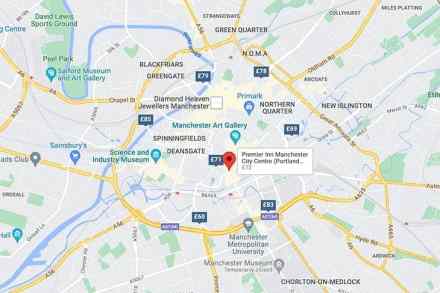
It’s fairly commonplace for people to wonder what, if anything, they’ll be remembered for. I’m going to be 59 later this year, so it’s been preying on my mind. Will it be the self-deprecating memoir I wrote about failing to take Manhattan? The schools I helped set up? The Free Speech Union? The answer, I’m afraid, is none of the above. I’ve just received an email from Google that has conclusively answered this question – and it’s not good news. According to the email, I added a location to Google Maps on 4 October 2017 that has been viewed 24 million times. Now, I might take some satisfaction from this if the place in question was a charming, out-of-the-way pub or an historic building.

The most disadvantaged group in Britain? White working-class men

From our UK edition

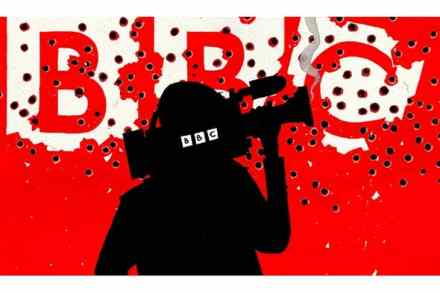
I’m not sure what to think about the BBC’s announcement that it wants a quarter of its staff to be from working-class backgrounds by 2027. On the one hand, I’m against hiring quotas of any kind and think every position should be filled by the person best qualified for the job. But on the other, if the BBC is going to have diversity targets – and fighting against them seems futile at this point – then this one seems better than most. The rationale for this quota, according to the BBC, is it wants its staff to ‘better reflect UK society’, but I’m not sure it will achieve that. The problem lies in the way the BBC has defined ‘working-class’.

My £50-a-week chocolate habit

From our UK edition

As I’ve got older my tastes have generally become less refined. During my youth I dutifully slogged through Kafka, Camus and Sartre, but my current bedtime reading is Sharpe’s Trafalgar by Bernard Cornwell. With movies, I used to feel obliged to watch subtitled masterpieces like La Règle du jeu and Le Salaire de la Peur, but now I’m perfectly happy with the latest Marvel blockbuster. However, when it comes to food and wine, I’ve become more snobbish – insufferably so. My last meal on death row would be the twice-baked cheese soufflé from Le Gavroche washed down with a bottle of Corton-Charlemagne Grand Cru. For some reason, this is particularly true of my taste in chocolate.

Are cancel-culture activists aware of their sinister bedfellows?

From our UK edition

Is there a woke case to be made for freedom of expression? Jacob Mchangama certainly seems to think so. This 500-page door-stopper, which combines a history of free speech with a persuasive case for its defence, is aimed squarely at snowflakes and social justice warriors. Mchangama deals patiently and methodically with all the objections they might make to ‘the first freedom’ and then tries to convince them it’s in their interests to defend it. Take the assumption that untrammelled free speech perpetuates current inequalities, favouring the privileged and penalising the disadvantaged.

Turkey’s dilemma

From our UK edition

39 min listen

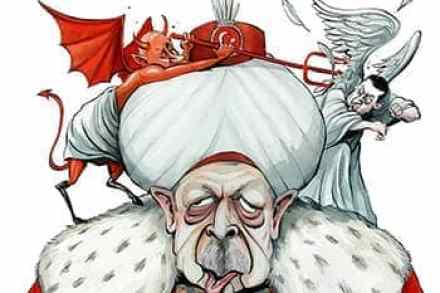
In this week’s episode: could President Erdogan broker a peace deal between Putin and the West?  For this week’s cover piece, Owen Matthews has written about how Turkey’s President Erdogan became a key powerbroker between Vladimir Putin and the Western alliance. On the podcast, Owen is joined by Ece Temelkuran, a political thinker, author, and writer of the book How to Lose a Country. (1:13)Also this week: a look at Tina, the drug devastating the gay community.Dr Max Pemberton has written about Tina, a dangerous drug often used at chemsex parties. Max joins us now along with Philip Hurd, a chemsex rehabilitation professional and trustee of Controlling Chemsex. (14:02)And finally: Are The Oscars losing their relevance?

How to save the Oscars

From our UK edition

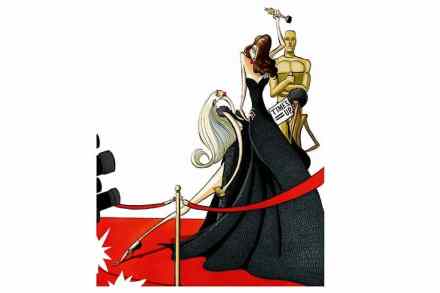
This Sunday’s Academy Awards will be a litmus test of whether Hollywood can uncouple itself from the political agenda of young woke radicals that is proving so unpopular in the US. Joe Biden had a stab at it during his State of the Union address, criticising the ‘defund the police’ movement for fear of a Democrat wipeout in the midterms, and the New York Times did an astonishing volte-face last week, publishing an editorial in defence of free speech. A bit rich from the paper that recently forced out its most distinguished science reporter at the behest of its junior staff for using the n-word in a discussion about the appropriate use of the n-word. But will the luvvies be able to resist trotting out all the usual fashionable platitudes about sex, race and gender?

My football analogy for the free speech debate

From our UK edition

By the time you read this the new draft of the Online Safety Bill should be on the DCMS website. I haven’t seen it yet, but I have a pretty good idea of what’s in it because I’m one of dozens who’ve been urging ministers and officials behind the scenes to strengthen the free speech protections in the bill. For those not up to speed, the aim of the bill (in the words of Nadine Dorries, the Secretary of State at DCMS) is ‘to make the UK the safest place in the world to be online’, i.e., turn the internet into a safe space. The white paper that preceded the bill was a nightmare from a freedom-of-expression point of view.

What really happened when my wife left me in charge

From our UK edition

I’m currently standing at the top of Brownie Point Mountain, having spent the past two weeks looking after our three sons while Caroline has been sunning herself in Barbados. I’ve been cooking, cleaning, washing – you name it. As if that weren’t heroic enough, I spent the previous week with our 18-year-old daughter in Mexico City helping her find a flat and a job. In other words, I’ve had no help from Caroline for three straight weeks. I feel so virtuous, I’m almost tempted to throw myself off said mountain. A place in heaven would be guaranteed. I daresay some women reading this will be thinking: ‘Why should you get any points for doing what your wife has been doing for almost 20 years? Typical bloody man.

Nuclear war, magic mushrooms and a teenage trip I’ll never forget

From our UK edition

Vladimir Putin’s decision on Sunday to put his ‘deterrence forces’ – code for nuclear weapons – in a high state of readiness revived a fear in me that I haven’t experienced since the fall of the Berlin Wall. As someone who spent his teenage years during the Cold War, the threat of nuclear war was never very far from my mind. Indeed, one of the biggest political battles back then was between unilateralists and multilateralists and I was firmly in the latter camp, even starting a local anti-CND group called ‘A Sensible Approach to Nuclear Questions’. But the two sides were united in their fear of Armageddon, only disagreeing about the best way to avoid it. Peak anxiety for me occurred in 1980.

Mexico is no country for journalists

From our UK edition

I’m writing this on my last day in Mexico City, having accompanied my 18-year-old daughter here for the first week of a six-month stay. She’s hoping to become fluent in Spanish before embarking on a degree in languages in September. My mission was to help her find a flat in a nice part of town and a job so she can support herself, and between us we just about managed it, thanks to the help of the local expat community. Mexico City reminded me of being in New York in the mid-1990s, where being British and having the modern-day equivalent of letters of introduction meant an entire social network opened up before you.

When does ‘middle age’ end and ‘old age’ begin?

From our UK edition

I was a bit irritated by all the millennials saying the Superbowl half-time show made them feel old. The 15-minute musical extravaganza at Sunday’s game was a tribute to the golden age of hip hop and featured Snoop Dogg, 50 Cent, Mary J. Blige, Eminem and Dr Dre. The reason it made so many people in their thirties and early forties feel a bit long in the tooth is that all artists are now candidates for the Hall of Fame. Dr Dre is 56 and Snoop Dogg turned 50 last year. Seeing their idols thickening around the waist and sprouting grey hairs was a mementomori for people who came of age around the millennium. The reason that bothered me is that I’m even more ancient than Dr Dre. Indeed, I felt old when Snoop Dogg had his first hit with ‘Deep Cover’ in 1992.

The day Boris tried to bribe me

From our UK edition

It’s not every day that a future prime minister offers you a bribe, but that’s what happened to me 38 years ago. I was the editor of Tributary, a satirical magazine at Oxford, and Boris wanted me to pass on the editorship to him. He conveyed through an intermediary that if I did him this favour he would invite me to lots of parties. That was notable for two reasons. First, it was unnecessary — Boris was the only applicant for the job. Second, Boris hates parties. It would be ironic if partygate is the cause of his downfall, since a love of late-night carousing is one of the few vices the Prime Minister doesn’t suffer from. He would have been cajoled into attending any social gatherings in Downing Street, forced to show his face to please his wife or staff.

Why don’t I come with a trigger warning?

From our UK edition

Last week brought the news that some universities have attached more ‘trigger warnings’ to certain books, concerned that students may find their contents offensive and upsetting. No, we’re not talking about Lolita, American Psycho or The 120 Days of Sodom. The works judged too disturbing for young people of a sensitive disposition include Oliver Twist, Nineteen Eighty-Four and Harry Potter and the Philosopher’s Stone. I’m not making that last one up. The English department at the University of Chester has included it as a set text on its Approaches to Literature module and cautioned students that it may ‘lead to some difficult conversations about gender, race, sexuality, class, and identity’.