Tim Wigmore

End game: the blurring line between fantasy sports and the real thing

For millions of fans, the only thing more important than the NFL from September to January is fantasy football. In the US and Canada alone, there are an estimated 59 million fantasy sports players — one-sixth of the entire population. These players spend an average of seven hours a week — almost a full working day — consuming fantasy content, according to Andrew Billings, an expert in fantasy sports at the University of Alabama. The rise of much modern sports — most obviously cricket — is inextricably linked to gambling. So it is with fantasy sports. It’s the numbers, stupid! Then obsessing over stats. With sports gambling illegal in most states until a Supreme Court ruling in 2018 overturned a federal ban, the fantasy world filled the void.


fantasy

The science of tennis grunts

From our UK edition

The cancellation of Wimbledon this summer deprived fans of their annual exercise in moralising. There is one topic SW19-goers love to complain about every year: the grunting sounds that players emit as they hit the tennis ball. Maria Sharapova, who retired in February, was called the Queen of Screams. Her grunts were once recorded at 101 decibels, more than a Boeing 707 as it touches down. They even inspired a series of ringtones. ‘I’ve done this ever since I started playing tennis and I’m not going to change,’ Sharapova once said. Yet her grunts were said to be mysteriously absent on the practice court. Grunting can give players a tactical advantage.

Football focus | 27 September 2018

From our UK edition

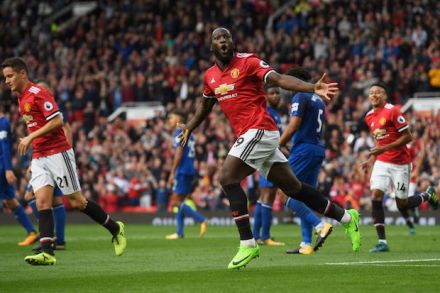
‘Football holds a mirror to ourselves,’ Michael Calvin asserts in State of Play. Modern football is angrier, more brutal, more unequal and simply more relentless than ever before. The sense of a football club being rooted to its locality has been shattered. Globalisation, and hyper-commercialisation, means that local owners have been replaced by ‘speculators and savants’ from abroad. Locally reared players, victims of football’s global free market in talent, have become rare.

The Fifa paradox

From our UK edition

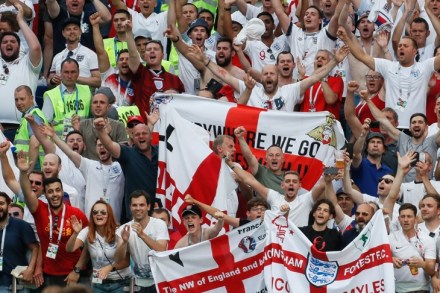
In 1930, Jules Rimet, the creator of the Football World Cup, crossed the Atlantic in a steamship to attend the inaugural competition in Uruguay. In his bag he carried a small trophy, the World Cup; in his heart he carried the belief that the World Cup could unite nations and smooth nationalism. ‘Men will be able to meet in confidence without hatred in their hearts and without an insult on their lips,’ he declared. Rimet would have been horrified by what the World Cup has become. A tournament that has funded the endemic corruption and racketeering within Fifa exposed by the FBI.

The people’s cricket

From our UK edition

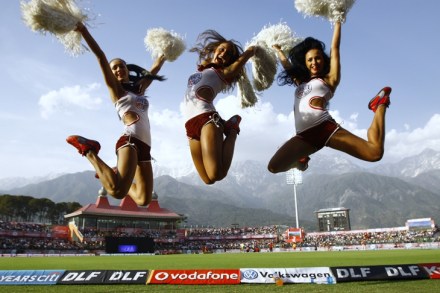
Blame it on a marketing survey. In 2001, the England and Wales Cricket Board commissioned the biggest piece of market research in the game’s history. They were told cricket was ‘socially inaccessible’, and that there existed a vast swath of ‘cricket tolerators’ — those who didn’t hate the game yet didn’t attend matches. So the ECB decided to take cricket to them. Twenty20, which could be crammed in after work on a midsummer’s evening, was created in the summer of 2003. The new game followed a traditional path: born in England, but perfected abroad. After India overcame its initial opposition, the country inexorably became the home of T20.

Tough luck, old boys

From our UK edition

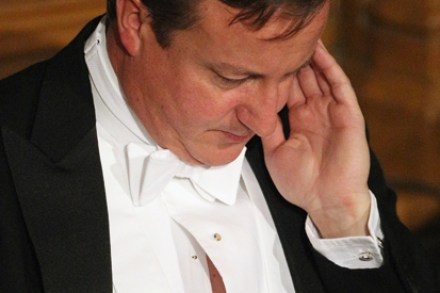
For a centre-right political party, the Conservatives are oddly obsessed with where people went to school. Michael Gove and Lady Warsi both lamented the number of Old Etonians in influential positions earlier this year. It may not have been coincidence that, within five months, both had moved posts: there remains a potent undercurrent of class tension in today’s Conservative party. The charge sheet is simple. David Cameron has stacked the corridors of power with those who share his black-and-turquoise old school tie. How can it be that British politics has regressed into the chumocracy days of Harold Macmillan? Yet the prominence of Old Etonians today is not a throwback to an era that we thought we’d left behind — it’s a last hurrah.

Why school trips are needed now more than ever

From our UK edition

The school trip now seems rather quaint. When you can see the whole world on Google Maps, what’s the point of traipsing to the seaside to see longshore drift in action? In an age of austerity, moreover, the school trip might seem an unaffordable indulgence. Yet parents seem to think otherwise: according to a recent Family Finances Report, 69 per cent of parents are willing to pay for school field trips in Britain. Experiencing the real world — rather than merely reading or writing about it, or staring at it through a computer — should be an essential part of education. The government agrees. Last October, Michael Gove unveiled a £5 million scheme designed to fund trips to the first world war battlefields for thousands of pupils in England.

Barack Obama’s best voice: Michael Grunwald

From our UK edition

No Obama policy – not even ‘Obamacare’ – has been derided quite as much as his stimulus package and the $787 billion Recovery Act passed in February 2009. It became a byword for failed big-government liberalism, and the Republicans’ staunch opposition to it underpinned their 63-seat gain in the House of Representatives in 2010. Yet, in this engaging and insightful attack upon the received wisdom of Obama’s failure, Michael Grunwald launches a lucid defence of the Recovery Act. Grunwald’s key argument is that, whatever its imperfections, the US would have been a far worse place without the Recovery Act. Independent analysts agree that it has saved or created over 2.5 million jobs. But its impact went far beyond these jobs.

The Lib Dems’ future may not be so bleak

From our UK edition

At last week’s Corby by-election, the Liberal Democrat candidate requested two recounts. Once a formidable by-election machine, the Lib Dems were reduced to searching in vain for the 14 extra votes they required to get 5% of the vote, and so get their £500 deposit refunded. In 1935, a famous book described The Strange Death of Liberal England, a theme that has regularly been returned to in the intervening 77 years. In 1951 the Lib Dems’ predecessor, the Liberal Party, won six seats on 2.5 per cent of the national vote; in 1989, a year after the merger between the Liberal and Social Democratic parties, the Lib Dems polled 6 per cent in the European elections, 9 per cent below the Green Party.

Barack Obama tells Mitt Romney: ‘We have fewer horses and bayonets’

From our UK edition

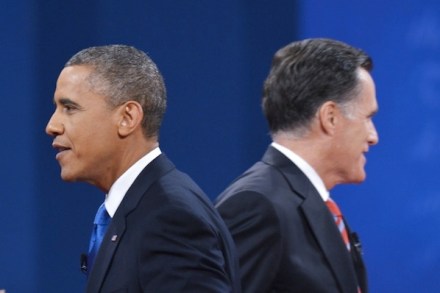
Whoever wins the US presidency on 6 November will owe little of their success to foreign policy. A recent poll showed that 46 per cent of the electorate regards the economy as the most important issue of the election; just 6 per cent chose foreign policy. The tightness of this race meant that the foreign policy debate still had the potential to influence matters, but a stilted format contributed to a rather stale exchange last night. Barack Obama produced a more compelling performance, but when he wakes up it will not be to the sort of collective mood shift Mitt Romney enjoyed after the Denver debate.

Obama campaigns for Clinton’s third term

From our UK edition

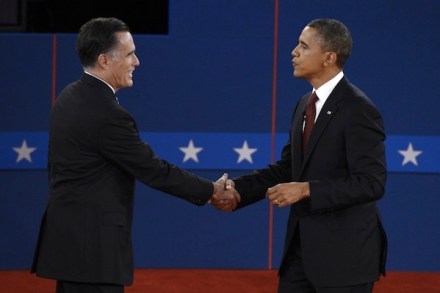
This debate was never going to be easy for Mitt Romney. After his evisceration of Barack Obama in the first presidential debate, encapsulated by the New Yorker cover of Romney talking to an empty chair, it was certain that Obama would be rigorously schooled before the second debate. Obama’s performance 13 days ago was so anaemic that some even speculated whether, subconsciously at least, he still wanted to be President. But there was renewed vigour in this performance – a refusal to display passivity of the sort that ruined the Democrats’ night in Denver. The Town Hall debate format helped too: the need to engage with the audience’s questions made it harder for Obama to revert to his remote, professorial style.

Vice-President Biden closes the enthusiasm gap

From our UK edition

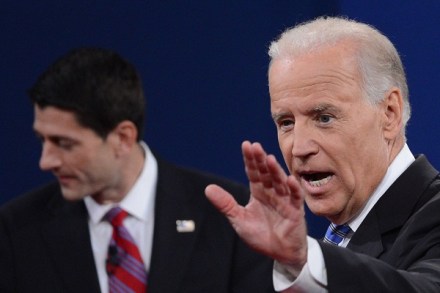
The conventional wisdom dictates that debates between VP candidates are nights that should only interest political anoraks. But the last eight days have not been good for conventional wisdom: remember how boring Mitt Romney was meant to have no chance against a man of Barack Obama’s élan? Far more than any recent presidential debate, last night’s vice-presidential one was genuinely absorbing, pitting two contrasting, combative and forthright politicians against each other. They were helped by the performance of the moderator, Martha Raddatz. She was far more willing to engage the candidates than Jim Lehrer last week, providing the best possible opportunity for a stimulating debate. And that is certainly what we got.

Mitt Romney raises (low) expectations in first presidential debate

From our UK edition

It’s been quite a week for weird would-be national leaders. First we had Ed Miliband deliver the best speech of his life in Manchester. And, last night, Mitt Romney bettered Barack Obama in the first presidential debate. The two men are at very different stages of their political cycles – Romney has 30 days until his election, Miliband 30 months – but they face similar challenges. And, to their credit, both approached their performances - for that is what modern political speeches and debates amount to - with verve, poise and even glimpses of audacity. Where Miliband’s boldness came in his conception of ‘One Nation Labour’, Romney’s came in his presentation of moderation.

The quiet country lane hosting a schooling revolution

From our UK edition

The location hardly suggests revolution. A few miles down a Somerset country lane, a new school opened this week. It will do so on the site of a tiny old primary school, buttressed by a couple of swiftly-erected buildings, before moving to its permanent site, currently occupied by the NHS, within two years. But the opening of the Steiner Academy Frome could one day be regarded as a seismic moment in British educational history. Steiner Academy Frome is the first state school for generations that could be said to have brought about the closure of a private school. The Meadow School shut just after the end of the 2011/12 academic year; a number of teachers, as well as over 20 pupils, have since moved to the Steiner Academy Frome.

How the forecasters could fail for the 2012 presidential election

From our UK edition

The really curious thing about this year's US presidential election is that it looks set to defy all political forecasts. While the most respected political science models have predicted victory for Mitt Romney, polls have consistently suggested otherwise. Political science and predictive models seldom receive much attention in the UK but they enjoy a strong tradition in the US. And they normally get it right. Most spectacularly, the University of Colorado’s forecasting model in 2000 successfully predicted that Al Gore would win the popular vote but lose the electoral college. Since its inception in 1980, the University of Colorado’s forecasting model has successfully predicted the results of the last eight US presidential elections.

McCain sounds his age, not like an elder statesman

From our UK edition

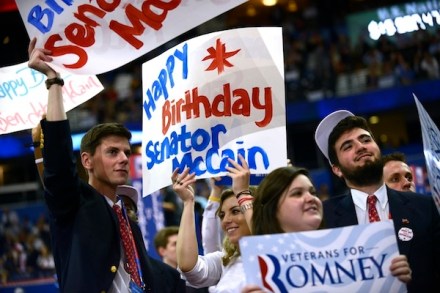
John McCain cut rather a sad sight last night as he addressed the Republican National Convention on his 76th birthday. Four years ago, he would have envisaged spending the convention stepping up his campaign for a second presidential term. Now, he was reduced to a speech that attracted only polite interest from delegates, who were far more enthused by the offerings from Rand Paul and Paul Ryan. Few people are consigned to history more rapidly than nominees who lost a presidential election: none since Nixon, with his almost unique powers of resilience, have later campaigned seriously to reclaim the nomination. At times it felt as though the only applause McCain was receiving was from his home state of Arizona, and even that sprang less from enthusiasm, and more from dutifulness.

How Artur Davis can really help Mitt Romney

From our UK edition

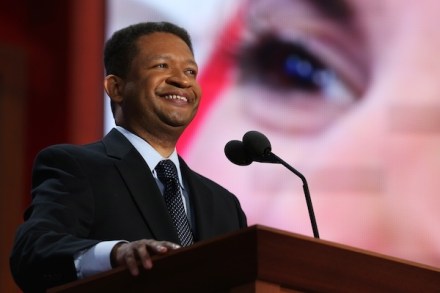
'The last time I spoke at a convention, it turned out I was in the wrong place.' Artur Davis spoke last night at what he now believes is the right venue for him: the Republican National Convention. It did not take him long to reconcile himself to Republicans angry that they were welcoming a man who had provided the official second in favour of Barack Obama's candidacy at the Democratic Convention four years ago. Davis has a most unusual personal story. Like most African Americans, he had been a Democrat all his life, and served in the House of Representatives for eight years until 2011. In 2010, he campaigned, unsuccessfully, for the Democrat nomination for Governor of Alabama, while also voting against Obamacare.