Tim Shipman

Tim Shipman

Tim Shipman is political editor of The Spectator.

Is Britain ungovernable?

From our UK edition

14 min listen

We are on course for yet another prime minister – our seventh in just ten years. With statistics like that, and after watching the now-familiar pattern of leaders arriving with promises of hopeful change only to collapse into inertia and scandal, it is little wonder that many assume Britain has become ungovernable. But is that really true? Or have we simply had a uniquely bad crop of prime ministers, each sent packing because of their own mistakes? James Heale speaks to Tim Shipman and Luke Tryl. Produced (for the final time) by Megan McElroy. We all wish her luck at Politico!

Is Britain ungovernable?

Five things I’m hearing about the Burnham ascendancy

From our UK edition

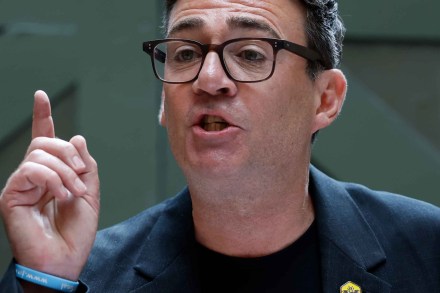
We are at the phony war/silly season stage of the Andy Burnham ascendancy and there’s a lot of nonsense flying around. A lot of decisions have not yet been made – and some of them remain highly problematic – but, in descending order of confidence, this is what I’m hearing: 1) Is Mahmood edging ahead of Miliband to be chancellor?Burnham makes his big speech on the economy and devolution in – where else? – Manchester on Monday, but the steer from senior members of Team Andy is that we should not expect the battle to be chancellor, which comes down to Ed Miliband against Shabana Mahmood, to be resolved next week. ‘It won’t be for a while,’ one says.

Would Burnham be 'Labour's first female PM'?

Would Burnham be ‘Labour’s first female PM’?

From our UK edition

15 min listen

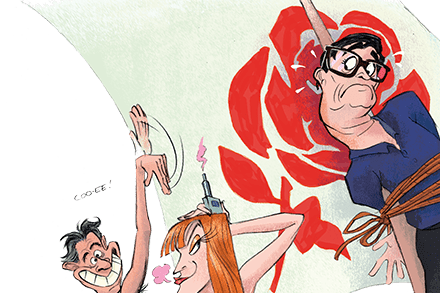
Another agenda-setting cover piece from Tim Shipman has ruffled feathers in Westminster. The controversy centres on a line from a senior Labour source who told Shippers that Andy Burnham could be ‘Labour’s first woman prime minister’. The remark has been doing the rounds in Westminster WhatsApp chats – not least the women’s PLP group, whose members are up in arms. What exactly did the source mean? Also today, Mike Tapp – the outspoken Home Office minister – is at the centre of a row between the Prime Minister and the Home Secretary. Shabana Mahmood wants to sack her number two over an op-ed he wrote in The Times, in which he revealed – or took credit for, depending on whose side you’re on – changes to Labour’s immigration policy. Did he break the ministerial code?

Burnham's coronation – but does he have a plan for power?

Burnham’s coronation – but does he have a plan for power?

From our UK edition

46 min listen

For this week’s Edition, William Moore is joined by the Spectator’s political editor Tim Shipman, the drinks writer Henry Jeffreys and the founder and chair of iNHouse Communications – and former director of communications for Theresa May – Katie Perrior. This week: another year, another prime ministerial resignation – it’s all becoming a little too common in British politics. The guests give their views on Starmer’s downfall and look ahead to the inevitable Andy Burnham premiership, from his policy agenda to who’s in – and who’s out – when it comes to the Cabinet and all-important role of Chancellor. Facing criticism that he lacks a mandate, not to mention how recently he was elected to Parliament, should he call for a general election?

Can Burnham resist the siren call of the left?

Power, when it is gained and lost, is transferred in stages: the actual, the visual and the constitutional. The latter took place on Tuesday evening when the prime minister presumptive sent a letter to Antonia Romeo, the Cabinet Secretary, requesting that she commence access talks with his team. Keir Starmer had already given permission for them to proceed, but the propriety and ethics team in the Cabinet Office had told Romeo she could not initiate proceedings. Andy Burnham had to ask first. To all intents and purposes, he is already the vessel from which power flows. At the same time, it became clear that James Purnell, the former Blairite cabinet minister, will lead the transition team and stay on to become chief of staff in 10 Downing Street.

Does Burnham have a plan? (No)

From our UK edition

16 min listen

Andy Burnham is back in Westminster, Sir Keir Starmer has resigned and Wes Streeting has said he will not contest the leadership election. Labour rebels will be celebrating that their plan has gone off without a hitch. Now King Andy’s attention turns to the small matter of how he might run the country. He needs to assemble a team, and a set of proposals, that can appeal to the country and – more importantly – the PLP. Will he be afforded the time he wants to come up with a plan? Who is in line to be his chancellor? Elsewhere, Nigel Farage has called for a general election and those cries are only going to grow louder as time goes on – will Burnham have to call one? Tim Shipman and Noa Hoffman discuss.

Does Burnham have a plan? (No)

The 42 reasons why Keir Starmer failed

From our UK edition

Before David Cameron got the job of prime minister, he was asked why he wanted it. ‘Because I’d be good at it,’ he replied. This has always been told as evidence of Cameron’s arrogance and hubris, but it was also, until the end, a defendable position. I’ve always thought Keir Starmer thought largely the same. He’d risen to the top of the law and considered politics a logical career change. He believed he could get more done that way. The Cameron quote I’ve always thought genuinely hubristic came when he told another friend questioning his desire to get to No. 10: ‘How hard can it be?’ Both Cameron and Starmer know the answer to that. Politics is bloody difficult. Our problems are deep and intractable.

It's over – Keir Starmer resigns

It’s over – Keir Starmer resigns

From our UK edition

13 min listen

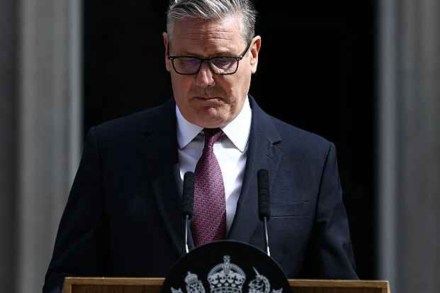
It’s over. Sir Keir Starmer has finally done the deed and quit. After years spent berating the Tories for constantly changing leader, fighting among themselves and looking inwards, Labour has succumbed to the same fate in less than two years. The path now looks clear for Andy Burnham to descend on Westminster and triumphantly assume the Labour leadership at the third time of asking. So what happens next? Will anyone contest Burnham’s bid to become prime minister? And will he be able to resist calls for a general election? Megan McElroy speaks to Tim Shipman and Noa Hoffman. Produced by Oscar Edmondson and Megan McElroy.

The nine contenders to be Burnham’s chancellor

From our UK edition

Andy Burnham is the new MP for Makerfield and is well on the way to becoming the new prime minister. Much blood may need to flow under the bridge first, but few in Westminster doubt the inevitability of his ultimate elevation to No. 10. Which raises key questions about what he will do, and how he will convince the wicked Bond villain markets to go along with it. Key to that will be the identity of his chancellor of the exchequer, who will have to find money for Burnham’s pet projects and prevent the collapse of the pound and an explosion in the cost of borrowing.

Why Makerfield changes everything | Tim Shipman, James Lyons, Luke Tryl & Michael Simmons

From our UK edition

35 min listen

Andy Burnham has won what may come to be seen as the most consequential by-election in recent memory. Political journalism has a tendency towards hyperbole, but the situation is clear: Burnham is on his way to Westminster with significant backing to take on Keir Starmer; he has proved that he can beat Reform on a ‘stop Starmer’ ticket and will now look to translate that message nationally; he also appears to have united the left behind him, with the Lib Dems and Greens barely registering in Makerfield. Meanwhile, the right is splintered. Reform’s momentum has been seriously dented, while the Tories have been buoyed by a welcome by-election victory in Aberdeen South.

Why Makerfield changes everything | Tim Shipman, James Lyons, Luke Tryl & Michael Simmons

Andy Burnham wins by a landslide – what happens next?

From our UK edition

11 min listen

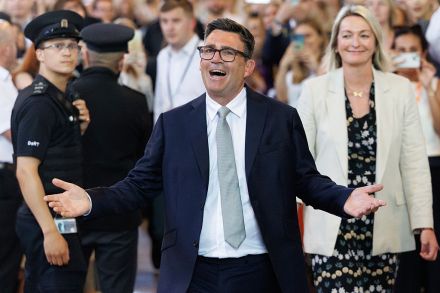
In the end, it was not even close. Andy Burnham has won the Makerfield by-election by a landslide, putting him on course to be Britain’s next prime minister. The Mayor of Greater Manchester managed to unite the left behind his ‘Stop Reform’ campaign, beating even the most optimistic polls with 24,937 votes (54.8 per cent). That put him more than 20 points ahead of Reform’s Robert Kenyon, who won 15,696 votes (34.5 per cent), and in a distant third came Restore Britain’s Rebecca Shepherd, who took 3,111 votes (6.8 per cent). Now that Burnham has proved he is the man who can take the fight to Reform in a constituency full of ‘their kind of people’, what happens next? Oscar Edmondson speaks to Tim Shipman. Produced by Oscar Edmondson.
Andy Burnham wins by a landslide – what happens next?

Was Brexit worth it – and can Burnham save Britain?

From our UK edition

55 min listen

For this week’s Edition, William Moore is joined by the Spectator’s assistant editor Isabel Hardman and the editor of The New Statesman Tom McTague. Plus, in a special episode this week, the Spectator’s economics editor Michael Simmons joins for the first half of the episode, before political editor Tim Shipman jumps in later on. This week: was Brexit worth it? As we approach the tenth anniversary of the vote to leave the European Union, the Spectator’s editor – and former prominent Vote Leave campaigner – Michael Gove makes the case that not only was Britain right to leave, but it has benefitted from leaving. The past decade however has been marked by domestic political chaos, so to what extent was Brexit a symptom or a cause of Britain’s structural problems?

Was Brexit worth it – and can Burnham save Britain?

How quickly could Starmer be deposed?

From our UK edition

16 min listen

Voters head to the polls tomorrow in Makerfield for what could be the most consequential by-election in modern British history. If Andy Burnham wins by a significant margin, he will be heralded as the man Labour need to beat Reform nationally – and Starmer could be forced out within days. Yet the Prime Minister has come out fighting, warning Burnham that now is not the time for a challenge. What should we expect from what promises to be a febrile 72 hours in British politics? Will Starmer’s deposition be conducted with decorum, or will it descend into a bloodbath? Plus: with Keir Starmer travelling back from the G7 today, parliament saw Deputy Prime Minister’s Questions.

How quickly could Starmer be deposed?

‘As soon as Andy wins, the world changes’: Burnham’s plans for power

From our UK edition

There is no situation room, no wall of flatscreens or a hotline to the White House, just a few chairs patrolled by ‘quite a mad dog’. But a garden in Golborne, on the outskirts of Wigan, is now ground zero in three different operations which will decide the future of Britain. The first is Op Makerfield, the campaign for Andy Burnham to win this week’s by-election. The second is Op Leadership, to line up Labour MPs, trade unions and donors for the showdown which may follow. The third is Op Transition, the plans to install a Burnham-led government. ‘Loads of it has been done in Andy’s garden,’ says a close ally. ‘Half of us in the garden, the other half online. We’re having to run a by-election campaign, a leadership campaign and preparations for government simultaneously.

Why Trump’s Iran deal won’t save Starmer

From our UK edition

13 min listen

Donald Trump has announced a deal to end the war between Iran and the US, but in Westminster, the relief comes with serious questions. What does the deal actually contain? Will the Strait of Hormuz reopen quickly enough to bring down oil prices? And could any economic boost come too late to save Keir Starmer? Elsewhere, Keir Starmer has announced under-16s will be banned from social media by spring 2027. The policy may be popular with parents, but the details remain sketchy: how would it be enforced, would it require facial recognition or digital ID, and could teenagers simply get around it with VPNs? Tim Shipman and Michael Simmons discuss with Megan McElroy.

Tim Shipman – with Kemi Badenoch, Justin Marozzi, Christopher Howse & Lara Prendergast

From our UK edition

30 min listen

On this week’s Spectator Out Loud: Tim Shipman interviews Kemi Badenoch – including excerpts from the interview; Justin Marozzi argues that Trump’s strategy has only strengthened the Iranian regime; Christopher Howse pays tribute to ‘London’s rudest landlord'; and finally, Lara Prendergasts says that ‘matrescence’ is one big con. Produced and presented by Patrick Gibbons.

Tim Shipman – with Kemi Badenoch, Justin Marozzi, Christopher Howse & Lara Prendergast

Can Starmer survive the MoD exodus?

From our UK edition

15 min listen

A second defence minister has resigned in protest at Keir Starmer’s failure to fund Britain’s armed forces. Al Carns, a former Royal Marines colonel, has followed John Healey out of the Ministry of Defence, warning that the government is letting down those in uniform – and taking aim at both the defence investment plan and Labour’s handling of Northern Ireland veterans. Starmer has now appointed Dan Jarvis as Defence Secretary, but the brief increasingly looks like a poisoned chalice. With the Strategic Defence Review still unfunded, ministers sent out to defend a plan they have not seen, and the Prime Minister heading to the G7 and Nato summit under pressure, has Starmer’s strongest claim to leadership – defence and foreign affairs – collapsed?

Can Starmer survive the MoD exodus?

Starmer is facing the beginning of the end of the end

From our UK edition

This is not the end, but it’s well past the beginning of the end, or even the middle of the end. It feels, with six days until the Makerfield by-election is expected to return Andy Burnham to Parliament, that we are at the beginning of the end of the end. It is also well past the point of no return for Britain’s credibility on the world stage. Like the clockwork toy which goes off just as you have drifted off to sleep, Keir Starmer weathered an interview with the BBC on the departure of two ministers from the Ministry of Defence (and two ministerial aides) only to get an Exocet in the guts from the Americans. Elbridge Colby is one of the Washington hawks, but he also has a respect for Britain.

‘It’s beyond embarrassing, it’s dangerous’: why Britain must fund defence | Sir Richard Barrons

‘It’s beyond embarrassing, it’s dangerous’: why Britain must fund defence | Sir Richard Barrons

From our UK edition

30 min listen

Britain’s defence review is now a year old – but the government is still arguing over how to pay for it. John Healey, the (now former) defence secretary, has resigned over the failure to set out an adequate plan to meet the need to modernise our armed forces. General Sir Richard Barrons, one of the architects of the Strategic Defence Review, joins Coffee House Shots to explain why the funding row is about more than budgets. He warns that Britain’s armed forces have been hollowed out after decades of cuts, that modern war is moving at the speed of AI and that Russia does not need to invade Britain to threaten daily life. Is Britain ready for the next war? What happens if America no longer comes to Europe’s defence?

Defence Sec resigns: ‘Keir can’t keep Britain safe’

From our UK edition

16 min listen

John Healey has resigned as Defence Secretary. In a blistering letter to the Prime Minister, he said: ‘You have been unable, and the Treasury has been unwilling, to commit the resources that the nation needs to defend the country at this time of rising threats.’ This comes after Keir Starmer failed even to secure the derisory sum of money he had demanded from the Treasury and the cabinet to modernise Britain’s forces following the recommendations of the Strategic Defence Review. The timing is equally devastating, as Starmer is heading to the G7 summit on Monday, where he will have to face Donald Trump. So what does this mean for Starmer’s premiership? Will more resignations follow – or will the missiles turn on the Treasury and Rachel Reeves’s reluctance to cough up?

Defence sec resigns: 'Keir can't keep Britain safe'