Tim Martin

My plan for reopening Wetherspoon pubs

From our UK edition

The ancient Babylonians and Hebrews would have been excellent publicans or restaurateurs, since they knew, as did John Wesley, that cleanliness was next to godliness. By prioritising mundane cleaning tasks, the number of things that can go wrong in a pub is dramatically reduced. Clean beer lines and glasses ensure good beer. And clean kitchens, tables and cutlery help to prevent a plethora of potential problems, which can drastically undermine even the most high-falutin celebrity chef. McDonald’s realised this years ago and conquered the world – and Wetherspoon copied McDonald's. Both companies are at the very top of the local authorities’ publicly available league tables for cleanliness.

Water, sky, wind and cold

From our UK edition

Dystopian fiction continues to throng the bookshelves, for all the world as though we weren’t living in a dystopia already, and the latest entrant to the glum-futures category is John Lanchester’s The Wall, about which much can be divined from a glossary of the capitalised nouns that throng it from the title onwards. The Wall encircles the perimeter of a fortified Britain. The Change has caused the sea level to rise, transforming the world forever. The Defenders, a national service now demanded of all young people, protect the Wall. The Guards patrol the coastal waters in boats, the Flight in planes. The Others want to get over the wall from outside, by violence or stealth. The Breeders make babies, which most people won’t do any more.

Commies and comics

From our UK edition

Its Booker-longlist nomination meant that Nick Drnaso’s Sabrina (Granta, £16.99) was the comic that everyone has heard of this year, even if it’s also the one most likely to give them post-traumatic stress. Drawn in deliberately bland colours and small, often wordless panels, this story about the human aftermath of a grisly American killing takes in internet paranoia, conspiracy theorists and the internet’s hyperspeed appetite for atrocity. But it’s also an intensely withdrawn book, full of desperate characters whose emotions vibrate at near-subperceptible frequencies. I admired it deeply, and I’d be happy never to think about it again.

Highway to hell

From our UK edition

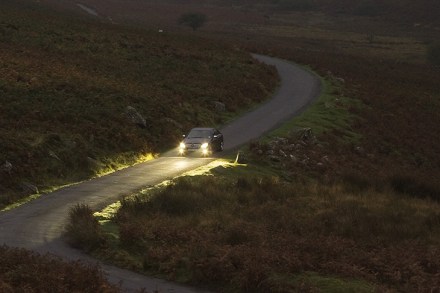
A lingeringly strange atmosphere hangs about Benjamin Wood’s third novel, in which the settings and paraphernalia of a new wave of British weird fiction — old children’s TV series, rustic bloodletting, the starkness of the northern landscape — encroach steadily on a retrospective story of childhood murder and deceit. The setting is northern England in the early 1990s, as the young Daniel Hardesty, a bookish 12-year-old, embarks on a road trip to Yorkshire with his estranged dad Francis, a jobbing stage carpenter, philanderer and liar. They’re on their way to the set of The Artifex, the sci-fi TV drama on which Francis works and with which his son is obsessed.

Should he stay or should he go?

From our UK edition

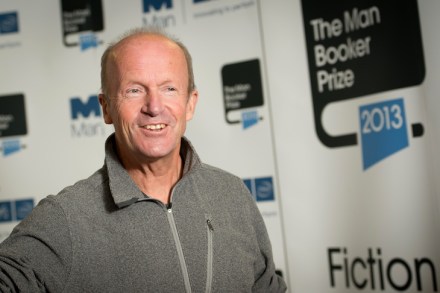
This remorselessly slow-moving, hazily allegorical drama about ageing and xenophobia is Jim Crace’s 12th book, and the first to appear since he announced his retirement from writing in 2013. Like much of his other work, it lays its scene in a topographical and temporal bubble of the author’s own devising, where recognisable aspects of society and geography are almost imperceptibly twisted away from true.

A dense, angry fable

From our UK edition

Set partly in a future surveillance society, partly in ancient Carthage and 1970s Ethiopia, partly in contemporary Greece and London and partly in the synaptic passageways of the human brain, this huge sci-fi detective novel of ideas is so eccentric, so audaciously plotted and so completely labyrinthine and bizarre that I had to put it aside more than once to emit Keanu-like ‘Whoahs’ of appreciation. Science fiction in general is having an interesting moment right now, as writers and filmmakers respond to the loopily futuristic contemporaneities of robotics and AI research, but Nick Harkaway goes further than most in this vast and baroque novel.

Unearthly powers

From our UK edition

This delightfully good-humoured novel is the sort of genre scramble that doesn’t often work: there’s a bit of 1990s family saga, a bit of mobster crime thriller, a bit of Cold War goat-staring spy story and really quite a lot of psychic/psycho-kinetic fantasy. And yet Daryl Gregory, who won several impressive prizes a few years ago for his fabulous horror novella We Are All Completely Fine, pulls the whole thing off with the unflustered charm of a stage magician. The setting is Chicago in the summer of 1995, where the Telemachus family, formerly a bunch of stage psychics and entertainers (‘Teddy Telemachus and His Amazing Family!’) have fallen on hard times.

Madness in Manhattan

From our UK edition

Life has far more imagination than we do, says the epigraph from Truffaut that opens Salman Rushdie’s 12th novel — as though, these days, anyone needed reminding. Set in New York and running between the start of the Obama administration and the rise of Trump, this book about gangsterism, art, dynastic ambition, secret identities and the tragedy of plan-making charts the descent of America into satire-killing oddity and social danger as it follows the lives of the Goldens, a family of larger-than-life Indian squillionaires who come to live in Manhattan in the wake of the 2008 Bombay terror attacks. The Goldens are Nero, a Gatsbyish businessman whose past and business interests are murky, and his sons Petronius (Petya), Apuleius (Apu) and Dionysus (D).

Self’s obsessions

From our UK edition

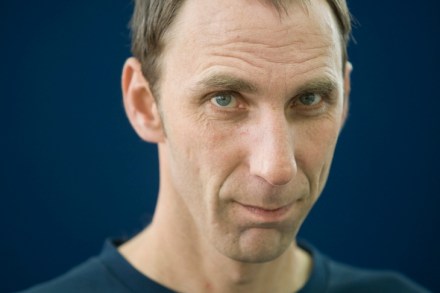
This 600-page, single-paragraph novel shuttles back and forth across time between the perspectives of an elderly and confused psychiatrist, a tank commander in Iraq, an autistic computer genius, the autistic computer genius’s mother and a closeted MI6 spy who thinks his cock is talking to him — which, for this stage in Will Self’s writing career, is pretty much situation normal. Readers of Umbrella (2012) and Shark (2014) will know the score already, as this is the third instalment in a loose trilogy following Self’s recurring psychotherapist Zack Busner as well as several generations of a family called Death (De’Ath for the posh ones).

On the way to a lynching

From our UK edition

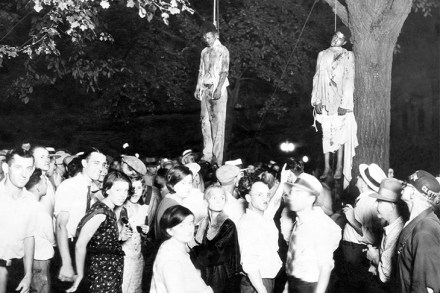
Southern trees bear a strange fruit in Laird Hunt’s seventh novel, a dark historical fiction filled with dreams and visions that has one very disconcerting trick of style to play on the reader. The setting is Indiana in 1930, where a white woman called Ottie Lee Henshaw is on the way to a lynching in the town of Marvel with her lecherous boss Bud and her redneck husband Dale. They stop to feed Dale’s pig; they stop at a church supper and a Quaker prayer meeting; they stop at a backwoods still; they stop to forcibly relieve a black family of their buggy. They meet a Klansman, an elderly acrobat and a man on a bicycle. They never make it to Marvel, because this is a book about journeys, not destinations.

The cryonics game

From our UK edition

Cults, the desert, natural disasters. Artists, bankers, terrorists. Cash machines, food packaging, secret installations. Mediaspeak and scientific jargon. Crowds and capital. Language and death. Just as it used to be possible to play Ballard Bingo with the work of the late 20th century’s other great literary monomaniac, so Don DeLillo’s themes have remained astonishingly consistent in the 45 years since Americana, his first novel, appeared.

Foreign body count

From our UK edition

China Miéville’s work is invariably clever, inevitably dense and usually interwoven with hard-left political and social concerns, but its author rarely loses sight of the delightfully mind-warping possibilities of his chosen genres. Last year’s story collection, Three Moments of an Explosion, offered brief slices of imaginary futures in which icebergs floated above London streets, archaeologists hauled crystal statues from the Mediterranean earth and urban hipsters attended parties wearing the heads of butchered animals.

The atheist delusion

From our UK edition

Dan Rhodes apparently had trouble finding a publisher for this short novel, and it’s possible to envisage a certain amount of sorrowful head-shaking in legal departments at its theme. In the dead of winter, accompanied by his long-suffering ‘male secretary’ Smee, a ‘thrice-married evolutionary biologist’ named Richard Dawkins gets stranded in rural England while en route to address the All Bottoms Women’s Institute on the topic of the non-existence of God.

Two serious ladies

From our UK edition

‘You understand, Lenú, what happens to people: we have too much stuff inside and it swells us, breaks us.’ The line comes from the third of Elena Ferrante’s Neapolitan novels, but it offers a fair summary of a sequence that concludes in this fourth volume. Set in Italy between the 1950s and the present, and documenting the turbulent friendship between two women from the same working-class quarter of Naples, these books by a still-unidentified pseudonymous writer rattle like pressure-cookers with anger, outrage, frustration, jealousy and spleen.

Things left undead

From our UK edition

In the afterword to this sixth book, Aleksandar Hemon dedicates a word of thanks to his agent for keeping a straight face ‘when I told her I’d written a book she’d known nothing about’. I doubt she kept it for long, because one of the many ways in which The Making of Zombie Wars differs from Hemon’s other work is that it is dreadfully, wrigglingly, antisocially funny: the sort of book that’s difficult to read in public without undignified honks of laughter.

LA runs riot

From our UK edition

Ryan Gattis’s novel All Involved is set in South Central Los Angeles in 1992, during the riots that began after four white police officers were acquitted of beating the black taxi-driver Rodney King. The inadvertent coup that the book’s publishers have scored by bringing it out in the wake of the Baltimore and Ferguson riots only underlines how far we haven’t come since then: some lines from this buzzing thriller might still be quotes from yesterday’s news stories, such as the impassioned complaint of one character against the police: ‘If you’re brown or black, you’re worth nothing. Killing you is like taking out the trash. That’s how they think.

Things fall apart in Denis Johnson’s latest novel of madness and anarchy in Sierra Leone

From our UK edition

‘I’ve come back because I love the mess. Anarchy. Madness. Things falling apart.’ The lines belong to Roland Nair, one of the morally bankrupt spies who careers around Africa in Denis Johnson’s tenth novel, but they might equally well describe Johnson himself, a writer always happiest in his work when the wheels come off and the world breaks down. His novels vary in setting (Prohibition America in Train Dreams, the Vietnam war in Tree of Smoke, a future post-apocalypse in Fiskadoro) but they share a mixture of gravitas and derangement, sarcasm and lyricism, comic danger and dangerous comedy that makes them reliably fascinating — and reliably peculiar. You certainly wouldn’t confuse Johnson’s dialogue with anyone else’s.

Cowboys and Muslims: that’s the new global power struggle, according to the latest great American novel

From our UK edition

‘I’m pleading with you, with tears in my eyes: if you fuck with me, I’ll kill you all.’ When ‘The Bumper Book of American Foreign Policy’ gets written, General James Mattis’s line to Iraqi leaders after the 2003 invasion will be an obvious choice for the cover blurb, but meanwhile it makes a striking epigraph to Bob Shacochis’s furious, sprawling novel about a half-century of US espionage and powerbroking. Like Norman Mailer’s Harlot’s Ghost, Don DeLillo’s Libra and Denis Johnson’s Tree of Smoke, this is the spy story tricked out as the great American novel, vaulting over the conventions of the cloak-and-dagger genre in dogged pursuit of larger questions of the national heart and mind.