Theo Hobson

Theo Hobson

Theo Hobson is co-editor of Created for Love: Towards a New Teaching on Sex and Marriage.

Alice Roberts and the problem with ‘humanism’

From our UK edition

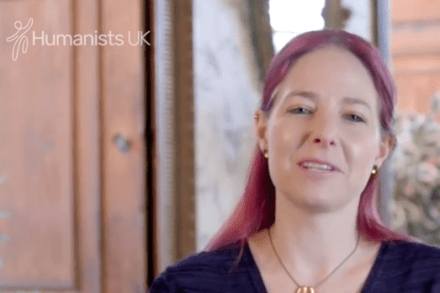
Public atheism has a new face. Your uncle Richard has been replaced by your cool cousin Alice. She’s bursting with fun facts about nature and history, but is also a well-rounded human, happy meeting other humans and smiling a lot. (Uncle Richard sometimes smiles, but it’s usually a by-product of sneering at the flawed footnote of an enemy.) But don’t call it atheism, Alice Roberts’ creed. Far too negative! In keeping with her human-ness, it’s called ‘humanism’. 'Atheism is defining yourself by an absence of something,' she told an interviewer. 'Humanism is a positive choice to base your morals on your own human capacity'. To explain this further, she has just co-authored The Little Book of Humanism with Andrew Copson.
Racism is a sin – and we are all sinners

From our UK edition

The current resurgence of debate about racism shows that we still need the concept of sin. Seriously, sin? Yes. Without this concept, we can’t really understand the BLM movement. In the past, moral campaigns were tied to concrete demands for changes in legislation, or government policy. Ban the bomb, legalise homosexuality, overthrow capitalism, and so on. The BLM movement is rooted in frustration: it knows that laws already exist outlawing discrimination, but feels that such laws are hugely inadequate. For such laws cannot uproot systematic racism, which is built into the mindset of the majority. It declares that liberalism is too vague, too non-judgemental, too laissez-faire.

Is Evensong too problematic to survive?

From our UK edition

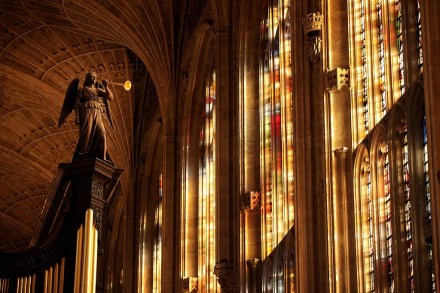
If only God had clearly decreed exactly what sort of music he wanted us to make in church. For uncertainty on this matter is highly problematic. If only he had said, for example, unaccompanied female voices on weekdays and an all-male choir on Sundays, with nothing composed before 1800 and no stringed instruments, except at Christmas. Or something else, similarly specific. The Calvinists of the sixteenth century decided that he had said something of this sort: no music at all, except for chanted Psalms. You can imagine the Dean of Sheffield Cathedral feeling a flicker of sympathy for this position. For Sheffield Cathedral has announced that its choir is not working and needs a fresh start.

Woke zealots have my sympathy

From our UK edition

I share the average liberal’s unease at woke-ism, or ‘hyper-liberalism’ – let’s call it Woke Zeal. But I disagree with those pundits who see it as a new thing, at odds with the vague liberal consensus of the past. Because it is willing to curtail freedom of speech in the pursuit of its aims, they say, and because it can advocate an aggressive tribalism, based on identity politics, it must be a fundamentally new creature. In reality Woke Zeal is a fairly natural development of our core shared creed. It is in some ways an intensification of liberalism, in other ways a cry of frustration at the limitations of liberalism. But it can’t be separated from the long tradition of liberal idealism.

Will churches open their doors as lockdown eases?

From our UK edition

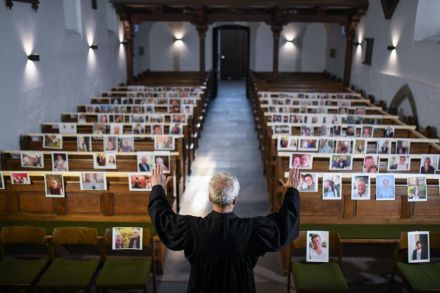
The grumbling of high church clergy should now lessen a bit. They were complaining, in some cases furiously, about the Chuch of England's decision to go further than the law required when it came to the lockdown, telling clergy not to open their churches at all, and not to broadcast services from them. Some were threatening to re-fight the Reformation over the issue, saying that low-church Welby would really rather preach from his own kitchen than admit that churches are a necessary site of authentic sacramental worship. The Church has now relaxed its rules, allowing vicars to pray in their churches and broadcast services from them. And the Church has started to think aloud about the really interesting question, of how churches should respond to the easing of lockdown.

The poetry of ‘Ambulances’

From our UK edition

The visible face of this virus, for most of us, is the ambulances. All else that we see – empty streets, spaced out queues, face masks, rainbows in windows – is secondary. Only the ambulances tell of the disease itself. They are the eerily siren-less blue flashing tips of the iceberg. So I am surprised that Philip Larkin’s poem ‘Ambulances’ has not, as far as I know, been identified as the text of the moment. I suppose it’s bleaker than one might like – uplifting poems are generally preferred at such a time. In fact I saw that another Larkin poem, ‘The Mower’ has been placed on a list of poems to help us through the crisis, due to its concluding exhortation to be kind to each other ’while there is still time’.

Closed churches could be a golden opportunity for Christians

From our UK edition

The closing of the churches over Easter is an opportunity to think about what church is, and what role it plays in our lives, if any. Plenty of Christians have already written in praise of their worshipping communities, saying how they miss the normal togetherness. My approach is more nuanced. Yes, I too miss going to church. But I also want to be honest: it is not top of the list of my current deprivations. I’m an awkward, semi-detached, leave-before-coffee sort of parishioner. Maybe this odd Easter is a chance to reflect on why. As a youth I was very into the sort of liberal reformist Protestant theology that is ambivalent about church, seeing most of its forms as too conservative, too nostalgic, as failing to express the radical message of Jesus.

How Christians feel at Christmas

From our UK edition

Imagine being in love with someone who ignores you eleven months of the year, then suddenly seems really into you. Instead of elation you feel a weird form of pain as your beloved finally smiles on you, and finds you interesting, for you know that it is just a seasonal thing, and that frosty indifference waits in the wings. This is a bit like how Christians feel at Christmas. Our ruling culture finds the idea of worshipping Jesus Christ embarrassing, absurd, offensive. Or in fact it normally doesn’t bother feeling these things, it just shrugs with boredom. And yet for a few weeks it gives the appearance of venerating the little guy in the manger, buying into the myth that he brings hope for the world.

George Eliot isn’t the writer her fans think

From our UK edition

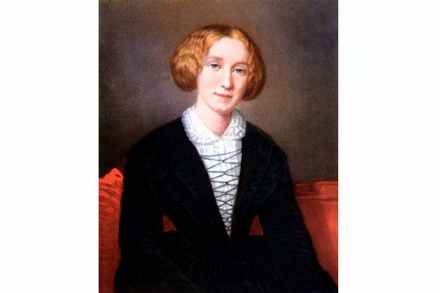
George Eliot deserves some praise 200 years after her birth. But the sort of praise she is getting is predictably blinkered by the literary assumptions of our day. She is celebrated as the great fore-runner of the secular feminist literary culture of today, as if she was Margaret Atwood in lace, or Zadie Smith in a bonnet. She is probably the number one pin-up of agnostic literary types, their secular nearly-saint. Woolf scores slightly higher in sexual politics top trumps, but few of us even pretend to enjoy reading her work. So it’s Eliot who is the canonical darling of the bookish lady journalists who are our prime cultural gate-keepers. I loved her novels as an adolescent. But it does not feel very acceptable to speak about the reasons why I loved them.

The apocalyptic self-righteousness of Laura Pidcock

From our UK edition

While launching her campaign to be returned as MP for North West Durham, Laura Pidcock revealed the barmy self-righteousness that has taken over the Labour party. This is how she wrapped up her speech: 'I know it has been a long time coming, but we are on the path to justice. And because people know that it is perfectly possible that Jeremy Corbyn could be our prime minister, you can be sure that absolutely everything, absolutely everything, is going to be thrown at us in the next few weeks. People will say some of the most hurtful things about our people and our communities and our political representatives. Please forgive them, please forgive them, for they know not what they do.' https://youtu.be/FJYiFHSehPM The first three sentences are normal enough.

Justin Welby could be the man to rescue Brexit

From our UK edition

So there is more than one Old Etonian hoping to ride to the nation’s rescue. My first reaction to the news that Justin Welby is involved in plans for a citizens' assembly to find an alternative to a no-deal Brexit was sceptical. Too late for such an initiative. Give Boris a chance to get on with it. Nice idea that the established Church can help us to get beyond political tribalism, but surely doomed to failure. The coming scrap between remainers and the Government is not a place for nice clergymen. Then I remembered: I had the same sort of reaction to the news, over two years ago, that Welby was calling for a cross-party commission to find a way forward. That seemed naïve.

What I learned talking to Boris Johnson about religion

From our UK edition

I don’t pretend to have had extensive discussions about religion with our new Prime Minister, but I did have a couple of brief ones when he edited my first Spectator articles. We once discussed Christian and Muslim ideas of martyrdom, and he was suddenly reminded of a hymn he liked at Eton which he proceeded to sing to me down the phone.  His tone towards religion in general was, as you’d expect, a bit guffawing: here’s a prime site for flippant jokes and the puncturing of earnestness. But, knowing that I took religion seriously, and seeing that we had an article to discuss, he was a tad constrained.

Is universalism the true cause of left-wing anti-Semitism?

From our UK edition

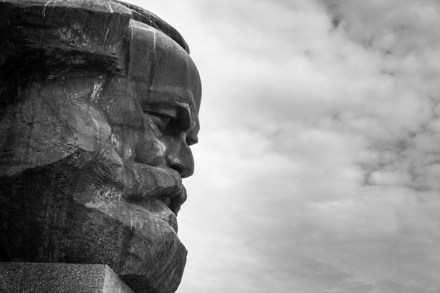
Why does the left have a problem with Jews? I don’t think the current analysis goes deep enough. We need to take two or three steps back from recent political events. The key concept is universalism. Socialism is a universalist ideology: it thinks it has a solution to the world’s problems that everyone ought to subscribe to. The right by contrast is semi-universalist: it thinks free markets are good for everyone, but this is more theoretical than heartfelt, and it balances this with some degree of nativism. Socialism has had an anti-Semitic streak from the start: Marx was an anti-Semite as well as a Jew.

Why don’t we talk about Van Gogh’s Christian faith?

From our UK edition

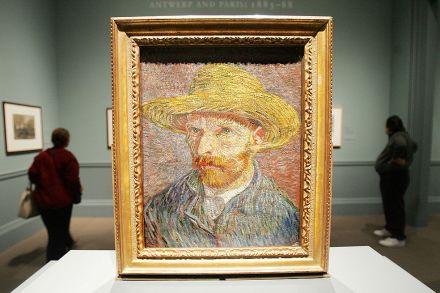
Vincent Van Gogh has been airbrushed by the secular arts media. I have not yet seen the new exhibition at Tate Britain about his London years, so I can only comment on the publicity I have read and heard. This arts chatter downplays, or even ignores, the central feature of his life at this time: his religious zeal. It gives the impression that he was dedicating himself to art, gearing up to be the archetypal creative genius. In reality he did not take art fully seriously in the mid 1870s: though he worked for an art dealer, his real passion was religion.

Will Cardinal Pell’s fall prompt soul-searching in the Catholic Church?

From our UK edition

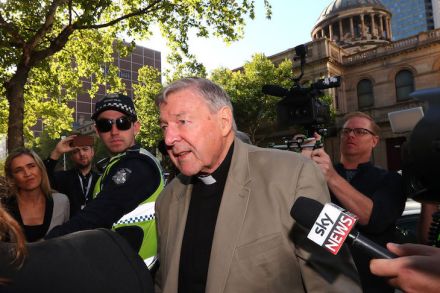
I have heard surprisingly few Catholic responses to this week’s news of the conviction of Cardinal George Pell. I guess those who are not in denial are in shock. Let me interrupt the stunned silence with an outsider’s perspective. This is not just another paedophile priest story - Pell was a key figure in the Vatican under the last three popes - and a major public face of the church’s moral conservatism. So will his fall bring a new level of Catholic soul-searching, a new critique of the Church’s entire moral culture? Pope Francis himself often seems to call for such critique. Last week he warned against the potential dangers of moral rigidity, while speaking about the child sex abuse scandal in general.

How agnostics can help save the Church of England

From our UK edition

General Synod has repealed the old law that every Anglican church must hold a Sunday service. It’s not really the end of an era, because the law has been flouted for decades: many rural vicars are in charge of a large handful of churches and cannot hold services at all of them every week. It’s a reminder that we have to think creatively about how to keep our parish churches alive. And this is not just the responsibility of Anglican churchgoers. Because we have an established Church, it makes some sense for an agnostic who never, or nearly never, attends worship to feel some connection with his or her local church. It is part of the public realm, part of the historic life of the village or district.

Victoria Bateman’s naked Brexit stunt isn’t feminist

From our UK edition

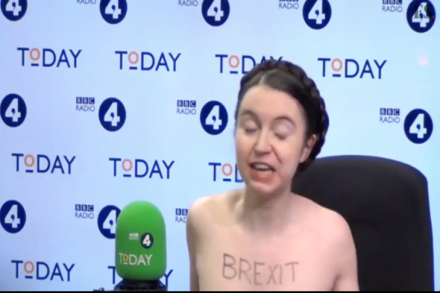
Dr Victoria Bateman’s naked Brexit stunt should not be seen in terms of modern feminism but in terms of early modern religious performance art, especially that of the Ranters and Quakers. The trauma of the seventeenth century English civil war caused some strange religious groups to emerge, and some of them went in for shocking little stunts, or ‘happenings’, in the hippy-sixties term. Cromwell’s frail Commonwealth got rid of the old established church, and deciding what to put in its place was a bit like Brexit. Lots of Puritans wanted their new orthodoxy set up, but plenty of liberals wanted a more open-ended free for all, a ‘no-deal’ scenario perhaps. The Ranters were religious punks; they mixed religion with sex, drugs and swearing.

Why I’m relaxed about the decline of English at university 

From our UK edition

There’s an interesting article in the Guardian about the study of English at university. It’s in decline, says Susannah Rustin, which is a shame. Bright youngsters who might once have signed up to a few years of sonnets and Chaucer are feeling pressured to study something more useful like engineering. Let them, and those influencing their choices, not suppose that English is self-indulgent thumb-twiddling; let them not forget that it sharpens the critical faculties, and ‘has a humanistic role… in advancing a more expansive and democratic version of Englishness than the nativist one.

The liberal case for Brexit

From our UK edition

Anyone for Whexit? I voted Remain. The theoretical arguments seemed finely balanced, so boring old pragmatism decided it. On the one hand I feel vindicated by the current shambles. But on the other hand, oddly enough, I have become more conscious of the case for leaving. And if we really are leaving it seems worthwhile to accentuate this. But ‘Brexit’ feels tarnished by crude jingoism, and I’m a liberal. I propose that we affirm our exit on old-fashioned liberal grounds: Whig Brexit: Whexit. The assumption is that the EU is a great promoter and defender of liberal values. But ultimately it’s an unhealthy assumption. Liberal values are only fully real when the nation state upholds them, puts them into law.

Justin Welby has shown why his church is in such trouble

From our UK edition

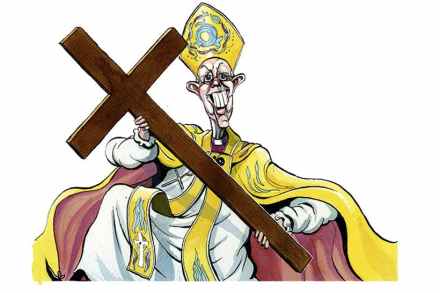
Sorry to sound sectarian, but the Archbishop of Canterbury should really be able to articulate a preference for Anglicanism over other variants of Christianity, including Roman Catholicism. Interviewed here in this week's Spectator, he was more or less invited to do so; instead he said that he was entirely positive about Anglican priests converting to Rome. Hard to imagine the Pope saying the same thing in reverse. Ecumenical enthusiasm is all very nice, but a Church is in trouble if it can’t say why people should stay within it, or choose it over other options. So what is Anglicanism’s selling point? The answer is unfashionable but unavoidable: its socio-political liberalism. Note that I do not say simply ‘liberalism’.