Theo Hobson

Theo Hobson

Theo Hobson is co-editor of Created for Love: Towards a New Teaching on Sex and Marriage.

It’s nonsense to say we are no longer a ‘Christian country’

From our UK edition

According to the census, British Christianity is having a disastrous century. In the 2001 census, a clear majority of people in England and Wales – 72 per cent – described themselves as ‘Christian’. In 2011, this figure fell to 59 per cent. And now, it’s another drop: a 13 percentage point drop to 46 per cent.  These figures suggest that a Christian country has imploded within the space of two decades. Will the figure continue to fall at this rate? Will Christianity disappear from this land within 40 years?  Probably not. What the census shows is that ‘cultural Christianity’ has dramatically fallen. For of course this is all that the census can tell us about. It does not delve any further than asking about people’s religious allegiance.

Sam Bankman-Fried and the twilight of the ‘Effective Altruists’

From our UK edition

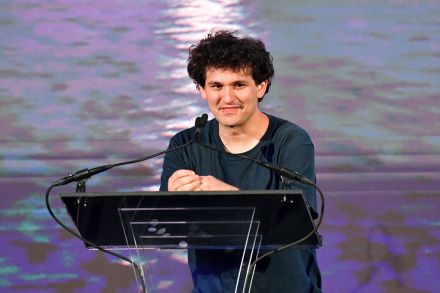
Crypto whizzkid Sam Bankman-Fried has come a cropper. His $16 billion (£13 billion) fortune vanished overnight last week after FTX, the crypto exchange he founded, collapsed. What makes the tale of his rise and fall fascinating is that Bankman-Fried wasn’t in it for the money. Well, not in the normal way. Bankman-Fried is (or was) the poster boy of the Effective Altruism (EA) movement: a group of rational philanthropists who use their time and money in the most efficient possible way. That might involve becoming a banker, or crypto king, in order to earn millions, or in this case billions, so that they can give it away.

Don’t condemn the Church of England for its stance on gay marriage

From our UK edition

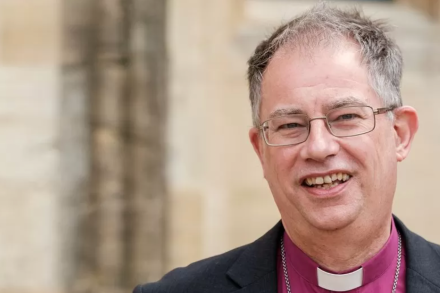
The Bishop of Oxford, Steven Croft, has come out in favour of gay marriage – the first senior bishop to do so. He has apologised to gay Christians that the Church has dragged its feet, and that his own views have been slow to change.  He is right to call for change. But I don’t think he needs to apologise that the change has taken, or rather is still taking, a long time to come. I think that the Church has been right to approach the issue super-cautiously. Gradualism is sometimes good. The orthodoxy says otherwise: ‘justice delayed is justice denied’. But in this case, such rhetoric is impatient and counter-productive. For many centuries it was firmly assumed that marriage should involve people of different sexes.

A.N. Wilson and the ‘aesthetic’ relationship to religion

From our UK edition

My first Spectator article, 21 years ago, was a rebuke to the religious attitude of certain public intellectuals whom I dubbed ‘devout sceptics’. They gave the impression, I said, of being drawn to the depth of religion, unlike shallow atheists, but also of being too intellectually honest to believe in it. To my delight, one of my targets, Clive James, wrote a self-defending letter. I had been noticed by a big beast! A.N. Wilson was another of my targets. Of him, I said that a foppish antiquarian interest in religion was just a water-muddying distraction; we could do with some intellectuals who get off the fence and set out the case for religion. I met him soon after that article and he was very nice about it. He is a charming and friendly chap.

Katharine Birbalsingh is right: children do have original sin

From our UK edition

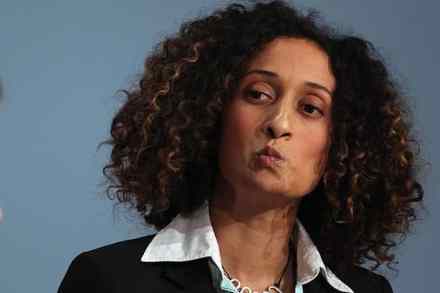
When my son was about six he heard something at school about slavery but was not quite clear what it was all about. So I spelled it out. I told him that a slave was someone that someone else owned and ordered around and probably mistreated. I waited for the proper response of moral horror to show on his innocent features. Instead he said, ‘Cool, I want one!’ I offer this recollection in support of Katharine Birbalsingh’s supposedly controversial opinion that children are not naturally full of the right moral impulses. ‘Britain’s strictest head teacher’ has bolstered her reputation by saying that children are born with ‘original sin’ and must be ‘habituated into choosing good over evil.

The esoteric creed of King Charles

From our UK edition

Our new king is not, by normal standards, an important intellectual. But it would be churlish to dismiss his thinking as insignificant. Normal standards do not apply to a man who has spent his life earnestly preparing for a grand mythical role. Some princes have little trouble ignoring the religious aspects of monarchy, instead getting on with hunting, polo, or charity work. But young Charles was a sensitive soul, the sort who struggles to forge an identity. He had intellectual curiosity and a high idea of himself. Charles has shown a real capacity for melancholic detachment, self-scrutiny, angst. That’s not the whole story: as his leaky-pen petulance reminds us, he also has traits of the spoiled boy.

The Archbishop of Canterbury has risen to the occasion

From our UK edition

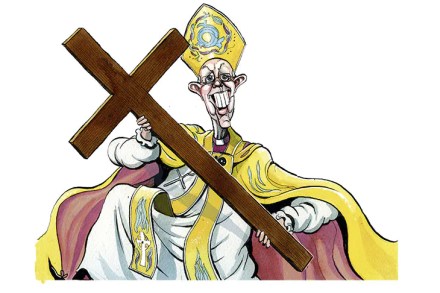
Archbishop Justin Welby has done a good job of relating the Queen’s virtues to her Christian faith. This is no easy task. The writers of the New Testament would have been very surprised by the notion that a monarch could be an exemplary Christian. And any sensible Christian leader is mindful that monarchs should be praised with care, lest religion seem cravenly reverent of tradition and worldly grandeur. She was a model of practical virtue In her life, he said in his official statement, ‘we saw what it means to receive the gift of life we have been given by God and – through patient, humble, selfless service – share it as a gift to others.’ This rightly puts the emphasis on her positive outlook – something most of us struggle to have.

What Philip Larkin can teach us about depression

From our UK edition

A couple of years ago I taught The Whitsun Weddings by Philip Larkin to some A-level students. In the last class they summed up their feelings about his poetry. ‘It’s bare depressing, innit’, said someone (this wasn’t Eton), and someone else agreed: ‘I guess it’s good poetry but I can’t lie, it’s way too gloomy for me.’ Then one young man piped up: ‘But that’s how life is for a lot of people – you know, really bleak.’ Yes, I quietly thought, and you might discover that acquaintance with bleakness awaits you, too. But hang on, aren’t today’s teenagers meant to be depressed and anxious?

Where does Justin Welby stand on same-sex marriage?

From our UK edition

Justin Welby has made a valiant attempt to placate both sides of the Anglican divide. He has insisted that the official conservative teaching on sexuality, agreed at the Lambeth Conference of 1998, is still valid. But he also said that provinces that dissent, and affirm same-sex marriage, should not be disciplined. In effect, he is calling their dissenting view an authentic expression of Anglicanism. At the end of the speech he ducks the question In the crucial passage of his speech that he delivered this week, he asserts that, ‘for the large majority of the Anglican Communion’, to question the traditional teaching is ‘unthinkable, and in many countries would make the church a victim of derision, contempt and even attack.

Oliver Cromwell was a liberal pioneer ahead of his time

From our UK edition

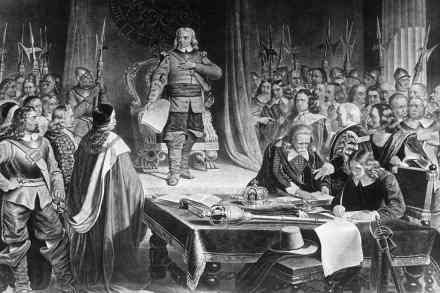
Was Oliver Cromwell a religious fanatic who loved banning stuff, or a pioneer of liberal values? Sunday’s Observer reported that a group of historians have dredged up some documents that suggest that he was seriously committed to religious freedom.  Despite his reputation for brutally suppressing Irish Catholics, it emerges that Cromwell was open to them practicing their faith, so long as they no longer posed a political threat by supporting royalists. Another document confirms his enthusiasm for readmitting Jews to England and his willingness to offer them religious freedom.

Good Luck to You, Leo Grande misses the point of sex

From our UK edition

Good Luck to You, Leo Grande, the new film starring Emma Thompson, doesn’t know what sex is. It portrays a brief liaison between a widow (Nancy, played by Thompson) and a male prostitute as liberating for her, a blessed introduction to the world of sexual pleasure. The marital sex she knew was functional, orgasm-free (for her). Maybe religion’s to blame; she was an RE teacher. I don’t know if the film specifies whether she has a religious background, but it’s at least implied. And in an interview Emma Thompson blames religion for the shame that has denied so many people sexual pleasure. Back to my opening claim. Such a plot entails a two-dimensional view of sex.

My Sally Rooney conversion

From our UK edition

I tried to dislike the writing of Sally Rooney. But I failed. I retain some resistance to Sally Rooney the cultural phenomenon, because this is largely about television adaptations of her books, which can only accentuate the negatives. I have an old-fashioned view of these things: only literature can represent a glamorous world with nuance, real satire, barbed detachment; the interiority of writer and reader is a counterweight to the allure of worldly things.  The adaptation of her first novel, Conversations With Friends, which begins this weekend, is unlikely to challenge my view. It might, for example, attempt to show that Nick is vain and selfish as well as handsome and amazing at sex, but handsome and amazing at sex will win.

Is Channel 4’s sex obsession really a ‘public service’?

From our UK edition

Is Channel 4 a public service broadcaster that should be saved from privatisation? Today's Queen's Speech, which lays the groundwork for the sale of the channel, is set to reignite that debate once again. But Channel 4's increasingly dire output – and its obsession with shows about sex – shows privatisation might not be such a bad idea. Yes, Channel 4 produces some worthy stuff, but much less than in the past – I can’t recall a really good recent documentary on the channel. Its news is useful enough, especially if you can tolerate the smug air of its main presenters. But these positives are outweighed by a massive negative that enlightened people pretend not to notice.

Boris Johnson is right about Justin Welby

From our UK edition

The Prime Minister told Tory MPs that church leaders had been 'less vociferous in their condemnation on Easter Sunday of Putin than they were on our policy on illegal immigrants'. Lambeth Palace called this 'a disgraceful slur'. So who is right? If the PM’s comment is confined to the archbishop of Canterbury, he appears to be technically correct. Welby’s high-profile sermon did attack the asylum policy in strong terms, and it had no such harsh words for Putin himself (even if he did say Easter should be a 'time for Russian ceasefire, withdrawal and a commitment to talks'). Not only did Welby say that the deal raised 'serious ethical questions'; he went into full prophet mode and declared that it would not 'stand the judgment of God'.

Dostovesky and Putin’s useful idiots

From our UK edition

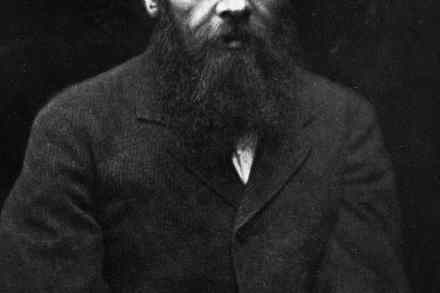
When I was 17 I heard the name Dostovesky, and was enthralled. Just the name felt so glamorously intellectual, so deep. I began to read some of his novels, and my hunch was vindicated. A bit later I delved into his ideas, and my admiration became more nuanced. I partly admired his defiance of the rational humanist arrogance of the West, but I was also wary of his reactionary mystical nationalism, his faith in the anti-liberal Russian soul.  It seems that a lot of religiously minded intellectuals struggle to get past stage one. They are so taken with the flinty glamour of this writer that their critical faculties atrophy. They allow their aesthetic admiration to influence their religious politics.

Louis Theroux and the problem with sex scenes

From our UK edition

You know the restaurant scene in Notting Hill? The Hugh Grant character defends the honour of his magical girlfriend when she is the butt of some sexist banter from some vulgar brutes, who don’t realise she is sitting round the corner. In many languages, says one, the word for actress is the same as the word for prostitute. Hugh just can’t bear it: he confronts them with an angry eye-flutter, telling them to bloody well shut up, and then Magic Girlfriend appears and tells them that they have small penises. It’s one of those scenes in which Richard Curtis helps us to understand what is good and what is bad these days.  Well, at the risk of resembling one of the nasty sexists in this scene, I want to suggest that the new orthodoxy has its limits.

The trouble with Putin’s Christian Orthodoxy

From our UK edition

If you are worried about the uncertain fate of democracy in today’s world, what should you do? Become a human rights advocate, maybe, or a campaigning journalist. Or maybe you should consider becoming a Protestant missionary. In today’s Times, Danny Finkelstein draws our attention to the democracy index compiled by the Economist Intelligence Unit. It tells us that democracy has been in decline since 2006, and in recent years it has downgraded some of the most seemingly solid democracies, including the US, from ‘full democracies’ to ‘flawed democracies’. It is rather unfashionable to speak of the Protestant roots of liberty I had a look at the top ten ‘full democracies’.

Douglas Murray, Nyrola Elimä, Theo Hobson

From our UK edition

27 min listen

On this week's episode, we’ll hear from Douglas Murray on why he thinks that the Coronavirus is over. (00:51)Next, Nyrola Elimä on her family’s experiences as Uighurs living under the rule of the CCP. (08:27)And finally, Theo Hobson on why the different factions of the Church of England need to come together. (16:54)Produced and presented by Sam HolmesSubscribe to The Spectator today and get a £20 Amazon gift voucher:spectator.

Divided we stand: Anglicans need to agree to disagree

From our UK edition

Two years ago the Church of England decided to delay any public discussion of its deepest division, over homosexuality, until 2022. So this might be the year in which an already troubled institution has a dramatic public meltdown. Or it might be the year in which the Church of England sorts itself out a bit. Yes, really. Stranger miracles have happened. There are grounds for hope, and not just on the gay issue. The Church has a core strength that it could draw on, and a core identity that could stand it in good stead, though one it is weirdly shy to assert. First let’s admit that things haven’t been going so well, even while the gay issue has been kicked into the long grass.

A Christmas prayer

From our UK edition

Dear God, Please help me to keep it together this Christmas. For it is a testing time as well as a joyful one. Help me to make sense of this season, in which the wonderful story of the birth of your Son jostles with all sorts of ghastliness. Give me the calm fortitude to bear the advertising, the tinsel, the pressure to be a perfect family, meaning a self-satisfied bourgeois bunch, worshipping at the shrine of their miserable materialism. Help me not to flirt too much with that foxy young mum down the road Help me not to be too much of a fool at Christmas parties. They are smaller and fewer this year but there are still opportunities to put my foot in it with an inappropriate joke or a stray comment that shows someone what I think of them.