Theo Hobson

Theo Hobson

Theo Hobson is co-editor of Created for Love: Towards a New Teaching on Sex and Marriage.

The dull piety of the new Tate Modern

From our UK edition

I happen to like the new Tate Modern building. The content’s the problem. The art currently on show there sums up some of the worst defects of the art world. Just when it should be exuberant and joyous it is pious, timid, cold - like a sparky young woman who goes all bluestocking on you. This isn’t a whinge about modern art - I love the stuff most of the time. But it can be overtaken by nervous self-consciousness. Called to boldness, it plays it safe. The new space currently focuses on performance. But there was no performance - no little burst of arty theatre to amuse or challenge us. Just lots of video, and lots of reports of past performances (many of which had an earnest political feel).

Secularism’s view on violence is less humane than Christianity’s

From our UK edition

Let’s say that a man kills a few people at random in your neighbourhood – on the street in broad daylight. Is it better or worse if he justifies his killing spree as part of a holy crusade? In other words, which is worse – terrorism or meaningless psychotic violence? I am aware that this is something I perhaps should not admit, but when reports emerge of such attacks, I sometimes catch myself hoping that it is terrorism, not just meaningless madness. Maybe the journalist in me wants a chunkier story, linked up to world events. But the main motive is wider, I think: we can view the evil of terrorism as theoretically curable – by replacing religious extremism with better ideas. This is not so with insanity, which makes it even more terrifying than terrorism.

Labour needs to rediscover its religious vision

From our UK edition

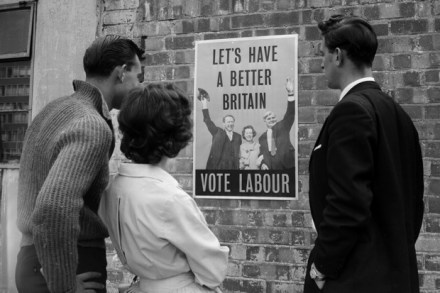
One of our main political parties is at an immense disadvantage. Labour is tied to a form of idealism. Socialism is a strong form of idealism. It can only gain and hold power by diluting this idealism, mixing it with realism. This is psychologically difficult, existentially unstable. When it finds a way of gaining power, it is not calmly at ease with itself, but divided. And this intensifies after a period of power: purists seek revenge on those behind the ‘successful’ compromise. Blair’s Iraq war adventure is incidental to why he is so hated by the left. He is really hated for winning all those elections. How has such a party survived thus far? How can the moderates bear to rub shoulders with the purists who so hate them?

Pride in procreation is dull, pagan stuff. Christians should steer clear of it

From our UK edition

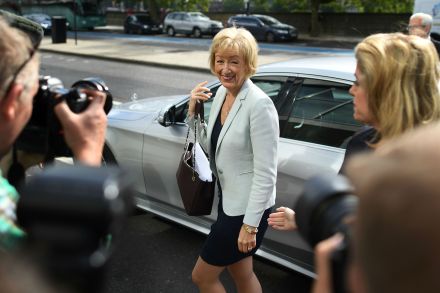
Andrea Leadsom presumably considers her aggressive pride in her maternity to be something to do with her Christian faith. To quote her heroine (who now seems wonderfully subtle): No, no, no. Pride in procreation is dull, banal, pagan stuff, not completely unrelated to fascism. Christians ought to steer clear of it. Did Jesus or St Paul lack a stake in the future by virtue of failing to breed? Christianity broke with the Jewish and pagan assumption that having a big family is essential to a fully meaningful and fulfilling life. It said that the community of the church was more important, and in this community the childless, including dedicated virgins, were seen as at least as valuable as family types.

The scapegoating of Blair is excessive

From our UK edition

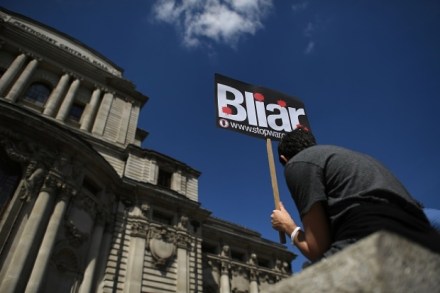
Blair’s great mistake was his desire to believe the best of America. It must know what it’s doing in invading Iraq, he thought. And in 2002, for once, this mighty superpower was hurt, needy – he felt needed by the leader of the free world. Which must be an intoxicating experience. Many of the rest of us shared in this basic mistake, this assumption that this generally benign superpower should be trusted. It’s an assumption bolstered by hundreds of films in which American power saves the day. And it’s an assumption largely backed up by history: Western Europe has been made safe by American power, for many decades. Yes, he was at fault, for presenting flawed, biased intelligence to parliament, for failing to demand assurances about the post-invasion plan.

Brexit was reckless but not immoral

From our UK edition

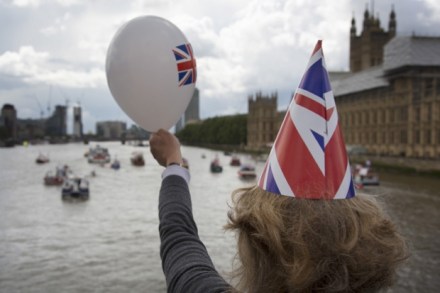
I voted Remain. I felt that the arguments for and against Brexit were pretty evenly balanced, except in terms of economic risk – and maybe geopolitical risk. So why risk it? But we did risk it. A reckless move, but not a morally indefensible one, as most Remainers are now saying. Let me explain why I’m on the fence about the morality of the decision. Let me come at it in a rather eccentric way – by talking about ideas in a rather general way. I think we have to start by considering what our most basic common creed is, what unites us (in as far as anything does) as a nation. I suggest that we call it secular humanism, our common creed.

Perhaps, after all, sexual morality does still matter in politics

From our UK edition

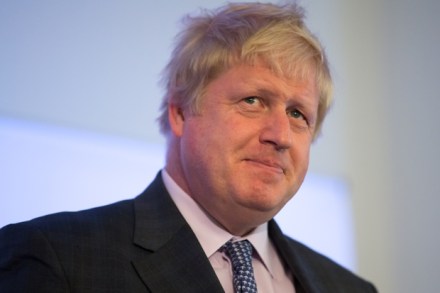
This is not something that we are keen to discuss, for we are pretty sure that we have become far less puritanical, and that this is a good thing. But try this experiment. Imagine a slightly different version of Boris: funny, human, brilliant, a bit chaotic-seeming, and so on – but without any hint of sexual scandal. There would still have been question marks over such a Boris becoming PM – especially after his opportunistic Brexit decision. But they would have faded as the prospect of a charismatic, nation-enthusing leader emerged. Some would have called this Boris fundamentally untrustworthy, citing episodes of bullying and aggressive ambition, but such qualms would have been marginal.

No, Brexit wasn’t a defeat for humanist values – or for love

From our UK edition

Perhaps the most important pundit to have emerged from the earthquake is Giles Fraser. As a left-wing vicar and longstanding anti-racism campaigner, he makes it harder for people to depict the Brexiters as closet racists. He disrupts the defeated Remainers’ assumption that they represent progressive values, humanism. The same applies to the handful of pro-Brexit Labour MPs, but MPs can be assumed to have murky motivations. On last night’s Question Time, Fraser quoted Galatians (one of the readings in churches yesterday): Love your neighbour as yourself. We need to get beyond our current divisions, and trust in this supra-political principle, he said. Contrast this with today’s offering from Zoe Willams, his fellow Guardian columnist.

Alain de Botton offers Freudian bleakness to the Facebook generation

From our UK edition

Alain de Botton, to judge from his new novel The Course of Love, is trying to be the Freud for our day, the Facebookers’ Freud. For a book that presents itself as an affirmation of married love, it is rather bleak. And the bleakness echoes that of the Viennese know-it-all. Freud, remember, said that our sex drive makes life basically tragic. To have orderly lives, we must renounce our desire for promiscuous fun. To be mentally healthy, we must be honest about this; we must admit the force of our primal instinct, and not deny it or suppress it too rigidly, or we go neurotic. But we must suppress it. The funny thing about de Botton is that he comes to such conclusions against the grain of his temperament, which is doggedly upbeat.

Church attendance isn’t everything. It’s authenticity that counts

From our UK edition

When there’s a story about Christianity in decline, or in crisis, you always get a few loudmouth lifestyle columnists gloating – sorry, imparting their secular wisdom. Barbara Ellen was not very surprised that a new report says that Christians (at 44 per cent) are now outnumbered by ‘Nones’ (at 48.5 per cent). After all, the main thing religion claims to offer is ‘community’, and in practice that probably means ‘sitting in a draughty hall with a Bible group and a digestive biscuit’. This is a good snapshot of secularist arrogance. If Ms Ellen attended a local group in which a genuine social mix assembled (unlike at her book group) in order to practice literary analysis and share life-stories, imagine how excited she’d be.

If atheists do have values, what are they?

From our UK edition

There’s an interesting article in the Guardian by Julian Baggini. Now that nearly half of Britons say that they have no religion, he observes, some believers are saying that atheism is also a sort of faith. Though an atheist, he is not of the Dick Dawkins school, and so does not respond with Dickish bluntness. He is not one of those ‘zealous’ atheists who sees religion ‘as an offence to human rationality.’ People like that do seem to have a sort of crusading faith, he says. Excessive trust in the power of reason can be dangerous, he adds. He admits that the ‘meaning and value’ that atheists find in life is not strictly evidence-based, and so has a faith-resembling aspect. But it’s misleading to call this ‘faith’, he concludes.

Even religious polemics can’t inject any life into the Brexit debate

From our UK edition

Churches are generally ideal venues for public debates. But there’s a slight chance that a speech about the perils of EU membership will be interrupted by a homeless person doing a pee in the corner. At a debate on Christian responses to the EU at St James the Less church in Pimlico last night, Giles Fraser left off quoting his hero Tony Benn on the evil of unaccountable power in order to do his muscular Christian duty and help eject the man, who spluttered invective as he departed. Did I imagine it or did he shout 'Fexit Brexit'? A bit earlier, his opponent Ben Ryan had set out an optimistic vision – not Project Fear but Project Hope. He argued that the European project was never simply about economics: it was based in a Christian moral vision.

The Brexiteers have brought romance back into politics

From our UK edition

I recently got round to reading Francis Fukuyama’s famous book The End of History and the Last Man. As well as heralding the triumph of liberal democracy, he explains that a snake will always lurk in the garden, for human nature is not entirely won over by the gospel of equality. He introduces us to the term megalothymia, the desire to distinguish oneself from the rest, be the best. It’s expressed in capitalism, sport and other cultural pursuits. It is also likely to be expressed in politics: leaders will probably emerge who don’t have any new ideology, but want to rock the liberal democratic boat. They are motivated by a sort of primitive lust for adventure.

Britain’s Christian culture has risen above the recent religious brawl

From our UK edition

Our political culture contains some tension between Jews and Muslims. And some secular anti-Semitism, particularly on the left, and some Islamophobia. But, at the risk of getting Pollyannaish, let us see the positive. This country's main religious culture, Christianity, is not involved in any of this nastiness. It does not contain any substantial prejudice against Muslims or Jews. It is not significantly invoked by our (rather mild) nativist movement, Ukip. Yes, Farage sometimes says that he stands for Christian values, but this is just a harmless and desperate bit of rhetoric. The louder message is that the Queen asked that lovely Muslim baker to her party. Let us be quietly proud that our Christian culture is above the fray.

The BBC should commission a Christian version of Woman’s Hour

From our UK edition

In his new book God is No Thing: Coherent Christianity, Rupert Shortt notes that religion is in some ways taken more seriously now than a decade or two ago. But huge habits of ignorance and condescension remain: ‘When secular humanists attack Christianity, they often fail to realise that it is the gospels which provide unseen elements in their own outlook.’ He rightly draws attention to the ‘tension between the enormous cultural footprint of Christianity on the one hand, and its concealment in a secular multicultural society such as Britain on the other.’ And he tentatively criticises the subtle marginalisation of Christianity from public discourse.

Louis Theroux has brought honest humanism to our screens

From our UK edition

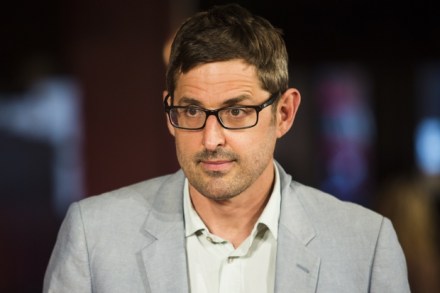
Louis Theroux’s latest documentary on alcoholism confirms the fact that he has become an interesting broadcaster. He has grown up. This was already clear from his last couple of films from America, on a secure mental hospital, and on transgender children. This might sound excessive, but he has become capable of expressing a more nuanced humanity than the average television journalist. In his callow youth he was fun to watch, but overdid the sneering ironic act. He kept a straight face in order to allow idiots to expose themselves. Such an approach is tainted by a sort of self-righteousness: let’s look down on these ridiculous human specimens. Then he began to focus on fairly ordinary people with interesting struggles. And he paid attention, gave them space.

Will the human rights industry ever admit that it has Christian roots?

From our UK edition

Helena Kennedy’s two-part radio programme on human rights was very predictable. She did a lot of hand-wringing. She spoke some passionate rhetoric about our common humanity. She quoted Hannah Arendt. She consulted a lot of non-Western thinkers, a lot of fellow human rights lawyers, and a token critic of the concept of human rights. The first part put much emphasis on the ancient global roots of the concept. Look how it is anticipated in this ancient Iranian or Mesopotamian or Buddhist document. I think this is misleading. Though many ancient cultures had impulses in this direction, they were frail. It was the Christian West that gradually heaved such aspirations into politics.

Brexiters shouldn’t knock Obama too hard. Most Brits still like him

From our UK edition

I suppose it’s inevitable that Brexiters will angrily reject Obama’s intervention, especially his line about Britain being left 'at the back of the queue' when it comes to trade. But if they let their annoyance spill over into a general criticism of the president, they will harm their own case. For most Brits still rate him very highly. Tim Montgomerie accuses him of extreme arrogance, and widens the critique: the grand stirring rhetoric that won him the presidency not only failed to unite America; it fostered a more extreme and angry political culture. I half-agree: Obama’s exceptional expression of liberal idealism scared his opponents, and provoked them to mobilise.

Channel 4’s Sex Box is far more damaging to British culture than Islamism

From our UK edition

Last night Channel 4 broadcast a programme by Trevor Phillips, in which he worried about the integration of British Muslims. He suggested that we should switch to a policy of ‘active integration’. The night before, at the same time of 10pm, Channel 4 broadcast a programme in which the merits of having sex with a complete stranger were discussed. Some people find it very liberating, a sexpert explained, as a thrilled audience of thickos tittered. Yes I know – I wrote about Sex Box last week – one more strike and I’m officially volunteering to be the new Mary Whitehouse. My point is that sensationalist TV is guilty of falsifying who we are as a nation in a way that alienates people with traditional moral views.

Can Christianity be translated into a few core rules?

From our UK edition

The message of Pope Francis, in his exhortation Amoris Laetitia (The Joy of Love), seems to be this: there must be rules. Only tough rules can express the absoluteness of the gospel. Without these rules it will be diluted, its saving force depleted. But the Church must apply these rules with Christlike tenderness and mercy, rather than with legalistic rigour. It must be tolerant of innovators on the edge, testing the boundaries. But it must uphold the core rules, even if they seem harsh. For this harshness corresponds to the absoluteness of the ideals of Christianity. We may all struggle to live up to these ideals, but we need absolute standards to aim for – we need to try, and fall short, in the right direction.