The Spectator

Letters: Why do we need beavers?

From our UK edition

It’s not about money Sir: Professor Tombs criticises Alex Massie (Letters, 22 August) for ignoring evidence when the latter claims that economic concerns ‘no longer matter’ in great political decisions. But the evidence from the last Scottish referendum tends to support Massie. At the beginning of the Scottish referendum campaign in 2014, polls showed 26 per cent of Scottish voters favoured independence. The Better Together campaign amassed compelling evidence that independence would be a financial disaster and set about presenting this to the Scottish public in an exercise they christened Project Fear.

The BBC tradition of trying to remove patriotic songs from Last Night

From our UK edition

About Last Night It was suggested that the BBC might ‘decolonise’ the Last Night of the Proms by removing ‘Rule, Britannia’ and ‘Land of Hope and Glory’. ‘Land of Hope and Glory’ made its first appearance at the Proms in 1902 (Edward Elgar’s march had been played the previous year without the words). Sir Henry Wood’s ‘Fantasia on British Sea Songs’ followed in 1905. But the Last Night in its modern form began only with the first televised Last Night in 1947. Twenty-two years later began another tradition: the BBC trying to remove patriotic songs from the programme. The move was defeated in 1969 and again in 1990, in the run-up to the Gulf War.

Portrait of the week: BBC drops songs, museum drops Sloane, and KFC and John Lewis drop slogans

From our UK edition

Home Nicola Sturgeon, the First Minister of Scotland, made pupils wear face-coverings in school corridors. It didn’t take long for the UK government to follow suit in England, for secondary pupils in areas of high transmission. The chief medical officers of England, Scotland, Northern Ireland and Wales said that the fatality rate for those aged five to 14 infected with coronavirus was 14 per million, lower than for most seasonal flu infections. Sally Collier resigned as chief regulator of Ofqual, which had been caught up in the chaotic assessment of A-level and GCSE candidates. It was ‘vitally important’ for children to go back to school, said Boris Johnson, the Prime Minister.

2469: Breadth solution

From our UK edition

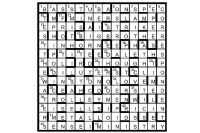
The unclued lights were: 12 CORNI, anagram of Corin (As You Like It); 23 MANDIRA, Miranda (The Tempest); 27 LARDOON, Orlando (As You Like It); 38 GRADE, Edgar (King Lear); 1D SIROC, Osric (Hamlet); 8 HAMPERING, Erpingham (Henry V); 21D EUTROPHIC, Petruchio (The Taming of the Shrew); 34 ANGER, Regan (King Lear). Title: anagram of ‘the Bard’. First prize Mrs F.A.

Letters: why do we put up with bats?

From our UK edition

Scottish hearts and heads Sir: Alex Massie ignores the evidence when he espouses the assumption that economic concerns no longer matter in great political decisions (‘Scottish horror’, 15 August). Compare, as he does, a future Scottish referendum with the 2016 Brexit vote. Then, around two thirds of the British electorate held ‘Eurosceptic views’ (so Sir John Curtice of Strathclyde University tells us). But the barest majority voted to Leave. The cause is plain: the largest single motive for Remain voters was that ‘the risks of voting to leave the EU looked too great when it came to things like the economy, jobs and prices’. A Eurosceptic two thirds was whittled down by ‘hearts vs heads’ considerations.

Portrait of the week: A-level chaos, quarantine confusion and revolution

From our UK edition

Home The government seemed to be taken strangely unaware by the frenzy of recrimination that came its way when results were announced from a system put in place as a substitute for A-levels, cancelled in March. Schools had been told to present teachers’ assessments, to which Ofqual applied an algorithm supposed to iron out anomalies. Almost 40 per cent of teachers’ assessments were downgraded, but even so the proportion of A and A* grades was higher than ever. Yet anomalies abounded, and schools that had performed less well in recent years saw bright pupils penalised; black children and those from poor backgrounds were said to be hard hit. While candidates lamented lost places at medical school, the government did nothing.

How scared are we still about Covid?

From our UK edition

Pink and twisted Bernard Matthews, which stopped making Turkey Twizzlers in 2005 after criticism about unhealthy school dinners from Jamie Oliver, announced it is reintroducing the product. It will contain up to 70% turkey, compared with 34% originally. — Bernard Matthews came up with the idea of making twisted pieces of turkey, allegedly as an accidental by-product from a machine which stamped out imitation drumsticks from reconstituted turkey meat. — The name ‘Twizzler’ was also used by a Pennsylvania confectionary company, Y&S Candies, from 1929. The product, still sold in the US, is made from corn syrup, flour and sugar, with strawberry flavouring. Covid courage How brave have the British public been feeling over Covid-19 in the past week?

The Democrats’ complacency is Trump’s greatest weapon

From our UK edition

There is a great mystery lying behind the 2020 US presidential election: how come a country of 350 million, which leads the world in academia, science and more, is unable to find two more inspiring candidates than Donald Trump and Joe Biden? Where is the voice of hope, or even just a reassuring voice of calmness and competence? Instead, come November, citizens of the most powerful nation on earth will be forced to choose between a narcissist and a man whose claim to his party’s candidature appears to be based on the principle of Buggins’ turn.

Inflated exam grades let the government ignore its own failures

From our UK edition

It was obvious that closing schools would hit the poorest hardest, inflicting permanent damage and deepening inequality. While many private schools and the best state schools maintained a full timetable of lessons throughout lockdown, a study by UCL in June found that 2.3 million pupils — one in five of the total — did virtually no schoolwork at all during the weeks of lockdown. The official response has been to turn a blind eye, and imagine that the damage can be covered up by simply awarding decent exam results. This year’s students are right to protest about the injustice of the system. From the moment the decision was taken to cancel exams, rather than carry out exams with social distancing, this year’s mess was guaranteed.

How hot does a ‘heatwave’ have to be?

From our UK edition

Some like it hot Are heatwaves becoming a devalued currency? Last year the Met Office defined a heatwave as three consecutive days when maximum temperatures exceed the 90th percentile maximum temperature for mid-July. In London that means when the maximum exceeds 28˚C. For the rest of the south-east, as far west as Hampshire and as far north as Nottinghamshire, the threshold is 27˚C. For Dorset, Somerset, Herefordshire, Shropshire, Cheshire, Derbyshire, South Yorkshire and Lincolnshire it is 26˚C, and everywhere else, including the West Country, most of Wales, the north of England and Scotland it is 25˚C. In places it will mean a heatwave occurring in 30 to 50 per cent of years. Journeys by dinghy How far do migrants have to travel in boats?

Letters: Will office workers ever want to return?

From our UK edition

The future of offices Sir: I agree with much of Gerard Lyons’s article about the future of the capital (‘London in limbo’, 8 August), but there is more to consider. Before the virus, many organisations considered having staff working from home. However, there were always objections: people needed to be at meetings; the technology wasn’t good enough; questions over whether workers would work their contracted hours. With the onset of the virus, working from home was forced upon many, and has proved to work better than could ever have been expected. Will these workers ever want to come back to the office?

2467: Girl Talk solution

From our UK edition

The unclued lights, 3/34, 12/31, 26/1A/33, 35/9, 39 and 18 PEAKE (an anagram of the red highlighted letters), are six of the actresses who appeared in the recent BBC production of Talking Heads.

Portrait of the week: Local lockdowns, busy beaches and an explosion in Beirut

From our UK edition

Home Some 2.7 million people in Greater Manchester and parts of Lancashire and West Yorkshire, where many Muslims live, were put under tighter restrictions on the eve of Eid al-Adha. Wedding receptions, gambling in casinos and eyebrow-threading continued to be banned when the government decided to ‘squeeze the brake pedal’ to control coronavirus, in the words of Boris Johnson, the Prime Minister. Aberdeen was put back into lockdown. People would have to wear masks in church from 8 August. The sudden actions came after new cases rose from a probable 2,800 to 4,200 a day, according to a survey by the Office for National Statistics, based on 116,026 swab tests collected over six weeks, which found 59 people with Covid-19.

Letters: How to slim down the nation

From our UK edition

Peer review Sir: A neat solution to the levels of inactivity of some members of the House of Lords (‘Peer pressure’, 1 August) might be annual self-assessment against national minimum standards: record of attendance (including duration), contributions to debates, questions asked, involvement in legislative procedure, notable achievements, charitable works. Any peer falling short should be shown the ornate door, as should any caught popping in just to claim their £300.David EdwardsNorton sub Hamdon, Somerset Matrix of success Sir: It is agreed that the purpose of the Upper House is to employ its wisdom and experience to improve draft bills emanating from the Commons. The present occupants of the Lords hardly represent a font of all wisdom.

Economies run on confidence – the government mustn’t undermine it

From our UK edition

Throughout the past few months the government has appeared to face an unenviable choice between saving lives and saving livelihoods. Nevertheless, a fortnight ago the path seemed clear. The numbers of Covid infections were falling, but the economic news was dire — hence Boris Johnson was engaged in a drive to reopen the economy as quickly as he could without prompting objections from his scientific advisers. Now things feel rather different. Economic figures from recent days have surprised on the upside: the CBI’s figures for retail sales in July show a sharp V-shaped recovery. Sales of cars and houses were running ahead of last year — during July at least. At the same time, though, the outlook on Covid-19 has darkened.

How busy have restaurants been this summer?

From our UK edition

The other Argos The Argos catalogue, known as the ‘Book of Dreams’, is no longer to appear in printed form. How did the shop get its name? Founder Richard Tompkins happened to be on holiday in the city of Argos, on the Peloponnese peninsula in Greece, when he came up with the idea for it. The city, which dates back to around 1200 bc, offers a number of treasures of its own, including: — An ancient theatre, seating 20,000 people and dating back to the 3rd century bc — The Agora, developed in the 6th century bc — The arched municipal market, Argos’s own monument to retail, dating from 1889 Dying out The overall mortality rate in England and Wales was below average in June, in spite of high numbers of Covid deaths still being recorded.