The Spectator

The soft censorship of the Online Safety Bill

From our UK edition

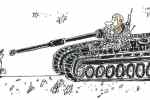
The arrest of a reporter who held up a poster during a Russian news broadcast criticising the war in Ukraine reminds us how dictatorships operate. One of Vladimir Putin’s first acts on the home front, after sending his tanks over the Ukrainian border, was to pass a law specifying jail terms of up to 15 years for anyone who dares to disseminate ‘fake news’ – i.e. anything which contradicts his government’s lies – about the Russian war effort. Britain is a very long way from that kind of suppression of speech. If a publication wishes to condemn Boris Johnson for his handling of the Ukraine war, Covid or for anything else, its writers and editors will not be ‘disappeared’. But the stories themselves might be.

Who coined the name ‘Londongrad’?

From our UK edition

Thamesky Prospekt Who first coined the place name ‘Londongrad’? The name was used in a BBC sitcom called Comrade Dad, written by Ian Davidson and Peter Vincent, and first broadcast in 1984. It was set in a Britain of 1999 when the Soviet Union had annexed the country. However, the first use of the term has been traced to an obscure columnist, Senator Soaper, writing for the Montana Standard in 1931. Ridiculing George Bernard Shaw’s fondness for communism, he gave Shaw’s address as ‘Whitehall Courtsky, Londongrad’. Whitehall Court, on the Embankment, has become a favourite of Russian investors. Igor Shuvalov, deputy prime minister of Russia between 2008 and 2018, is believed to own two apartments in the building.

Portrait of the week: Russian forces move in on Kiev

From our UK edition

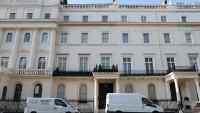
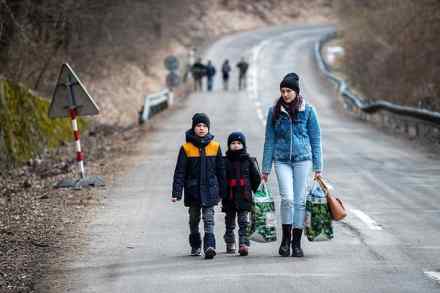
Home More than 100,000 people registered interest in giving a place in their homes for Ukrainian refugees under a government scheme, after widespread criticism of bureaucratic obstacles, though refugees would still require a visa. The scheme was the responsibility of Michael Gove, the Levelling Up Secretary; asked if he would take in a refugee, he said: ‘Without going into my personal circumstances, there are a couple of things I need to sort out – but, yes.’ He thought it might be an idea to lodge refugees in oligarchs’ empty properties. Anarchists occupied a house in Belgrave Square belonging to Oleg Deripaska; four were arrested.

It’s time to drop the net zero agenda

From our UK edition

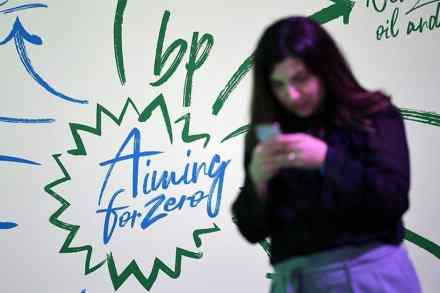
For years British energy policy has been an exercise in wishful thinking. We’ve been living in a fantasy world in which Britain can somehow achieve ‘net zero’ by 2050 without paying any serious economic price, and with no one significantly poorer as a result. ‘Not a hair-shirt in sight,’ said the Prime Minister, though most independent assessments said net zero would cost between £36,000 and £50,000 per household. Reality, now, is biting. Reducing emissions is important but security of supply is vital, and Europe has been forced to come to terms with its dependence on Russian oil and gas. The dependence is so entrenched that it is possible Vladimir Putin thought that Europe would rather leave Ukraine undefended than impose sanctions.

Letters: Britain must offer immediate sanctuary to Ukrainians

From our UK edition

Unintended consequences Sir: The West has got it wrong when it comes to putting a stranglehold on Vladimir Putin (‘Putin’s rage’, 5 March). Harsh economic sanctions will ultimately punish millions of ordinary Russians, many of whom are poor and probably against the invasion of Ukraine. If the products Russian workers produce do not sell then those workers become unemployed and forced into poverty. That could quickly turn more Russian citizens against the West, strengthening support for Putin rather than weakening it, thus prolonging the occupation and hostilities. So far, the West hasn’t done a great deal regarding this invasion, other than turn the wheels of Putin’s propaganda machine for him.

Portrait of the week: Zelensky channels Churchill, Russia blocks BBC and Bercow banned from parliament

From our UK edition

Home President Volodymyr Zelensky of Ukraine addressed a packed House of Commons by video, echoing Winston Churchill by declaring that Ukrainians would fight in the fields and in the streets. He said: ‘Please make sure that our Ukrainian skies are safe.’ Wearing a blue and yellow tie, the Speaker, clearly moved, thanked him. Earlier, Boris Johnson, the Prime Minister, announced a ban on Russian oil imports in the coming months, but no ban on gas imports. He proposed a six-point plan that included an international humanitarian coalition and maximising economic pressure on Vladimir Putin’s regime in Russia. Mr Johnson also said the government would publish a strategy for producing more energy in the UK. Petrol rose above 155p a litre.

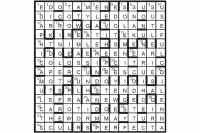
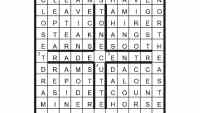
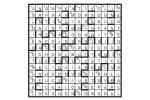
2543: Parts of Speech – solution

From our UK edition

Unclued lights are the many parts each man plays, from the ‘Seven ages’ speech by Jaques (29D) in As You Like It (2:7:139). First prize Andy Binstead, Stroud, Glos Runners-up Susan Hay, Perton, Wolverhampton; S.J.J.

Schools portraits: a snapshot of four notable schools

From our UK edition

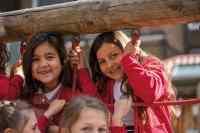
Colville Primary School Based just off Notting Hill’s Portobello Road, Colville Primary School occupies a Victorian Grade II-listed building that was once a laundry. Today, it accommodates pupils up to the age of 11 who are taught under the school’s ‘three key values’: respect, aspiration and perseverance. Colville also says it believes in the British values of democracy, individual liberty and tolerance. The school’s performance has shot up over the past decade: three years ago, it was rated ‘Outstanding’ by Ofsted. Despite its setting in the heart of London, there’s plenty of area for play — the playground facilities are new, and there’s also a large ball court and running track.

What does it mean to go ‘full tonto’?

From our UK edition

The wild one Defence Secretary Ben Wallace said that Vladimir Putin had gone ‘full tonto’. The word tonto is used in Spanish for ‘stupid’ or ‘foolish’, but one of its suggested origins has a meaning which would perhaps go down better with Putin himself. Tonto was used by Apache Indians as a term for the Western Apaches – mean ‘wild ones’. It went on to become the name of a native-American character in the 1930s radio show The Lone Ranger – later a TV series. The colour of money What will sanctions on the Russian economy mean?

Letters: How the UK should respond to Russia

From our UK edition

Soft options Sir: In relation to strengthening the impact of the Russian sanctions package (‘Tsar Vladimir’, 26 February), please may I suggest three enhancements? Firstly, to encourage the UK’s Dependencies, such as the British Virgin Islands, to enforce the UK’s sanctions on the government target list of Russian criminals who are operating within their corporate jurisdiction. Secondly, to define the Russian state, Putin and his cronies, as terrorists, much like the members of Islamic State. This is appropriate and proportional, and will enable institutions in the City, and elsewhere, to treat the Russians accordingly.

Portrait of the week: Russia bombs Ukraine, MPs get a pay rise and Tube staff strike

From our UK edition

Home Boris Johnson, the Prime Minister, said of the invasion of Ukraine by Russia: ‘Never in all my study or memory of politics and international affairs have I seen so clear a distinction between right and wrong, between good and evil, between light and dark.’ He was speaking during a visit to the Ukrainian Catholic cathedral in London, where he lit a candle. He flew off to visit Poland and Estonia, and said he was worried that Vladimir Putin might ‘Grozny-fy’ Kiev, which would be ‘an unalterable moral humanitarian catastrophe’. Britain might take in 200,000 Ukrainian refugees after a scheme for close relatives of Ukrainians in the UK was widened to include other family members.

2542: Wider II – solution

From our UK edition

The unclued lights and COMPOSERS (35A) are RIBBONS/Gibbons (1A), MAILER/Mahler (7), RAMEAN/Rameau (25), WANTON/Walton (26A), DELICES/Delibes (46), RAVENER/Tavener (1D), BELLING/Bellini (4), RAMPION/Campion (12), WRITTEN/Britten (26D). Title: cf. Charles-Marie WIDOR.

Did Storm Eunice really break records?

From our UK edition

Blow by blow Did Storm Eunice really set a new record for wind speed in England? A 122 mph gust measured at the Needles on the Isle of Wight is, according to the Met Office, provisionally the fastest ever recorded in England. Greater speeds have been measured in Scotland: 173 mph on Cairngorm summit on 20 March 1986 and 142 mph at Fraserburgh on 13 February 1989. Northern Ireland, too, has recorded a faster gust, of 124 mph at Kilkeel, County Down on 12 January 1974. Last week’s record is only provisional. One suspect detail is that it is more than 30 mph faster than any gusts recorded elsewhere.

Abolishing Covid restrictions now is bold, brave – and necessary

From our UK edition

Shortly after Covid emerged, our civil liberties were suspended. The government took control of when and for how long we could leave our houses, and children’s right to classroom education was abolished. The idea was that lockdown would prevent catastrophic loss of life and the collapse of the NHS. But when that was no longer a serious prospect, the justification for restrictions vanished. The big question was whether governments would hold on to the emergency powers anyway — with identity cards, testing regimes and ‘no-jab, no-job’ policies. In Britain, the answer is — thankfully — now clear. We have become, along with Denmark, the first country to draw a line underneath the pandemic and return government to its proper relationship with the public.

Letters: It’s time for the common cup to return to communion

From our UK edition

The Bull of Oman Sir: There was one significant omission in the cast of characters mentioned by Charles Moore in his notes on the Sultan of Oman’s armed forces (Notes, 19 February): General Sir Timothy Creasey KCB . The omission is all the more surprising given the key role Margaret Thatcher played in getting General Tim to take up the Sultan’s invitation to go back out to Oman as deputy commander in chief and chief of defence staff. Having been instrumental in achieving a satisfactory resolution of the insurrection in Dhofar as a senior loan service officer, General Tim was highly regarded by the Sultan but he was not keen to take up the offer of direct employment.

Portrait of the week: Storms rage, Covid curbs end and Russia’s ‘renewed invasion’

From our UK edition

Home Boris Johnson, the Prime Minister, announced, in the House of Commons, sanctions against Russia after its ‘renewed invasion’ of Ukraine. These included the freezing of five banks’ assets and those of three Russian billionaires (Gennady Timchenko, Boris Rotenberg and his nephew Igor Rotenberg). The price of Brent crude oil reached a seven-year high of $99.38. A day earlier, the Prime Minister had told parliament that all coronavirus restrictions in England were to end on 24 February. People who tested positive for Covid would no longer be required by law to self-isolate, but would still be advised to stay at home.