The Spectator

What’s your hurry?

From our UK edition

When I was young, nobody ran, unless, behind them on a dark and lonely road, they felt the breath of some misshapen thing, the aspens quivered and the willows wept; or if they’d spent their bus fare on warm beer, and they were overdue where duty called. Accoutred armies hurtle through our parks and boulevards, no good to ask them where’s the fire. Health oozes from their every pore. The race is to the swift, though only three ascend the podium. The rest are also-rans, way down the field, not troubling the judge. But now my ears are pricked, I pick up speed. There is the flag, and there the finish line.

Portrait of the week: Burnham blocked, Braverman bails and Starmer clashes with Trump

From our UK edition

Home Labour’s National Executive Committee refused permission for Andy Burnham, currently Mayor of Greater Manchester, to stand in a by-election at Gorton and Denton. The decision was made by ten people, including Sir Keir Starmer, the Prime Minister, with only Lucy Powell, Labour’s deputy leader, voting for Mr Burnham. Mr Burnham winning the seat had been seen by some as a route for him to become prime minister after Andrew Gwynne, its MP (who was suspended from the Labour party for bad jokes), left the Commons by applying for the office of Crown Steward and Bailiff of the Manor of Northstead. The by-election will be on 26 February. Fifty Labour MPs signed a letter to Sir Keir calling the decision ‘a real gift’ to Reform.

A decade on, Brexit still means Brexit

From our UK edition

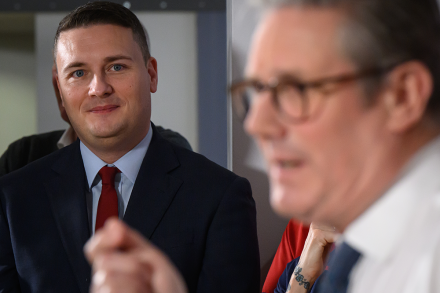
It’s been almost a full decade since Britain voted to leave the European Union. Inside Labour, whatever words are muttered about accepting the referendum’s result, the consensus remains that Brexit was a mistake. Ministers compete to see who can flirt most openly with re-entry, despite their party manifesto pledges not to rejoin the single market or customs union, or to reintroduce freedom of movement. Keir Starmer has attacked the ‘wild promises’ of Brexit supporters and said Britain must ‘get closer’ to the single market. David Lammy and Wes Streeting have both lamented the ‘damage done by Brexit’ and called for a customs union with Brussels – a proposal that Peter Kyle, the Trade Secretary, suggested would be ‘crazy’ not to consider.

Which US city is the most violent?

From our UK edition

Black in the day A new book claims William Shakespeare’s works were really written by a black woman and were stolen by a semi-literate chancer from Stratford-upon-Avon. Other historic figures who have been claimed to be black: — Queen Charlotte, wife of George III. Was born Charlotte of Mecklenburg-Strelitz in 1744, and was thoroughly German, unless you happen to believe that she was descended from 13th-century Portuguese king Alfonso III and his African mistress. — Beachy Head Woman. Skeleton of Roman-era young woman discovered near Eastbourne in the 1950s. A study of her skull claimed she was the first known black person in Britain, until DNA analysis found she probably came from southern England. — Inventor of the lightbulb.

Letters: The Tories and Reform have little to unite them

From our UK edition

Class war Sir: Your leading article, ‘More in common’ (24 January), laments the ‘civil war’ between Reform and the Conservatives. But this division goes much deeper. Reform’s core support is the patriotic white working class in the so-called Red Wall seats – the people (often male) who supported Brexit and flocked to Boris Johnson in 2019 when he promised to get Brexit done. They are cultural conservatives but economic statists. That’s why (against his better instincts) Nigel Farage backs steel and water nationalisation and is soft on welfare and pensions. Reform’s natural political bedfellows are not the Tories, but the SDP (left economically, right culturally).

January

You go here and go there, but also stand still, return to the same spots: the bench on the hill in Victoria Park, above the plane trees that veil through winter branches the city’s spill, platform seven, same-time Tuesdays, Temple Meads gloomy and Cardiff central gleeful in sun, a table in the café waits, routinely where you sit, before work, as you’ve always done. You are running too, when you can, through early dark, sun lifting lazily over Ashton Court’s tree-lined hill, cross-country reps. Wednesdays, in Manor Woods Park, this New Year’s world breathes cautious, centred, still, those night walks home; Orion, seems the spindle, that turns time through January’s long chill.

Portrait of the week: Jenrick sacked, Chinese super-embassy approved and Trump makes a grab for Greenland

From our UK edition

Home President Donald Trump of the United States made Britain and other countries dance to his tune. Sir Keir Starmer, telephoning him about Greenland, said: ‘Applying tariffs on allies for pursuing the collective security of Nato allies is wrong.’ Mr Trump had said he would impose tariffs on Britain, Denmark, Finland, France, Germany, the Netherlands, Norway and Sweden until ‘such time as a Deal is reached for [the US’s] Complete and Total purchase of Greenland’. Then Mr Trump posted remarks on social media saying Britain’s gift to Mauritius of the Chagos Islands, including the base at Diego Garcia, was ‘an act of GREAT STUPIDITY’. He added: ‘China and Russia have noticed this act of total weakness.

Which royals have appeared in court?

From our UK edition

Political frenemies Nigel Farage accepted Robert Jenrick into Reform UK in spite of having previously called him a ‘fraud’ (for boasting about securing hotels for migrants when in government and then campaigning against them in opposition). Some more political make-ups: — David Cameron called Nick Clegg his ‘favourite joke’ before forming a coalition with him in 2010. — Donald Trump chose J.D. Vance as his running-mate in 2024 in spite of Vance having called him ‘America’s Hitler’ and a ‘really bad person’. — George H.W. Bush served as Ronald Reagan’s vice-president between 1981 and 1989 in spite of having previously accused him of ‘voodoo economics’.

Letters: A teacher’s lessons for Rod Liddle

From our UK edition

How to kill reading Sir: I am appalled by the response to Andrew Watts’s concerns about the teaching of reading at his son’s school. His article reveals a system almost guaranteed to discourage reading and an alarming turning away by a school from its responsibility to parents who have entrusted it with their children (‘Schoolboy error’, 17 January). Effective reading involves immersing oneself in the text without distractions, going at one’s own pace. The degree of involvement will be determined by the material and by the engagement of the reader. The remark by Andrew’s son’s head of English, that the school’s reading programme was not supposed to encourage reading for pleasure, indicates a wilful disdain for effective reading.

Livestream: Against the gloom – reasons to be optimistic about 2026

From our UK edition

Watch here as The Spectator turn Blue Monday on its head and deliver an optimist’s guide to 2026. Post-holiday depression, failed new year’s resolutions and battered bank balances: January’s Blue Monday has long been branded as the most miserable day of the year. Headlines warn of ongoing war, political turmoil and economic gloom – but could they be mistaken?

Our duty to British Jews

From our UK edition

Are Jews safe in Britain? To even have to ask the question is extraordinary. But a recent survey has found that half of British Jews feel they do not have a long-term future in the UK and 61 per cent have considered leaving. Those figures are shocking, but not surprising. Since 7 October 2023, anti-Semitism in Britain has reached record levels. Violence against British Jews is more common than at any time since their readmission in the 1650s. The survey was conducted between the Heaton Park synagogue terrorist attack in October and the sentencing of Walid Saadaoui and Amar Hussein in December for plotting to open fire on a march against anti-Semitism.

Portrait of the week: Digital IDs ditched, unrest in Iran and an app to check you’re not dead

From our UK edition

Home The government dropped plans to make digital ID compulsory to work in Britain. Sir Keir Starmer, the Prime Minister, called it ‘disgraceful’ that Grok, the online tool on Elon Musk’s X, could undress pictures of people. X limited the function to subscribers, but Liz Kendall, the Technology Secretary, said that the government would back Ofcom if it decided to block X in Britain. ‘They just want to suppress free speech,’ Mr Musk wrote on X. Sir Keir, due to visit China this month, was warned by some Labour MPs not to approve a vast new Chinese embassy in London. The government signalled a U-turn on increases to business rates for pubs in England before the ink was dry on the Telegraph’s Save Our Pubs campaign.

How many pubs are left in the UK?

From our UK edition

Net freedoms The government was pressed to ban X over charges that Elon Musk’s AI app Grok is being used to ‘undress’ women and children. Kemi Badenoch said the Tories would copy Australia in banning under-16s from social media. What are the most extreme countries for regulating the internet and social media – using a combined score including political sites, pornography and virtual private networks (VPNs), from the most laissez-faire at 1 to the most restrictive at 12?

Letters: The real reason Gen Z aren’t having sex

From our UK edition

No EU turn Sir: Before Dr Brian Mathew’s letter on ‘How to restore prosperity’ appeared (10 January), the FT printed an article making it clear that Britain’s powerful financial services industry would not be included in the government’s much-vaunted ‘reset’ with the EU. It quoted figures from the City saying that this was ‘the last thing they wanted’ and explaining they were doing much better outside EU regulation. The article contained a reported comment from the government to the effect that they had taken note of the City’s views and that financial services would not now be included in their cherished initiative.

Predicament

World’s stock of afternoons is running short And summer’s light is turning golden brown – It’s time to summon up our winter thoughts Since poetry will always be our sport And images, once mothered, won’t disown Our afternoons, though old, though running short, For in mind’s shadows metaphors hold court And new dreams swarm. We fully own It’s time to conjure up our winter thoughts, New entities of if and how, the sort That make us glad to live in winter towns Whose broken afternoons are falling short.

Knowledge Revises

It’s too late now to say you are not old, the years gang up on you, they settle down like locusts falling on a field of grain, the rustling noise you hear, that is their sound. How to be old: I’ll help you on the way. Stand straight. Be calm. Pretend you are a tree Speak like a tree, only speak slow and clear. Speak only once. If words should scatter flashing their tails before they disappear, temporise, change the subject, no great matter – Enough, wrong tone: meaning to make amends should not have used this hieratic patter knew from the start that half I said was wrong pitching it for that By-Our-Lady play And yet, which half was false and which was true? After all, here am I, but where are you?