The Spectator

Portrait of the Week: the gilt market, Larry the Cat and Iranian protests

From our UK edition

Home The Bank of England warned of a ‘material risk’ to financial stability as it stepped in to buy a wider range of gilts. But markets got the jitters again when Andrew Bailey, its governor, announced to pension funds: ‘You’ve got three days left.’ Kwasi Kwarteng, the Chancellor of the Exchequer, would present his ‘fiscal statement’ to parliament on 31 October, Halloween, not 23 November as originally planned. The Institute for Fiscal Studies thinktank said that under current plans, public spending would need to be cut by £60 billion a year by 2026-27 to put the economy on a safe footing. GDP shrank by 0.3 per cent in August. British Cycling announced an eight-year sponsorship deal with the oil company Shell.

China’s great leap backward

From our UK edition

This month should have marked the end of Xi Jinping’s time as leader of the Chinese Communist party. The twice-a-decade party congress is being staged in Beijing. It is a grand event at which a new General Secretary is meant to be either nominated (five years in advance) or given power. But Xi has changed all that. He has sidelined all opposition and is now settling down to his 11th year in office – fully intent on ruling for life. The world’s second-largest economy will therefore this weekend be reconfirmed as an outright dictatorship. Ten years ago there was a fatal car crash in Beijing involving a Ferrari driven by the son of Ling Jihua, chief of staff to the then president Hu Jintao.

Who has the most nuclear weapons?

From our UK edition

Out of office Could Liz Truss end up being Britain’s shortest-serving prime minister? She would have to remain in office until 2 January to outlast George Canning, who was PM from 12 April 1827 until his death on 8 August of that year. Like Truss, Canning had served as foreign secretary, where he was credited with boosting trading opportunities for British merchants. However, he became leader of a divided Tory party, which split between his supporters and those of Sir Robert Peel and the Duke of Wellington. Tax returns Some countries by the top rate of income tax: Japan 56% Denmark 55.9% Sweden 52.9% Belgium, Israel 50% Netherlands 49.

Portrait of the week: Tory party conference, gas supply warning and Denmark’s royals stripped of titles

From our UK edition

Home Liz Truss, the Prime Minister, came up with a message for the Conservative party conference: ‘Whenever there is change, there is disruption… Everyone will benefit from the result.’ Her words followed a decision not to abolish, after all, the 45p rate of tax, paid by people who earn more than £150,000 a year. Backbench Conservative MPs had let it be known they would not vote for it. ‘The difference this makes really is trivial,’ said Paul Johnson, director of the Institute for Fiscal Studies thinktank. But the pound rose and the government was able to borrow a little more cheaply. Kwasi Kwarteng, the Chancellor of the Exchequer, told the conference: ‘I know the plan put forward only ten days ago has caused a little turbulence. I get it.

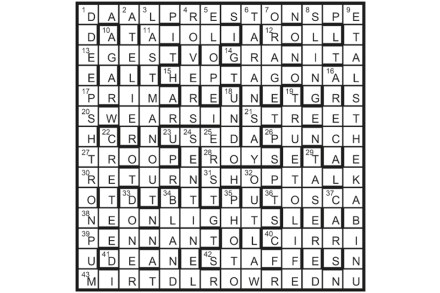
2573 – solution

From our UK edition

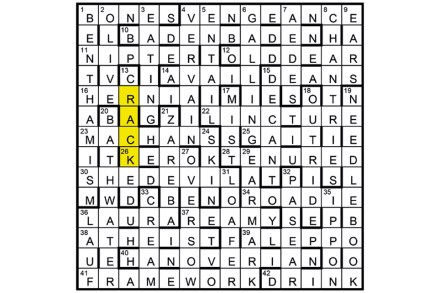
The preamble referred to ten symmetrically placed unclued entries which spell out CURRENT PUZZLE NUMBER HAS PRIME FACTORS: THIRTY-ONE, EIGHTY-THREE. First prize Bill Stewart, Leicester Runners-up D.P. Shenkin, London WC1; C.S.

Give Liz Truss a chance

From our UK edition

Conservative governments have a habit of self-destructing: they die not in battle with political enemies but as a result of vicious infighting. It’s been less than three years since Boris Johnson’s triumphant 80-seat election victory, which seemed at the time to come close to condemning Labour to oblivion. Yet this week in Birmingham it was the Conservatives who have looked doomed, posing a far greater threat to each other than to Keir Starmer. In her conference speech, Liz Truss laid out a confident and coherent agenda. She is correct about the need to harness the power of free enterprise to kickstart growth, but she failed to prepare the ground for her agenda. Since entering No.

Full text: Liz Truss’s Tory conference speech

From our UK edition

My friends, it's great to be here with you in Birmingham. It's fantastic to see the cranes across the skyline building new buildings, the busy trams coursing down the streets and the bull standing proudly at the heart of Birmingham. My friends, this is what a city with a Tory Mayor looks like - it's positive, it's enterprising, it's successful. And Andy Street is a human dynamo, delivering for the people of Birmingham. And our Teesside Mayor Ben Houchen is also delivering new jobs and investment. This is what modern Conservatism looks like. Let's get Tory mayors elected in London, in Manchester, in West Yorkshire and right across the country. We gather at a vital time for the United Kingdom. These are stormy days.

Who was the first monarch to live in Buckingham Palace?

From our UK edition

Fit for a king King Charles III, it has been reported, is reluctant to move into Buckingham Palace. Who was the first monarch to live there? – The core of what is now the palace was built as a townhouse, Buckingham House, for the Duke of Buckingham in 1703 and purchased by George III as a home for Queen Charlotte and her children – while he lived at St James’s Palace. – His successor, George IV, started work on enlarging what by then was already called a palace, intending to use it for his own residence. He died before it was complete, however, as did William IV. William IV was not so keen on it as a residence but considered moving parliament there. – The first monarch to live there permanently was Queen Victoria upon her accession in 1837.

Letters: Britain needs the English National Ballet

From our UK edition

Putin’s options Sir: I agree with Paul Wood that Vladimir Putin is on the back foot (‘Cornered’, 24 September). His actions, from partial mobilisation to nuclear threats to the rapid referenda in occupied Ukraine, indicate a psychopathic gambler who hopes that one last spin will turn Lady Fortune his way. However, there is a big gap between ‘losing’ and ‘lost’, and that is where the focus on the nuclear threat by the West is unhelpful and dangerous. As well as the partial mobilisation, Putin ordered in August a 10 per cent increase in the size of the military to more than a million combat troops.

Portrait of the week: Chancellor unveils his unBudget, Hilary Mantel dies and corgi prices soar

From our UK edition

Home Kwasi Kwarteng, the Chancellor of the Exchequer, presented a far-reaching ‘fiscal event’ (ineligible to be called a Budget), said to have cut more tax than any measure since 1972. The markets’ immediate response was to sell pounds, and sterling fell to $1.07 (though the euro also continued in its own decline against the dollar and the Chinese yuan fell sharply). The Treasury defensively said it would publish proposals for dealing with its debt and the Bank of England said it would buy government bonds to help ‘restore orderly market conditions’. The IMF spoke out, inviting the government to ‘re-evaluate’ its tax changes.

Hilary Mantel, 1952 – 2022

From our UK edition

Hilary Mantel has died at the age of 70. She became the first-ever winner of The Spectator/Shiva Naipaul Memorial Prize for travel writing in 1987. Mantel wrote for The Spectator as its film critic until 1991. She went on to win the 2009 and 2012 Booker Prize for Wolf Hall and Bring Up the Bodies. Below is Hilary's prize-winning piece on Saudi Arabia; the judges 'particularly admired her ability to convey not only the discovery of a culture new to her but also the distaste which the discovery aroused', said then-editor of The Spectator Charles Moore.

In search of Trussonomics

From our UK edition

When Liz Truss entered the leadership race there was no such thing as ‘Trussonomics’. She began her campaign with no real expectation of winning and without any serious guiding philosophy. Rishi Sunak did her a great service by portraying her throughout the leadership campaign as a crazed tax-cutter, a disciple of Ronald Reagan. But in truth, her economic policy was nowhere near as coherent as Sunak made out. Truss just about scraped through the soundbite war of the debates, but without any real pro-growth, tax-cutting agenda. All she pledged to do during her campaign was to freeze forthcoming corporation tax rises and shave 1 per cent off National Insurance. This she did mainly because the 2019 Tory manifesto promised not to raise tax.

2571: 10” – solution

From our UK edition

The TEN unclued lights are Scottish islands – or ‘INCHES’. First prize Mrs F.A. Bull, Canterbury Runners-up Susan Hay, Wolverhampton; J. and F.

Who had the most highly attended state funeral?

From our UK edition

The namesakes Some of history’s other Charles IIIs: – Charles III, King of Naples (1382-86): forced Pope Urban VI into exile, then moved to Hungary, whose throne he had assumed through marriage. Was assassinated. – Charles III, King of Navarre (1387-1425): made peace with France. – Charles III, Duke of Savoy (1504-53): lost when France invaded Savoy in 1536. Remained king in name but spent the rest of his life in exile. – Charles III, Duke of Bourbon (1505-21): tried to regain independence from France by partitioning the kingdom. Fled to Italy when the plot was discovered. – Charles III, King of Spain (1759-88): invaded the Kingdom of Naples and claimed it for Spain.

Letters: Why the Union may not be so secure under Charles

From our UK edition

The Queen’s kindness Sir: Last week’s Spectator (17 September) was thoughtful, insightful and at times hilarious; just the tonic I needed. Many reading this will have their own memories of the Queen, but I would like to tell a personal story recounted by Christopher Chessun, the Lord Bishop of Southwark, in his address to the House of Lords of my sister’s meeting with her. He said: ‘My late sister-in-law, who was profoundly deaf, accompanied me during my time as Bishop of Woolwich when the Royal Artillery moved from Woolwich down to Salisbury Plain. Her Majesty the Queen was there for the occasion and spotted that my sister-in-law was wearing a Duke of Edinburgh gold badge.

America’s touching tributes to the Queen (1901)

From our UK edition

The United States hasn’t always reacted rather snidely to the death of the British monarch. Below is The Spectator’s lead piece following the funeral of Queen Victoria in 1901, available on our fully-digitised archive. Nothing has been more striking, nothing more moving to the British as a nation, than the way in which the Queen has been mourned and her memory reverenced in the United States. The English-speaking people of America almost with one voice have joined the English-speaking people of the British Empire in their expressions of affection for the Queen.