The Spectator

Letters: Harry, Charles and the way to reconciliation 

From our UK edition

Back to work Sir: I read with interest Martin Vander Weyer’s clarion call to ‘Mr and Mrs Early-Retired Spectator Reader’ to return to work (Any other business, 14 January). The successful realisation of this aim is likely to require both a nudge from government, possibly through the tax system, and employers to show greater creativity. This pressing economic need will not be met if ‘grey returners’ are treated to the same expectations and orthodoxy as thrusting 35-year-olds. What is required, as Martin rightly notes, is flexibility. Flexible hours, flexible work practices and a flexible attitude to those who, having ‘seen and done it’ several times over, are confident in challenging, and demonstrating candour in, the workplace.

Portrait of the week: Sunak vs Sturgeon, Nepal plane crash and Mexico bans smoking on beaches

From our UK edition

Home The government prevented the Gender Recognition Reform (Scotland) Bill, passed by the Scottish parliament, from proceeding to royal assent, under Section 35 of the Scotland Act, because of its ‘serious adverse impact’ on the operation of the Equality Act 2010. It was blocked by a statutory instrument laid before parliament by the Scottish Secretary, Alister Jack. The Scottish National party leader in the Commons, Stephen Flynn, called opponents to the bill ‘rabid gammon’. Nicola Sturgeon, the First Minister of Scotland, sought judicial review. Rishi Sunak, the British Prime Minister, had visited Scotland a few days before to help some Sea Scouts toast marshmallows and to have dinner with Ms Sturgeon.

How many people are injured by dogs?

From our UK edition

Duke out Will the Duke and Duchess of Sussex be invited to Charles III’s coronation? The royal family faced a similarly tricky decision over the Duke of Windsor, the former Edward VIII, at Elizabeth II’s coronation in 1953. Documents released by the National Archives in 2007 reveal that the matter was handled by the Prime Minister, Sir Winston Churchill, who contacted the Duke in November 1952 and ‘advised’ him not to attend, adding that the Prime Minister would tell the press that ‘it would not be consistent with usage for coronation to be attended by any former ruler’. That such advice was necessary suggests that the Duke might have been sent a invitation as a formality. Whether he was or not, he did not attend.

Christmas crossword solution | Birthday Boy

From our UK edition

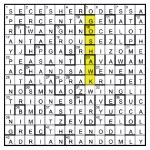
Two unclued lights are a title (three words) and its creator (two words). Remaining unclued lights are four names and eight titles (either singly or paired, including two each of two, three and four words and one of five words), each name being associated with two of the titles. The theme word connecting them all must be highlighted in the grid. Further prizes of Eliot’s Book of Bookish Lists by Henry Eliot (Penguin) go to the following. The first four winners each also win a bottle of champagne. The solution is on p35. The winners First prize Susanna Heywood-Lonsdale, Inverness Runners-up John Tyson, Gloucester; Rebecca Bull, Cardiff; Rob Hardcastle, Harrogate Further runners-up Felicity Fairbairn, Tisbury, Wiltshire; O.F.G.

Remembering Paul Johnson, 1928–2023

From our UK edition

Paul Johnson, the author, journalist and historian, has died at the age of 94. He wrote more than 40 books, edited the New Statesman from 1965 to 1970, and wrote a column for The Spectator from 1981 to 2009. Below are some extracts from his Spectator columns, all of which are available on our archive. On the 20th century ‘Only six weeks to go before the end of the century: time to draw up a list of its political success stories. My criterion is the simple utilitarian one of Jeremy Bentham: who did most to promote the greatest possible happiness of the largest possible number?

Why Britain’s space industry should be celebrated

From our UK edition

The attempted launch of a rocket via a Boeing 747 from Spaceport Cornwall – the first such attempt in Europe – was not a giant leap so much as a giant plunge. While the plane took off and landed successfully, the rocket released from beneath its wing at 35,000 feet crashed and burned, taking with it the nine satellites it was supposed to launch into orbit. There is a lesson for the government in what happened at Spaceport Cornwall this week It is easy to imagine Vladimir Putin chortling at the news that Britain has failed to do something the USSR managed 66 years ago. Satellite launches have become routine, with 14,000 put into space since the Soviet Union’s first Sputnik in 1957.

2585: Happy anniversary – solution

From our UK edition

Puzzle 2585 appeared on 10 December 2022, an anniversary of HUMAN RIGHTS DAY (at 1 Across) whose letters can be used to make the ten symmetrically placed unclued entries. The UN General Assembly adopted the Universal Declaration of Human Rights on 10-12-48.

Who was the monarchy’s original wicked stepmother?

From our UK edition

Wicked stepmothers Prince Harry said that he was worried Camilla would become his ‘wicked stepmother’. But she would have to be rotten indeed to match the English monarchy’s original wicked stepmother, Aelfthryth, who married King Edgar in 965. Upon Edgar’s death the succession should have passed to his elder son, Edward, but Aelfthryth had other ideas, wanting her own son, Aethelred – King Edgar’s younger son – to take the throne. She invited Edward to meet at Corfe Castle, Dorset, where, according to the Anglo-Saxon Chronicle, she sent out her servants to stab the boy – then aged about 16 – to death. As a result, it was Aethelred who became king, with Aelfthryth becoming regent until he reached adulthood. Crime time Why are people in prison?

Letters: What Benedict XVI did for Catholicism

From our UK edition

Oxford’s Big Brother Sir: Your Oxfordshire council correspondent (Letters, 7 January), who refers to himself as the corporate director of environment and place, refutes Rod Liddle’s description of councillors as ‘dictators’ and his criticism of the way Oxford will be divided into zones to reduce traffic. Bill Cotton’s letter put me in mind of Nineteen Eighty-Four. The sectors, the checkpoints, the control of access, the difficulties in just trying to go about your business, the paperwork. Ah, the paperwork! Cotton’s letter mentions residents’ applications for permits – at cost – to drive through the ‘filters’ for 100 days or 25 times a year for county visitors. How will people keep track of these?

Wanted: a research producer

From our UK edition

The Spectator is the world’s oldest magazine. More people than ever are reading us, online and in print, and they’re listening and watching our broadcast output too. Our podcasts now get downloaded more than two million times each month, and Spectator TV often gets more than a million views a month. We are looking to hire a research producer, working in our broadcast team. Our team of four set up Spectator TV and produce podcasts on everything from politics to books and food, and we have big ambitions for the future. We need someone to provide research, deliver briefings, write entertaining questions and scripts, and support the team with editing it all. You must understand what The Spectator, in print, online and in broadcast, is all about.

Harry’s losing game

From our UK edition

Four months into his reign, King Charles has seen his fair share of drama: two prime ministers and a wave of public attacks from his second son. ‘I would like to get my father back,’ says the Duke of Sussex, in part of a television interview to promote Spare, his book, which is released next week. The book is, of course, not exactly a sincere appeal for familial unity. It is yet another broadside against Harry’s family, the House of Windsor. The main revelation is a story about how an argument with his brother once escalated into a fight: one in which he says his necklace was ripped. The public are by now familiar with Prince Harry’s story: the royal family’s ‘never complain, never explain’ motto is a deception, he says, as he explains his complaints.

2584: Song XI – solution

From our UK edition

‘MANY A TEAR HAS TO FALL’ (10/30) is the first line of It’s All in the Game whose tune, originally called ‘MELODY IN A MAJOR’ (1D), was composed by Charles G. Dawes, a future NOBEL LAUREATE (40D/2) and was often played by FRITZ KREISLER (30/6). TALLEST (34): It’s ALL in the game (TEST). DAWES (diagonally from row 4) was to be shaded.

How often do you see a walrus in Britain?

From our UK edition

Tusk force A new year firework display in Scarborough was cancelled for fear of disturbing a walrus which was resting on the seafront. How unusual is it to see a walrus in Britain? – There have been 27 recorded sightings in UK waters in the past 130 years, the most recent in Seahouses Harbour, Northumberland, in November 2021. – In the same year a walrus continued even further south, visiting northern Spain before returning to the Arctic. – There have been 11 sightings in Irish waters over the past century. A 125-stone walrus was responsible for sinking several anchored boats in Irish harbours in 2021. Top of the crops A Radio 4 programme, Rethink, repeated claims that crop yields could fall by 30 per cent by 2050 as a result of climate change.

Letters: The vileness of Richard Harris

From our UK edition

Three kings Sir: In his analysis of British politics over the past 12 months (‘A year is a long time in politics’, 17 December), James Forsyth named 2022 as ‘the year of the three British prime ministers’. Some interesting comparisons were drawn with Prussia’s year of the three emperors in 1888. Two alternative choices slightly closer to home could have been illustrated through the dramatic consequences of the two years when England saw three kings. In both 1066 and 1483 the monarchy changed three times, ushering in profound political upheaval with lengthy repercussions. Perhaps in the long view, and contrary to Whig interpretations of history, 2022 was not so exceptional after all.

Piazza Della Lepre

From our UK edition

There’s a black door in Piazza Della Lepre with neoclassical figures. The stairs lead up to a knocking shop, at the very top. The best in the city, oh what ceilings! There’s no lift. You must walk up the slate stairs.  The stairs are steep. Not everyone can: heart seizure, ennui, brain softening and some who do never put their nose in the piazza again,  extinguished – it would seem – by rapture. Number 9, Piazza Della Lepre. Books have been written and songs have been sung. Any man of that age would have taken their pleasure there back in the day. They were young. They didn’t walk up the stairs. They – more or less – ran.

Christmas after our darkest hour (1940)

From our UK edition

Below is The Spectator’s leading article from Christmas 1940, which you can find on our fully-digitised archive. We have reached the second Christmas of the war, and we are keeping it with what heart we may. No confidence in the rightness of our cause is lacking, nor has doubt emerged about the ultimate issue of the struggle. What penetrates men’s souls today is not concern for their personal fate, or even for their country’s, but a sense, borne in on them with sombre force as this festival comes round, of the tragedy of the conflict in which millions of human beings are still locked on the day when the message of peace and good will to all mankind should be sounding from every pulpit and rung out by the bells of every steeple.

The CLA

From our UK edition

Sectioned, I was sent to the Cicada Lunatic Asylum. Doctor Coppola signed the papers. His patients, he explained, were beleaguered by obsessions. Hence the cicadas which colonised the trees in the great courtyard. We were encouraged to adore them. This was Doctor Coppola’s radical way of defying insanity, he was known across Europe. It wasn’t easy at first. Sbagliando si impara. Practice makes perfect. Imagine locked wards of relatively decent people flapping their tongues. Even the cicadas thought we were cicadas. Saturdays Doctor Coppola conducted his monomaniacal troupe from the gazebo. People came from Spoleto: wooden benches, jugs of wine, hand-rolled cigarettes. Bravissimo! Bravissimo!