The Spectator

The Spectator’s 2026 no-CV internship scheme is now open

From our UK edition

The Spectator runs the UK’s only double-blind internship scheme. We don’t ask for a CV, we don’t use your name. We don’t care where (or whether) you went to university, we anonymise your application. We give each applicant a city name, mark out of 100 and give offers to the best ones. You’ll come in for a week of your choosing in the summer. It’s a useful window into journalism and gives us the chance to meet new talent. When jobs come up, as they do in various fields, we look to hire past interns. About a third of our editorial staff came through this way — full list below. No other publication goes to such lengths to find interns, which is perhaps why those who make it on our staff list are often snapped up by other publications.

Blue Moon Valley

There’s a magical muddle          that clings to the page like mist to a meadow. No help in the hurting,          no truth in the light, just haze on the harvest. I’ve cancelled my comeback          and chosen instead to be cloistered in clover. In the blare of the body          the spirit lies mute like a book in a bottle. I’ll hunker in hollows          where wisdom is vague and history can’t happen. There’s a heaven of honey          in hives of friends’ hearts.

The Private of the Bluffs

From our UK edition

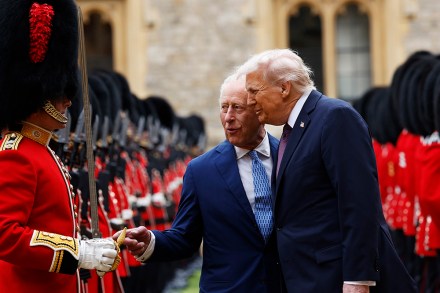
Last night among his fellow roughs, He plotted, schemed, and swore; An anxious statesman of the Bluffs, Who never looked before. To-day, beneath the foeman’s frown, He stands in Charles’s place, Ambassador from Britain’s crown, And type of all her race. Rich, reckless, posh, well-born, well-taught, Bewildered and alone, A heart with leftish instinct fraught, He yet can call his own. Ay, tear his body limb from limb, Bring cord or axe or flame, He only knows that straight through him Shall England come to shame.

Portrait of the week: Peter Mandelson resigns, Keir Starmer returns and gold rallies 

From our UK edition

Home Lord Mandelson resigned his membership of the Labour party and then retired from the House of Lords; some of the three million items released by the US Department of Justice relating to the late Jeffrey Epstein suggested that, while serving as business secretary in Gordon Brown’s cabinet, he sent market-sensitive government information to Epstein. The Metropolitan Police launched a criminal investigation into allegations of misconduct in public office by Lord Mandelson. Mr Brown sent the Met ‘relevant’ information for their investigations. In an exchange with Lord Mandelson two days before Mr Brown’s resignation as PM, Epstein emailed: ‘Bye, bye smelly?’ The Conservatives questioned in parliament the decision to appoint Lord Mandelson ambassador to Washington.

How to fight the AI revolution

From our UK edition

Ask ChatGPT to write a Spectator leader about the risks of AI and it begins like this: ‘There are two kinds of people talking about artificial intelligence today. One group is exhilarated, convinced that AI will usher in a new era of abundance, productivity and human flourishing. The other is distinctly alarmed, warning of mass unemployment, runaway systems and even existential catastrophe. They disagree on almost everything – except one crucial point. This is going to be a big change. And Britain, like most countries, is not nearly ready for it.’ As the bot identifies, the consensus among experts is that AI’s impact will be seismic, whether for good or ill.

Letters: Let children drink

From our UK edition

Chagos stupidity Sir: To British Establishment watchers, Michael Gove’s dissection of the dubious and devious machinations of Jonathan Powell, Richard Hermer, Philippe Sands et al over the Chagos Islands (‘The guilty men’, 31 January) should come as no surprise. Powell, in the Irish Troubles context in particular, has form. His negotiating position more resembled that of an imported diplomat than an official of the UK government. What is surprising in the Chagos fiasco, however, is the seeming gullibility of some at least on the American side. Are they, one wonders, working to a covert agenda of withdrawal and retrenchment, or are they just very stupid? Terry Smith London NW11 Democracy denial?

What’s your hurry?

From our UK edition

When I was young, nobody ran, unless, behind them on a dark and lonely road, they felt the breath of some misshapen thing, the aspens quivered and the willows wept; or if they’d spent their bus fare on warm beer, and they were overdue where duty called. Accoutred armies hurtle through our parks and boulevards, no good to ask them where’s the fire. Health oozes from their every pore. The race is to the swift, though only three ascend the podium. The rest are also-rans, way down the field, not troubling the judge. But now my ears are pricked, I pick up speed. There is the flag, and there the finish line.

Portrait of the week: Burnham blocked, Braverman bails and Starmer clashes with Trump

From our UK edition

Home Labour’s National Executive Committee refused permission for Andy Burnham, currently Mayor of Greater Manchester, to stand in a by-election at Gorton and Denton. The decision was made by ten people, including Sir Keir Starmer, the Prime Minister, with only Lucy Powell, Labour’s deputy leader, voting for Mr Burnham. Mr Burnham winning the seat had been seen by some as a route for him to become prime minister after Andrew Gwynne, its MP (who was suspended from the Labour party for bad jokes), left the Commons by applying for the office of Crown Steward and Bailiff of the Manor of Northstead. The by-election will be on 26 February. Fifty Labour MPs signed a letter to Sir Keir calling the decision ‘a real gift’ to Reform.

A decade on, Brexit still means Brexit

From our UK edition

It’s been almost a full decade since Britain voted to leave the European Union. Inside Labour, whatever words are muttered about accepting the referendum’s result, the consensus remains that Brexit was a mistake. Ministers compete to see who can flirt most openly with re-entry, despite their party manifesto pledges not to rejoin the single market or customs union, or to reintroduce freedom of movement. Keir Starmer has attacked the ‘wild promises’ of Brexit supporters and said Britain must ‘get closer’ to the single market. David Lammy and Wes Streeting have both lamented the ‘damage done by Brexit’ and called for a customs union with Brussels – a proposal that Peter Kyle, the Trade Secretary, suggested would be ‘crazy’ not to consider.

Which US city is the most violent?

From our UK edition

Black in the day A new book claims William Shakespeare’s works were really written by a black woman and were stolen by a semi-literate chancer from Stratford-upon-Avon. Other historic figures who have been claimed to be black: — Queen Charlotte, wife of George III. Was born Charlotte of Mecklenburg-Strelitz in 1744, and was thoroughly German, unless you happen to believe that she was descended from 13th-century Portuguese king Alfonso III and his African mistress. — Beachy Head Woman. Skeleton of Roman-era young woman discovered near Eastbourne in the 1950s. A study of her skull claimed she was the first known black person in Britain, until DNA analysis found she probably came from southern England. — Inventor of the lightbulb.

Letters: The Tories and Reform have little to unite them

From our UK edition

Class war Sir: Your leading article, ‘More in common’ (24 January), laments the ‘civil war’ between Reform and the Conservatives. But this division goes much deeper. Reform’s core support is the patriotic white working class in the so-called Red Wall seats – the people (often male) who supported Brexit and flocked to Boris Johnson in 2019 when he promised to get Brexit done. They are cultural conservatives but economic statists. That’s why (against his better instincts) Nigel Farage backs steel and water nationalisation and is soft on welfare and pensions. Reform’s natural political bedfellows are not the Tories, but the SDP (left economically, right culturally).

January

You go here and go there, but also stand still, return to the same spots: the bench on the hill in Victoria Park, above the plane trees that veil through winter branches the city’s spill, platform seven, same-time Tuesdays, Temple Meads gloomy and Cardiff central gleeful in sun, a table in the café waits, routinely where you sit, before work, as you’ve always done. You are running too, when you can, through early dark, sun lifting lazily over Ashton Court’s tree-lined hill, cross-country reps. Wednesdays, in Manor Woods Park, this New Year’s world breathes cautious, centred, still, those night walks home; Orion, seems the spindle, that turns time through January’s long chill.

Portrait of the week: Jenrick sacked, Chinese super-embassy approved and Trump makes a grab for Greenland

From our UK edition

Home President Donald Trump of the United States made Britain and other countries dance to his tune. Sir Keir Starmer, telephoning him about Greenland, said: ‘Applying tariffs on allies for pursuing the collective security of Nato allies is wrong.’ Mr Trump had said he would impose tariffs on Britain, Denmark, Finland, France, Germany, the Netherlands, Norway and Sweden until ‘such time as a Deal is reached for [the US’s] Complete and Total purchase of Greenland’. Then Mr Trump posted remarks on social media saying Britain’s gift to Mauritius of the Chagos Islands, including the base at Diego Garcia, was ‘an act of GREAT STUPIDITY’. He added: ‘China and Russia have noticed this act of total weakness.

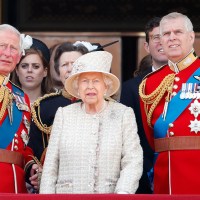
Which royals have appeared in court?

From our UK edition

Political frenemies Nigel Farage accepted Robert Jenrick into Reform UK in spite of having previously called him a ‘fraud’ (for boasting about securing hotels for migrants when in government and then campaigning against them in opposition). Some more political make-ups: — David Cameron called Nick Clegg his ‘favourite joke’ before forming a coalition with him in 2010. — Donald Trump chose J.D. Vance as his running-mate in 2024 in spite of Vance having called him ‘America’s Hitler’ and a ‘really bad person’. — George H.W. Bush served as Ronald Reagan’s vice-president between 1981 and 1989 in spite of having previously accused him of ‘voodoo economics’.

Letters: A teacher’s lessons for Rod Liddle

From our UK edition

How to kill reading Sir: I am appalled by the response to Andrew Watts’s concerns about the teaching of reading at his son’s school. His article reveals a system almost guaranteed to discourage reading and an alarming turning away by a school from its responsibility to parents who have entrusted it with their children (‘Schoolboy error’, 17 January). Effective reading involves immersing oneself in the text without distractions, going at one’s own pace. The degree of involvement will be determined by the material and by the engagement of the reader. The remark by Andrew’s son’s head of English, that the school’s reading programme was not supposed to encourage reading for pleasure, indicates a wilful disdain for effective reading.