The Spectator

Livestream: The Alternative Covid Inquiry

From our UK edition

Watch The Spectator’s Alternative Covid Inquiry. Six years after the world shut down, we’re still examining what happened and why. As the official Covid Inquiry finally comes to end, our panel asked the questions the experts didn’t – or wouldn’t. The Spectator’s commissioning editor Lara Brown was joined by science writer and journalist Matt Ridley; Sunetra Gupta, Professor of Theoretical Epidemiology at the University of Oxford; Jonathan Sumption, writer and former Supreme Court Justice; Christopher Snowdon, journalist and head of lifestyle economics at the IEA, and Tom Whipple, science writer and special correspondent at the Times.

Is it still worth going to university?

From our UK edition

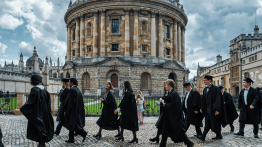
When self-styled ‘Money Saving Expert’ Martin Lewis gate-crashed Kemi Badenoch’s Good Morning Britain interview to reprimand the Conservative leader over her plans to cut the interest on student loans, he failed to mention that she was addressing a crisis for which he carries a little of the blame. For years, Lewis has encouraged prospective students not to be put off by tuition fees, arguing that the loans should be thought of as a ‘graduate contribution system’ rather than traditional debt. This was an investment in their futures, easily paid off through the higher earnings a degree would confer. But the system has become a tax on aspiration.

Portrait of the week: Andrew’s arrest, tariff rulings and Boris in Ukraine

From our UK edition

Home Andrew Mountbatten-Windsor was arrested on his 66th birthday on suspicion of misconduct in public office, and released under investigation. The King said: ‘The law must take its course.’ The government proposed introducing legislation to remove Mountbatten-Windsor from the line of royal succession, and agreed to a motion compelling ministers to release information relating to his appointment as a trade envoy ‘as soon as practicable and possible within the law’. Global Counsel, the consultancy co-founded by Peter Mandelson in 2010, collapsed into administration. Lord Mandelson, aged 72, was arrested in London on suspicion of misconduct in public office, and released on bail nine hours later.

2738: First-rate third-rate – solution

From our UK edition

The ship was HMS Bellerophon, nicknamed BILLY RUFFIAN (11A/14A), whose BATTLE honours included THE GLORIOUS FIRST OF JUNE, THE NILE and TRAFALGAR and whose most famous passenger was NAPOLEON who surrendered to her after Waterloo. Her final role was as a prison HULK (23D). Title: having 74 guns she was a ‘third-rate’. First prize D.C.

Letters: Why I love my Jellycats

From our UK edition

Defence agreement Sir: If (a big ‘if’, I know) our politicians really would like to address the parlous state of the UK’s defences (‘Indefensible’, 21 February) but refrain from the necessary tax increases and/or spending cuts out of fear their unpopularity would open the door to their opponents, they should consider adopting a device the Danes have used to great effect for many decades. ‘Political agreements’, which I came across when advising the Danish finance ministry in the 1990s, are legally binding, long-term contracts between political parties to support and implement specified courses of action, regardless of who is in power, and requiring all parties’ sign-off to amend.

Who has been removed from the line of succession?

From our UK edition

Out of line Andrew Mountbatten-Windsor may be removed from the line of succession. When was the last time this happened? — The Abdication Act of 1936 not only removed Edward VIII from the throne; it also removed his heirs from the line of succession. In the event, however, he didn’t have any. The last alteration to the line of succession came as a result of the Perth Agreement of 2011, when the prime ministers of the 16 Commonwealth realms agreed that in future females would be treated the same as males, and that the latter would not leap over the former as the then Prince Andrew had done when, on his birth in 1960, he pushed Princess Anne down the line of succession.  — The birth of Prince George in 2013 made the change academic, for now.

The Private of the Bluffs

Last night among his fellow roughs, He plotted, schemed, and swore; An anxious statesman of the Bluffs, Who never looked before. To-day, beneath the foeman’s frown, He stands in Charles’s place, Ambassador from Britain’s crown, And type of all her race. Rich, reckless, posh, well-born, well-taught, Bewildered and alone, A heart with leftish instinct fraught, He yet can call his own. Ay, tear his body limb from limb, Bring cord or axe or flame, He only knows that straight through him Shall England come to shame.

The Death of the Autocrats

The world, the young woman said, is ruled by old men with hard, brutal faces and an ugly lust for power. Nothing that gym bars or strictures of the personal physician can offer will help them in the end when the dark fog drops to cover the formerly sentient mind, its edicts like arrows that once made the sky dark, repulsed its multiple enemies.

Portrait of the week: Gender in schools, election U-turns and the ‘truth’ about Navalny

From our UK edition

Home Pupils will be allowed to change gender at school, according to guidance issued by Bridget Phillipson, the Education Secretary; parents would be consulted, unless there was a safeguarding reason not to, and children would have their preferred pronouns used in the classroom. However, children older than eight would still have to use facilities according to their biological sex. A High Court judge dismissed a challenge to the Equality and Human Rights Commission’s guidance last April that single-sex lavatories or changing rooms should be used by people of the same biological sex; the EHRC withdrew its guidance in October, and its revised guidance is being considered by the government.

2737: 19×24 inches – solution

From our UK edition

The unclued lights can precede or follow ROYAL. The preamble should have read: Seven unclued lights (two of two words) follow and four precede a word defined by the title. Doc apologises for the error. First prize Andrew Bell, Shrewsbury, Shropshire Runners-up C.R. Haigh, Hassocks, W.

Letters: Nicky Haslam should fix the Palace of Westminster

From our UK edition

Growing pains Sir: It was reassuring to learn that Wes Streeting is a reader of The Spectator and also shares the view of many that his government has ‘no growth strategy’ (‘To lead or not to lead’, 14 February). However, it is a shame that following the October 2024 Budget he did not take up the Spectator’s ‘Refer a Friend’ offer, as both Keir Starmer and Rachel Reeves may have benefited from its early insights. Many of your writers and readers clearly predicted that the disastrous Budget would create wider problems for the UK, damaging growth, adding cost of living pressures, increasing company failures, raising unemployment and prompting further wealth flight. All this is now coming to pass and underpins the current gloom.

How much do graduates owe in student loans?

From our UK edition

Toxic legacy Analysis by scientists at Porton Down suggested that Russian opposition leader Alexei Navalny had been killed using epibatidine, a neurotoxin found in dart frogs from South America. — Using naturally occurring neurotoxins goes back further than anyone thought. In January scientists at Stockholm University reported that they had found traces of alkaloids from gifbol – a poisonous form of onion – on 60,000-year-old quartz arrowheads in South Africa. Debt to education How much do graduates owe in student loans?

Livestream: Speaker Series – An evening with John Rhys-Davies

From our UK edition

Watch the live recording of Toby Young in conversation with John Rhys-Davies. Widely regarded as having one of the most recognisable voices in film history, the legendary actor has starred in some of the biggest blockbusters of the past 40 years, including The Lord of the Rings and Indiana Jones. In this exclusive in-depth conversation with Toby Young, Rhys-Davies charts his fascinating journey from his childhood in Tanzania to his years spent across Los Angeles, New Zealand, Wales and his home on the Isle of Man. He also explores the defining roles of his career and talks about what he sees as the challenges facing western civilisation, including demographic change, the decline of traditional values and even the emergence of embodied AI.

Keir Starmer can only delay the inevitable for so long

From our UK edition

Wes Streeting is known to be a Spectator reader. Pinned on the Health Secretary’s office wall, as he revealed in an interview last Easter, is a leading article of ours asking whether he was ‘the Hamlet of the Health Service’. Streeting was ‘so riled’ by our suggestion of inactivity that he put it up to hold himself to account. It’s thus flattering, but unsurprising, that he also agrees with us about the holes at the heart of the government in which he serves. In WhatsApp conversations with Lord Mandelson, which he released helpfully early this week, Streeting lamented that the government has ‘no growth strategy’ and is not providing ‘a clear answer to the question: why Labour?’.

Portrait of the week: McSweeney resigns, Starmer hangs on and Streeting plots

From our UK edition

Home Morgan McSweeney, the helmsman of Labour, walked the plank by resigning as chief of staff to Sir Keir Starmer, the Prime Minister, whom he had advised in 2024 to appoint Lord Mandelson as ambassador to Washington. Mr McSweeney’s resignation statement began: ‘After careful reflection, I have decided to resign from the government,’ as though he had been a member of the government. In a speech meant to be about funding for local communities, Sir Keir said he was ‘sorry for having believed Mandelson’s lies and appointed him’. But he added: ‘I had no reason to believe he was telling anything other than the truth’, even though the Financial Times had in 2023 reported that Mandelson had stayed at Jeffrey Epstein’s house when the financier was in prison.

2736: Jammy – solution

From our UK edition

Associations with BLACK were 7 SABLE, 25 BOYCOTT and 32 SOMBRE; with CUR 6A RASCAL, 14 VARLET and 20 WRETCH; and with RANT 1A HARANGUE, 15 TIRADE and 24 RAIL. First prize Brian Taylor, Horwich, Bolton Runners-up Laura Gould, Shrewsbury; A.

Letters: AI won’t save the army

From our UK edition

Brute force Sir: General Sir Nick Carter is correct to point out the fragility of the UK’s armed forces today (‘Empty shell’, 7 February). He is also right to highlight the level of expenditure which will be necessary to overcome 25 years of structural under-investment in defence if the UK and its allies are to deter or win any future war. However, the suggestion that the British armed forces might be saved – relatively cheaply – by the institution of AI-automated kill chains alone is questionable. Indeed, it may be just another mirage of the type which has contributed to the current predicament. Autonomous weapons systems have existed for many years. With AI, they will proliferate and may become more important.

The Spectator’s 2026 no-CV internship scheme is now open

From our UK edition

The Spectator runs the UK’s only double-blind internship scheme. We don’t ask for a CV, we don’t use your name. We don’t care where (or whether) you went to university, we anonymise your application. We give each applicant a city name, mark out of 100 and give offers to the best ones. You’ll come in for a week of your choosing in the summer. It’s a useful window into journalism and gives us the chance to meet new talent. When jobs come up, as they do in various fields, we look to hire past interns. About a third of our editorial staff came through this way — full list below. No other publication goes to such lengths to find interns, which is perhaps why those who make it on our staff list are often snapped up by other publications.