The Spectator

Portrait of the week: Lee Anderson defects, Ireland rejects and Kate photoshops

From our UK edition

Home Rishi Sunak, the Prime Minister, said that Britain needed to build new gas-fired power stations to ensure energy security. GDP grew by 0.2 per cent in January. The number of people of working age classed as economically inactive rose to 9.25 million, compared with 8.55 million in February 2020, according to the Office for National Statistics. Among those aged 16 to 34, economic inactivity was rising; among those aged 35 to 64 it had fallen. Long-term sickness accounted for 2.7 million people not in work, 600,000 more than four years ago. The National Health Service employed more than two million for the first time, more than a third of public-sector workers.
Why we don’t need another vote on euthanasia

From our UK edition

Ethical issues such as abortion and euthanasia are rightly considered matters of personal conscience for MPs at Westminster, so Keir Starmer’s promise of a vote on assisted dying does not automatically mean that Britain will follow Belgium, the Netherlands and Canada in legalising euthanasia, no matter how large a majority Labour might win. When the House of Commons held a similar vote in 2015, it was heavily defeated by 330 votes to 118, though Starmer himself voted in favour. Nevertheless, we should be concerned about this development. The campaign for assisted dying has recently been energised by the intervention of Esther Rantzen, who is herself terminally ill with lung cancer. She is considering ending her life by travelling to the Swiss clinic Dignitas.

White House doubles down after Hur testimony

Attacking special counsels is fine now, apparently. At least, that’s according to the “Forrest Gump of political failure,” Ian Sams.Former special counsel Robert Hur testified to the House Judiciary Committee on Tuesday that his report on Biden’s mishandling of classified documents, contrary to claims from the White House and Democrats — did not “exonerate” or “clear” Biden — and that there was evidence he willfully retained classified documents, that he shared them with others and that his ghostwriter obstructed the investigation. Sams, however, who is the White House’s spokesman on investigative matters, told CNN that Hur was “misleading” in his testimony.

What the royals must learn from Kate’s photo blunder

From our UK edition

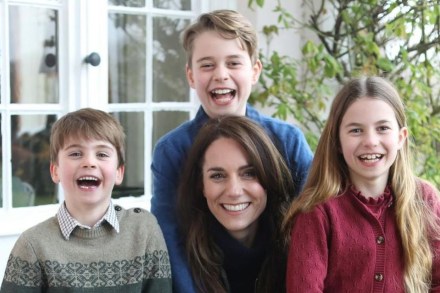
As an object lesson in how to feed conspiracy theorists while trying to see them off, the Princess of Wales’s Mothers’ Day photograph of herself and her three children could hardly be bettered. For weeks since the sudden announcement that she was to undergo abdominal surgery in January, the internet has been buzzing with speculation as to the nature of her undisclosed condition, along with hints that it could all be a lot more serious than the official royal news sources were making out. The fact that the original announcement coincided with the King’s own health problems – an enlarged prostate, followed by the discovery of some form of cancer – has merely added to the speculation.

Democrats splurge on ads for tough Senate battle

As we look ahead to a Biden-Trump rematch, the map for Senate remains filled with uncertainty, and the Senate Democrats’ super PAC is making major money moves with the “largest ad reservations in Senate history,” according to the group.Senate Majority PAC’s total ad reservations for the fall currently amount to $239 million, as first reported by the Washington Post. It’s a wise move, as the early bird typically gets the cheaper ad buy rate. The ads are booked to run in seven states: Nevada, Ohio, Michigan, Wisconsin, Arizona, Pennsylvania and Montana. SMP’s president said they will focus on “a woman’s access to abortion, healthcare coverage for preexisting conditions and the preservation and strengthening of Medicare and Social Security.

A very unusual State of the Union

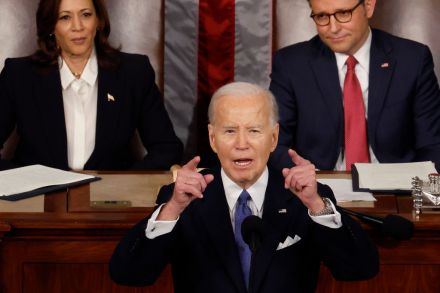
One of the first things I noticed last night as I arrived on Capitol Hill to cover President Joe Biden’s fourth State of the Union address was the insane amount of security. Multiple blocks of streets surrounding the Capitol were fenced off by police and cop cars with their flashing lights on were ubiquitous. I hadn’t seen anything like it in downtown DC since the Capitol complex was locked down in the aftermath of the January 6 Capitol riot. Except then, staff and press were allowed to enter the gates with a valid ID badge. This time, we all had to make the trek around the massive perimeter in the hopes of finding one open door to get into a congressional building and then snake through the tunnels to the Capitol.

Letters: decarbonisation is futile

From our UK edition

What’s the point? Sir: Your editorial (‘Net loss’, 2 March) sets out how the decarbonisation industry is a net drain on the British economy. While you mention that the UK has already decarbonised faster than any other European country, the fact that the UK produces less than 1 per cent of global carbon emissions to start with means that even if we became carbon neutral overnight, it would have precisely no impact on global climate change. So the 765,000 people working in that sector are not only taking skilled labour away from sectors that are actually economically productive, but they are on a hiding to virtue-signalling nothing. They might as well be digging holes and filling them in again.

Portrait of the week: Budgets, by-elections and Big Brother

From our UK edition

Home In the Budget, Jeremy Hunt, the Chancellor of the Exchequer, spoke of ‘long-term growth’. He cut National Insurance by 2p in the pound, saving the average worker £450 a year but pensioners nothing. A new ‘British Isa’ would allow an extra £5,000 a year tax-free investment. Tax arrangements for non-doms would be changed. The 28 per cent capital gains tax on property would go down to 24 per cent. Alcohol and fuel duty were frozen for a year; vaping would attract duty. He said the UK was on track to become the world’s next Silicon Valley and second only to Hollywood for film. The NHS would become ‘digitally integrated’ and drones become police first-responders. He announced devolved powers for Surrey and remarked on Sir Keir Starmer’s weight.

What do voters have to thank the Tories for?

From our UK edition

Last November Jeremy Hunt announced what he proclaimed was ‘the biggest tax cut on work since the 1980s’. He cut employee National Insurance from 12 per cent to 10 per cent, yet to his great disappointment, the polls didn’t budge. This week he decided to double down, lowering NI again, to 8 per cent. ‘The UK now has the lowest effective personal tax rate since 1975,’ he said. It’s likely the public will still be unimpressed, because taxes are rising further. Hunt’s policies will in fact leave the UK with the highest overall tax burden since 1948. The headline rate may be falling, but the proportion of income subject to taxes has gone up, primarily because tax thresholds have been frozen.

Parliament and the press

From our UK edition

Attempts by the Emirati government to buy The Spectator and the Telegraph through RedBird IMI, one of its state investment vehicles, pose a conundrum. There is no existing law against such a deal because until this point safeguards have not been needed. No autocracy has ever before attempted to buy a leading national newspaper in a democratic country. The Prime Minister may feel powerless to stop the deal, given the lack of legal tools available, but Baroness Stowell, a Tory peer, has now proposed an amendment to the Digital Markets Bill. This would require that any foreign power which wishes to buy a national publication must first secure parliament’s approval. No one in the House of Commons or Lords has raised a serious objection to this common sense principle.

The big lessons from Super Tuesday

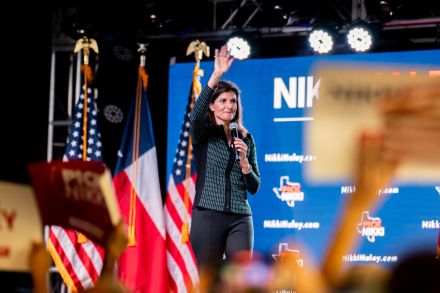
It’s (basically) officially over: former president Donald Trump and President Joe Biden will face off again this November. Former UN ambassador Nikki Haley, the only remaining viable challenger to Trump, dropped out of the race this morning after eking out just one Super Tuesday victory in Vermont’s open primary. (And Biden challenger Dean Phillips suspended his campaign as well). It wasn’t exactly a surprise. One of her biggest donors, Americans for Prosperity, pulled support last week; she had no public events scheduled in South Carolina as reporters holed up in hotel rooms rather than flocking to watch parties, and she was eerily quiet for hours as results poured in.

Nikki Haley dances on her own grave

Former South Carolina governor Nikki Haley finally notched her first win in the GOP presidential primary, winning the Washington, DC contest by about thirty points, or 598 votes. Haley picked up nineteen delegates in the contest and now trails Donald Trump by 201 delegates.  The nation’s capital is arguably the worst place Haley could have achieved her first victory. The Trump campaign immediately used it as proof that she is in bed with the political establishment and fundamentally a candidate that can only win with the support of the consultant and donor class.

Trump and Biden’s border battle

President Joe Biden and former president Donald Trump made dueling visits to the southern border this Thursday, as the issue of immigration becomes the political priority of millions of Americans. The latest Gallup survey (February 1-20) reveals that immigration ranks as the most important problem ahead of the 2024 presidential election. For context, 28 percent of Americans see the issue as the most crucial one, which is more than the following issues combined: federal deficit (3 percent), crime and violence (3 percent), foreign policy/foreign aid/focus overseas (3 percent), poverty/hunger/homelessness (6 percent) and inflation (11 percent).

biden trump border

Letters: Rod Liddle is on the side of experts

From our UK edition

Work to do Sir: I agree with Kate Andrews’s diagnosis: the nation’s mental health is appalling and a major barrier to our economic prosperity (‘Sick list’, 24 February). I agree with her criticism of the treatment offered by the health service: we are failing to restore people to working health. Antidepressants are handed out like sweets while provision of talking therapy falls woefully short. What is missing from her otherwise excellent analysis is a consideration of aetiology. The pandemic unmasked, so to speak, but did not itself cause, a dearth of interpersonal connection in our society. We must all take responsibility for landing ourselves in this mess, and for finding a way out of it.

Which year was the worst for strikes? 

From our UK edition

Populist roots Where did the term ‘populist’ come from? The original Populist party grew out of the Farmers’ Alliance, a movement set up to fight corporate interests in the US in the 1880s. It then joined with other minor parties to fight the 1892 presidential election under the Populist banner. Its candidate James B. Weaver won 8.5% of the vote and carried four states – Colorado, Idaho, Kansas and Nevada – with a set of left-leaning policies including free-collective bargaining, shorter working hours and lower interest rates. In spite of its success it broke up during the 1896 election campaign when many members chose to back the Democrat candidate William Jennings Bryan instead.

Net-zero targets have hamstrung British prosperity

From our UK edition

Britain’s ‘net-zero economy’ is booming, creating more better-paid jobs than any other sector, but it is all being put at risk by the government’s reversal on policies on electric vehicles and heat pumps. That, at any rate, is what the Confederation of British Industry (CBI) and the Energy and Climate Intelligence Unit (ECIU) wants us to believe. In a report this week, these groups claim that the net-zero target has spawned an industry worth £74 billion, up 9 per cent in just a year. It has created 765,000 jobs which are 1.6 times as productive as the average UK job and which offer average wages of £44,600, compared with £35,400 for the rest of the economy.

Portrait of the week: Anderson’s outburst and Biden’s ceasefire prediction

From our UK edition

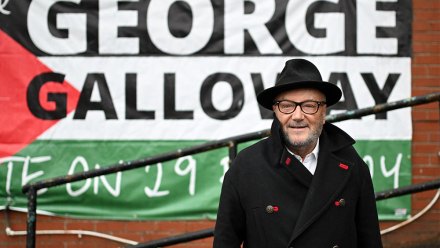
Home Lee Anderson, a former Conservative party deputy chairman, had the whip withdrawn after responding to an article by Suella Braverman that said: ‘The Islamists, the extremists and the anti-Semites are in charge now.’ He said: ‘I don’t actually believe that the Islamists have got control of our country, but what I do believe is they’ve got control of [Sadiq] Khan and they’ve got control of London, and they’ve got control of [Keir] Starmer as well.’ He later added: ‘They are laughing at our police. This stems with Khan, he’s actually given our capital city away to his mates.’ Rishi Sunak, the Prime Minister, said the comments were ‘not acceptable. They were wrong’.