The Spectator

Letters: how to get the uni protestors out

From our UK edition

Soft left Sir: I read with a certain wry amusement in Yascha Mounk’s piece that ‘activists’ occupying Columbia were demanding the university administrators should supply them with food and water (‘Preach first’, 11 May). How times have changed. In winter 1976 I was the president of the student body at Edinburgh University. A group of ultra-left activists occupied a building of the social science faculty. The administration sent two members of staff to speak to me in the hope that I might be able to dislodge them. I explained very patiently to them that given my own unashamed Conservatism, there was unlikely to be any meeting of minds on this matter.

When was the last genuine royal tour of Nigeria?

From our UK edition

Royal welcomes The Duke and Duchess of Sussex visited Nigeria last week. When was the last genuine royal tour of that country? – The late Queen made a 20-day visit in 1956, four years before Nigeria’s independence. She went for three days in 2003 when she opened the Commonwealth Heads of Government meeting.– The then Prince Charles visited in 2018, when he joined a Peacebuilding and Interfaith Engagement, laid a wreath at the Commonwealth War Graves memorial in Abuja and attended a talk on poultry-rearing. Faith in politics A Liberal Democrat candidate in Sutton and Cheam has been deselected allegedly because of his Christian faith. How do religious groups tend to vote?

Portrait of the Week: Natalie Elphicke defects, wages rise and Switzerland takes Eurovision

From our UK edition

Home The parliamentary Labour party shook itself uneasily after Natalie Elphicke, the MP for Dover, crossed the floor of the Commons and joined it, because she found the Conservatives too left wing. Monty Panesar, the former England cricketer, left George Galloway’s Workers Party of Britain a week after being announced as a parliamentary candidate. Some Liberal Democrat party members complained to the Equality and Human Rights Commission about the deselection as a candidate for Sutton and Cheam of David Campanale, an Anglican. The Commons voted by 170 to 169 for MPs arrested for serious sexual or violent offences to be banned from attending parliament. The government bruited plans to stop sex education for under-nines and restrict teaching about gender.

Britain should embrace the AI revolution

From our UK edition

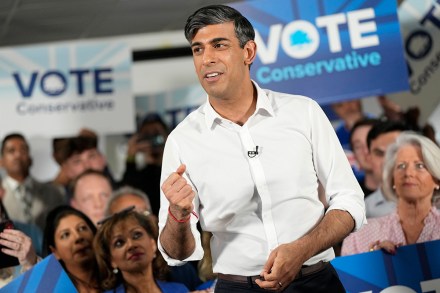
Rishi Sunak’s big speech this week was easily lampooned. Having accused Keir Starmer of ‘doomsterism’, the Prime Minister warned that Britain’s most dangerous years lay ahead, and talked of the threat from ‘colluding authoritarian states’. Less attention was paid to the part of his speech about artificial intelligence, which was in fact genuinely optimistic. As well as bringing greater freedom, choice and opportunity, AI could double productivity ‘in the next decade’, he said.

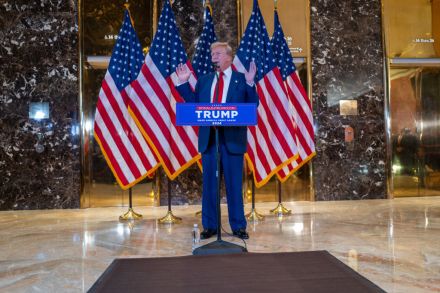
Biden and Trump say ‘YES’ to debates

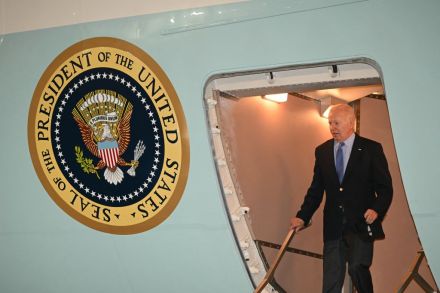
After months of speculation — will they, won’t they? — President Joe Biden and former president Donald Trump have officially agreed to a set of two presidential debates. In a rather surprising move, Biden released a statement indicating he would not participate in the fall debates sanctioned by the Commission on Presidential Debates (a wholly partisan sham organization, by the way, as my colleague Ben Domenech points out here). Instead, Biden laid out his own set of conditions to his opponent: there will be no audience, no RFK Jr., only CNN, ABC, CBS or Telemundo may host, and microphones must be muted when a candidate’s time expires.

letters

Letters from Spectator readers, June 2024

The rise of reverse gaslighting Sir — To an otherwise excellent article, I have a small correction. In 1860, the Southern states did not keep Lincoln off the ballot. Unlike today, where voting ballots are printed by the states, in 1860, voters were not presented with official ballots at polling stations that allowed them to check off which candidate they were voting for. Instead, a nineteenth-century ballot or “political ticket” was a slip of paper, provided by each party, listing their candidates for whatever offices were up for election. This allowed voters to easily “vote the ticket” for their party without having to know the names of every candidate and office.

culture

This month in culture: June 2024

The Fall Guy In theaters now Ryan Gosling’s career is rather bizarre if you think about it, from drippy romcom protagonist in The Notebook to brooding car noir hero in Drive to laughable failure in The Nice Guys to musical star in La La Land and Barbie. Now he takes a stab at renewing his hardass ways in The Fall Guy, an adaptation of Lee Majors’s 1980s series which pairs him with Emily Blunt and is, in a way, an homage to the careers of “stars who do their own stunts” even if Gosling does not do so himself. There’s even a stunt show planned for Universal Studios’ Hollywood theme park based on the movie, prior to its release.

Cohen in court

Donald Trump’s former lawyer Michael Cohen finally took the stand Monday in the so-called “hush-money” trial against his old boss in Manhattan. Cohen’s testimony has been much hyped by Trump’s critics, as the legal claim is that Trump improperly claimed payments made by Cohen to adult film star Stormy Daniels as legal expenses instead of campaign expenses. Cohen testified that his former client signed off on everything that he did, indicating that Trump directed him to pay off Daniels and suggesting that he would have known that they shouldn’t be marked down as a legal expense or retainer in the company books.

Why won’t phone companies stop kids using social media?

From our UK edition

When it comes to social media, parents find it difficult enough to keep up with their offspring’s online world. What hope, then, do governments and regulators have of keeping up with digital technology? This week, Ofcom has announced a new code of practice which aims to use powers granted under the Online Safety Act in order to ‘tame aggressive algorithms’. Such a move seems well-meaning, but official bodies will always be several steps behind the latest online trends. The onerous-sounding new rules will probably end up restricting the online freedom of less savvy adults more than of children.

Does RFK know what he believes on abortion?

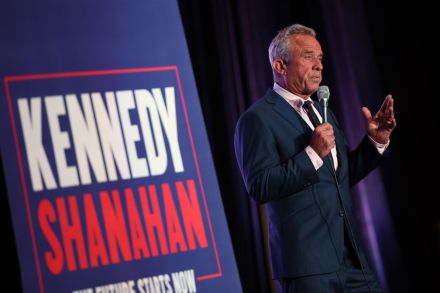
 Independent presidential candidate and former Democrat Robert F. Kennedy Jr. admitted this week that he supports “full-term” abortions. In a sit-down interview with former ESPN reporter Sage Steele, RFK said that while he doesn’t think women should abort their children in the eighth month of pregnancy or beyond, he wouldn’t prohibit them from doing so.  “Even if it’s full-term,” he said, later adding, “I think we have to leave it to the women rather than the state.” RFK’s position is extreme, no matter how you slice it. The majority of Americans believe there should be some restrictions on abortions; only 37 percent believe abortion should be legal in the second trimester and just 22 percent say it should be legal in the third trimester.

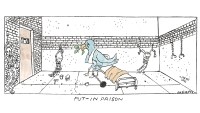
How violent are prisons?

From our UK edition

Name calling Springwatch presenter Gillian Burke says she finds it ‘jarring’ to call animals by their English names, preferring Swahili. Some popular Swahili translations: – Elephant: tembo/ndovu – Giraffe: twiga – Lion: simba – Hyena: fisi – Hippopotamus: hippopotamus – I’m fed up of paying for a TV licence: Nimechoka kulipa leseni ya TV Full Marx A Labour politician named Karl Peter Marx Wardlow was elected as a councillor in Stockport. The fondness for left-wing parents to name their children after their political heroes is most obvious in Keir Starmer – his first name is also shared with Keir Mather, who won the Selby and Ainsty by-election for Labour last year.

Portrait of the week: Tory defections, local elections and a China defence hack

From our UK edition

Home The local elections proved dreadful for the Conservatives but not quite perfect for Labour. The Conservatives lost 474 of the council wards in contention, ending up with 515; Labour gained an extra 186 to reach 1,158. Independents and others, some standing on the issue of Gaza, increased their councillors by 93 to 228, and took away Labour votes. George Galloway’s Workers Party of Britain got four seats. Reform won only two seats but took votes from the Tories; it almost came second in Blackpool South, where there was a by-election which Labour won with 10,825 votes to the Tories’ 3,218. Ben Houchen (Lord Houchen of High Leven) won a third term as Mayor of the Tees Valley as a Conservative; Sadiq Khan for Labour convincingly won a third term as Mayor of London.

Tories for Starmer

From our UK edition

Nick Boles was once at the heart of a mission to renew Conservatism. He was one of a small number of modernisers, central to the Cameron project, who ended up serving as Tory ministers. He quit over Brexit and this week made his public debut in a new job as an adviser to Rachel Reeves. He was chosen to introduce the shadow chancellor’s speech about how Keir Starmer’s government plans to revive the economy. The lack of any serious clash of ideals between the main parties has allowed a lazy consensus to thrive This is part of a new movement in British politics: Tories for Starmer. It’s something we will see a lot more of as Labour approaches power.

Biden’s Israel betrayal

President Joe Biden has been straddling an incredibly thin line when it comes to his stance on the Israel-Gaza conflict. The president historically has been supportive of the US’s alliance with Israel but his posture has been tested by a vocal pro-Palestinian contingent in the Democratic Party; in the Democratic primaries, they voted “uncommitted” to send a message to their party’s leader and in recent weeks have showed up on college campuses to demand university administrations divest from Israel. Biden has responded by remaining vocally pro-Israel but inching further away from Israel from a policy standpoint.

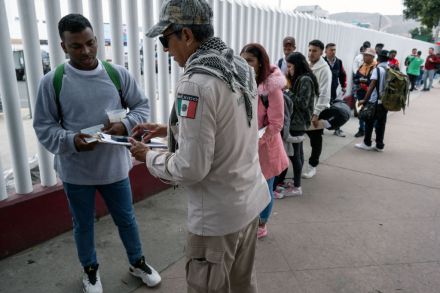
Chicago plans to keep the DNC migrant-free

The Democratic National Convention is set to take place in downtown Chicago in a little over three months and Democrats are hard at work scheming to prevent handing any easy political wins to their Republican opponents. It’s already a problem that Chicago is a poster child for the left’s failed gun-control policies (nearly three dozen people were shot, at least seven of whom were killed, over the weekend and gang violence prompted the city to cancel its West Side Cinco de Mayo celebrations despite the city having some of the strictest firearm regulations in the country).Chi-town is also notorious for its political seediness, and the shamelessness with which its party bosses operate is on full display in DNC preparations.

dnc chicago

Republicans versus MTG

If a motion to vacate the speaker of the House fails resoundingly, does it make a sound?The answer is, of course, yes — with a Capitol Hill press corps that loves nothing more than pitting all-too-willing Republicans against one another. Next week, Congresswoman Marjorie Taylor Greene is poised to finally pull the trigger on her quixotic quest to oust Speaker Mike Johnson — but she’s likely to be left holding a bag of small-dollar donations and press clippings, which is what her detractors think she is actually motivated by.On one side of the push to oust Johnson is a trio of Greene, Thomas Massie and Paul Gosar.

Letters: the joy of a male book club

From our UK edition

The state of our defence Sir: Your article on the etiolated state of European, including Britain’s, defence, is spot on (‘The price of peace’, 27 April). Rishi Sunak’s belated conversion to increasing defence expenditure is welcome but is, frankly, too little, too late. What it most definitively does not do is place the UK on a ‘war-footing’. By contrast, Russia is already in that state. It spends between 6 and 8 per cent of its GDP on defence. It has established strategic alliances with China, Iran and North Korea, and now much of West Africa too. We need a severe dose of realism. To begin, we must stop pretending that Ukraine has any hope of pushing Russia back to the 2014 borders.

How many people are attacked by sharks? 

From our UK edition

Horse trials Five Household Cavalry horses bolted in central London, with two reaching Limehouse before being calmed down. It may have been a shocking sight in the 21st century but it would have been ordinary life in the 19th century. – By the 1890s there were 300,000 horses in London. It was not uncommon for them to bolt in the street. Between 1854 and 1861, 62 people are recorded by Guy’s Hospital as having died as a result of collisions with horse-drawn vehicles. A bigger day-to-day problem was with dung, 1,000 tons of which were produced by the animals every day.– The last time a horse bolted in a London street was during the Black Lives Matter protests in June 2020 when a police horse was spooked and ran riderless into crowds.