The Spectator

Letters from Spectator readers, October 2024

The Californication of the Democratic Party At the risk of taking a Marxian perspective, California has become exactly what could have been predicted in 1993, with the loss of its manufacturing base to the 1990s defense cuts and much of its agricultural base to environmental regulation and foreign competition under the WTO. The state’s economy is now based on some of the most unequal industries on the planet: software, entertainment and hospitality. Plus, in the case of entertainment, an industry that has always tolerated and quietly celebrated what may politely be called decadence, or less politely, degeneracy. Just look at who has all the discretionary money and how they got it, and almost everything else follows. — M.

letters

Letters: A cautionary lesson for England’s schools

From our UK edition

Lessons to learn Sir: Your leading article ‘Requires improvement’ (7 September) rightly raised concerns that a curriculum review in England might reverse the excellent progress in schools following the Gove reforms. Fortunately, there are two very good examples of what happens when you replace rigour and the acquisition of knowledge with left-wing dogma and woolly thinking. The introduction of the Curriculum for Excellence in Scotland has led to a dramatic fall in standards in Scottish education and a resultant collapse in its Pisa [Programme for International Student Assessment] ranking. Last year Wales recorded its lowest-ever Pisa ranking.

Which media titles are worth the most?

From our UK edition

Media interest This week The Spectator was acquired by Old Queen Street Media for £100 million, around five times its annual turnover. How does that compare with other media valuations (also as a multiple of revenue)? Date / Title / Valuation Aug 2010 / Newsweek / 0.000000006 Feb 2011 / Huffington Post / 10.0 Aug 2013 / Washington Post / 0.4 Jul 2015 / Financial Times / 2.5 Aug 2015 / The Economist / 2.8 Nov 2016 / Buzzfeed / 6.8 Jul 2017 / Vice / 8.1 Oct 2018 / Time / 1.1 Mar 2021 / New Scientist / 4.1 Aug 2021 / Politico / 5.0 Jan 2022 / The Athletic / 8.5 Jun 2022 / New European / 3.4 Sep 2024 / The Spectator / 4.

2668: Obit VII – solution

From our UK edition

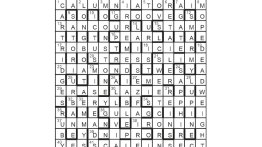
The BOWLER (7) was DEREK (26) Underwood (synonym of COPSE (32)), nicknamed ‘Deadly’, who died on 15 April 2024. The four victims were MUSHTAQ MOHAMMAD, SUNIL GAVASKAR, GRAHAM DOWLING and GARRY SOBERS.

How to manage migration like the Swedish

From our UK edition

In the end, the German state of Thuringia did not fall into the hands of the far-right Alternative für Deutschland (AfD). The party won the most votes in the recent election but was unable to form a coalition, meaning that Björn Höcke will not be the state’s minister-president. This is ideal for him: he can cry foul, claim to represent the true voice of Germany and point to a conspiracy to keep him out of power. His incendiary strain of politics proved more popular than the more moderate version of the AfD in Saxony, which held elections the same day. These will all be lessons taken into consideration ahead of Brandenburg’s state elections in two weeks’ time. The growing strength of the AfD has sent mainstream parties scurrying to respond to public concerns.

Portrait of the week: State pension to rise, prisoners released early and a new owner for The Spectator

From our UK edition

Home The government won by 348 to 228 a Commons vote on limiting the winter fuel allowance for pensioners to those who qualified by poverty: 52 Labour MPs didn’t vote, one voted with the opposition; five MPs suspended from the Labour party also voted with the opposition. Three million people who began receiving the ‘new’ state pension after 2016 will be given £460 a year more from April 2025, in line with wage growth of 4 per cent. A bill was published to exclude the 92 hereditary peers from the House of Lords.

What’s next after the Trump-Kamala debate

The first presidential debate between former president Donald Trump and Vice President Kamala Harris took place last night on ABC News. The candidates talked about the economy, immigration, abortion, foreign policy and other major issues facing voters heading into November. We won’t get too much into winners and losers here, as you can head to The Spectator’s home page for all kinds of reactions. Here’s a quick sample:  How Kamala Harris won the debate comfortably, Charles Lipson ABC News is the big loser of the debate, Roger Kimball  The Trump-Harris presidential debate failed the voters, Amber Duke What we will cover is snap reactions from voters and what happens next.

The Trump-Kamala showdown

The long-awaited debate between former president Donald Trump and Vice President Kamala Harris is kicking off Tuesday night at 9 p.m. ET on ABC News. This is a high-stakes moment, mostly for the Harris campaign: Kamala’s predecessor at the top of the ticket, President Joe Biden, was forced by his own party to drop out of the race after an abysmal performance against Trump in June, and Kamala has only done one unscripted event on camera since launching her own campaign. Unlike that CNN interview with Dana Bash, Kamala will be challenged and will not have her running mate, Tim Walz, sitting next to her for support.

Hunter pleads guilty to tax charges

President Joe Biden’s son Hunter Biden pleaded guilty in federal court Thursday to tax charges in a last-minute reversal of his previous not guilty plea. The younger Biden was accused of failing to pay taxes on his lucrative business — often foreign — ventures and accepted guilt on all nine charges. There was no deal with prosecutors; Biden will not receive a reduced fine or sentence for his change of hear, instead explaining that he merely wanted to avoid putting his family through additional scrutiny like that of his Delaware gun trial.  “I will not subject my family to more pain, more invasions of privacy and needless embarrassment,” Biden said in a statement. Biden’s lawyers acknowledged that there was enough evidence to convict him in a trial.

School portraits: snapshots of four notable schools

From our UK edition

Elstree, Berkshire Elstree – which educates boys and girls from three to 13 – is nestled in 150 acres of stunning countryside near Newbury in Berkshire. The school, which celebrated its 175th anniversary last year, says that its aim is two-fold: ‘to find out how a child is intelligent rather than how intelligent a child is’ and to teach pupils that ‘effort is king’. From Year 4 onwards, children can choose to flexi or weekly board and from Year 5 pupils are taught by individual specialists in all subjects from Year 5, compared with the usual Year 7. Although Elstree is non-selective, school-leavers have received scholarships to – among others – Eton, Harrow, Radley, Marlborough and Winchester.

What are the most ‘unsettling’ artworks to hang in 10 Downing Street?

From our UK edition

The art of politics Keir Starmer moved a portrait of Lady Thatcher from one room at 10 Downing Street to another because he found it ‘unsettling’. Some more possibly unsettling artworks that have hung at No. 10: — ‘More Passion’, by Tracey Emin, featuring the words ‘More Passion’ in neon, was installed by David Cameron in 2011. In 2022 Emin wrote on Instagram about her unhappiness that it was still there after the revelation of Boris Johnson’s lockdown parties. His ‘behaviour and lack of contrition’, she said, were ‘bizarre’. — Annabel’s – a series of lino cuts depicting Sloanes revelling at the Mayfair nightclub in the hedonistic mid-1980s – also hung in Downing Street during Johnson’s premiership.

The real crisis in our school system

From our UK edition

For years, each school in England has been put in one of four categories: ‘outstanding’, ‘good’, ‘requires improvement’ and ‘inadequate’. While undoubtedly crude, the system offered clarity to parents. Bridget Phillipson, the Education Secretary, has now abolished this categorisation structure but not yet said precisely what will replace it. Children are returning to school in the middle of uncertainty. Are politicians blind to the staggering inequality within a state system that educates 93 per cent of pupils? The National Education Union has long urged schools to ignore Ofsted ratings and to stop referring to them on their gates. Phillipson’s reform seems to nod towards this.

Portrait of the week: UK cancels Israel exports, Grenfell fire report released and AfD victory in Germany

From our UK edition

Home The government cancelled 30 out of 350 export licences for arms to Israel on items that it said could be used by Israel for ‘offensive purposes’ in Gaza. Israel Katz, the Israeli foreign minister, said: ‘A step like the one taken by the UK now sends a very problematic message to the Hamas terrorist organisation and its backers in Iran.’ Nine offshore wind farm contracts were awarded by the government; last year there were no bidders. The previous government had increased the maximum guaranteed price from £44 to £73 per MWh. The headquarters of GB Energy, a new UK government-backed energy company, will be in Aberdeen.

Do polls really matter after Labor Day?

The political pundits like to tell us that general election polls don’t matter until after Labor Day. That, they say, is when the average American actually starts paying attention to what is happening in the election and so you can get a better understanding of which way the electorate is leaning. The only problem with that traditional wisdom is that it’s hard to put much stock into polls when so many are returning drastically different results.Take the Morning Consult poll that dropped this morning that shows Harris surging with a lead in six of the seven battleground states. The poll has her up eight points in Wisconsin, four in Pennsylvania and Nevada and three in Michigan. To be frank, no one serious believes these numbers.

Which schools get the most pupils into Oxbridge?

From our UK edition

Oxford and Cambridge have released figures showing how many offers they gave to pupils from schools in the 2023 Ucas application cycle. We have combined the figures in this table. It shows how well state grammars and sixth-form colleges compete with independent schools. Over the years, both universities have increased the proportion of acceptances from state schools: 72 per cent, up from 52 per cent in 2000. Of the 80 schools, 29 are independent, 29 grammar or partially selective, 17 sixth-form colleges and five are comprehensives or academies. (Schools are ranked by offers received, then by offer-to-application ratio. If schools received fewer than three offers from one university, this number has been discounted due to Ucas’s disclosure control.

News pages

From our UK edition

i.m. Ian Jack (1945-2022) I feel awkward owning up to it, Ian, but I find I’m skimming the news pages. To bask in the light, listen to music, watch geese fly over and tulips glow doesn’t feel as if I’m selling my soul. Not that I skip the bullet points – bombs falling, democracies failing, the forests going up in smoke – but now the sun comes up at six, with a blackbird calling and the koi luminescent, will you forgive me for sitting outside, on the flagstones, a coffee in hand, my eyes on the plum tree next door with its cumulus of white blossom, or if not forgive – newsman as you are – at least come through the gate to dispute it.