The Spectator

AI studios, ethical advertising and software for defence – Britain’s business services Innovator of the Year

From our UK edition

31 min listen

The Spectator Economic Innovator of the Year Awards, in partnership with Rathbones, celebrate the passion and creativity of British entrepreneurs. From hundreds of entries we have narrowed down to some 50 finalists across the United Kingdom. In this episode, the judges discuss the innovators within the Business Services and Logistics category – the companies that help other innovators and companies operate day to day. The judges in this episode are mechanical engineer and venture capitalist Adrian de Ferranti; Caroline Theobald CBE, managing director of Bridge Club Ltd which helps connect entrepreneurs with investors, expertise and skills; Michelle White, Head of Private Office for Rathbones; and Martin Vander Weyer, The Spectator's business editor.

Trump drops bombs on Liz Cheney

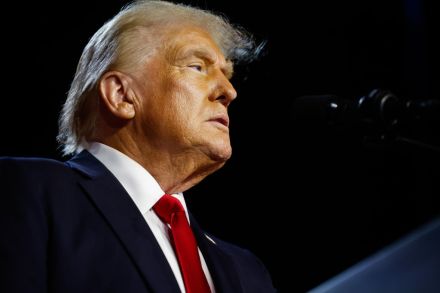
Former president Donald Trump slammed former Republican congresswoman Liz Cheney, who has been campaigning on behalf of Vice President Kamala Harris, for her war-hawk tendencies and quickly found himself in a media feeding frenzy. Trump said during a town hall with former Fox News host Tucker Carlson, “She’s a radical war hawk... Let’s put her with a rifle standing there with nine barrels shooting at her, OK? Let’s see how she feels about it, you know, when the guns are trained on her face.”He added, “Look, they’re all war hawks when they’re sitting in Washington in a nice building saying, ‘Oh gee, let’s send 10,000 troops right in the mouth of the enemy.

Rachel Reeves is taking us back to the 1970s

From our UK edition

The first fiscal event to be delivered by a female Chancellor of the Exchequer is a landmark moment, but in every other regard this Budget was a return to the familiar, and failed, approach of Labour governments past. This was the Life on Mars Budget – a journey back to the 1970s, only without the cheap booze and fags. Tax rises, increased borrowing, a bigger state, spending on public services unaccompanied by meaningful reform and additional costs for those businesses which create wealth – we have seen all these before and we know they are the markers of decline. This Budget was a journey back to the 1970s, only without the cheap booze and fags Before the election there were signs that Labour’s leadership understood the need for a different approach.

Portrait of the week: Tax rises, a cheddar heist and snail delivery man gets slapped

From our UK edition

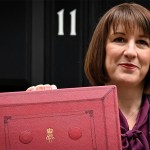
Home Rachel Reeves, the Chancellor of the Exchequer, repeatedly mentioning an inherited ‘£22 billion black hole’, raised taxes by £40 billion in the Budget, while saying she was abiding by Labour’s manifesto promise not to increase taxes on ‘working people’. A big hit came from increasing employers’ contributions to national insurance; the threshold at which it begins to be paid was reduced from £9,100 to £5,000. But income tax and NI thresholds for employees would be unfrozen from 2028. Capital gains tax went up; stamp duty for second homes rose. Fuel duty would again be frozen. The non-dom regime was abolished. Tobacco went up; a pint of draught went down a penny. The minimum wage would rise. Defence spending would rise by £2.9 billion.

Biden’s garbage time

Here’s what was supposed to happen: Vice President Kamala Harris would speak at the Ellipse, just as Donald Trump did on January 6, 2021, before his supporters entered the US Capitol in order to prevent the certification of the last presidential election. Harris would strike a stark contrast; she would deliver a disciplined address to all Americans, a week before polls close, and show that the Democrats were still in the fight, despite the recent “vibe shift” toward Trump. Tens of thousands would attend. The visuals would be striking.Everything went to plan. Enter Joe Biden.

Who first classified ‘working people’?

From our UK edition

Working people Government ministers may have had trouble defining what was meant by ‘working people’ in the Labour manifesto, but where did the idea of classifying people who earn their living as a distinct group come from? – According to the OED,the term ‘working class’ has been traced back to the 1757 edition of the Universal Dictionary of Trade and Commerce written by Malachy Postlethwayt, a former adviser to Horace Walpole. Postlethwayt was born the son of a wine merchant in Limehouse, east London, in 1707. He certainly fitted Starmer’s definition of a working person in that he appears to have died, in 1767, owning no assets.

Letters: How to save the NHS

From our UK edition

The survey says Sir: David Butterfield’s 21 years of experience of higher education (‘Decline and fall’, 26 October) chimes with my 35. But the decline in the rigour of university education which he so deftly describes has not been entirely self-willed. Successive governments have championed a consumerist understanding of higher education. Students have become consumers and academics have become service providers. The reduction in the intellectual demands of undergraduate courses and grade inflation are due to the annual National Student Survey. Universities are in thrall to this and make ever greater efforts ‘to enhance the student experience’. This includes pandering to the desire of most students to have fewer essays, slimmer reading lists, few exams and higher grades.

Books of the Year I

From our UK edition

Jonathan Sumption Barbara Emerson’s The First Cold War: Anglo-Russian Relations in the 19th Century (Hurst, £35) is an outstanding account of Britain’s relations with Russia at a time when ambassadors mattered and Britain was the only world power. No one has explained the Great Game in Central Asia or the intricacies of European dynastic politics so well. Anne Somerset’s Queen Victoria and Her Prime Ministers (Collins, £30) overlaps with it, since one of the abiding themes of the queen’s relations with the eight men who occupied No. 10 in her long reign was her enthusiasm for going to war with Russia. Victoria was opinionated and outspoken, but easy to manipulate if you knew the codes.

Wonky fruits, supplements for pets and smart walking sticks – Britain’s consumer Innovators of the Year

From our UK edition

35 min listen

The Spectator Economic Innovator of the Year Awards, in partnership with Rathbones, celebrate the passion and creativity of British entrepreneurs. From hundreds of entries we have narrowed down to some 50 finalists across the United Kingdom. In this episode, the judges discuss the innovators within our consumer goods and services category, from suppliers of wonky fruits to producers of supplements for pets. The judges in this episode are Merryn Somerset Webb, senior columnist at Bloomberg and the founder of MoneyWeek; entrepreneur and investor Gordon Black, whose company Peter Black Holdings was a major supplier of the UK's leading retailers; Michelle White, Head of Private Office for Rathbones; and Martin Vander Weyer, The Spectator's business editor.

Democrats pounce on sold-out Madison Square Garden rally

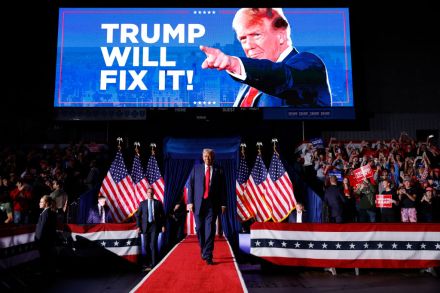
New York For New Yorkers fed up with the Jets, Giants and Yankees, this weekend offered no shortage of entertainment, with former president Donald Trump returning to his hometown for a sold-out rally at Madison Square Garden, the “world’s most famous arena.”While the election isn’t over for more than a week, Trump made what is likely his highest-profile event before Election Day in the heart of deep-blue New York City. While his speech did not deviate from his traditional remarks about the border, Vice President Kamala Harris being a “very low-IQ” person, no taxes on tips and more, it was a clear display of confidence in the home stretch of the 2024 campaign.

Carbon capture, vertical farming and coding for girls – Britain’s environmental and social purpose Innovators of the Year

From our UK edition

The Spectator Economic Innovator of the Year Awards, in partnership with Rathbones, celebrate the passion and creativity of British entrepreneurs. From hundreds of entries we have narrowed down to some 50 finalists across the United Kingdom. In this episode, the judges introduce those start-ups rethinking and finessing the battle against climate change, from vertical farming to carbon capture technology; as well as those working for a greater social purpose, such as getting more women into tech.

Democrats ramp up efforts to tie Trump to Hitler

Democrats including presidential nominee Kamala Harris and 2016 candidate Hillary Clinton are accusing their Republican opponent of being a Hitler-esque fascist. Spurred by a curiously thin report from the Atlantic claiming that former president Donald Trump disrespected the memory of a fallen soldier and praised Adolf Hitler and his generals, Harris held a press conference on Wednesday in front of her Washington, DC residence in which she warned Trump is “increasingly unhinged and unstable.” During a CNN town hall later that evening, Harris answered in the affirmative when she was asked if she believes Trump is a fascist. Meanwhile, Clinton likened the upcoming Sunday Trump rally at Madison Square Garden to an event held by Nazis at the same venue in 1939.

Which were the closest US elections?

From our UK edition

Back to the White House If Donald Trump wins on 6 November, he will be the first US President to serve two separated terms since Grover Cleveland, who was president between 1885-89 and 1893-97. Cleveland actually won a higher share of the popular vote in the 1888 election, but lost to Benjamin Harrison in the electoral college after an election fought on the issue of trade tariffs. Cleveland’s wife Frances was confident she would return to the White House, reputedly telling her staff to keep things in good order for when they return four years to the day. So it proved – Cleveland won the 1892 election easily.

2674: New crop – solution

From our UK edition

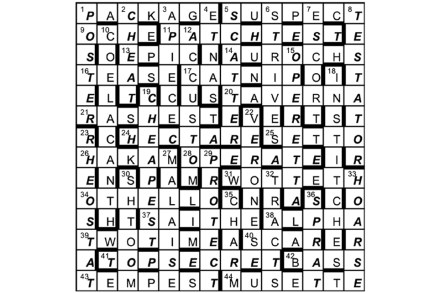
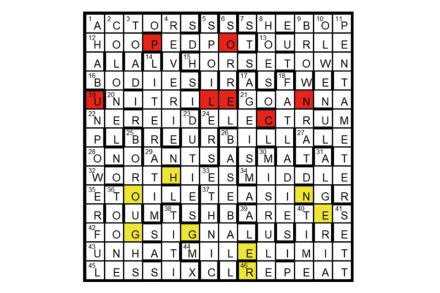
7D sung by 40A suggested other unclued lights, all anagrams of fruits: 12A mango; 17A apple; 18A apricot; 24A damson; 9D tangerine. MELON, an anagram of LEMON, was to be highlighted.

Is Wes Streeting the Hamlet of the health service?

From our UK edition

Is Wes Streeting the Hamlet of the Health Service? Is this undoubtedly talented and thoughtful young Labour prince fatally irresolute when it comes to doing what he knows must be done? Few politicians have articulated so clearly the need for reform of our healthcare system. Streeting’s insistence that the NHS should be a service not a shrine angered all the right people, which is to say the BMA. It marked a welcome departure from the treacly displays of affection which have hitherto characterised ‘debate’ about the health service. More recently, the Health Secretary has frankly admitted that the NHS is letting patients down and acknowledged its manifold inefficiencies. The need for change has been recognised. The case for reform is urgent.

Portrait of the week: Budget leaks, prisoners released and Israel kills Hamas leader

From our UK edition

Home Rachel Reeves, the Chancellor of the Exchequer, was expected to freeze tax thresholds in the Budget on 30 October, to swell government income as more working people were brought into higher tax bands. Before Labour formed a government, she had said that the Conservatives, by freezing tax thresholds, were ‘picking the pockets of working people’. Weeks of speculation on the Budget were encouraged by leaks and by constant questioning of ministers about how Labour would keep to its manifesto undertaking not to raise taxes on ‘working people’ by increasing income tax, national insurance or VAT. The International Monetary Fund raised its growth forecast for the United Kingdom to 1.1 per cent this year, compared with the 0.7 per cent it forecast three months ago.

Kamala ambushes potential spoiler candidate

Vice President Kamala Harris is spending millions on new ads against Green Party candidate Jill Stein in swing state Wisconsin, warning potential supporters that a vote for Stein is a vote for Trump. The advertisement also attempts to smear Stein by asserting that she has links to KKK leader David Duke and Russian president Vladimir Putin. “You can tell a lot about a person by the company they keep,” a voiceover says. “Stein isn’t sorry about swinging the 2016 election to Trump.” The ad was paid for by the Democratic National Committee but approved by the Harris campaign.Why would Harris be using air-time to attack Stein just two weeks out from the election? There are a couple of theories.

The Chew Chew Foot Massage Parlour

From our UK edition

Hong Kong A fan on the ceiling.  The parlour full of drapes and towels.  A pianist plays behind the curtain. They call him Liverpool.  The cat mooches. The woman puts her hands together in salutation.   A man on the chair, legs stretched out. The woman kneads his feet. The boss takes the money.  Sometimes yawning,  sometimes burping, sometimes farting. Her chakras perfectly aligned.  The man on the chair floats above Tung Street. His feet are factories of pleasure.

Letters: Why does the Navy have more admirals than ships?

From our UK edition

Pointless laws Sir: The leading article ‘Wrong problem, wrong law’ (19 October) makes cogent points about the Terrorism (Protection of Premises) Bill, in particular pointing out that it would probably not have made any difference had it been in force at the time of the Manchester Arena bombing, and that if passed it will impose disproportionate and often unmanageable burdens on venues such as churches and village halls. There is, in truth, a wider point here: most legislation is either counterproductive, useless or both. All legislation has five aspects: (1) A real purpose. This may be to achieve the ostensible purpose of the legislation, but is often really to make it look as if the government is ‘doing something’. (2) An ostensible purpose.