The Spectator

Trump’s White House… reloaded

President-elect Donald Trump is slowly revealing who will — and who will not — be a part of his second administration come 2025. As a reminder, last week Trump announced campaign co-manager Susie Wiles as his chief-of-staff.Over the weekend, Trump rebuffed Nikki Haley, who previously served as Trump’s UN ambassador, and Mike Pompeo, who was Trump’s secretary of state. “I will not be inviting former ambassador Nikki Haley, or former secretary of state Mike Pompeo, to join the Trump administration, which is currently in formation,” Trump wrote on Truth Social. “I very much enjoyed and appreciated working with them previously, and would like to thank them for their service to our country.

Tracking the Trump transition

Donald Trump has successfully won his second term, which means it’s time for him and his allies to buckle down and fervently start hiring for the incoming administration. Prior to his election, Trump announced that his transition would be chaired by former head of the Small Business Administration Linda McMahon and billionaire businessman Howard Lutnick, with assists from Trump’s sons as well as former Democrats Robert F. Kennedy Jr. and Tulsi Gabbard.The president-elect made his first pick for his administration on Thursday, announcing that his campaign co-manager Susie Wiles would be his chief of staff. She will be the first ever woman to hold this key White House post.

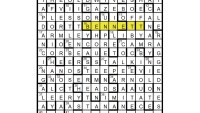
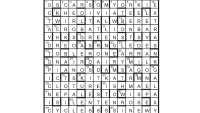
2676: ITOX – solution

From our UK edition

The unclued lights reveal phrases beginning (or, with 8, ending) with the numbers 1 to 10. The red and yellow squares reveal two members of LES SIX, the solution at 45 Across.

What Britain can learn from Donald Trump’s victory

From our UK edition

This has been the year of ejection elections. Across the democratic world, incumbents have been thrown out and insurgents have triumphed. And nowhere has the establishment been so humbled, the insurgency so resurgent, as in the US – still the world’s greatest democracy. For Democrats, it is mourning again in America. Just as in 2016, it is not just their candidate who has been defeated but their beliefs about their country. There are lessons for them, and for all political actors across the West, in Donald Trump’s victory.

Portrait of the week: Trump’s victory, Kemi’s shadow cabinet and footballer killed by lightning

From our UK edition

Home Kemi Badenoch, the new leader of the Conservative party, appointed a shadow cabinet. She made Robert Jenrick, whom she beat for the leadership, shadow justice secretary; Dame Priti Patel, shadow foreign secretary; Chris Philp, shadow home secretary; Mel Stride, shadow chancellor. Alex Burghart was given Northern Ireland and the Cabinet Office, with Laura Trott at education, Edward Argar at health and James Cartlidge at defence. Badenoch had been elected leader by 56.5 per cent of the 95,194 members’ votes (compared with the 57.4 per cent for Liz Truss in 2022), in a turnout of 72.8 per cent (compared with the 82.2 per cent in 2022). The Pitt Rivers museum in Oxford returned to Borneo a sun hat acquired in 1923 from the Brooke family, who ruled Sarawak.

The top election takeaways from Trump’s beatdown

President Donald Trump will be the 47th president of the United States after a historic political comeback and complete annihilation of his opponent, Vice President Kamala Harris. Harris called Trump to concede this afternoon after failing to appear at the campaign’s planned victory party at her alma mater, Howard University, in Washington, DC. Instead, she delivered her concession speech there this afternoon. More on that below the fold. Biden is also said to have called Trump to congratulate him and express his desire for a smooth transition. It was a relatively short night compared to most predictions, with Trump sealing victory a couple of hours after midnight (although the result seemed obvious by that point).

The Cooling Sand

From our UK edition

The beach magician’s vanished, gone home. Now it’s my sleeping cousins’ turn to disappear.                              Out of the creaking depths of old deckchairs their teenage spirits rise, drift down to the shore.                                                    The mackerel are in. Helen’s in blue, Cat in her yellow dress.

Letters: What is the Chancellor trying to achieve?

From our UK edition

Zero-sum game Sir: Though troubled by the impact of Budget measures on employers and economic growth, I am more baffled by the regressive nature of those measures on the most vulnerable sectors – retail, hospitality, social care and students (‘Tax, spend, borrow’, 2 November). While the employer of a full-time employee earning £50,000 a year will see a cost increase of 2 per cent, the comparable increases for a full-time adult, a half-time adult and a 16-hour-a-week student on the minimum wage are 10.4 per cent, 13.1 per cent and a staggering 23.2 per cent respectively – and retail and hospitality are also hit by a major reduction in business rates relief.

Books of the Year II

From our UK edition

Peter Parker The New Zealand novelist Catherine Chidgey ought to be much more celebrated in this country than she is. Do not be put off by the fact that The Axeman’s Carnival (Europa, £14.99) is narrated by a magpie; whimsy is entirely absent from this highly original, thrillingly dark and often very funny novel. The bird is adopted by the wife of a cash-strapped farmer and learns to speak, becoming an internet sensation and so providing useful income. At the same time, its guileless chatter includes picked-up phrases that inadvertently expose what is really going on in the household where it has made its home. Treat of the year was Sheila Robinson’s Balance, Humanity and Nature (Random Spectacular, £27.

Live coverage: the 2024 election

Welcome to The Spectator’s live 2024 election coverage. Stay tuned throughout the night as our writers bring you news, analysis and commentary on the presidential race and others from across the country.

The 2024 election edition

Welcome, DC Diary readers, to the last edition of this newsletter before Tuesday night’s election. Most polls still have the presidential race at a dead heat between Vice President Kamala Harris and former president Donald Trump. Pennsylvania remains the lynchpin, as the paths for the respective candidates appears to be the Rust Belt and Pennsylvania for Harris, and the Sun Belt and Pennsylvania for Trump. Each campaign is pointing to data that they think gives them an advantage tomorrow.Trump’s team published a memo Monday, for example, pointing out that early vote numbers suggest turnout among urban voters and women is down significantly in the seven swing states compared to 2020.

Bespoke batteries, recyclable electronics and drone ports – Britain’s manufacturing and engineering Innovators of the Year

From our UK edition

The Spectator Economic Innovator of the Year Awards, in partnership with Rathbones, celebrate the passion and creativity of British entrepreneurs. From hundreds of entries we have narrowed down to some 50 finalists across the United Kingdom. In this episode, the judges discuss the innovators within the Manufacturing and Engineering category – 3D printing hydraulic systems, making plastic alternatives out of plant-based polymers, creating recyclable electronics, and more.

AI studios, ethical advertising and software for defence – Britain’s business services Innovator of the Year

From our UK edition

31 min listen

The Spectator Economic Innovator of the Year Awards, in partnership with Rathbones, celebrate the passion and creativity of British entrepreneurs. From hundreds of entries we have narrowed down to some 50 finalists across the United Kingdom. In this episode, the judges discuss the innovators within the Business Services and Logistics category – the companies that help other innovators and companies operate day to day. The judges in this episode are mechanical engineer and venture capitalist Adrian de Ferranti; Caroline Theobald CBE, managing director of Bridge Club Ltd which helps connect entrepreneurs with investors, expertise and skills; Michelle White, Head of Private Office for Rathbones; and Martin Vander Weyer, The Spectator's business editor.

Trump drops bombs on Liz Cheney

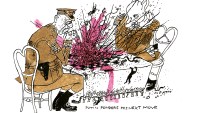
Former president Donald Trump slammed former Republican congresswoman Liz Cheney, who has been campaigning on behalf of Vice President Kamala Harris, for her war-hawk tendencies and quickly found himself in a media feeding frenzy. Trump said during a town hall with former Fox News host Tucker Carlson, “She’s a radical war hawk... Let’s put her with a rifle standing there with nine barrels shooting at her, OK? Let’s see how she feels about it, you know, when the guns are trained on her face.”He added, “Look, they’re all war hawks when they’re sitting in Washington in a nice building saying, ‘Oh gee, let’s send 10,000 troops right in the mouth of the enemy.

Rachel Reeves is taking us back to the 1970s

From our UK edition

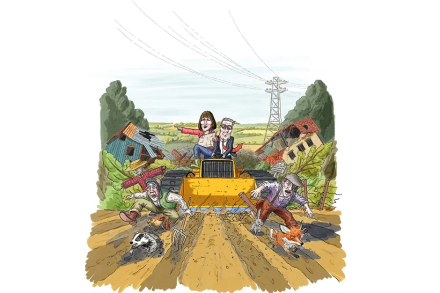
The first fiscal event to be delivered by a female Chancellor of the Exchequer is a landmark moment, but in every other regard this Budget was a return to the familiar, and failed, approach of Labour governments past. This was the Life on Mars Budget – a journey back to the 1970s, only without the cheap booze and fags. Tax rises, increased borrowing, a bigger state, spending on public services unaccompanied by meaningful reform and additional costs for those businesses which create wealth – we have seen all these before and we know they are the markers of decline. This Budget was a journey back to the 1970s, only without the cheap booze and fags Before the election there were signs that Labour’s leadership understood the need for a different approach.

Portrait of the week: Tax rises, a cheddar heist and snail delivery man gets slapped

From our UK edition

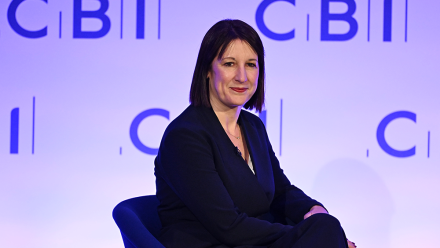
Home Rachel Reeves, the Chancellor of the Exchequer, repeatedly mentioning an inherited ‘£22 billion black hole’, raised taxes by £40 billion in the Budget, while saying she was abiding by Labour’s manifesto promise not to increase taxes on ‘working people’. A big hit came from increasing employers’ contributions to national insurance; the threshold at which it begins to be paid was reduced from £9,100 to £5,000. But income tax and NI thresholds for employees would be unfrozen from 2028. Capital gains tax went up; stamp duty for second homes rose. Fuel duty would again be frozen. The non-dom regime was abolished. Tobacco went up; a pint of draught went down a penny. The minimum wage would rise. Defence spending would rise by £2.9 billion.

Biden’s garbage time

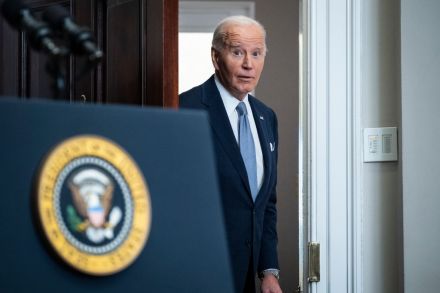
Here’s what was supposed to happen: Vice President Kamala Harris would speak at the Ellipse, just as Donald Trump did on January 6, 2021, before his supporters entered the US Capitol in order to prevent the certification of the last presidential election. Harris would strike a stark contrast; she would deliver a disciplined address to all Americans, a week before polls close, and show that the Democrats were still in the fight, despite the recent “vibe shift” toward Trump. Tens of thousands would attend. The visuals would be striking.Everything went to plan. Enter Joe Biden.

Who first classified ‘working people’?

From our UK edition

Working people Government ministers may have had trouble defining what was meant by ‘working people’ in the Labour manifesto, but where did the idea of classifying people who earn their living as a distinct group come from? – According to the OED,the term ‘working class’ has been traced back to the 1757 edition of the Universal Dictionary of Trade and Commerce written by Malachy Postlethwayt, a former adviser to Horace Walpole. Postlethwayt was born the son of a wine merchant in Limehouse, east London, in 1707. He certainly fitted Starmer’s definition of a working person in that he appears to have died, in 1767, owning no assets.

Letters: How to save the NHS

From our UK edition

The survey says Sir: David Butterfield’s 21 years of experience of higher education (‘Decline and fall’, 26 October) chimes with my 35. But the decline in the rigour of university education which he so deftly describes has not been entirely self-willed. Successive governments have championed a consumerist understanding of higher education. Students have become consumers and academics have become service providers. The reduction in the intellectual demands of undergraduate courses and grade inflation are due to the annual National Student Survey. Universities are in thrall to this and make ever greater efforts ‘to enhance the student experience’. This includes pandering to the desire of most students to have fewer essays, slimmer reading lists, few exams and higher grades.