Battery
From our UK edition
From our UK edition
From our UK edition
From our UK edition
From our UK edition
From our UK edition
Unions led astray Sir: Leo McKinstry’s article on the current problems in the trade unions (‘Counter-strike’, 11 July) brings back unhappy memories of the last time a similar situation arose. This was probably best known for Arthur Scargill’s attempt to use his position as head of the NUM for his own self-aggrandisment. I lived through that era and remember it well. I knew union members who were frightened of their ‘leaders’, a situation the founders of the trade union movement would have found incredible. In 1974 I attempted to transfer my union membership to a new location. Two representatives of the local branch came to see me, and were all smiles until I mentioned I wanted to opt out of the political levy.
From our UK edition
Ties that bind Lewis Hamilton was ejected from the royal box at Wimbledon for not wearing a tie. Some places he would have been welcome: — In 99 out of 100 of the most expensive restaurants surveyed in 2010. — For four evenings a week on a Cunard cruise (he would need a tie after 6 p.m. on the other three). — Driving a cab in Dubai (ties are no longer compulsory after a customer pulled one driver’s). And some places he wouldn’t: — Visiting Lloyds of London. — Competition days at Knebworth Golf Club (though socks are not usually compulsory). — Bicester Community College (ties compulsory for pupils from September).
From our UK edition
Home The government postponed a Commons vote on relaxing the Hunting Act in England and Wales after the Scottish National Party said it would oppose the changes. Scottish police admitted that a crashed car off the M9, reported to them on a Sunday, was not examined until the Wednesday, when one of the two passengers inside it was still alive. She died three days later. A case of H7N7 bird flu was found at a poultry farm near Preston, Lancashire, where 170,000 chickens were slaughtered. British people were being urged by the Foreign Office to leave Tunisia because ‘a further terrorist attack is highly likely’. Up to 5,000 were flown home.
From our UK edition
Iran is, beyond doubt, a sponsor of terrorism and this week it has been made much stronger. It has (again) agreed not to make a nuclear bomb and in return trade sanctions are being dropped — so money will start to flow in once more. We can be sure that the cash will soon find its way to Hezbollah in Syria, and to what remains of Bashar al-Assad’s regime. A stronger Iran means a longer and bloodier Syrian civil war, a more vulnerable Israel and a further injection of money and arms into the world’s deadliest war zones. None of this is in doubt. The question is whether, after this week’s deal, Iran will be less likely to menace the region as a nuclear power.
From our UK edition
From our UK edition
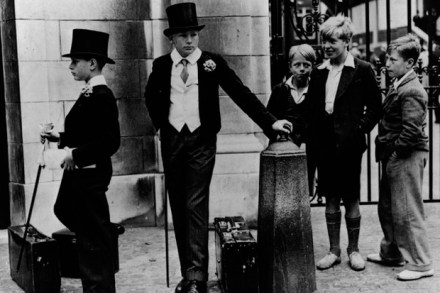
From ‘Education and Honour’, The Spectator, 17 July 1915: Under a voluntary system—which indeed takes off the lid, as General Baden-Powell would say—service rendered to the country depends entirely upon a man's own feelings as to what he ought to do. In other words, his service will be in proportion to his recognition of personal obligation—in proportion to his honour. In what are called the upper classes the war has shown this sense of honour to be extremely high. The young man who has been to a Public School or to one of the Universities and who remains at home without adequate excuse doing nothing is so rare as to be very conspicuous. In other classes it is otherwise. Among the so-called lowest class men have responded pretty freely to the call.
From our UK edition
From ‘Education and Honour’, The Spectator, 17 July 1915: The young man who has been to a Public School or to one of the Universities and who remains at home without adequate excuse doing nothing is so rare as to be very conspicuous. In other classes it is otherwise. Among the so-called lowest class men have responded pretty freely to the call. The so-called lower middle class, though in this there are of course brilliant exceptions, has perhaps answered less freely than any other class. In this class may be found, we fancy, most of the smug complacency which assumes that the fighting has necessarily to be done by other people, and that the Empire and the home will somehow be saved by efforts in which it is not necessary to take any part.
From our UK edition
From ‘Possibilities of Taxation’, The Spectator, 17 July 1915: Since the day when Bob Lowe attempted to impose a tax on matches the cost of production has been immensely reduced and the consumption has increased enormously. Matches are now so cheap that even a tax which doubled their price would not hurt the consumer. Good matches can he bought for threepence for a dozen small boxes, each containing about fifty; which works out to about two hundred matches for a penny. The result of this cheapness is that people constantly strike two or three matches when with moderate care one would suffice. A tax of at least one penny a dozen boxes should be imposed.
From our UK edition
From ‘Catching the Train’, The Spectator, 17 July 1915: ENGLISHMEN have many exasperating habits, but perhaps the most exasperating of all is that of running a train so fine that they only just catch it. What the normal healthy, unnervous Englishman likes to do is to arrive at the railway station one minute before the train starts, walk up the platform a little agitated inside but outwardly very calm and ostentatiously slow in movement, saying to any one he meets that there is not the slightest need to be in a hurry, as there are still twenty-five seconds before she is due to start. "Besides, all the carriage doors are still open and it must take another minute to shut them." That is the scene at the station end.
From our UK edition
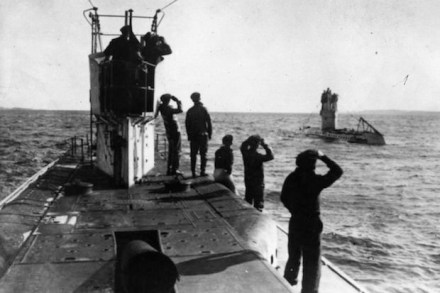
From 'News of the Week', The Spectator, 17 July 1915: ON the western side trench warfare continues on the familiar lines of attack and counter-attack. On the whole, however, we are not, we think, unduly optimistic when we say that on the balance the Allies once more have had the advantage, not only in the matter of small successes, but still more in the matter of human attrition. We and the French both lose heavily in men, but the Germans lose more and can worse afford it. We ought, however, to add that, according to a Berlin wireless telegram, the Crown Prince's attacks in the Argonne have been very successful, and that he has taken a large number of prisoners and put several guns out of action. Against this, the French declare that the enemy's gains have been of a trivial character..
From our UK edition
From 'A Pilgrim in Wartime', The Spectator, 10 July 1915: WITH a heavy bundle on her head, and gathered skirts which swung as she walked, I mistook her for a peasant carrying fodder home to the farm. Then as I saw the cockleshell sewn on to her cape my heart gave a bound. "O Pellegrina, stop and talk to me a while," I cried. And there on the Fiesole hillside she turned to greet me—a little old woman, erect and agile, with white hair and brown, weather-beaten skin, her poor rough garments clean and neat. At once I felt she could be no ordinary pilgrim, and as I watched her penetrating dark eyes I knew that the Sacred Fire glowed within, giving her a vision of things beyond my reach.
From our UK edition
From 'Parliament and Registration', The Spectator, 10 July 1915: The modern rigidity of the party system has enabled Ministers, once they have attained to power, to despise the House of Commons, for they know that the Whips will see that the party votes straight, and that is all they care about. This is a fundamental mistake, for the House of Commons in war time quite as much as in peace time is, with all its defects, one of the most valuable of our institutions. It provides the machinery for the criticism of the Government under conditions in which that criticism can most effectively be made and most effectively be answered.
From our UK edition
From ‘The Grand Victualler to the Nation’, The Spectator, 10 July 1915: As important as the supply of munitions is the supply of food. One, indeed, is useless without the other. No matter how much shell we have, we shall not be able to use it if our men are starving and are too weak from privation to load their guns or continue to keep up the supply of ammunition. If we are to ensure that this country shall always be abundantly victualled, we must take vigorous and timely action. If we do not, there is very grave risk that one day the country will be suddenly awakened by the news that there is a serious shortage of food, and that unless some tremendous effort is made we shall run the risk of starvation.
From our UK edition
From our UK edition
From our UK edition