The Spectator

The Spectator at war: Warsaw and Russia

From our UK edition

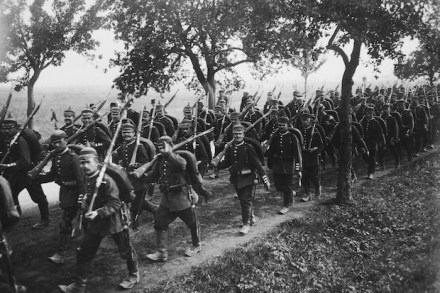
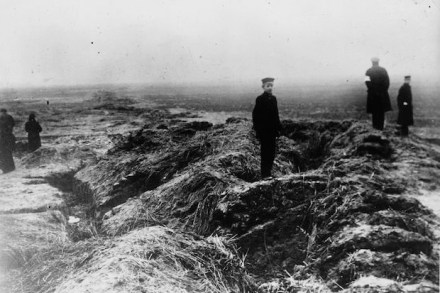
From 'Warsaw and Russia', The Spectator, 7 August 1915: ON Thursday afternoon the German wireless news announced the occupation of Warsaw. Official confirmation is lacking as we go to press, but in any case it is probable that the city will be evacuated very shortly. Earlier news had encouraged the hope that the determination of the Russians to postpone the evil day as long as possible would prevail, and that the Germans would have to spend another week in hard fighting outside the city. What is, we trust, certain is that the Russian armies have made their position secure, and that there is now no risk of their being caught between the two jaws of the pincers that are closing from the north and south.
The Spectator at war: Born under fire

From our UK edition

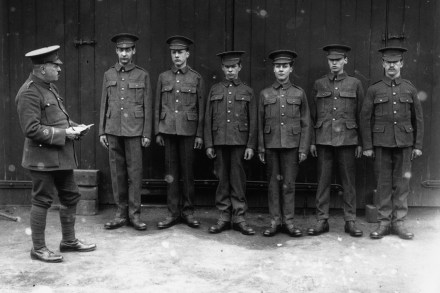
From 'News of the Week', The Spectator, 7 August 1915: A YEAR has elapsed since the first war issue of The Spectator. We have tried elsewhere to say something in answer to the question. "How do we stand?" Here we only reply very shortly. If we cannot say all is well, we can at any rate say that no man whose mind is not blinded by panic or prejudice can fail to admit that the position is on the whole satisfactory. It is true that we are still in peril, and that, unless we strain every nerve to carry the war to a successful issue, that peril may at any moment assume the most deadly proportions. But though this has been the prevailing condition ever since the war began, we can say truthfully that the peril is far less now than it was a year ago.

The Spectator at war: Germany’s moral code

From our UK edition

From 'Germania Contra Mundum', The Spectator, 31 July 1915: It may be said that, in the domain of international relations, the triumph of the German arms would substitute the perpetuation of a state of war rather than the maintenance of peace as the ideal goal which the rulers of the world should seek to attain. The leaders of German thought, indeed, openly avow that "war is the noblest and highest expression of human activity." The predominance of German principles would foster discord in the place of amity and suspicion in the place of confidence. Mr. Oliver scarcely overshoots the mark when he says that the new German code of morals, "if universally adhered to, would make an end of human society.

The Spectator at war: That touch of mink

From our UK edition

From 'Sim-sam the Mink', The Spectator, 31 July 1915: Sim-sam's bath was the spectacle that revealed him at his very best. Watching him glide and twist and loop the loop under water with the utter ease of a fish made you see the reason for the webbed toes, the powerful short, double-jointed legs that bent in any direction indifferently, and for the slim, lithe body with its rippling muscles. Sim-sam, you perceived, was built expressly for quick movement under water—movement far different from the clumsy-looking bopping gallop that was his best gait on land. A bath was his supreme enjoyment. It filled him with the highest spirits.

The Spectator at war: Debating compulsory service

From our UK edition

From 'News of the Week', The Spectator, 31 July 1915: The debate on compulsory service in the Commons on Wednesday night was remarkable for the speeches in its support made by Liberal Members. Captain Guest, who raised the question, declared that if we were to win in the present war, and to win quickly, compulsory service was the only way. Mr. Wedgwood, like Captain Guest fresh from active service in the field, vigorously supported the demand, and claimed to represent the views of all the fighting spirit of the Labour movement. What the country wanted more than money, shells, or men was a leader who could lead without fearing the consequences. Mr. Amery emphasized the dangers of our "dogged irresolution." Mr. Tennant, replying for the Government, demurred to the statement of Mr. J. H.

Letters | 30 July 2015

From our UK edition

What we’re building Sir: I was surprised and frustrated to read Ross Clark’s piece on housing associations in last week’s edition of your magazine (‘Stop moaning, start building’, 25 July). Surprised because it seemed to misrepresent the facts concerning housing associations, and frustrated because the analysis offered by Mr Clark ignores the key role that housing associations play in ending the housing crisis. Housing associations — which vary hugely in geography, size and function — have consistently supplied tens of thousands of new homes year after year. For example, last year they built 40,000 homes — a third of all new homes — and they matched every £1 of public investment with £6 of their own money.