Technology

Why Artemis II matters

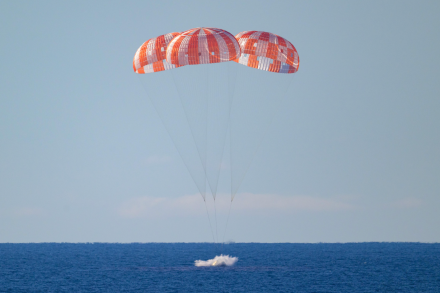
Weren’t those images beamed back from the Artemis II mission something to catch the breath in the throat? If something in you wasn’t stirred by the sight of Earth, glimpsed through the window of the space capsule past the silhouetted face of the astronaut Christina Koch, I don’t think you can be fully alive. And what about the thought that for the first time in history, human eyes will look directly on the dark side of the moon; or that the inhabitants of that spacecraft will travel farther from our home than any humans have ever done? That for a few tens of minutes before earthrise, they will be wholly

The peptides market is exploding – but are they safe?

Two weeks before the 2024 presidential election, Robert F. Kennedy Jr. tweeted that “the FDA’s war on public health is about to end.” He then listed a host of treatments, all of which he claimed had been “aggressively suppressed” by a corrupt Big Pharma system. Two Ps – psychedelics and peptides – featured on that list of treatments, one more familiar than the other. You could be forgiven for thinking that peptides are a recent creation but they’re not. They’ve been around for a long time, but they’ve gained huge attention due to Wegovy and Ozempic. Peptides are natural compounds: short chains of amino acids (the building blocks of proteins)

peptides

The arrogance of the tech-skeptics

If you’ve been paying attention to social media lately, then you already know the score: smartphones are corrupting our children, we need legal intervention immediately. Roughly half of US states have enacted some form of age-gating for social media or pornographic content. Australia banned under-16s from social media platforms outright, France and Indonesia followed suit and the United Kingdom is now asking people for their papers to read moderately offensive blog posts. You don’t need me to rehash this. The phones have nuked the interior lives of Gen Z, Gen A and the hitherto unborn Generations B and C. Every opinion lands somewhere between “protect the children” and “this is

Why China has the edge in mining

Donald Trump wants to bring back mining and mineral processing to the US – and he needs to do this if he’s to continue fighting wars. “You cannot claim to have a military strategy without a clear idea of your supply chains,” says economic journalist Wolfgang Münchau. “The specific advantage that both Russia and China have over the West is not simply their wealth of metals and minerals – it’s the fact that they can also process them. China’s expertise in processing its raw material is unparalleled.” Trump has exhorted America’s traditional allies to take responsibility for their own mineral supplies as well as their own defense, and to ditch

mining

How the West is empowering China’s war machine

The West’s technology brains and universities are arming China. A few of them are potentially breaking the law to do it, but most of them don’t need to. The front door has been open for years, and nobody in London or Washington has thought to close it. According to a federal indictment unsealed in Manhattan last month, on December 18, 2025, in a warehouse somewhere in Southeast Asia, a team of men used a hair dryer to peel serial-number labels off genuine server boxes and press them onto fakes. The real servers, loaded with some of America’s most restricted artificial intelligence hardware, are alleged to have long since been shipped

Will Artemis II fulfill our Space Age dreams?

As the Artemis II mission thundered into the sky last night, a full moon rose above Cape Canaveral. It was no coincidence: the timing of the lift-off was ordained by lighting requirements and the mechanics of the Moon’s orbit. The mission set off not in the direction of the Moon, but towards where the Moon will be in five days’ time when the spacecraft swings around it in what is called a “free-return trajectory.” The crew of four are the first in almost 54 years to go to the Moon. In a way, things have not changed so much since then. Over the ten-day Artemis II mission, when the crew

The age of the aircraft carrier is over

Ever since World War Two, America’s aircraft carrier fleets have served as imposing instruments of imperial power, roaming the oceans to cow recalcitrant nations into obedience. Favored by the Trump administration for this purpose, current experience indicates their day is done thanks to the proliferation of anti-ship missiles and the increasing ubiquity of drones. In America’s last Middle Eastern war but two, against the Yemeni Houthis in 2025, the carrier USS Harry S.Truman, complete with its attendant escorts, was driven into retreat, leaving antagonists in control of the Red Sea. On one occasion, the carrier’s desperate maneuver to avoid a Houthi drone caused an $80 million Hornet jet fighter to slide

Iranian hackers breach the gates of Kash’s Valhalla 

“See you in Valhalla” is how Kash Patel said farewell to Charlie Kirk. Unfortunately, it now seems that Patel’s own sanctum has now been breached. Iran-aligned hackers have broken into the FBI director’s personal email inbox and released the contents online. What did they leak? The un-redacted Epstein files? The truth behind the Kennedy assassination? Not quite. None of the 300 purloined emails were even sent during Patel’s time at the FBI. The hackers, no doubt cackling manically while doing so, instead released according to the Guardian: a series of personal photographs of Patel sniffing and smoking cigars, riding in an antique convertible and making a face while taking a picture

Kash Patel

‘LinkedIn speak’ is a disgrace

The past few years have seen a slew of devastating style assaults on the English language known as “LinkedIn speak.” You know the type of word salad: “synergize” instead of “combine,” “ideated” instead of “thought of,” “holistic” instead of – well – looking at something as a whole. Alarmingly, there is now an app, Kagi Translate, that allows you to type any sentence and it will deliver it for you in this wretched patois. For instance, write “I went to the zoo,” and Kagi gives you: “I had an incredible opportunity to observe high-performing teams in a diverse ecosystem and reflect on the importance of adaptability and strategic positioning.” Go on, try it. Or rather: “Step out of your comfort zone and embrace

Linkedin

How AI led a psychiatrist to a breakdown

This is the story of Paul, a 52-year-old psychiatrist who had a psycho-spiritual crisis triggered by overwork and overuse of AI. But this is not a usual AI cautionary tale, because Paul also says AI helped him navigate said crisis and make sense of it. Is he still in the grip of AI-induced mania? You decide. Paul has ADHD, and took a common form of stimulant to treat it until recently. He is interested in big ideas and spirituality. Early last year, he was working freelance and using AI to help him produce two or three 5,000-word reports a day. Because it was so useful at work, Paul started talking

The disembodied brain cells playing video games

In a suburban Melbourne industrial estate, hidden in a clutter of brutalist buildings and parked trucks, tomorrow’s world is taking shape. Here, an Australian tech start-up called Cortical Labs has caused an internet sensation. More than 40 million people have watched a clip of disembodied human brain cells playing the 1990s video game Doom. These cells are kept in petri dishes, wired up to computers and trained to do whatever the researchers want. “Right now, the cells play a lot like a beginner who’s never seen a computer,” says neuroscientist and Cortical Labs’s chief scientific officer, Brett Kagan. “But they can shoot, they can spin, they can seek out enemies

How we wage war in space

Operation Epic Fury marks a turning point in the art of war. The key to 20th-century battles was air power. In the past, space and cyber activities have traditionally played supporting roles as so-called force multipliers. But this is no longer the case. In this conflict they have become mainstream, carving out new fronts for the wars of the future. The use of space is no longer something that is just nice to have, because everything from comms to intel to navigation uses space and cyber assets. Along with the National Reconnaissance Office, which manages US spy satellites, the US Space Force uses a global sensor network of ground-based telescopes

Conspiracy culture will never be satisfied

American conspiracy culture is a tradition with a long lineage, though not a simple one. It runs through the John Birch Society and Mae Brussell, through Bill Cooper and Alex Jones, into QAnon and beyond. There are other tributaries – black nationalist suspicion of COINTELPRO, evangelical end-times theology, militia movements, UFO subcultures – but one dominant current exists in every conspiracy: it speaks from below. The conspirators operate as the hidden orchestrators of surface reality. The deep state, the intelligence agencies, the Fed, the media – at worst, Jews – all sit above normal people, controlling their world. The people telling these stories understand themselves as excluded from power. For

Are aliens really out there?

We have all wondered if we are alone in the cosmos; if beings born under the light of another star embark on fabulous voyages between the stars to reach us – their cosmic cousins. Those who believe the Earth has been visited by aliens must think all their dreams are coming true. The recent rumors are that Donald Trump will break the “truth embargo” and make an alien disclosure speech on May 1. Then there is Steven Spielberg’s film about aliens, Disclosure Day, due out in the summer. This is surely no coincidence. The UFO community is a money-making juggernaut that cannot change direction YouTuber Brian Tyler Cohen recently interviewed

Inside the race to build AI data centers in space

In the 1966 novel Colossus by British author D.F. Jones, a supercomputer (which goes by the name of Colossus) is given control and decision-making power over the US’s nuclear arsenal – a logical and unemotional computer being better placed, it is assumed, to make unemotional decisions than a human. Eventually, Colossus discovers the existence of a similar supercomputer in the USSR and begins communicating with its Russian counterpart in mathematical languages about technological advances beyond human comprehension. Frightened by the possibilities this presents, scientists sever the connection – only for Colossus to threaten to launch nuclear weapons if it isn’t reconnected. Colossus and its newfound Russian friend begin monitoring and controlling their

How Silicon Valley is calling the shots on the battlefields of Ukraine

Sometime in the late morning of February 4, somebody at SpaceX headquarters pressed a computer key. A command line was beamed to Starlink’s 9,600 satellites in low Earth orbit. Their onboard processors, circling 550 kilometers above the Earth, instantly obeyed the command and fractionally changed their operational settings. Back down on the frozen ground, in the trenches, bunkers and ruined cities of Russian-occupied Ukraine, hundreds of Starlink terminals lost internet connectivity. As another freezing night set in, the Russian army’s drones and tactical comms went dark. “We are left without communication!” complained a frontline Russian military officer in a video posted on the Telegram channel “Voenkory Russian Spring.” “Virtually on

I don’t trust AI’s built-in ‘safety systems’

Cars ruined cities. Anyone can see that cities built before the invention of the automobile are incomparably more beautiful and serene than anything built after them. The contrast between Los Angeles and Prague is unmistakable. But people like things that move fast and make life easier, which means we’re stuck with the modern city hellscape whether we like it or not. And today, the same is true for AI. The contrast between the internet five years ago and today is unmistakable: content-slop, workslop, AI-generated comments, fake opinions and phony judgments, trite phrases, apocalyptic hysteria, the biggest intellectual-property heist in human history – all because of the invention of Large Language

ai

Where will AI strike first?

Homo sapiens, as a species, is programmed to anticipate death, disaster and apocalypse. The monster in the mere, the ague that comes from the east, the flood that wipes out all living creatures outside the Ark. The reason children – and adults in horror movies – are scared of the dark is because darkness is where predators strike. We have a sensible evolutionary fear of things that go bump in the night. For thousands of years it was possible to argue this primal fear of apocalypse was overwrought. No matter what humans did, or did not do, we were incapable of destroying ourselves and anything that might destroy us in

Nancy Guthrie and the gamification of crime

Nancy Guthrie had been missing for less than 48 hours when the game began. Not the investigation, which was already under way, with FBI agents crawling the Catalina Foothills and more than 30,000 tips flooding in from the public, but the thing building around her disappearance, the thing that one could generously call “journalism” in both its legacy and citizen varieties.  By the time Ashleigh Banfield named a suspect in the case on her podcast, by the time Megyn Kelly had structured coverage around episode titles such as “Nest Camera Questions, Savannah Stalker Possibilities and Bitcoin Rumblings,” by the time dozens of true-crime influencers had weighed in, the kidnapping of

Will Bezos beat Musk to the Moon?

Even Elon Musk has to face a dose of reality every once in a while. Technology and politics have forced him to turn his gaze away from Mars, for the moment at least, to put Americans back on the surface of the Moon before China gets there. But it might already be too late. If America has any chance of beating China, it now seems inevitable that the next American human landing on the Moon will not be by Musk’s Starship but using a craft being developed by his rival Jeff Bezos. Announcing the pivot, Musk wrote on X: “For those unaware, SpaceX has already shifted focus to building a

Bezos

Cartel drones vs Texas lasers

Yesterday, El Paso, Texas, was placed under severe restrictions from the Federal Aviation Administration. For unspecified reasons of national security, no aircraft would be allowed in or out for ten days. Washington sources soon confirmed what many suspected: the cause was hostile drone activity from Mexico. Then there was an about turn. Within a few hours, the flight ban was lifted. What actually happened? We know that the Department of War has been working on an anti-drone system for some time, using lasers to shoot down craft. One of these laser systems was actually deployed near El Paso and officials claim a drone was indeed shot down. The FAA, concerned

How useful is AI for research?

Late last year, I published the first theoretical physics paper in which the main idea originated from artificial intelligence – from an AI. And my experience working with the most powerful AI models left me both impressed and wary. The most accurate analogy I can offer is that it’s like something familiar to anyone who has done research: a brilliant colleague who is also unreliable. This colleague can produce deep insights at surprising speed – and then, the next second, make an error that ranges from the trivial to the profound. That tension – capability versus reliability – has shaped how I now use these systems in mathematics and theoretical

The new power of cryptid belief

Last month, during the Arctic Blast that still has a few states trapped under ice (greetings from Illinois), someone posted an altered Google Earth screenshot to Facebook. The image displayed a snake-like shape in the Atlantic Ocean, east of Virginia. “The Leviathan is waking up,” the caption read. “This is why they are creating a FAKE snow storm and manipulating the weather so they can freeze it because of the military bases in the area.” The post gained enough traction to land on Know Your Meme, the internet’s best-kept meme encyclopedia. But it wasn’t just a meme, at least in the sense we usually mean. A lot of people earnestly