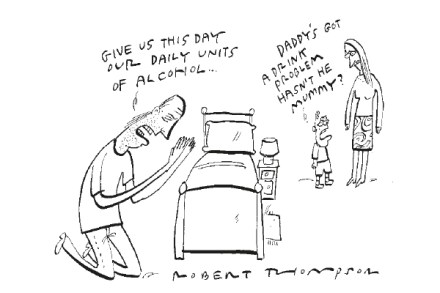
Problem
From our UK edition
From our UK edition
From our UK edition
From our UK edition
From our UK edition
From our UK edition
From our UK edition
From our UK edition
Bureaucratic tyranny Sir: As James Forsyth points out (‘Scary Monsters’, 16 January), David Cameron and other ‘In’ campaign supporters wish voters to base their decision on the short term, as this enables them to highlight the uncertainty and fear factor. But this vote is about the long term, and in 20 years’ time one thing is certain: the ‘ever-closer union’, and all that it means, will exist. What I don’t understand, and what I hope every interviewer will force him to explain, is why David Cameron believes it will be better for Britain to be increasingly ruled by the bureaucratic tyranny that is the EU.
From our UK edition
Roll out the barrel The price of crude oil dropped below $30 a barrel. Why do we measure it in barrels? — A standard barrel for the purposes of measuring oil is 42 US gallons or 35 imperial gallons. This was the size of a ‘tierce’, a unit for measuring wine in medieval England. — When demand for kerosene provoked an oil rush in Pennsylvania in 1859, producers were so desperate for vessels that they used all kinds of containers. — In August 1866, however, producers met in the town of Titusville to agree on a standard measure. A 42-gallon barrel of oil weighed 300lb: just enough, it was found, for one man to manoeuvre on his own.

From our UK edition
Home David Cameron, the Prime Minister, said that Muslim women must learn English, and that those who had entered on spousal visas would be told halfway through their five-year spousal settlement: ‘You can’t guarantee you can stay if you are not improving your language.’ He said that learning English had ‘a connection with combating extremism’. A heterosexual couple went to the High Court to claim the right to enter into a civil partnership. MI5, the security service, was rated as Britain’s most gay-friendly employer, following a survey by the organisation Stonewall. Mark Carney, the governor of the Bank of England, said: ‘Now is not the time to raise interest rates.

From our UK edition
This week brings to a close an absurdly overblown cause célèbre. The Court of Appeal ruled that David Miranda’s detention at Heathrow three years ago under the Terrorism Act was lawful. He had been part of a professional operation leaking classified information to the Guardian, which compromised British and American national security. Yet the judgement was hailed as a victory for Miranda because the court also noted that the Terrorism Act didn’t include sufficient protection for journalists carrying sensitive information. It asked Parliament to look again, in order that it be compatible with the European Convention on Human Rights — even though, in this case, there was no breach. This magazine is a staunch defender of press freedom.

From our UK edition
Donald Trump seems to offer only gloom, insults and arrogance - but America seems to love him for it, says Freddy Gray in this week's issue. Now there are only a few days left before the presidential election process starts, and ‘The Donald’ continues to storm the polls. He probably won’t be president, but it now looks as if he probably will be the Republican nominee — the heir to Lincoln, Teddy Roosevelt and Eisenhower. It’s a mind-boggling phenomenon. Isabel Hardman joins Freddy Gray and Janet Daley from the Telegraph to discuss the rise of Trump, and whether any of the other candidates have a chance of receiving the nomination.
From our UK edition
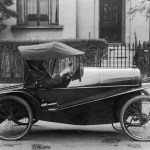
From ‘The Conscription of Wealth’, The Spectator, 22 January 1916: At recent race meetings streams of motor-cars have proceeded from London carrying down persons engaged solely in the pursuit of their own amusement, wasting petrol, wasting the labour of chauffeurs, and diverting in hundreds of detailed ways energy which ought to have been devoted to the carrying on of the war. A heavy tax on petrol and heavier duties on motor-cars, except where they are used for public work, would prevent this scandal. More generally, it is notorious that in all classes, with the possible exception of the very rich, the scale of expenditure is as high as, or higher than, before the war, and the only way of effectively dealing with the problem is to increase taxation heavily.
From our UK edition
This is tonight's Evening Blend email, a free round-up and analysis of the day's political events. Sign up here. Today in brief The SNP’s Angus Robertson accused David Cameron of ‘effectively taking part’ in the war in Yemen by selling arms to Saudi Arabia. David Cameron accused Jeremy Corbyn of being prepared to ‘give away’ the Falkland Islands as the pair clashed on student maintenance grants and bursaries for nurses. Labour sources hinted at a free vote in the party on Trident renewal. Yvette Cooper called for an end to Schengen and a return to internal border controls to manage the refugee crisis. Two Tory MPs said they used the drug ‘poppers’ as the Commons voted to ban it.

From our UK edition
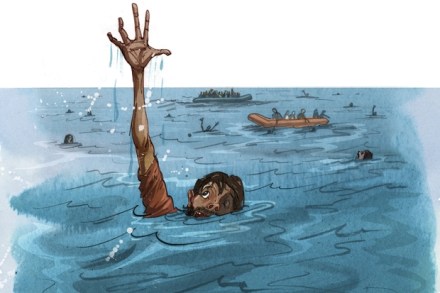
David Cameron is today expected to urge leaders to ease trade rules between Jordan and the EU to help with the Syrian refugee crisis. During his trip to Davos, Cameron will call for changes to spur economic growth and employment in neighbouring countries to Syria. Where might he have got this idea from? In August, Paul Collier - an economist Cameron admires - discussed in The Spectator how Britain had a duty to help refugees - and not just the ones who make the journey to Europe: 'The smart way to meet the duty to rescue is to incubate that economic recovery now, before the conflict ends. Europe can do that by fostering a Syria–in-exile economy located in Jordan and other neighbouring countries.
From our UK edition

From our UK edition
From our UK edition
From our UK edition
From our UK edition
From our UK edition