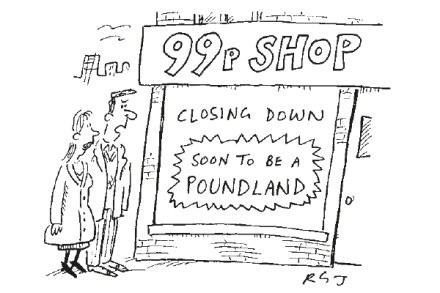
Poundland
From our UK edition
From our UK edition
From our UK edition
From our UK edition
From our UK edition
From our UK edition
From our UK edition
From our UK edition
From our UK edition
Leave those kids alone Sir: Melanie Phillips was right to raise serious concerns about the emerging practice of challenging children to define their gender identity (‘In defence of gender’, 30 January). She quoted justice minister Caroline Dinenage as saying that the government was ‘very much on a journey’ on this issue. The government should therefore give children space and time to follow their own ‘journey’ of self-discovery and discovery of the world without pressure from above to choose labels to define their own sexuality. They have enough pressure of this kind from their peers.
From our UK edition
Ballots drawn Hillary Clinton and Bernie Sanders tossed a coin to decide which of them was the winner in some precincts of Iowa. What would we do if we had a tied election? — The closest British election in modern times was the council election in Bury, Greater Manchester, in 2011. With Labour needing one more seat to take control of the council, the Labour and Conservative candidates in the ward of Ramsbottom were found to be tied. They drew straws, the longer of which went to the Labour candidate, Joanne Columbine. — The closest recent parliamentary election was that in Winchester in 1997, where Liberal Democrat Mark Oaten won by two votes.
From our UK edition
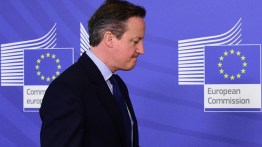
Home David Cameron, the Prime Minister, made a speech in Wiltshire about a letter from Donald Tusk, the president of the European Council, on Britain’s demands for renegotiating terms of its membership of the European Union. Mr Cameron said: ‘What we’ve got is basically something I asked for.’ In the House of Commons, Jeremy Corbyn, leader of the opposition, said: ‘It’s rather strange that the Prime Minister is not here…’ instead of ‘…in Chippenham, paying homage to the town where I was born.’ Mr Tusk proposed that in-work benefits for migrants might be subject to an ‘emergency brake’.
From our UK edition
Throughout his negotiations with the European Union, David Cameron was fatally undermined by his own lack of resolve. He was never going to recommend an ‘out’ vote in his referendum, as the other leaders knew. He promised a referendum three years ago, not from any great sense of conviction, but as a ploy to stop his party talking about Europe until after a general election which he half-expected to lose. Then, in May last year, he found himself with a majority — and in a position to renegotiate. But not in a position to win, and for a simple -reason: the other side always knew that he’d say yes, no matter what.
From our UK edition
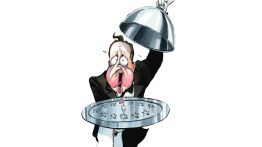
[audioplayer src="http://rss.acast.com/viewfrom22/fightingovercrumbs-euroscepticsandtheeudeal/media.mp3" title="Fighting over crumbs: Eurosceptics and the EU deal" fullwidth="yes"] Listen [/audioplayer]In this week’s issue, political editor James Forsyth asks whether David Cameron has somehow managed to dish the Eurosceptics for good. In the wake of the publication of the draft EU deal this week, James suggests the current climate ought to have whipped up the perfect storm for Eurosceptics. Amidst the migrant crisis plaguing the continent and widespread dislike of the EU in Britain, those backing Brexit could not have dreamed of a better scenario. But instead the Eurosceptic campaign is in chaos.
From our UK edition
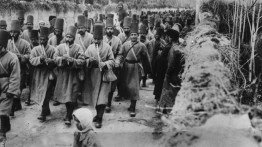
From ‘The future of Syria’, The Spectator, 5 February 1916: We say with all the emphasis at our command, and without the slightest fear of contradiction, official or otherwise, not only that we do not want Syria for ourselves, but that nothing would induce us to take it. Englishmen of all parties; or political schools of thought — as we ought now perhaps to call them — are agreed that the British Empire is quite big enough already, and that at the close of the war the danger will be, not of our getting too little, but of our getting too much — of getting, that is, more territory than we shall have the man-power or financial strength to manage and develop properly.
From our UK edition
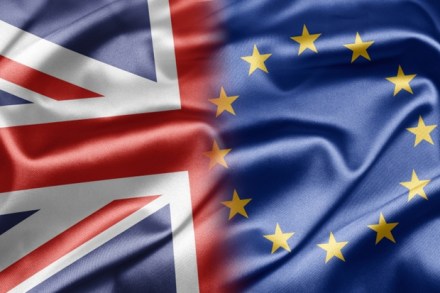
The following document has been released by the European Commission: The Heads of State or Government of the 28 EU Member States meeting within the European Council, whose Governments are signatories of the Treaties on which the EU is founded, DESIRING to settle, in conformity with the Treaties, certain issues raised by the United Kingdom in its letter of 10 November 2015, INTENDING to clarify in this Decision certain questions of particular importance to the Member States so that such clarification will have to be taken into consideration as being an instrument for the interpretation of the Treaties; intending as well to agree arrangements for matters including the role of national Parliaments in the EU and managing the consequences of the establishment of.
From our UK edition

From our UK edition
From our UK edition
From our UK edition
From our UK edition
From our UK edition