Referendum 3
From our UK edition
From our UK edition
From our UK edition
From our UK edition
From our UK edition
From our UK edition
From our UK edition
What’s best for Europe? Sir: It seems that the British negotiations in Europe have produced little, and even at this late stage they would surely be more effective if the tone were based more on what is best for Europe as a whole (‘Fighting over the crumbs’, 6 February). If we leave, we will desert our friends among the nations of Europe and make them more beholden to the largest members. Surely the difficulties of immigration, the euro and muscle-bound regulation will sooner or later force Europe to make changes of the kind we wish to see, and we should be there to help make them happen. History teaches us that Europe is too large, and too near, for us to consider abandoning any influence over what they do there.
From our UK edition
Matters of life and death Lord Lucan is now officially presumed dead. How do you have someone declared dead? In England and Wales, under the Presumption of Death Act 2013… — Anyone can apply to have anyone else declared dead, but if the applicant is not a spouse, civil partner, parent, child or sibling of the presumed deceased they must show they have a significant interest. — The person should have been missing for at least seven years, but it is possible to have someone declared dead earlier if the court is convinced they have died. — It costs £480. — An order can be revoked if the person later turns up alive, but that will not reinstate a marriage or civil partnership. — The act cannot be used in the instance of a missing monarch.
From our UK edition
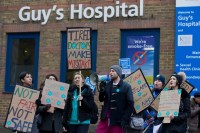
Home David Cameron, the Prime Minister, said that if Britain left the European Union, France could stop allowing British officials to make immigration checks on the French side of the border, and, his spokesman predicted: ‘You have potentially thousands of asylum seekers camped out in northern France who could be here almost overnight.’ Mr Cameron denounced the way prisons are being run by his administration: ‘Current levels of prison violence, drug-taking and self-harm should shame us all.’ Junior doctors went on strike again for 24 hours. Twelve men of Pakistani heritage were jailed for up to 20 years for the rape and sexual abuse of a girl when she was aged 13 and 14, over a period of two years, in Keighley, West Yorkshire.
From our UK edition
A few months ago, paramedics were on the brink of industrial action. They had legitimate grievances. Ambulance services were being run down, their staffing levels were dangerously thin — and the mismanagement (much of it exposed by Mary Wakefield in The Spectator) was horrendous. But in the end they stepped back from the brink — for good reason. It went against their nature to endanger lives, and in addition it would have been a tactical mistake. If a single patient died as a result of the strike, paramedics would have lost public sympathy. Should a nationalised health service really use the unwell as a bargaining chip? English doctors have not shown the same strategic foresight.
From our UK edition
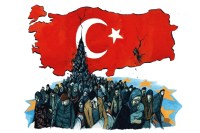
[audioplayer src="http://rss.acast.com/viewfrom22/thenextrefugeecrisis/media.mp3" title="Listen to this week's edition of the The View From 22"] Listen [/audioplayer] In this week’s issue, Laura Pitel discusses whether the next refugee crisis emerging in Turkey could dwarf the first which has gripped Europe. Turkey has taken in two and a half million refugees – nearly three times as many as the number who have sought refuge in Europe. But there are signs that the country is starting to struggle under the strain of Syrian refugees as more arrive each day. What could it mean for Europe if Turkey reaches breaking point?
From our UK edition
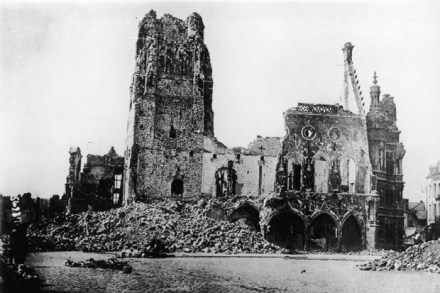
From ‘Marching through France’, The Spectator, 12 February 1916: Finally we came to the trenches themselves, and all around was desolation and ruin. There are few more mournful spectacles than a town or village lately reduced to ruins. To what purpose were all these homes sacrificed? Why are all these good people scattered and beggared and fugitive? Cui bono? On the Day of Judgment someone will have to answer. As we thought of the pleasant towns and villages that we had left behind, with their honest, kindly inhabitants, we set our teeth and resolved that, if we could prevent it, the receding tide should never return over the fair lands of France.
From our UK edition
This is a bleak day for the NHS. The doctors strike has gone ahead and some 3,000 operations have been cancelled. Talks broke down last night, and the British Medical Association has shown it is quite prepared to put patients in the firing line in its dispute over a deal that would mean a pay rise, not a pay cut, for 99 per cent of doctors. From 8am this morning, only emergency care will be provided. Treatment for that once-virulent condition, the British disease of strikes, has largely been successful. The number of working days lost to industrial action in the first ten months of last year was the second-lowest since records began. Pay and conditions have been relentlessly improving.

From our UK edition
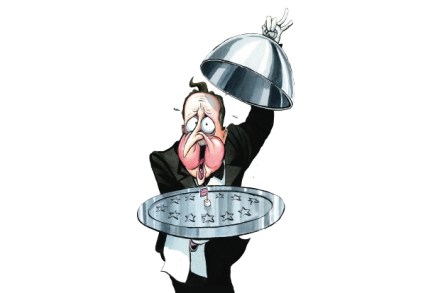
[audioplayer src="http://rss.acast.com/viewfrom22/fightingovercrumbs-euroscepticsandtheeudeal/media.mp3" title="James Forsyth and Vote Leave's Stephen Parkinson discuss Euroscepticsm"] It should, by now, be clear to David Cameron that he is in some degree of trouble with his referendum. The latest YouGov poll shows the ‘out’ side with a four-point lead: those who were waiting for his renegotiation to yield results have been appalled first at the paucity of the “deal”, and then at his shameless attempt to sell it as a victory. As Cabinet members rally behind this non-deal, we are presented with the unedifying sigh of an establishment closing ranks. This, in itself, causes a degree of public revulsion – which is being reflected in the polls.
From our UK edition
From our UK edition
From our UK edition
From our UK edition
From our UK edition
From our UK edition

From our UK edition