The Spectator

2694: Arc lights – solution

From our UK edition

The unclued lights (with the pair at 41/2) include the colours of the RAINBOW, as confirmed by 24 Across. First prize Roslyn Shapland, Ilkeston, Derbyshire Runners-up C.G.

Portrait of the week: Terrible Tuesday, W.H. Smith’s rebrand and no e-bikes on the Tube

From our UK edition

Home For many, ‘Terrible Tuesday’ began ‘Awful April’ with increased bills for water, energy, council tax (to an average in England of £2,280), road tax, telephone charges, broadband, the television licence and stamp duty. Sir Keir Starmer, the Prime Minister, spoke to President Donald Trump of the US as makers of motor vehicles, Britain’s biggest export to the US, contemplated American tariffs of 20 per cent on car imports. Matthew Doyle resigned as Sir Keir’s communications director. Plans were afoot to ban cars from Hammersmith Bridge, which has been closed for repairs for six years, when it is reopened.

Keir Starmer must look beyond adolescent politics

From our UK edition

An industry poll by the British Film Institute in 2000 to find Britain’s best television programme put Fawlty Towers first and Cathy Come Home second. The latter, Ken Loach’s bleak 1966 play about a woman’s downward descent through unemployment, homelessness and poverty, is about as far from John Cleese’s inimitable farce as can be conceived. Yet both made lasting impressions on viewers of very different kinds. Adolescence’s popularity is down to telling liberal England what it wants to hear, never mind its basis in reality Watched by a quarter of the population at the time, Cathy Come Home took an uncompromising approach to its subject and provoked wide reaction. Passers-by stopped its star Carol White in the street to hand her money, assuming she really was destitute.

The Spectator’s 2025 no-CV internship scheme is now open

From our UK edition

The Spectator runs the UK’s only double-blind internship scheme. We don’t ask for a CV, we don’t use your name. We don’t care where (or whether) you went to university, we anonymise your application. We give each applicant a city name, mark out of 100 and give offers to the best ones. You’ll come in for a week of your choosing in the summer. It’s a useful window into journalism and gives us the chance to meet new talent. When jobs come up, as they do in various fields, we look to hire past interns. About a third of our editorial staff came through this way: online (Gus, John and Max), broadcast (Cindy and Oscar), management (Lukas), economics (Michael), Ukraine (Svitlana – we made a job for her), social (Margaret) and tech (Fabian). Full list below.

Letters: The futility of net zero

From our UK edition

Not zero Sir: I was delighted to see your leading article about the impossibility of net zero (‘Carbon candour’, 22 March). We need now to expose its futility. The UK’s efforts will make no difference at all to global temperature. Whether it is naturally occurring or produced through coal burning, there is not the slightest chance of stopping the rise in atmospheric carbon dioxide (not ‘carbon’, which is nasty black stuff). Guy Liardet Meonstoke, Hampshire Ideological bullets Sir: ‘Don’t bite the hand that feeds you’, they say. But by biting the hand of business with her Budget, Rachel Reeves has shown total recklessness (‘The Rachel capers’, 22 March). By killing growth, she is now paying the heavy price for this both economically and politically.

The underlying message of Rachel Reeves’s Spring Statement

From our UK edition

Rachel Reeves may not be the most mellifluous writer ever to inhabit 11 Downing Street. At the weekend, she informed readers of the Mail on Sunday that she would ‘make no apology for keeping an iron grip on the country’s finances’ but was happy to spend money on training more ‘brickies, sparkies and chippies’. The lurch from cliché to fake colloquialism does not suggest Reeves will be bracketed with Disraeli, Gladstone, Churchill or Lawson. But there is one addition to the political lexicon for which Reeves is responsible and which deserves a revival – ‘securonomics’. Before Labour’s election, the term was never far from Reeves’s lips.

Portrait of the week: Spring Statement, Heathrow fire and Prince Harry quits his charity

From our UK edition

Home In the Spring Statement, Rachel Reeves, the Chancellor of the Exchequer, made further cuts to benefits (such as freezing the Universal Credit health element for new claimants). The Office for Budget Responsibility had said that the cuts announced before would not let her meet her budget rules. She now planned a £9.9 billion surplus by 2030, but would borrow more in the coming financial year. Civil service running costs would be cut by 15 per cent, with about 10,000 of its 547,735 staff to go. She concentrated on a £2.2 billion increase in defence spending and proposed that Britain should become a ‘defence industrial superpower’. The OBR reduced its forecast of growth this year from 2 to 1 per cent, increasing to 1.8 by 2029.

How many teenagers kill?

From our UK edition

That ship has sailed The BBC children’s television programme Blue Peter will no longer be broadcast live. Why did it go by that name? – Blue Peter is the nickname of the international maritime signal flag for the letter ‘P’, consisting of white square inside a blue square. When displayed on its own it means ‘all persons should report on board because the ship is about to sail’. In 1958, a predecessor programme, the Children’s Television Club, was broadcast from the Mersey ferry. Watching was Owen Reed, head of children’s television for the BBC at the time, who wanted to launch a new show for five- to eight-year-olds and was taken by the name of the flag that was displayed as filming got under way. Civil question Who works for the civil service?

Plaster Saints

From our UK edition

Beneath the towering oils of holy deaths — Cascading thunderstorms of crucifixion, Hands tortured into final benediction, Forgiveness in so many final breaths — They stand, a little dull, a little pale, A little worn by all the years of prayer, As if the hopes still hanging in the air Had left them strangely tired and sad and stale — The painted saints of plaster, wood and stone, So far beyond our grasping human reach, With nothing but their wordlessness to preach What lies beyond all breath and bone. They teach us in so many silent ways — A missing hand, a still uplifted gaze.

Letters: The romantic route to cheap flights

From our UK edition

Blood on our hands Sir: Paul Wood asks if anyone will be punished for the bloodbath in Syria (‘Massacre of the innocents’, 15 March). But where does one start? What we have seen most recently are the dreadful consequences – as also in Iraq and Afghanistan – of selfish western meddling in the Middle East for our own ends. I was on sabbatical in Syria at the end of 2010 interviewing Syrians of all religions and political persuasions. Well over 90 per cent and especially women saw the Assads as the only plausible bulwark against an Islamist theocratic nightmare. There was freedom of religion, freedom of association, the freedom for women to choose what to wear and be educated to university level.

Who lives in the countryside?

From our UK edition

The recession relationship There are fears that the US and UK may both be heading for a recession. Has the US ever suffered a recession which did not spread to Britain? Since the Great Depression of the early 1930s there have been 16 identifiable periods in which the US met the usual definition of a recession (two consecutive quarters of negative growth), the most recent being in 2022. Britain has seen only ten such periods – even though its economy has grown by less overall. Periods when the US saw a recession but Britain did not include 1937-38, when the US economy shrank by 18 per cent over a year, 1945, 1949, 1953, 1958, 1969-70, 2001 and 2022. The UK suffered recessions not shared by the US in 1956 and 2023.

Portrait of the week: Welfare war, gold prices soar and gang jailed for toilet heist 

From our UK edition

Home Sir Keir Starmer, the Prime Minister, entertained 29 other national leaders online to seek a way of guaranteeing the future security of Ukraine. He then invited European defence leaders to meet in London. He spoke by phone to President Volodymyr Zelensky after the inconclusive conversation between President Donald Trump and President Vladimir Putin. John ‘Paddy’ Hemingway, thought to be the last Battle of Britain pilot, died aged 105. The government faced resentment in its own party against welfare cuts outlined by Liz Kendall, the Work and Pensions Secretary: the eligibility criteria for Personal Independence Payments would be tightened; incapacity benefits under universal credit would be frozen for existing claimants and those under 22 would not be able to claim it.

Kemi’s stance on net zero is courageous – and correct

From our UK edition

Kemi Badenoch secured the Conservative leadership on the basis that she would confront her party and the country with uncomfortable truths. This week, in a speech to launch the Tories’ policy renewal programme, she effectively told Theresa May and Boris Johnson that they were naifs for committing to unachievable climate targets. The decarbonisation of our economy, she said, was a ruinously expensive folly. By stating baldly and unapologetically that it will be impossible for Britain to get to net zero carbon emissions by 2050 without huge economic pain she has broken a consensus and breached a taboo. It is difficult for opposition parties to attract attention for policy announcements so far out from a general election, but Badenoch’s clarity is welcome and necessary.

What’s the most insulting thing a teacher said to you? A Spectator poll

From our UK edition

Matthew Parris  From the late Alan Lomberg, my English teacher at my school in Swaziland, in my school report: ‘I’m sure I have only slightly less high an opinion of Matthew’s literary abilities than he has himself.’ Sebastian Shakespeare The late Alan Clark once described me in his diaries as a ‘tricky little prick’, but he was beaten to the punch decades before by a teacher who dubbed me a ‘giant prick’. To this day I’m not sure which is the greater compliment or insult. Quentin Letts    The word that appeared in my school reports time and again was ‘facetious’. Facetious is a fine word, not least because it presents all five vowels in alphabetical order, but would a teacher nowadays dare use it of a pupil? I was an annoying child.

Letters: Wokery is a form of dictatorship

From our UK edition

Democracy rules Sir: I share the sentiments of both Rod Liddle (‘Trump displays weakness, not strength’, 8 March) and Douglas Murray (‘How MAGA turned on Ukraine’). I am one of those peculiar political animals who finds himself in agreement with certain elements of the right, including those represented by Donald Trump, on just about everything except Ukraine. Nevertheless, I see his election as an essential antidote to the poisonous ideology of the woke that has all but conquered the rest of the West in terms of the manner in which we live and are governed. Nor is the US immune.

2691: Very large fellow – solution

From our UK edition

Richard OSMAN (defined by the title) created 1/42/21, the members of which are 13/39, 18, 37/4 and Ron 29 with RON highlighted in the grid and referred to in the clue at 17 Down. First prize L. Coumbe, Benfleet, Essex Runners-up Angus Ross, Old Portsmouth, Hants  Joe O’Farrell, Leighlinbridge, Co.

Portrait of the week: Spies in Norfolk, rats in Birmingham and Denmark ditches letter deliveries

From our UK edition

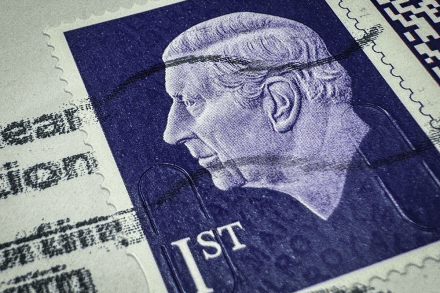
Home Three Bulgarians were found guilty of spying for Russia as part of a cell that plotted to kidnap and kill targets in Europe, under a fellow Bulgarian who lived in a former guest house in Great Yarmouth, Norfolk. The court heard that the spies reported to Austrian-born Jan Marsalek, who sought refuge in Moscow after the collapse in 2020 of Wirecard, the German payments company he helped run. Walgreens Boots Alliance, the US owner of Boots the chemist, was taken over by a private equity firm, Sycamore Partners. The government introduced the Planning and Infrastructure Bill, which will enable councils to seize land. The cost of a first-class stamp will go up 5p to £1.70 on 7 April.