The Spectator

Migrant benefits

From our UK edition

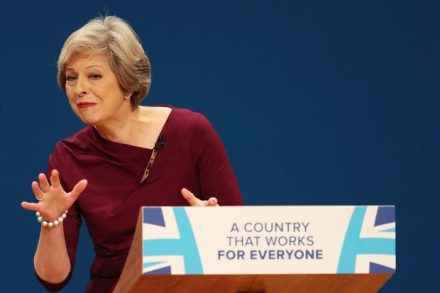
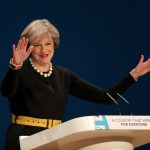
Calm is slowly returning to the debate about Britain and Europe. The shrillness of the referendum campaign, and the hysteria from people who ought to have known better, is giving way to an acceptance that the end is not nigh and that things could be as good, if not better, than before. The idea that the British public had somehow voted for a recession is being steadily abandoned. The next stage is to accept that Brexit was not a populist yawp about protecting our borders. It was not a demand to stop immigration, but to manage it better. So when Theresa May rejected an Australian-style points-based immigration system this week, it did not mean that she had betrayed Brexit or shown her desire to water down the whole process.

Fire in the sky

From our UK edition

From ‘The burning of the Zeppelin’, The Spectator, 9 September 1916: Half London formed the vast proscenium for this tragedy of the air, and saw on the aerial stage the triumph of right over might — saw with their natural eyes David smite Goliath and hurl him in flaming ruin to the ground. Never before in human history had men sat in such a theatre and seen such a curtain rung down from the starry heights above them. But what made this drama of the open Heaven memorable above all record was the cheer that greeted its close. Those who had the inexpressible good fortune to hear that soul-shaking sound heard something which for its quality and its volume no ear had ever heard before, and, it may be, will never hear again.

School portraits | 8 September 2016

From our UK edition

Rugby When Rugby School first allowed girls into its sixth form in 1976, just ten joined. In 1995 it went fully co-ed and today there are 373 female pupils. The ankle-length skirts that form part of the uniform look old-fashioned, but the school’s co-educational aproach is far more progressive. The transition wasn’t all smooth, though. When the first head girl was appointed, some boys hung protest banners in the Warwickshire school’s chapel and boycotted a service marking the bicentenary of former headmaster Thomas Arnold. These days the head girl and head boy work seamlessly together and Rugby performs solidly in the league tables, with IGCSEs in most subjects and 29 different A-levels. As you’d expect, the school that invented rugby is strong on sport.

School report

From our UK edition

Teaching maths the Asian way English primary schools have received funding of £41 million to embrace the ‘Asian style’ of teaching maths. The method, used in Singapore, Shanghai and Hong Kong — all of which are at the top of Pisa’s study into the school performance of 15-year-olds — is more visual than the ‘normal’ British style of maths teaching, and focuses on children being taught in a mixed-ability group, rather than being divided into streams. The funding, announced in July, will allow 700 teachers to be trained in the Asian method, in addition to the 140 who have already completed their training.

Barometer | 1 September 2016

From our UK edition

Behind the cover-up Some facts about Burkinis: — The Burkini was invented by Ahedi Zanetti, a Lebanese-born Australian businesswoman, in 2004 after watching her niece trying to play netball in a hijab. — Muslim lifeguards started wearing them on Sydney beaches in 2007. — According to Zanetti, 40% of her customers are non-Muslim. — Two years ago, several swimming pools in Morocco were reported to have banned them for hygiene reasons. Drowning by numbers Five men drowned at Camber Sands in Sussex after being trapped playing football on a sandbank. Where did the 311 people who drowned in Britain last year die?

A rotten windfall

From our UK edition

It’s strange that, even now, the Brexit vote is routinely referred to as an expression of anger or frustration — as if the most easily baffled half of the population had voted in response to forces they could not understand. In fact, the result of the 23 June referendum seems to look wiser with every week that has passed. Of course, leaving has its risks. But 52 per cent of voters judged that a greater one lay in staying in a European Union that is changing all the time — and invariably for the worse.

Portrait of the week | 1 September 2016

From our UK edition

Home Britain rejected a call by Nicolas Sarkozy, the former president of France who hopes to return to power next year, ‘for the opening of a centre in England to process asylum requests for all those who are in Calais’. More than 9,000 migrants camp at the so-called Jungle near Calais; it was Mr Sarkozy who in 2003 helped implement the bilateral treaty that allowed Britain to place border officials on the French side of the Channel. Southern Rail reinstated 119 of the 341 daily services it cut in July. Katrina Percy resigned as the chief executive of the Southern Health NHS Trust following criticism that the deaths of people with mental illness or deficiencies had not been examined properly.

Churchill’s privilege

From our UK edition

From ‘Mr Churchill’s misfire’, The Spectator, 2 September 1916: There is nothing that democracy so much hates as unfair privilege, and Mr Churchill has enjoyed and has utilised an unfair privilege in getting himself in and out of the Army at his arbitrary will… The public now fully understands that his influence on our political life is almost wholly bad because it is wholly dissociated from any motive except that of personal advancement. He would, indeed, now be powerless either for good or for evil, were it not for the fact — or what appears to be the fact — that he still retains useful friends within the Cabinet who afford to him privileges which are denied to the ordinary man.

Letters | 25 August 2016

From our UK edition

Golden age problems Sir: Johan Norberg’s ‘Our golden age’ (20 August) is absolutely right — we do live in a golden age; antibiotics still work, we have less starvation, the world is open for trade, with all its benefits. But there is a fly in the ointment: human overpopulation. Global warming (if you believe in it), degradation of the environment, extinction of species, all are consequences of it. It is a result, in fact, of our success. The only country to have grasped the nettle — China — is now having second thoughts. Perhaps wind and solar power can provide for our needs when we are 70 million in these islands; but what when we are 80 million, 90, 100? And for the rest of the world? W.G.

Better together

From our UK edition

This time two years ago, the United Kingdom stood on the brink of dissolution. The referendum on Scottish independence hung in the balance and momentum was with the nationalists. The optimism and energy of Alex Salmond’s campaign stood in admirable contrast to the shrill hysteria of Project Fear, the name given to a unionist campaign that churned out ever-less-credible warnings about what would happen after separation. The union was saved, but 45 per cent of Scots had voted to leave it. So the referendum had not closed the question, but left it wide open. At the time, the North Sea oil sector was still in fairly good health. In the SNP’s economic manifesto for independence, it gave estimates of up to £7.9 billion a year for oil revenues.

Portrait of the week | 25 August 2016

From our UK edition

Home Virgin Trains released videos showing that there were seats available when Jeremy Corbyn, the leader of the Labour party, was filmed sitting on the floor of a railway carriage saying: ‘This is a problem that many passengers face every day, commuters and long-distance travellers. Today this train is completely ram-packed.’ He then continued his journey in a seat. The RMT union called two more days of strikes for guards on Southern. Sir Antony Jay, the co-writer of the series Yes, Minister and Yes, Prime Minister, died, aged 86. British competitors returned from the Olympic Games in Rio with 67 medals, of which 27 were gold, beating their performance in the London games of 2012 and coming second in the medal table between the United States and China.

Just not cricket | 25 August 2016

From our UK edition

From ‘The bed-rock of war’, The Spectator, 26 August 1916: As a rule in war the bowling has a great advantage over the batting, but it happens that the newest fashion in combat has given a great temporary advantage to the defence. To break a trench line which rests like that of the Germans on the sea and on a neutral country is a task demanding almost superhuman efforts, and yet it must be attempted and accomplished unless we wish the war to drag on for another three years, drag on until attrition has done its dire work, and done it, alas, on us and our allies almost as much as on our enemies.

An independent Scotland would now be bankrupt

From our UK edition

This time two years ago, the United Kingdom stood on the brink of dissolution. The referendum on Scottish independence hung in the balance and momentum was with the nationalists. The optimism and energy of Alex Salmond’s campaign stood in admirable contrast to the shrill hysteria of Project Fear, the name given to a unionist campaign that churned out ever-less-credible warnings about what would happen after separation. The union was saved, but 45 per cent of Scots had voted to leave it. So the referendum had not closed the question, but left it wide open. At the time, the North Sea oil sector was still in fairly good health. In the SNP’s economic manifesto for independence, it gave estimates of up to £7.9 billion a year for oil revenues.

It’s time to defend Brexit

From our UK edition

One of the many incorrect predictions about this year’s referendum was that those who voted for Brexit would soon regret it. The theory was that these deluded souls only intended to lodge a protest vote, and would be overcome with buyers’ remorse as Britain fell headlong into a deep recession. Two months after the referendum, there is precious little regret. Polls suggest that just 5 per cent of those who backed Brexit wish they hadn’t; the same is true for those who voted Remain. However, the Remainers have moved quickly and effectively into post-campaign mode and have found a new vocabulary. Their new enemy is ‘hard Brexit’. They seize on every piece of bad economic news while rubbishing renegotiation prospects.

Letters | 18 August 2016

From our UK edition

Losing game Sir: Matt Ridley is completely right (‘Don’t grouse about grouse’, 13 August). I am lucky enough to live at Blakeney in north Norfolk with a clear view to Blakeney Point. But since the RSPB, Chris Packham and the National Trust got their hands on Blakeney, things have changed dramatically. I walk every day on and around the marshes and the Blakeney Freshes. This morning — a brilliant, calm day — I strolled for an hour and apart from a couple of warblers, crows and several black-backed gulls, that was it. When my wife and I came to Blakeney 35 years ago it was markedly different. From our room we would see dozens of lapwings, curlews, warblers, curlews, avocets and waders of all types. Not now.

Defending Brexit

From our UK edition

One of the many incorrect predictions about this year’s referendum was that those who voted for Brexit would soon regret it. The theory was that these deluded souls only intended to lodge a protest vote, and would be overcome with buyers’ remorse as Britain fell headlong into a deep recession. Two months after the referendum, there is precious little regret. Polls suggest that just 5 per cent of those who backed Brexit wish they hadn’t; the same is true for those who voted Remain. However, the Remainers have moved quickly and effectively into post-campaign mode and have found a new vocabulary. Their new enemy is ‘hard Brexit’. They seize on every piece of bad economic news while rubbishing renegotiation prospects.

Portrait of the week | 18 August 2016

From our UK edition

Home Theresa May, the Prime Minister, who was supposed to be on a walking holiday in Switzerland, wrote to Xi Jinping, the Chinese President, saying that she wanted to strengthen Britain’s trading relationship with China despite uncertainty over the construction of the nuclear power station at Hinkley Point. During her absence and that of the Chancellor of the Exchequer from Britain, Boris Johnson, the Foreign Secretary, was the ‘senior minister on duty’, Downing Street conceded. Regulated rail fares in England and Wales and regulated peak-time fares in Scotland will rise by 1.9 per cent in January, that being the annual rate of inflation in July, as measured by the Retail Prices Index (up from 1.6 per cent the month before).

Barometer | 18 August 2016

From our UK edition

Four-letter surveys A judge at Chelmsford Crown Court who was sworn at by a man she was sentencing to jail swore back at him from the bench. How common is swearing? — A study in 1980 by Timothy Jay of the Massachusetts College of Liberal Arts analysed 11,609 words of everyday conversation and found 70 taboo words — a rate of 0.7%. — A similar study in Britain in 2006 suggested that between 0.3% and 0.5% of words we utter are swearing, and a 2007 US study suggested a rate of between 0.5% and 0.7%. According to the latter, Americans utter between 15,000 and 16,000 words a day, 80–90 of them taboo.