The Spectator

Carry on, Major

From our UK edition

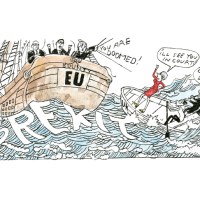
As Prime Minister, John Major was intolerant of opposition from within the Conservative party over the EU — memorably calling Maastricht rebels ‘bastards’. It was unwise, and the bad blood it created within his party has been swirling around ever since. Now that the tables have turned and Sir John now finds himself the rebellious outsider on Europe, it is tempting for those on the Conservative party’s Eurosceptic wing, who for so long were denounced as freaks, fruitcakes and swivel--eyed loons, to take the same approach. Their instinct is to denounce Sir John, Michael Heseltine, Ken Clarke and others as dinosaurs seeking to deny the will of the British people.

Portrait of the week | 2 March 2017

From our UK edition

Home Sir John Major, the former prime minister, made a speech at Chatham House in which he called the referendum vote for Brexit ‘an historic mistake’. The Lords got its teeth into the European Union (notification of withdrawal) bill. A merger between the London Stock Exchange and Deutsche Börse foundered after the LSE refused a demand by the European Commission for it to sell its Italian bond-trading platform, MTS. Royal Bank of Scotland, in which taxpayers hold a 73 per cent stake, announced losses of £7 billion. Theresa May gave up crisps for Lent. Asked if he would still be Labour leader in 2020, Jeremy Corbyn said: ‘I’ve given you a very, very clear answer — yes.

A model village

From our UK edition

From ‘Sir Thomas Acland’s example’, The Spectator, 3 March 1917: In 1912 we discussed the idea — a favourite dream of ours — that some characteristic English village, perfect of its kind but likely to lose its quality in the hugger-mugger expansions of modern enterprise, might be acquired by the National Trust to be kept forever as a specimen, in a changing world, of what used to be… Men freely give pictures and collections of china and plate and furniture to the nation. Why not the grouped architectural works of man? Why, too, should not open pieces of country be given as often as pictures and bronzes and statues?

Donald Trump’s Congress address, full transcript

From our UK edition

Mr. Speaker, Mr. Vice President, Members of Congress, the First Lady of the United States, and Citizens of America: Tonight, as we mark the conclusion of our celebration of Black History Month, we are reminded of our Nation's path toward civil rights and the work that still remains. Recent threats targeting Jewish Community Centers and vandalism of Jewish cemeteries, as well as last week's shooting in Kansas City, remind us that while we may be a Nation divided on policies, we are a country that stands united in condemning hate and evil in all its forms. Each American generation passes the torch of truth, liberty and justice - in an unbroken chain all the way down to the present. That torch is now in our hands. And we will use it to light up the world.

The real gender gap is not about women’s pay but boys’ lack of attainment

From our UK edition

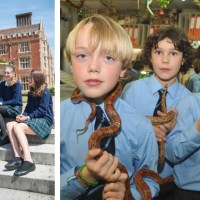
For a body supposedly committed to eliminating inequality between the sexes, the Women and Equalities Select Committee don’t exactly lead from the front. Only three of the 11 members are men. To some, this will be a welcome corrective to the still male-dominated House of Commons. To others (such as Philip Davies, one of the three male members), it is a sign of how, in Westminster, the cause of equality is narrowly focused on the interests of white professional women. There is not a single ethnic minority representative on the committee. This week, committee chair Maria Miller announced her ‘deep disappointment’ that the government has not adopted their proposals on closing the gender pay gap.

Letters | 23 February 2017

From our UK edition

Seeing off the Speaker Sir: If senior Tories in Buckingham had had their way, John Bercow’s career as Speaker could have been over long before he had a chance to make any ‘spectacularly ill-judged’ remarks (Politics, 18 February). At the 2010 election, an impressive local Tory was keen to prevent the new Labour-supported Speaker retaining the seat where the party had had an 18,000 majority in 2005. Conservative headquarters insisted that Buckingham must abide by the long-standing convention that the Speaker is returned unopposed. The local Tories should have gone ahead; there is no such convention. All ten Speakers since the war have faced opposition. Six, including Bercow, have faced independents or minor parties.

Barometer | 23 February 2017

From our UK edition

Big league Lincoln City became the first non-league club since Queens Park Rangers in 1914 to win a place in the FA Cup quarter-finals. But what happened in 1914? — There were only 40 league clubs and QPR won a bye through the early rounds. — They drew 2-2 with Bristol City before winning 2-0 in a replay. — They beat Swansea and Birmingham (2-1 each) to reach the quarter-finals, where Liverpool beat them 2-1. — Liverpool lost the final 1-0 to Burnley, the team Lincoln beat last weekend. — That final was the last held at the Crystal Palace, which had been its venue since 1895. Mega mergers Unilever rejected a £115 billion takeover offer from Kraft Heinz. What happened after huge mergers that did go through?

Lost boys | 23 February 2017

From our UK edition

For a body supposedly committed to eliminating inequality between the sexes, the Women and Equalities Select Committee don’t exactly lead from the front. Only three of the 11 members are men. To some, this will be a welcome corrective to the still male-dominated House of Commons. To others (such as Philip Davies, one of the three male members), it is a sign of how, in Westminster, the cause of equality is narrowly focused on the interests of white professional women. There is not a single ethnic minority representative on the committee. This week, committee chair Maria Miller announced her ‘deep disappointment’ that the government has not adopted their proposals on closing the gender pay gap.

The Americans are coming

From our UK edition

From ‘What will the United States do?’, The Spectator, 24 February 1917: It may be that the congestion of American shipping may force Mr Wilson’s hand, for a partial paralysis in the docks is temporary evidence that Germany can intimidate the greatest of neutrals. But, on the whole, we expect that some more sudden and violent demonstration of German violence will cause Mr Wilson to summon the American nation to action. When that happens we shall be able to say that Germany, among her other diplomatic achievements, has reunited the Anglo-Saxon world.

The Labour party has turned into a political bed-blocker

From our UK edition

Just as it seems that Labour has reached the bottom of the abyss, Jeremy Corbyn and his party somehow manage to find a new low. The latest nationwide poll puts them at 24 per cent, trailing the Tories by 16 points. No wonder Labour MPs look so boot-faced around Parliament, and an increasing number are hunting for jobs elsewhere. If a general election were called now, the Conservatives would win a huge majority. Labour would be further than ever from power, arguably even finished as a major parliamentary force. Polls are not rock-solid indicators of future electoral success or failure, but Labour’s ratings are so abysmal as to suggest a party facing an existential crisis.

Barometer | 16 February 2017

From our UK edition

Special forces Cathedral constables at York Minister got back their powers of arrest, which they had held from the 13th century until the 1930s. They will be allowed to carry batons and handcuffs. Other private police forces: — British Transport Police, which is almost entirely funded by the rail industry, has 3,069 officers with similar powers to those of regular police. — The Civil Nuclear Constabulary, with 1,500 officers, secures nuclear power plants and the transport of nuclear materials around the country. — Cambridge University Proctors, who used their powers of arrest mostly to detain prostitutes and unruly students, gave up policing powers in 1970 and now perform more of a ceremonial role.

Letters | 16 February 2017

From our UK edition

Living room Sir: Sajid Javid is quoted as saying that the biggest constraint on building more houses is the ‘lack of land’ (‘Javid’s home truths’, 11 February). While he is right to call for government intervention, I don’t agree with this view. We may live on a small island in relative terms, but that doesn’t diminish our actual land mass. For argument’s sake, let us say the average house takes up 100 square metres. This means that you could fit 10,000 houses into a single square kilometre. To put that into perspective, the Isle of Wight, with an area of 380 km², has the capacity to accommodate 3,800,000 houses. Obviously, housing estates require much less land.

Labour’s love lost

From our UK edition

Just as it seems that Labour has reached the bottom of the abyss, Jeremy Corbyn and his party somehow manage to find a new low. The latest nationwide poll puts them at 24 per cent, trailing the Tories by 16 points. No wonder Labour MPs look so boot-faced around Parliament, and an increasing number are hunting for jobs elsewhere. If a general election were called now, the Conservatives would win a huge majority. Labour would be further than ever from power, arguably even finished as a major parliamentary force. Polls are not rock-solid indicators of future electoral success or failure, but Labour’s ratings are so abysmal as to suggest a party facing an existential crisis.

Portrait of the week | 16 February 2017

From our UK edition

Home The Queen opened a new National Cyber Security Centre in London. Britain’s contribution to Nato has fallen below the promised 2 per cent to 1.98 per cent of gross domestic product, according to the International Institute for Strategic Studies, because GDP has grown. The annual rate of inflation measured by the Consumer Prices Index rose to 1.8 per cent in January, from 1.6 in December; by the new index to be used from March, called CPIH, which includes some housing costs, inflation had already reached 2 per cent. Unemployment fell by 7,000. Joe Root, aged 26, was made captain of England. A YouGov poll for the Times put Labour in third place among working-class voters at 20 per cent with Ukip at 23 per cent and the Conservatives at 39.