Books and Arts – 25 January 2018
From our UK edition
From our UK edition
From our UK edition
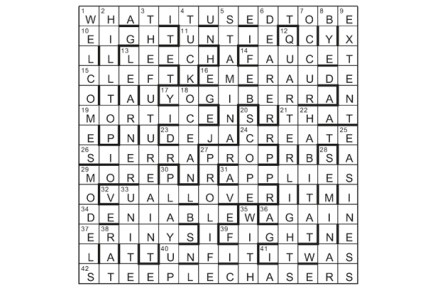
Amongst the many ‘aphorisms’ of Yogi Berra, the New York Yankees baseball manager, were ‘The future ain’t what it used to be’ and ‘It was déjà vu all over again’. First prize Christopher Hanafin, Adare, Co. Limerick Runners-up John Challoner, Newport, Essex; P.D.H.
From our UK edition
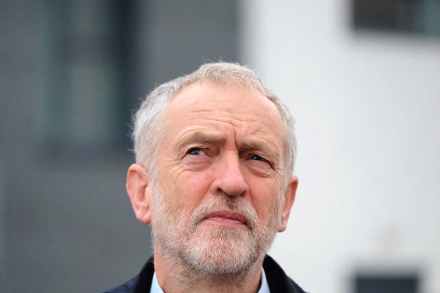
For Jeremy Corbyn and his allies, there has been no far-left takeover of the Labour party or its governing National Executive Committee. It’s true that, this week, Corbyn supporters came to control the majority of the NEC, completing their command of the party apparatus. But they see this as getting rid of the last of the right-wingers and enabling — for the first time — the Labour party to dedicate itself to the interests of the working class. It’s not the triumph of a fringe, they say, but the expulsion of a fringe. The Corbynite agenda of government expansion, mass nationalisation of railways, utilities and more, can now be pursued. Those still laughing at all that have not been paying attention.
From our UK edition
Investing in farming Sir: Martin Vander Weyer (Any other business, 13 January) says, unhelpfully and inaccurately, that subsidies ‘absurdly’ favour bigger farms. As we look towards life after Brexit, instead of debating the merits of small vs large, the government should incentivise good rather than bad. My family’s farming business, Beeswax Dyson Farming, farms 33,000 acres directly and has invested £75 million in technology, training, soil improvement and environmental stewardship over the past five years. These are hardly the acts of a mere ‘wealthy landowner’, in his dismissive parlance. Subsidies we receive go directly into the activities that they are designed to support but are dwarfed by our own investments.
From our UK edition
Big losers Construction company Carillion collapsed with debts of £1.5 billion. How does that compare with other UK corporate failures? Overend Gurney & Co, a bank, collapsed in 1866 with £4 million in liabilities (£400 million at today’s prices). Polly Peck failed after a fraud probe with £100 million in debts (£217 million). Barings Bank failed in 1995 after rogue trader Nick Leeson ran up £827 million of losses (£1.55 billion). MG Rover failed in 2005, leaving behind £1.4 billion of debt (£2 billion). Northern Rock was saved in 2007 after the government provided emergency loans to the tune of £27 billion (£35.7 billion).
From our UK edition
For Jeremy Corbyn and his allies, there has been no far-left takeover of the Labour party or its governing National Executive Committee. It’s true that, this week, Corbyn supporters came to control the majority of the NEC, completing their command of the party apparatus. But they see this as getting rid of the last of the right-wingers and enabling — for the first time — the Labour party to dedicate itself to the interests of the working class. It’s not the triumph of a fringe, they say, but the expulsion of a fringe. The Corbynite agenda of government expansion, mass nationalisation of railways, utilities and more, can now be pursued. Those still laughing at all that have not been paying attention.
From our UK edition
Home Carillion, the construction and service-provider with 20,000 employees and many contracts for the public sector, went into liquidation with debts of £1.5 billion, owing 30,000 businesses £1 billion. The government said it would pay employees and small businesses working on Carillion’s public contracts ‘to keep vital public services running rather than to provide a bailout on the failure of a commercial company’, as David Lidington, the minister for the Cabinet Office, told Parliament. Greg Clark, the Business Secretary, asked the Official Receiver to investigate the conduct of its directors; ‘Any evidence of misconduct will be taken very seriously,’ he said. The annual rate of inflation fell back a smidgen to 3 per cent in December, from 3.
From our UK edition
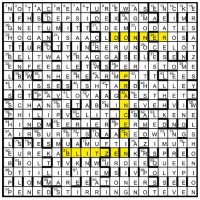
A beastly business The quote is 1A/92/18D from the poem ‘A Visit from St Nicholas’. The theme was the names of the eight reindeer in the poem. Three were highlighted whilst the others each suggested three unclued lights: Dasher (26, 63 and 83 — sprinters); Comet (12, 48 and 64 — astronomers’ names given to comets); Dancer (7, 49 and 74); Vixen (64A, 85 and 89 — female animals); Cupid (4, 25 and 46 — love deities). The winners The first prize of £100, three prizes of £25 and six further prizes of Bletchley Park Brain Teasers by Sinclair McKay (Headline) go to the following. In addition, the first four winners each win a bottle of champagne. First prize Peter Turner, Bearsden, Glasgow Runners-up F.
From our UK edition
From our UK edition
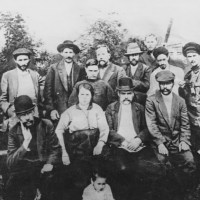
From ‘The Bolshevik negotiations with Germany’, 19 January 1918: We think that the fact is fairly emerging from the negotiations that the Bolsheviks are not, as some people supposed, the pliable tools or even the agents of Germany, but are idealists genuinely inspired by their mania. Of course, a great deal of harm may be done by a mania, however intellectually sincere it may be, and we can set no precise limits to the mischief that may be done by the Bolshevik leaders before they have finished. The habit of preferring the shadow to the substance, and rating the sound of words as more important than the realities implied by words, commonly ends in a terrible disillusionment.
From our UK edition
This piece first appeared as the leading article in this week's Spectator magazine. It is only a few months since gloomy economic commentators were confidently predicting that the world was about to plunge into a dark era of protectionism. Yet the global economy begins this year in its healthiest state ever, growing faster than any time since 2011. There has been a change in political rhetoric, but not in the willingness of people around the world to trade with each other. According to the OECD’s most-recent projection, made in November, world trade grew at 4.8 per cent last year. Something seems to be going badly right. Negative sentiments about the world economy echo those which have hung over Britain’s economy ever since the Brexit referendum.
From our UK edition
It is only a few months since gloomy economic commentators were confidently predicting that the world was about to plunge into a dark era of protectionism. Yet the global economy begins this year in its healthiest state ever, growing faster than any time since 2011. There has been a change in political rhetoric, but not in the willingness of people around the world to trade with each other. According to the OECD’s most-recent projection, made in November, world trade grew at 4.8 per cent last year. Something seems to be going badly right. Negative sentiments about the world economy echo those which have hung over Britain’s economy ever since the Brexit referendum.
From our UK edition
Long lives and pension pots Sir: Jon Moynihan is too optimistic about the prospects for further increasing life expectancy, and too gloomy about those of the pensions industry (‘Falling Short’, 6 January). The wondrous advancements of medical science have offered little to solve the most pervasive problem we now face: declining mental health. It seems unlikely that society will chose to invest endlessly in repairing bodies to extend lifespans, when the minds relating to those bodies have already been lost. So the viability of pension providers is not as parlous as suggested.
From our UK edition
Many people are gloomy about 2018. But some things are improving every year… Natural disasters These killed 9,066 people in the world in 2017, fewer than any year since 1979. From 2008 to 2017 an average 72,020 died in such disasters. Fifty years earlier (the period 1958-67) the average was 373,453. Life expectancy The current lowest in the world is the Central African Republic with 51.4 years. To put that into perspective, in 1800 Belgium had the highest at just 40 years. Average life expectancy changes in Africa since 1955: Year / Age 1955 / 38.7 1965 / 43.4 1975 / 47.6 1985 / 51.2 1995 / 51.9 2005 / 55.1 2015 / 61.

From our UK edition
It is only a few months since gloomy economic commentators were confidently predicting that the world was about to plunge into a dark era of protectionism. Yet the global economy begins this year in its healthiest state ever, growing faster than any time since 2011. There has been a change in political rhetoric, but not in the willingness of people around the world to trade with each other. According to the OECD’s most-recent projection, made in November, world trade grew at 4.8 per cent last year. Something seems to be going badly right. Negative sentiments about the world economy echo those which have hung over Britain’s economy ever since the Brexit referendum.
From our UK edition
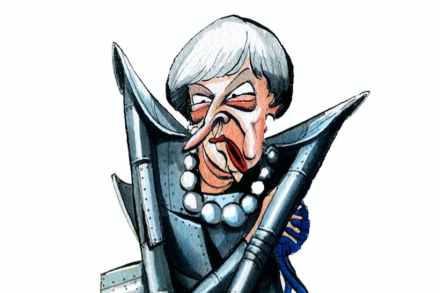
Home Theresa May, the Prime Minister, tried to shuffle her cabinet, but Jeremy Hunt, the Health Secretary, refused to become Business Secretary and stayed put with the words ‘Social Care’ added to his title. Sajid Javid, the Communities Secretary, had ‘Housing’ tacked on to his. Justine Greening spent three hours with Mrs May and emerged without her job as Education Secretary, having turned down Work and Pensions, which went to Esther McVey. David Lidington was made Chancellor of the Duchy of Lancaster, taking over tasks that had been performed by Damian Green, and was replaced as the sixth Justice Secretary in six years by David Gauke, the first solicitor to be made Lord Chancellor.

From our UK edition
From our UK edition
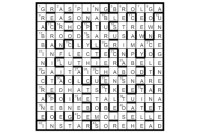
Deployment of a GRABBING CRANE (1D) is required to complete entries at 11, 13, 21 and 23. 1A, 19 and the puzzle’s TITLE (35) are synonyms of GRABBING; 5, 18 and 41 are types of CRANE, which is also the surname of Washington Irving’s character whose first name is ICHABOD (28).
From our UK edition
Theresa May's reshuffle is underway. Here are the key points so far: Justine Greening has quit the government; Damian Hinds is the new Education Secretary David Gauke becomes the Lord Chancellor and Secretary of State for Justice Esther McVey becomes work and pension secretary Karen Bradley is the new Northern Ireland Secretary after James Brokenshire resigns due to ill health Matt Hancock is the new Culture Secretary David Lidington appointed minister for the Cabinet Office Claire Perry is the new minister of state for business Brandon Lewis is new Tory party chairman following confusion over Chris Grayling's reported appointment.
From our UK edition
Among the many new political maladies of our age, one has been left largely undiagnosed. This is Trump Derangement Syndrome, a condition whereby intense dislike of the 45th president renders sufferers unable to understand what he is trying to do or allow that he is capable of success. Trump is hard to admire, it’s true, and seems to revel in his ability to appal. But therein lies the secret of his power: with a few tweets, he can set the world’s news agenda and drive his critics to distraction. Take this week, when he tweeted that his nuclear arsenal is larger than that of Kim Jong-un. His comments were seized upon as yet another example of his idiocy and his playground logic.