The Spectator

In defiance of all gloomy predictions, the global economy begins this year in its healthiest state ever

From our UK edition

This piece first appeared as the leading article in this week's Spectator magazine. It is only a few months since gloomy economic commentators were confidently predicting that the world was about to plunge into a dark era of protectionism. Yet the global economy begins this year in its healthiest state ever, growing faster than any time since 2011. There has been a change in political rhetoric, but not in the willingness of people around the world to trade with each other. According to the OECD’s most-recent projection, made in November, world trade grew at 4.8 per cent last year. Something seems to be going badly right. Negative sentiments about the world economy echo those which have hung over Britain’s economy ever since the Brexit referendum.

Something’s gone badly right with the world economy

From our UK edition

It is only a few months since gloomy economic commentators were confidently predicting that the world was about to plunge into a dark era of protectionism. Yet the global economy begins this year in its healthiest state ever, growing faster than any time since 2011. There has been a change in political rhetoric, but not in the willingness of people around the world to trade with each other. According to the OECD’s most-recent projection, made in November, world trade grew at 4.8 per cent last year. Something seems to be going badly right. Negative sentiments about the world economy echo those which have hung over Britain’s economy ever since the Brexit referendum.

Letters | 11 January 2018

From our UK edition

Long lives and pension pots Sir: Jon Moynihan is too optimistic about the prospects for further increasing life expectancy, and too gloomy about those of the pensions industry (‘Falling Short’, 6 January). The wondrous advancements of medical science have offered little to solve the most pervasive problem we now face: declining mental health. It seems unlikely that society will chose to invest endlessly in repairing bodies to extend lifespans, when the minds relating to those bodies have already been lost. So the viability of pension providers is not as parlous as suggested.

What’s going right

From our UK edition

It is only a few months since gloomy economic commentators were confidently predicting that the world was about to plunge into a dark era of protectionism. Yet the global economy begins this year in its healthiest state ever, growing faster than any time since 2011. There has been a change in political rhetoric, but not in the willingness of people around the world to trade with each other. According to the OECD’s most-recent projection, made in November, world trade grew at 4.8 per cent last year. Something seems to be going badly right. Negative sentiments about the world economy echo those which have hung over Britain’s economy ever since the Brexit referendum.

Portrait of the week | 11 January 2018

From our UK edition

Home Theresa May, the Prime Minister, tried to shuffle her cabinet, but Jeremy Hunt, the Health Secretary, refused to become Business Secretary and stayed put with the words ‘Social Care’ added to his title. Sajid Javid, the Communities Secretary, had ‘Housing’ tacked on to his. Justine Greening spent three hours with Mrs May and emerged without her job as Education Secretary, having turned down Work and Pensions, which went to Esther McVey. David Lidington was made Chancellor of the Duchy of Lancaster, taking over tasks that had been performed by Damian Green, and was replaced as the sixth Justice Secretary in six years by David Gauke, the first solicitor to be made Lord Chancellor.

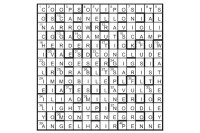
to 2339: Interesting

From our UK edition

Deployment of a GRABBING CRANE (1D) is required to complete entries at 11, 13, 21 and 23. 1A, 19 and the puzzle’s TITLE (35) are synonyms of GRABBING; 5, 18 and 41 are types of CRANE, which is also the surname of Washington Irving’s character whose first name is ICHABOD (28).

Cabinet reshuffle: Justine Greening quits the Cabinet

From our UK edition

Theresa May's reshuffle is underway. Here are the key points so far: Justine Greening has quit the government; Damian Hinds is the new Education Secretary David Gauke becomes the Lord Chancellor and Secretary of State for Justice Esther McVey becomes work and pension secretary Karen Bradley is the new Northern Ireland Secretary after James Brokenshire resigns due to ill health Matt Hancock is the new Culture Secretary David Lidington appointed minister for the Cabinet Office Claire Perry is the new minister of state for business Brandon Lewis is new Tory party chairman following confusion over Chris Grayling's reported appointment.

His critics can’t admit it, but Trump’s crazy tactics are succeeding

From our UK edition

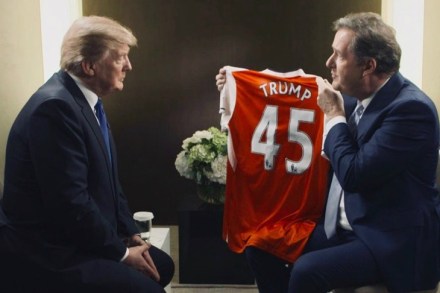
Among the many new political maladies of our age, one has been left largely undiagnosed. This is Trump Derangement Syndrome, a condition whereby intense dislike of the 45th president renders sufferers unable to understand what he is trying to do or allow that he is capable of success. Trump is hard to admire, it’s true, and seems to revel in his ability to appal. But therein lies the secret of his power: with a few tweets, he can set the world’s news agenda and drive his critics to distraction. Take this week, when he tweeted that his nuclear arsenal is larger than that of Kim Jong-un. His comments were seized upon as yet another example of his idiocy and his playground logic.

Letters | 4 January 2018

From our UK edition

A church for all people Sir: I enjoyed reading Ysenda Maxtone Graham’s account of debates in the Church of England in the interval between our parish mass for Advent 3 and our service of nine lessons and carols (‘Mission impossible?’, 16 December). She asks whether the church is planning ‘a back-door “evangelical takeover”’. The simple answer is no. Yes, the Archbishops’ Council has helped to fund churches such as St Luke’s Gas Street in Birmingham, St Philip’s in Salford, and St George’s Gateshead — though it is a bit harsh to dismiss these churches, which are effective in reaching students, young people and families, as ‘centres for instant conversion’.

Where Trump succeeds

From our UK edition

Among the many new political maladies of our age, one has been left largely undiagnosed. This is Trump Derangement Syndrome, a condition whereby intense dislike of the 45th president renders sufferers unable to understand what he is trying to do or allow that he is capable of success. Trump is hard to admire, it’s true, and seems to revel in his ability to appal. But therein lies the secret of his power: with a few tweets, he can set the world’s news agenda and drive his critics to distraction. Take this week, when he tweeted that his nuclear arsenal is larger than that of Kim Jong-un. His comments were seized upon as yet another example of his idiocy and his playground logic.

Portrait of the week | 4 January 2018

From our UK edition

Home In a message for the New Year, as though it were an immemorial custom, Theresa May, the Prime Minister, said: ‘Most people just want the government to get on and deliver a good Brexit, and that’s exactly what we are doing.’ It seemed a long time since, just before Christmas, Damian Green had resigned as the First Secretary of State, in a letter beginning, ‘I regret that I’ve been asked to resign’ and going on to ‘accept that I should have been clear in my press statements that police lawyers talked to my lawyers in 2008 about the pornography on the computers [in his parliamentary office], and that the police raised it with me in a subsequent phone call in 2013. I apologise that my statements were misleading on this point.

to 2338: Fone

From our UK edition

The unclued lights are former and current F1 teams.   First prize Ronald Morton, Basingstoke, Hants Runners-up Revd J.

Nothing new at New Year

From our UK edition

From The Spectator, 2 January 1847: The New Year opens for England with heavy clouds in the sky, but with no sunless horizon. Never did the country enter upon a year with more work to be done. Ireland alone presents a task without precedent: England has there to reorganize an old country... The progress of the new free-trade policy has to be looked after. The public law of Europe is unsettled, and an eye must be kept on that. But with all this Herculean amount of work, the country never had better means of performance. The very urgency and momentous importance of the tasks compel earnest zeal. The decay of party-spirit releases the ablest man from smaller services to cooperate in serving the largest interests of the country.

Theresa May’s 2018 resolution should be to look beyond Brexit

From our UK edition

The last full year before Britain leaves the EU has been foretold by some as a time of increasingly desperate negotiation. According to this view the government is drifting towards an economically painful Brexit, so consumed by the whole sorry business that it is unable to address any of the country’s other problems. Yet there is no reason why 2018 should turn out this way, and every reason to hope that it will prove to be the year when the Conservatives finally emerge from the tumult of the referendum to achieve other things. While the deal struck between the government and the EU in December -- and the prospect of Britain paying a ‘leaving bill’ of around £40 billion -- has offended some Brexiteers, it has transformed the political landscape.

A portrait of 2017: Brexit stumbled forward, Big Ben was silenced and sexual allegations swept the world

From our UK edition

January ‘No deal for Britain is better than a bad deal for Britain,’ Theresa May, the Prime Minister, declared in a speech at Lancaster House. Britain would leave the single market and customs union on leaving the European Union, she said. The Supreme Court ruled that only by an Act of Parliament could Article 50 of the Lisbon Treaty trigger Britain’s departure. Mrs May held the hand of President Donald Trump as they walked down a declivity at the White House; she asked him to make a state visit in 2017, but it was not to be. Mr Trump suspended entry to America for people from Iraq, Iran, Libya, Somalia, Sudan, Syria and Yemen. A man shot dead 39 people in an Istanbul nightclub.

Barometer: 2017’s missed targets

From our UK edition

Slipping behind Some things which were supposed to happen in 2017: — Hinkley Point C nuclear power station. In 2007 Vincent de Rivaz, chief executive of EDF, said that in 2017 we would be able to cook our Christmas turkeys from electricity generated by the plant. Anyone relying on his promise will have had cold turkey. The latest estimate for completion is 2027. — Universal Credit. When introduced in 2013, it was intended that the roll-out would be complete by 2017. That has slipped back to 2022, and is in some doubt altogether. — Electrification of the Gospel Oak to Barking line. Due to be completed in 2017 as part of a Department for Transport scheme announced in 2012. Won’t now be open until spring 2018.

Safe spaces and ‘ze’ badges: My bewildering year at a US university

From our UK edition

We’re closing 2017 by republishing our twelve most-read articles of the year. Here’s No. 4: Madeleine Kearns on her time at New York University: As a child in Glasgow, I learned that sticks and stones might break my bones but words didn’t really hurt. I’m now at New York University studying journalism, where a different mantra seems to apply. Words, it turns out, might cause life-ruining emotional trauma. During my ‘Welcome Week’, for example, I was presented with a choice of badges indicating my preferred gender pronouns: ‘he’, ‘she’, ‘they’ or ‘ze’? The student in front of me, an Australian, found this hilarious: ‘Last time I checked, I was a girl.’ Her joke was met with stony silence.