to 2347: Capital letters
From our UK edition
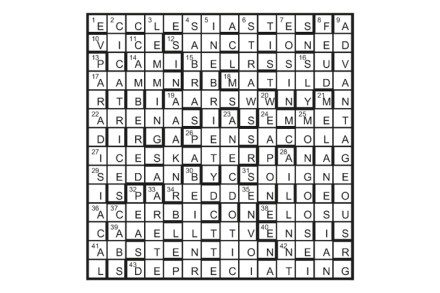
The unclued lights are LETTERS in alphabetical order which, when rearranged, give the names of eight CAPITAL cities.
From our UK edition
The unclued lights are LETTERS in alphabetical order which, when rearranged, give the names of eight CAPITAL cities.
From our UK edition
Ludgrove There aren’t many traditional all-boys, full-boarding prep schools left in the UK, but Ludgrove in Berkshire is one. ‘Our boys speak for themselves and it is them that make Ludgrove special. They are full of spark and never short of things to say,’ according to the school. There are two mantras of Ludgrove life, ‘Be kind’ and ‘Be the best you can’, while the school motto is: ‘Whatsoever thy hand findeth to do, do it with all thy might’ (Ecclesiastes 9:10). Ludgrove has a strong academic record — around 70 per cent of the top year go on to Eton, Harrow, Radley or Winchester — but sport and tradition are just as important.
From our UK edition
TRUE GRIT Education secretary Damian Hinds gave his first big speech at the Education World Forum in January, about the vital importance of learning from other countries and ensuring young people are able to thrive in a global economy. He also spoke of the benefits that come from sharing Britain’s educational excellence and know-how with the rest of the world. But he made it clear that he doesn’t believe education is all about exams and A grades. ‘There is much outside the relevant qualifications which matters a great deal as well,’ he said.
From our UK edition
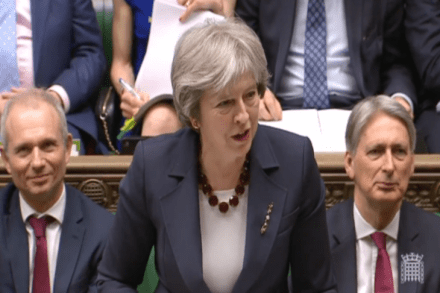
First, on behalf of the whole House, let me pay tribute once again to the bravery and professionalism of all the emergency services, doctors, nurses and investigation teams who have led the response to this appalling incident. And also to the fortitude of the people of Salisbury. Let me reassure them that – as Public Health England have made clear – the ongoing risk to public health is low. And the Government will continue to do everything possible to support this historic city to recover fully. Mr Speaker, on Monday I set out that Mr Skripal and his daughter were poisoned with a Novichok: a military grade nerve agent developed by Russia.
From our UK edition
The UK was the only major economy to make hundreds of tax and spending changes twice a year. And major international organisations and UK professional bodies alike have been pressing for change. In 2016 I took the decision to move to a single fiscal event in the Autumn. Giving greater certainty to families and businesses ahead of the new financial year. And allowing more time for stakeholder and parliamentary engagement on potential fiscal changes. Today’s statement will update the House on the economic and fiscal position. Report progress on announcements made at the two budgets last year. And launch further consultations ahead of Budget 2018, as set out today in my Written Ministerial Statement. I won’t be producing a Red Book today Mr Speaker. Mr Speaker.

From our UK edition
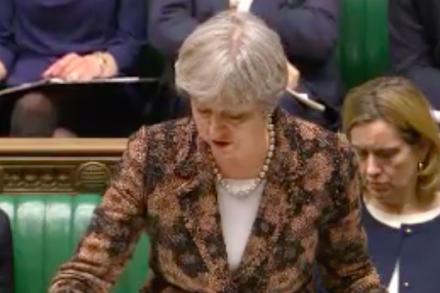
Mr Speaker, I share the impatience of this House and the country at large to bring those responsible to justice - and to take the full range of appropriate responses against those who would act against our country in this way. But as a nation that believes in justice and the rule of law, it is essential that we proceed in the right way – led not by speculation but by the evidence. That is why we have given the police the space and time to carry out their investigation properly. Hundreds of officers have been working around the clock – together with experts from our armed forces - to sift and assess all the available evidence; to identify crime scenes and decontamination sites and to follow every possible lead to find those responsible.
From our UK edition
Pipeline politics Sir: In his article ‘Putin’s gamble’ (3 March), Paul Wood quite rightly mentions that one of the key reasons why Russia played hardball in Syria was Assad’s willingness to block the efforts of Qatar to build a natural gas pipeline through the country to supply Europe. This would have undermined Russia’s market power in Europe, and weakened Russian leverage over Europe when defending its actions in Ukraine. Some of the strategic issues at play in Syria exist in Libya, but to a lesser degree. Libya supplies Europe with gas from large offshore deposits through the GreenStream pipeline to Italy.
From our UK edition
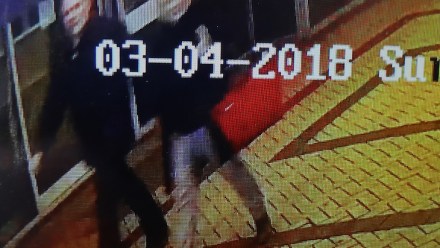
The apparent chemical attack on a former Russian double-agent and his daughter in an English cathedral city could be straight from a cold war thriller. Unfortunately, though, the case is not going to be solved in 500 pages — nor will it be solved by July, when the Foreign Secretary has threatened to withdraw a British delegation of dignitaries, if not the English team, from the opening ceremony of the World Cup. It was inevitable, as soon as Sergei Skripal was taken acutely ill on a bench in Salisbury, that fingers would point at Vladimir Putin. He did, after all, pass a law to give the FSB, the successor organisation to the KGB, powers to execute enemies of the Russian state on foreign soil.
From our UK edition
Home Sergei Skripal, aged 66, and his daughter Yulia were found in a state of collapse on a bench outside a shopping centre in Salisbury. Mr Skripal, a retired Russian military intelligence officer, was jailed by Russia in 2006 on charges of giving secrets to MI6; he was deported in a swap of spies in 2010. Boris Johnson, the Foreign Secretary, said that the incident had ‘echoes of the death of Alexander Litvinenko’. Public Health England threatened food manufacturers and supermarkets with new laws unless they reduced the calories in portions of crisps, pizzas and pies.

From our UK edition

From our UK edition
The unclued entries are all names for pontoon; extra words in 27, 31, 33, 34 and 36 needed the letters S, G, O, U, R to become WHIST, BRIDGE, SOLO, AUCTION, CONTRACT. Auction, auction bridge, bridge, bridge whist, contract, contract bridge, solo, solo whist and whist are all card-games listed in Chambers. PONTOON is a BRIDGE. First prize Rhiannon Hales, Ilfracombe, Devon Runners-up John Renwick, Ramsgate, Kent; R.
From our UK edition
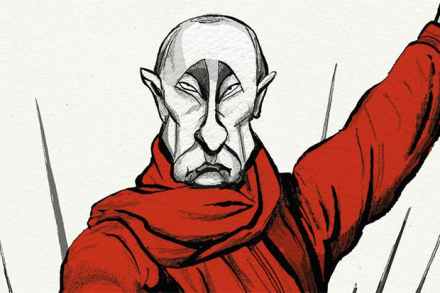
The apparent chemical attack on a former Russian double-agent and his daughter in an English cathedral city could be straight from a cold war thriller. Unfortunately, though, the case is not going to be solved in 500 pages — nor will it be solved by June, when the Foreign Secretary has threatened to withdraw a British delegation of dignitaries, if not the English team, from the opening ceremony of the World Cup. It was inevitable, as soon as Sergei Skripal was taken acutely ill on a bench in Salisbury, that fingers would point at Vladimir Putin. He did, after all, pass a law to give the FSB, the successor organisation to the KGB, powers to execute enemies of the Russian state on foreign soil.
From our UK edition
I am grateful to the Lord Mayor and all his team at the Mansion House for hosting us this afternoon. And in the midst of the bad weather, I would just like to take a moment before I begin my speech today to thank everyone in our country who is going the extra mile to help people at this time. I think of our emergency services and armed forces working to keep people safe; our NHS staff, care workers, and all those keeping our public services going; and the many volunteers who are giving their time to help those in need. Your contribution is a special part of who we are as a country – and it is all the more appreciated at a moment like this. FIVE TESTS Now I am here today to set out my vision for the future economic partnership between the United Kingdom and the European Union.

From our UK edition
Corbyn and the zeitgeist Sir: Your leading article is right about university tuition fees and the fruitlessness of Tory half-measures, name-calling and then unedifying policy-swapping (‘Corbyn’s useful idiots’, 24 February). But I believe the writing is on the wall for the wider involvement of ‘free markets’ in the public sector. We have seen growing public support for taking the railways and water companies back into public ownership as people justifiably ask what is in it for them under the current system. In the NHS, as Max Pemberton makes clear (‘Wasting away’, 24 February), the internal market has been a wasteful disaster. We were told that costs would be driven down as standards went up. All too often the reverse has been the case.
From our UK edition
Ageing rockers The Rolling Stones announced their first live shows for five years. Mick Jagger, Keith Richards (both 74), Charlie Watts (76) and Ronnie Wood (70) are not alone rocking on into their eighth decades. Other septuagenarians you can hear live in 2018: — Elton John (70) unveiled a farewell tour. Paul Simon (76) says that four concerts in the US this year will be his last. — Bob Dylan (76) announced 15 European concerts. — Rod Stewart (73) has six live shows booked for Las Vegas. — The Who’s surviving members Roger Daltrey (73) and Pete Townshend (72) will be playing 18 dates in 2018, quite possibly belting out Townshend’s famous line: ‘Hope I die before I get old.
From our UK edition
Home Crisis loomed over Brexit negotiations as Theresa May, the Prime Minister, travelled to the north-east to explain ‘this Government’s vision of what our future economic partnership with the European Union should look like’. Jeremy Corbyn, the leader of the Labour Party, had announced that its Brexit policy was now ‘to negotiate a new comprehensive UK-EU customs union’ that would still (somehow) ‘ensure the UK has a say in future trade deals’. Sir Keir Starmer, Labour’s Brexit spokesman, had said earlier that the party would back an amendment to the Government’s delayed Trade Bill hatched by the Conservative Remainer Anna Soubry, to keep Britain in a customs union.
From our UK edition
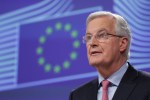
There’s an unwritten law governing Boris Johnson in Westminster: every-thing he says or does is a gaffe, or can be portrayed as one. Yet actually Johnson has an uncanny knack for conjuring similes which sum up the political situation precisely. So it was for his much-ridiculed remark, in response to a question about the Irish border, that there are no border posts between London boroughs even though they have different business rates and policies on various other things. His phrasing was careless but the point stands: it is nonsense to claim that different regimes must mean border patrols. There are significant tax and excise differences on either side of the Northern Irish border, but they’re managed without any need for checkpoints.
From our UK edition
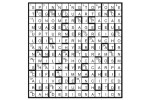
The puzzle’s NUMERICAL DESIGNATION (3 41) is preceded by 7A and followed by 7D 12 33 37 to form the first two lines of a NURSERY RHYME (4): ‘One, two, three, four, five/ Once I caught a fish alive’. Thematically caught fish, in entries at 1D, 5, 19, 26, 31, 32 and 34, are lant, rigg, maid, ide, ahi, ai and carp. First prize Michael Pigden, Barnet, Hertfordshire Runners-up C.

From our UK edition
From ‘A moral test’, 2 March 1918: The nation, in spite of all the silly talk about our war aims not having been stated, is more united now as to the minimum principles for which we have to fight than at any moment during the war. In spite, again, of most of the talk about revolution, the mind and spirit of the working men are sound… Whatever suffering there may be, it cannot last indefinitely. Right will certainly triumph, and when that glorious day comes we shall recognise that what was grievous to endure is sweet to remember.
From our UK edition
This week, Xi Jinping is close to achieving what Bill Clinton tried and failed to do: to remove the restriction on an individual serving more than two terms as leader of his country. It will mean that Xi is able to remain in charge of China beyond 2023, when his second five-year term will expire, and to become the longest-serving leader since Mao Zedong. Already, the Chinese constitution is being rewritten to incorporate his personal thoughts so a personality cult, too, is being created. For anyone who remembers the hell of the Cultural Revolution, it’s quite a step. Yet it’s one that’s being greeted with a yawn in the West.