The Spectator

Letters | 28 March 2018

From our UK edition

The antidepressants con Sir: Congratulations to Angela Patmore for exposing the many troubling aspects of the escalating use of antidepressants (‘Overdosed: Our dangerous dependency on antidepressants’, 24 March). The drug companies have conned doctors into prescribing antidepressants, patients into taking them, and taxpayers into paying for them with fake information. Such is the present epidemic of depression that one in ten of us is now taking them. NICE is drafting new guidelines for depression, and it is to be hoped it will expose this con, and that clinical groups in the UK will instead facilitate access to talking therapies for those millions of depressed people.

War and peace | 28 March 2018

From our UK edition

After Britain voted to leave the European Union, there was much mistaken talk about how it might also move away from its allies. Boris Titov, one of Putin’s appointees and a half-hearted challenger to him in the presidential election a fortnight ago, claimed that it would break the transatlantic alliance, turning the remainder of the EU into Russophiles, adding: ‘It’s not long until a united Eurasia — about ten years’. That fantasy was destroyed last week when, in an unprecedented show of solidarity, 23 countries announced that between them they are to expel more than 100 Russian diplomats whom they suspect have been working as spies.

to 2349: Novel

From our UK edition

The novel was HOWARDS END by E.M. Forster. Round the perimeter run the characters LEONARD BAST, PERCY CAHILL, MARGARET SCHLEGEL and HENRY WILCOX followed by EMF. WADED/SHORN (20/39) and SHOWN/ADDER (11/26) each  combine to form an anagram of HOWARDS END.   First prize Penny Mitchell, Burton-on-Trent, Staffordshire Runners-up R.R.

German manoeuvres

From our UK edition

From ‘The great battle’, 30 March 1918: Since our last issue by far the greatest battle of the war has developed — a battle to which, for significance and size, history affords no parallel. It is being fought with such intensity and with such an exhausting use of men and munitions that we cannot suppose that there will be a prolonged crisis… When the battle is over the military situation will be radically changed… We shall know either that Germany has lost her gambler’s throw and that we can deal with her during the rest of the war with confidence and deliberation, or we shall know that we have got to begin the war, as it were, all over again.

Letters | 22 March 2018

From our UK edition

Reform National Insurance Sir: One objection to an increase in National Insurance contributions to rescue the NHS is that it would once again exempt from contributing those who most heavily use the NHS — the retired — and heap yet more of the burden on the working young who least use it and can least afford it (‘The Tory tax bombshell’, 17 March). As you acknowledge, National Insurance contributions long ago ceased to be purely contributions into a pension and sickness benefit scheme, and became part of general taxation. This means that entirely exempting retirees from contributing when many of them are on incomes larger than the working young is quite impossible to justify.

Portrait of the week | 22 March 2018

From our UK edition

Home Britain and the European Union agreed on a transitional period after Brexit on 29 March 2019 until the end of 2020 in which Britain can make trade deals and EU citizens will be able to claim UK residency. The Irish border question was unresolved. British fisherfolk were sold down the river, despite an undertaking a week earlier by Michael Gove, the Environment Secretary, and Scottish Conservative leader Ruth Davidson. In a joint statement, the two politicians had promised: ‘Britain will leave the CFP [Common Fisheries Policy] as of March 2019.’ In fact, Britain will merely be ‘consulted’ on fishing quotas during the transitional period.

Losing control

From our UK edition

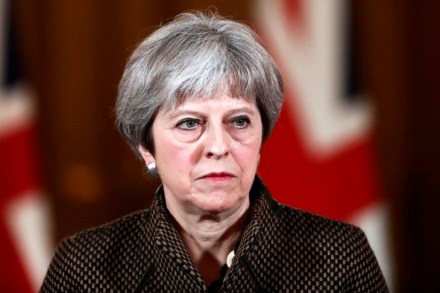
If Brexit was going to be as easy as some of its advocates had believed, we would not have had weeks such as this one. It’s hard to interpret the recent agreement over the transition period as anything other than a capitulation to EU demands. Theresa May has quietly scrubbed out her ‘red line’ on the rights of EU citizens and the jurisdiction of the European Court of Justice. Nationals of other EU countries will be free to move to Britain, seek work here and have their rights protected by the court until 31 December 2020. Moreover, she has agreed to UK waters being open to EU trawlers until that date. Indeed, to the chagrin of our own fishing industry, fishing quotas will be set for our waters in 2020 — without the UK even having a say as to what they should be.

to 2348: It’s a trap

From our UK edition

‘Now is the woodcock near the gin’, said by Fabian in Twelfth Night, suggests the position of BECASSE in relation to 8, 21, 28, 30 and 37.   First prize Jenny Staveley, London SW2 Runners-up Andrew Bell, Shrewsbury, Shropshire; A.M.

Letters | 15 March 2018

From our UK edition

Growing our own Sir: Rod Liddle is clearly right that ‘the people of Europe do not want any more immigration on the scale we have seen in the past five years’ and that this is one of the reasons for the rise in the populist vote (‘The populist revolution has only just begun’, 10 March). However, the people of Europe do want more cleaners, fruitpickers and vegetable harvesters, not to mention care home workers, paramedics, nurses and doctors. We in the UK need more teachers of science, maths and languages.

Portrait of the week | 15 March 2018

From our UK edition

Home Theresa May, the Prime Minister, told the Commons that the chemical that put in hospital Sergei Skripal, a Russian spy who had defected to Britain, his daughter Yulia, and the policeman who visited their home in Salisbury, belonged to a group of nerve agents called Novichok, developed by Russia. She said that Britain must take extensive measures, should there be no adequate explanation from Russia within two days; there was none.

School portraits | 15 March 2018

From our UK edition

Ludgrove There aren’t many traditional all-boys, full-boarding prep schools left in the UK, but Ludgrove in Berkshire is one. ‘Our boys speak for themselves and it is them that make Ludgrove special. They are full of spark and never short of things to say,’ according to the school. There are two mantras of Ludgrove life, ‘Be kind’ and ‘Be the best you can’, while the school motto is: ‘Whatsoever thy hand findeth to do, do it with all thy might’ (Ecclesiastes 9:10). Ludgrove has a strong academic record — around 70 per cent of the top year go on to Eton, Harrow, Radley or Winchester — but sport and tradition are just as important.

School report | 15 March 2018

From our UK edition

TRUE GRIT Education secretary Damian Hinds gave his first big speech at the Education World Forum in January, about the vital importance of learning from other countries and ensuring young people are able to thrive in a global economy. He also spoke of the benefits that come from sharing Britain’s educational excellence and know-how with the rest of the world. But he made it clear that he doesn’t believe education is all about exams and A grades. ‘There is much outside the relevant qualifications which matters a great deal as well,’ he said.

Theresa May’s Russia response, full text

From our UK edition

First, on behalf of the whole House, let me pay tribute once again to the bravery and professionalism of all the emergency services, doctors, nurses and investigation teams who have led the response to this appalling incident. And also to the fortitude of the people of Salisbury. Let me reassure them that – as Public Health England have made clear – the ongoing risk to public health is low. And the Government will continue to do everything possible to support this historic city to recover fully. Mr Speaker, on Monday I set out that Mr Skripal and his daughter were poisoned with a Novichok: a military grade nerve agent developed by Russia.