The Spectator

Portrait of the week | 17 May 2018

From our UK edition

Home Wages rose quicker than inflation in the first quarter of 2018, at an annual rate of 2.9 per cent, against 2.7 per cent rate for inflation. Unemployment fell to 1.42 million — at 4.2 per cent the lowest level since 1975. BT said it would cut 13,000 jobs over three years, about 12 per cent of its workforce, to save £1.5 billion. Network Rail surveyed 10 million trees by drone to see how many it might cut down. Plans were approved for a Silvertown road tunnel linking the Royal Docks north of the Thames with the Greenwich peninsula south of the river. Meghan Markle’s father, a bankrupt living in Mexico, felt unwell on the eve of her wedding to Prince Harry. The government said it would publish a white paper on Brexit before the EU summit next month.

to 2356: Beetle

From our UK edition

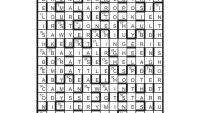
The unclued lights are compositions by Vaughan Williams; 17, 19/8, 21/23, 27/11, 36/4, 43/28 with the title of the puzzle suggesting a VW Beetle.

Brexit debate: Andrew Adonis vs Robert Tombs

From our UK edition

Robert Tombs, professor of European history at Cambridge University, and Labour peer Andrew Adonis took part in a discussion on the following question: Should those who know their history welcome Brexit? Here is an edited transcript of their arguments in the debate hosted by 'Our Future, Our Choice' and Clare College, Cambridge: Andrew Adonis: Robert Tombs has been very strident about Brexit in his post-2016 statements. He says joining the European Union was 'an immense historical error, borne of exaggerated fears of national decline and marginalisation, and a vain attempt to be at the heart of Europe'. However, what I find interesting reading his book, The English And Their History, you will not be able to detect that Professor Tombs is a Brexiteer.

Who’s afraid of cryptocurrency? It could be the answer to our ills

From our UK edition

Since its inception, cryptocurrency has been regarded as technically fascinating but fundamentally unreliable. Those who invested £10 in Bitcoin eight years ago would have £1.6 million today — a fluctuation which, while mind-boggling, further undermines the notion that digitally created currency is a stable store of value. At first, it was dismissed as a toy for geeks. Then it was seen as a threat, used by criminals to buy drugs and guns. Some, like Lloyds Bank, have refused to carry out any cryptocurrency transactions on behalf of customers. But its popularity has kept growing and this week, it made a significant leap towards the mainstream.

Don’t dismiss cryptocurrencies as the drug dealer’s friend

From our UK edition

This is the leading article in this week's Spectator magazine. Since its inception, cryptocurrency has been regarded as technically fascinating but fundamentally unreliable. Those who invested £10 in Bitcoin eight years ago would have £1.6 million today — a fluctuation which, while mind-boggling, further undermines the notion that digitally created currency is a stable store of value. At first, it was dismissed as a toy for geeks. Then it was seen as a threat, used by criminals to buy drugs and guns. Some, like Lloyds Bank, have refused to carry out any cryptocurrency transactions on behalf of customers. But its popularity has kept growing and this week, it made a significant leap towards the mainstream.

Letters | 10 May 2018

From our UK edition

Where capitalism fails Sir: James Delingpole is right, of course, to extol the virtues of capitalism (‘We don’t deserve capitalism’, 5 May) but wrong to imagine that if only we stuck to strict capitalist principles we could cure problems like the allegedly system-clogging bureaucracy in the NHS. The United States probably has the most ‘capitalistic’ health service in the world; but it has seen an even greater rise in numbers of bureaucrats than the NHS, contributing to its ranking as the world’s most expensive healthcare system. Or take US universities: they too operate on a very capitalistic model which has seen student fees rise steeply over the past three decades and has burdened the campuses with huge bureaucracies.

Who’s afraid of cryptocurrency?

From our UK edition

Since its inception, cryptocurrency has been regarded as technically fascinating but fundamentally unreliable. Those who invested £10 in Bitcoin eight years ago would have £1.6 million today — a fluctuation which, while mind-boggling, further undermines the notion that digitally created currency is a stable store of value. At first, it was dismissed as a toy for geeks. Then it was seen as a threat, used by criminals to buy drugs and guns. Some, like Lloyds Bank, have refused to carry out any cryptocurrency transactions on behalf of customers. But its popularity has kept growing and this week, it made a significant leap towards the mainstream.

to 2355: A Poet Skylarking

From our UK edition

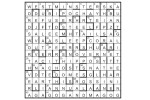
13 1A 23 22 is from SHELLEY’S ‘Ode to a Skylark’. Other unclued lights had ‘a poet hidden in the light’: OVID in 6A; LARKIN in 16; ELIOT in 17; TATE in 42; AUDEN in 43. Two poets’ names in the puzzle’s real title, ‘A Poet Skylarking’, needed highlighting.

All peril on the Western Front

From our UK edition

From ‘The situation on the Western Front in light of the Paris speech’, 11 May 1918: Instead of the Western Front proving impenetrable, the enemy has penetrated it, and brought us nearer a position of peril than we have been in since the retreat from Mons. There has been ‘real unity in the war direction of the Allied countries,’ but even if it may be an advantage per se, which we are not going to deny, it has proved a very poor substitute for Brigades and Divisions… Our line has been broken in, not from any want of so-called good Staff work, or from any failure on the part of our men, or from bad generalship, but simply and solely because if in modern war 14 Divisions are opposed by 50, the 14 must sooner or later succumb.

Live local elections 2018: Labour falls short in London

From our UK edition

The key results from the 2018 local elections: The Tories win Barnet and hold Westminster and Wandsworth, despite predictions Labour could seize the two Tory strongholds Labour take control of Plymouth from the Tories The Lib Dems win Richmond and Kingston-upon-Thames, on a good night for Vince Cable Ukip's falling vote share hands the Tories control in Basildon and Peterborough.

Letters | 3 May 2018

From our UK edition

Campaign for real cricket Sir: Geoffrey Wheatcroft’s splendid article ‘Cricket, unlovely cricket’ (28 April) remonstrated against the threat to Test matches and the County Championship posed by the juggernaut of what he termed ‘Twenty20Trash’. He ended with the words ‘after the very successful Campaign for Real Ale, what about a Campaign for Real Cricket?’ As one of the four traditional beer lovers who founded Camra and as an MCC member, I wholeheartedly agree. We must rescue our beloved sport from the hands of the money-obsessed administrators who are foisting an apology for beach cricket on true lovers of traditional forms of a noble game.

Barometer | 3 May 2018

From our UK edition

Is this thing on? Sainsbury’s Chief Executive Mike Coupe was recorded singing ‘We’re in the Money’ as he prepared to go on ITV news about his company’s proposed merger with Asda. Other embarrassing microphone moments: — Ronald Reagan was preparing for his weekly broadcast on National Public Radio in 1984 when he joked to technicians: ‘My fellow Americans, I’m pleased to tell you today I’ve signed legislation that will outlaw Russia forever. We begin bombing in five minutes.’ The recording was later leaked.

Momentum builds

From our UK edition

The local elections have thrown up a paradox. In theory, Britain has never had more devolution: we have assemblies in Edinburgh and Cardiff, city mayors in England, elected police chiefs and the supposed Northern Powerhouse. So, the run-up to the vote ought to have been dominated by local issues, with a new breed of local political heroes or villains in the media spotlight. Instead, apart from a few door-knocks and the odd leaflet, one could be forgiven for not even realising local elections were being held. This may be in part because of the sad decline of the local press and the dearth of reporters to cover the elections. But it is also because of the equally sad decline in the number of political volunteers willing to campaign, especially for the Tories.

to 2354: Pioneering

From our UK edition

Parts indicated in clues in italics must each BREAK NEW GROUND (1A 4A), creating entries at 6, 13, 26, 39 and 40; definitions of these entries are 2, 15A, 33, 27 and 20.

The Spectator Podcast: Mayday!

From our UK edition

In this week’s podcast, we discuss Theresa May’s impossible situation - how can she get herself out of the bind created by the Brexiteers and the Remainers? We also discuss the hostile environment policy, and ask, will Ireland appeal its Eighth Amendment? First, Theresa May finds herself in a real dilemma. Her cabinet colleagues, the EU and her advisors are all pulling her in different directions over the question of the customs union. While Remainers argue that a ‘customs partnership’ is the only way to avoid a hard border in Northern Ireland, Brexiteers believe ‘max fac’ (a maximum facilitation agreement, which includes a technology based border in Ireland) is the only way forward.

Barometer | 26 April 2018

From our UK edition

Kill or cure An anti-war protester on a march against the Syrian missile attacks claimed that President Assad couldn’t be a bad man because ‘he’s a doctor, for heaven’s sake’. Some other qualified medics who provide counter-evidence for this theory: — Dr Harold Shipman GP in Hyde, Manchester, convicted of 15 murders in 2000, though it is thought that he may have killed more than 250 patients. — Dr Crippen US-trained homeopath and ear and eye specialist who dispensed medicines, though his qualifications were not recognised in Britain. He was hanged in 1910 for murdering his wife. — Josef Mengele Gained a PhD in anthropology, researched genetics, then gained a doctorate in medicine before taking a job as physician at Auschwitz.