The Spectator

Portrait of the week | 24 May 2018

From our UK edition

Home Marks & Spencer announced plans to close 100 of its 1,035 shops by 2022, hoping to move a third of its sales online; the costs of the plans brought its annual profits down by almost two-thirds, to £66.8 million. Govia Thameslink Railway, which runs Great Northern, Thameslink and Southern, cancelled 160 trains, 7 per cent of the total, the day after it changed all its timetables. Northern trains were also affected. Chris Grayling, the Transport Secretary, announced that, as expected, his department would run the East Coast Main Line until 2020, after the franchise holders, Stagecoach and Virgin, pulled out of their agreement.

Carney’s errors

From our UK edition

Soon after he became his party’s leader, David Cameron spoke dismissively of Conservatives who ‘bang on about Europe’. He had a point. The subject has a peculiar ability to turn intelligent people into crashing bores who obsess over Europe to the exclusion of all else. Often, the subject warps good judgment. Since the referendum, this phenomenon has become much worse. Take the Bank of England governor, Mark Carney. Twice this week, he has claimed that households are £900 worse off as a result of the referendum. Why? Because his officials had overestimated salary growth, and he sees the Brexit vote as an explanation for their error. This is odd. Given that the Bank has been getting its forecasts wrong for years, why blame Brexit?

to 2357: Half a Drum

From our UK edition

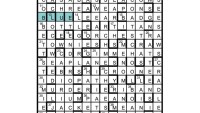
Unclued lights were five fictional TOMs and their authors: JONES (14A) and FIELDING (8D), SAWYER (16A) and TWAIN (35A), BROWN (41A) and HUGHES (15D), KITTEN (20D) and POTTER (30D), and BOMBADIL (23D) and TOLKIEN (12A).   First prize Chris Edwards, Pudsey, Leeds Runners-up Daniel Angel, Twickenham, Middlesex; S.L.

Brothers-in-arms

From our UK edition

From ‘The new crusade’, 25 May 1918: It is curious to think how great must soon have been the spiritual gulf between the new generation in Great Britain and the United States if the latter had remained in prosperous isolation. In five years we should have ceased to understand each other’s jokes, in ten we should scarcely have spoken the same language. But now the tide is setting just as mightily towards a complete and perfect sympathy. A whole generation of Americans will have been our brothers-in-arms… The possibilities of the new brotherhood are almost boundless.

Ruth Davidson: Tories are too dour and joyless

From our UK edition

This is an edited transcript of Ruth Davidson's speech at last night's launch of Onward, a new liberal Conservative think tank: Sometimes the Tories just look a bit dour. You know, we look a bit joyless. Fair? A bit authoritarian sometimes. We don't get to win if we start hectoring the people that we need to vote for us. We don't get to just say 'Please stand on the right' like every tube message out there. We've got to learn to be a bit more joyful and that's something that I think that we have tried to learn in Scotland. Trust me, when I started out in the Tory party in Scotland in Glasgow in 2009, if you weren't a blind optimist, the Scottish Conservatives really weren't for you!

What do Gammons really think of gammon-gate?

From our UK edition

Controversy raged this week over whether calling an angry, white, right-wing man a ‘gammon’ is racist. The insult is first recorded in Charles Dickens’s novel Nicholas Nickleby in 1838. But what of people really called Gammon? — There are about 2,500 Britons with that surname, which originated in Cornwall. Their politics are not all right-wing: in the 2017 Cornwall county council elections a Jacquie Gammon stood for the Lib Dems. — In the US, two Gammons are recorded as delegates at National Conventions: Lemuel Gammon representing Colorado for the Democrats in 1916 and Gussie Gammon representing North Carolina for the Republicans in 2008. — Not all Gammons are white: 7.3 per cent of those in the US are African-American and 2.

Letters | 17 May 2018

From our UK edition

Iran’s hated regime Sir: I disagree with the analysis of Christopher de Bellaigue (‘Trump’s folly’, 12 May). The Iranians I know, well aware of the hardship caused by sanctions, nevertheless welcome them as a demonstration of international condemnation of the Tehran regime. The idea that the Iranian people would rally round the mullahs in the face of disapproval by the West is wrong. My Iranian friends plead for our moral support in their efforts to overthrow their hated regime, which is impoverishing their country by its military adventurism abroad and has robbed many families of loved ones through imprisonment and executions.

Power and the press

From our UK edition

That the House of Lords has survived as an unelected chamber is largely down to the Salisbury Convention, which holds that peers do not vote down government bills on matters which appeared in the governing party’s election manifesto. It is a doctrine under attack as never before, partly as a result of the Lords’ votes against the government’s Brexit plans but also as a result of the Upper House’s battle of attrition against the government on press standards. It is bizarre to see an issue of such little importance to the public taking up so much parliamentary time. For generations, freedom of the press was regarded as an essential British liberty — the sort that people entered parliament to defend.

Portrait of the week | 17 May 2018

From our UK edition

Home Wages rose quicker than inflation in the first quarter of 2018, at an annual rate of 2.9 per cent, against 2.7 per cent rate for inflation. Unemployment fell to 1.42 million — at 4.2 per cent the lowest level since 1975. BT said it would cut 13,000 jobs over three years, about 12 per cent of its workforce, to save £1.5 billion. Network Rail surveyed 10 million trees by drone to see how many it might cut down. Plans were approved for a Silvertown road tunnel linking the Royal Docks north of the Thames with the Greenwich peninsula south of the river. Meghan Markle’s father, a bankrupt living in Mexico, felt unwell on the eve of her wedding to Prince Harry. The government said it would publish a white paper on Brexit before the EU summit next month.

to 2356: Beetle

From our UK edition

The unclued lights are compositions by Vaughan Williams; 17, 19/8, 21/23, 27/11, 36/4, 43/28 with the title of the puzzle suggesting a VW Beetle.

Brexit debate: Andrew Adonis vs Robert Tombs

From our UK edition

Robert Tombs, professor of European history at Cambridge University, and Labour peer Andrew Adonis took part in a discussion on the following question: Should those who know their history welcome Brexit? Here is an edited transcript of their arguments in the debate hosted by 'Our Future, Our Choice' and Clare College, Cambridge: Andrew Adonis: Robert Tombs has been very strident about Brexit in his post-2016 statements. He says joining the European Union was 'an immense historical error, borne of exaggerated fears of national decline and marginalisation, and a vain attempt to be at the heart of Europe'. However, what I find interesting reading his book, The English And Their History, you will not be able to detect that Professor Tombs is a Brexiteer.

Who’s afraid of cryptocurrency? It could be the answer to our ills

From our UK edition

Since its inception, cryptocurrency has been regarded as technically fascinating but fundamentally unreliable. Those who invested £10 in Bitcoin eight years ago would have £1.6 million today — a fluctuation which, while mind-boggling, further undermines the notion that digitally created currency is a stable store of value. At first, it was dismissed as a toy for geeks. Then it was seen as a threat, used by criminals to buy drugs and guns. Some, like Lloyds Bank, have refused to carry out any cryptocurrency transactions on behalf of customers. But its popularity has kept growing and this week, it made a significant leap towards the mainstream.

Don’t dismiss cryptocurrencies as the drug dealer’s friend

From our UK edition

This is the leading article in this week's Spectator magazine. Since its inception, cryptocurrency has been regarded as technically fascinating but fundamentally unreliable. Those who invested £10 in Bitcoin eight years ago would have £1.6 million today — a fluctuation which, while mind-boggling, further undermines the notion that digitally created currency is a stable store of value. At first, it was dismissed as a toy for geeks. Then it was seen as a threat, used by criminals to buy drugs and guns. Some, like Lloyds Bank, have refused to carry out any cryptocurrency transactions on behalf of customers. But its popularity has kept growing and this week, it made a significant leap towards the mainstream.

Letters | 10 May 2018

From our UK edition

Where capitalism fails Sir: James Delingpole is right, of course, to extol the virtues of capitalism (‘We don’t deserve capitalism’, 5 May) but wrong to imagine that if only we stuck to strict capitalist principles we could cure problems like the allegedly system-clogging bureaucracy in the NHS. The United States probably has the most ‘capitalistic’ health service in the world; but it has seen an even greater rise in numbers of bureaucrats than the NHS, contributing to its ranking as the world’s most expensive healthcare system. Or take US universities: they too operate on a very capitalistic model which has seen student fees rise steeply over the past three decades and has burdened the campuses with huge bureaucracies.

Who’s afraid of cryptocurrency?

From our UK edition

Since its inception, cryptocurrency has been regarded as technically fascinating but fundamentally unreliable. Those who invested £10 in Bitcoin eight years ago would have £1.6 million today — a fluctuation which, while mind-boggling, further undermines the notion that digitally created currency is a stable store of value. At first, it was dismissed as a toy for geeks. Then it was seen as a threat, used by criminals to buy drugs and guns. Some, like Lloyds Bank, have refused to carry out any cryptocurrency transactions on behalf of customers. But its popularity has kept growing and this week, it made a significant leap towards the mainstream.

to 2355: A Poet Skylarking

From our UK edition

13 1A 23 22 is from SHELLEY’S ‘Ode to a Skylark’. Other unclued lights had ‘a poet hidden in the light’: OVID in 6A; LARKIN in 16; ELIOT in 17; TATE in 42; AUDEN in 43. Two poets’ names in the puzzle’s real title, ‘A Poet Skylarking’, needed highlighting.

All peril on the Western Front

From our UK edition

From ‘The situation on the Western Front in light of the Paris speech’, 11 May 1918: Instead of the Western Front proving impenetrable, the enemy has penetrated it, and brought us nearer a position of peril than we have been in since the retreat from Mons. There has been ‘real unity in the war direction of the Allied countries,’ but even if it may be an advantage per se, which we are not going to deny, it has proved a very poor substitute for Brigades and Divisions… Our line has been broken in, not from any want of so-called good Staff work, or from any failure on the part of our men, or from bad generalship, but simply and solely because if in modern war 14 Divisions are opposed by 50, the 14 must sooner or later succumb.