The Spectator

Portrait of the Week – 20 September 2018

From our UK edition

Home Britain was overwhelmed by Brexitry. Before flying off to an EU summit in Salzburg, Theresa May, the Prime Minister, interviewed on Panorama, said that if Parliament did not ratify the Chequers plan, ‘I think that the alternative to that will be having no deal.’ The International Monetary Fund warned against ‘a no-deal Brexit on WTO terms that would entail substantial costs for the UK economy’. Philip Hammond, the Chancellor of the Exchequer, said: ‘We must heed the clear warnings of the IMF.’ Mr Hammond was said to have suggested in cabinet that Britain might have to remain a member of the EU beyond 29 March next year, but he was ‘slapped down’ by Mrs May.

Trading blows

From our UK edition

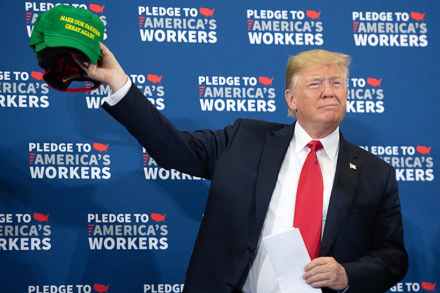
Donald Trump campaigned as an unrepentant protectionist and, on the face of it, he has lived up to his word. He has torn up the US-Pacific free- trade partnership, threatened the European Union with trade wars and imposed tariffs on billions of dollars’ worth of imports from China. As you might expect, Beijing’s retaliation has been immediate — as has the damage. American cherry growers, for example, estimate that they have lost about $85 million after suffering retaliatory surcharges. Farmers are now having to be bailed out by the US government. Yet this week Trump has doubled down, introducing tariffs on another 6,000 Chinese imports. When China responds in kind, he says, America will move on to phase three.

The Spectator writers’ party, in pictures

From our UK edition

It's the Spectator's 190th birthday this year and we celebrated with an end-of-summer drinks party in the garden for the writers and cartoonists who make the magazine what it is. In keeping with Fleet Street tradition, there was no food and plenty of booze – and everyone was kept entertained by great music from Charlie Wolfin and his jazz trio.

Letters | 13 September 2018

From our UK edition

No debt without credit Sir: Liam Halligan and William Galston set out, convincingly, all the causes and effects of the 2008 crash, painting a doom-laden picture of the future of the world (‘The world the crash made’, 8 September). Not once do they mention China, which has to be the beneficiary of the consequential increase in global debt. Neither mentions that for every debtor there is a creditor. When I first worked in the financial world many years ago, the US was the world’s biggest creditor, Glass Steagall reigned supreme and, with growth slow but steady, everything seemed under control. But the Big Bang and Clinton’s repeal of GS opened the floodgates, allowing personal greed to determine the operation of the financial system.

Portrait of the week | 13 September 2018

From our UK edition

Home Michel Barnier, the EU’s chief Brexit negotiator, was said to want to throw a lifeline to Theresa May, the British Prime Minister, but he insisted: ‘It is not possible to get freedom for goods without freedom for services, in particular for the movement of people.’ Up to 80 Tory MPs would vote against the government’s plan hatched at Chequers in July, Steve Baker, a former Brexit minister, said. A few dozen members of the European Research Group met to see how they might make best use of rules on Conservative leadership election. The Trades Union Congress said it could throw its ‘full weight’ behind a referendum on the final Brexit deal.

Why can’t the Tories see that a Canada-style Brexit deal is the answer?

From our UK edition

Loyalty, it used to be said, was the Tories’ secret weapon. No longer. Self-discipline has been discarded — along with commitments to lowering taxes, being strong on defence and keeping the streets safe. The Conservatives appear to have abandoned all of their beliefs and transformed into the party of Brexit. But, it seems, they can’t even get that right. Brexit is one of the most important projects any government has undertaken in our postwar history — a task that has been entrusted to Conservative MPs, most of whom voted against Brexit. The Prime Minister and her Chancellor, her Foreign Secretary and her Home Secretary all argued during the referendum campaign that leaving the EU would be a disaster.

to 2373: Susurrus

From our UK edition

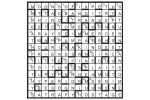
The theme was The Wind in the Willows (suggested by the title). RATTY defined 9, 13 and 22; MOLE defined 7, 11 and 16; BADGER defined 3, 31 and 41. MR TOAD was to be highlighted.   First prize Steven Reszetniak, Margate, Kent Runners-up R.J.

The rise of Sajid Javid

From our UK edition

Since being appointed Home Secretary, Sajid Javid has taken a series of bold and overdue decisions. On immigration, he understood that most people would like skilled doctors and nurses to come and work for the National Health Service, so he removed them from the cap that Theresa May had imposed on skilled workers coming to this country. In his response to the case of Billy Caldwell, the severely epileptic boy whose fits were eased by cannabis oil, Javid brought political nous to a department that all too often lacks it. He recognised that if heroin could be prescribed for medical purposes without further undermining prohibition, the same could be true for cannabis.

Letters | 6 September 2018

From our UK edition

Chinese burn Sir: Your leading article last week ended up saying ‘It is unrealistic to expect that we can achieve what China has in Africa over the past decade.’ If we were to have done that, I for one would wish to resign my British nationality. What they have done there for the past 30 years is to systematically rape and pillage the continent. China has insidiously worked its way into Africa by establishing ‘private’ contractors who then bid for building work and underbid all local opposition by being state-funded. Many local firms were thus put out of business. Their ‘aid’ projects — starting with the ill-fated TanZam railway — were funded not by grants but by loans accepted by weak and venal governments.

Barometer | 6 September 2018

From our UK edition

Origins of Wonga The payday lender Wonga has gone into administration. How did ‘wonga’ come to be used as slang for money? — The term is believed to have derived from the Romany word ‘wangar’ which, although used as a term for money, in fact means ‘coal’. This in turn has Indo-Iranian origins. — In English, too, ‘coal’ or ‘cole’ were used as slang for ‘money’ in the 17th and 18th centuries, when the possession of coal really did equate to wealth. Shrinking economies The Venezuelan economy is estimated to have shrunk by half over the past five years. How does that compare with the most severe economic crises of the past 150 years? Chile, 1920s -46.6% Uruguay, early 1930s -36.

Portrait of the Week – 6 September 2018

From our UK edition

Home Mark Carney kindly said he would stay on as governor of the Bank of England if it helped the government ‘smooth’ the Brexit transition. Lord King of Lothbury, Mervyn King, a former governor of the Bank of England, said that ‘incompetent’ preparation for Brexit had left Britain without a credible bargaining position. Paul Pester announced his resignation as chief executive of TSB after seven years, following the computing failure at the bank. Chris Evans announced on air that he would be leaving the Radio 2 breakfast show at the end of the year; he is to host Virgin Radio’s equivalent. David Watkin, the architectural historian, died aged 77. Lord Melchett , the former chairman of Greenpeace, died aged 70.

The case for Sajid Javid

From our UK edition

Since being appointed Home Secretary, Sajid Javid has taken a series of bold and overdue decisions. On immigration, he understood that most people would like skilled doctors and nurses to come and work for the National Health Service, so he removed them from the cap that Theresa May had imposed on skilled workers coming to this country. In his response to the case of Billy Caldwell, the severely epileptic boy whose fits were eased by cannabis oil, Javid brought political nous to a department that all too often lacks it. He recognised that if heroin could be prescribed for medical purposes without further undermining prohibition, the same could be true for cannabis.

2372: Spot-on | 6 September 2018

From our UK edition

The key phrase is LIKE A TANSY (39). The scientific name of the tansy is TANACETUM VULGARE (4A 12); remaining unclued lights are synonyms of tan (4D, 34), ace (25, 33) and tum (3, 19).   First prize Eileen Robinson, Sheffield Runners-up Peter Moody, Fareham, Hants; Mrs L.

School portraits | 6 September 2018

From our UK edition

    Bath Academy  Based in the beautiful city of Bath, this tutorial college is one of very few in the south-west to offer flexible academic programmes for a wide range of students. As well as being a sixth-form college, Bath Academy also offers GCSE courses, revision courses and resits in a wide range of subjects. The Academy’s University Foundation Programme was the UK’s first independent foundation programme. Equivalent to A-levels or the International Baccalaureate, it is designed primarily for international students who want to study at a British university. The focus is on a personalised approach to learning, with small class sizes and regular meetings between students and their personal tutors.

School report | 6 September 2018

From our UK edition

    MAKING THE GRADES  When he was education secretary, Michael Gove took it upon himself to reform the GCSE exam system. The A* to G grading system was replaced by a numerical one, with the aim of making it easier to differentiate between the top candidates — A* and A grades were, for example, replaced with three grades: 7, 8 and 9. These new exams were supposed to be harder than the previous ones, with former Harrow headmaster Barnaby Lenon commenting that they ‘contain questions of a level of difficulty that we have not seen since the abolition of O-levels in 1987.’ Despite all of this, GCSE results improved this year. The proportion  of students achieving the pass mark (previously a C, but now a 4) increased by 0.