Books and Arts – 13 December 2018
From our UK edition
From our UK edition
From our UK edition
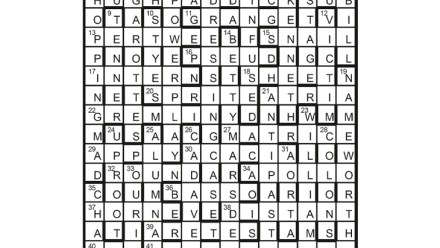
ROUND THE HORNE (32/40/37) starred 6/37, 6/23, 1A, 14 and 8/13. The title suggested their other comedy show, Beyond Our Ken. First prize Sara Macintosh, Darlington, Co.
From our UK edition
1. Oberon (A Midsummer Night’s Dream) 2. Hamlet (Hamlet) 3. Cordelia (King Lear) 4. Dogberry (Much Ado About Nothing) 5. Orsino (Twelfth Night) 6. Julius Caesar (Julius Caesar) 7. Titania (A Midsummer Night’s Dream) 8.
From our UK edition
Wuthering Heights by Emily Brontë, reviewed 18 December 1847 An attempt to give novelty and interest to fiction, by resorting to those singular ‘characters’ that used to exist everywhere… the incidents and persons are too coarse and disagreeable to be attractive, the very best being improbable, with a moral taint about them, and the villainy not leading to results sufficient to justify the elaborate pains taken in depicting it. Bleak House by Charles Dickens, reviewed 24 September 1853 Bleak House is chargeable with not simply faults, but absolute want of construction.

From our UK edition
Alexander McCall Smith There is a painting in the Scottish National Gallery of Modern Art that I find quite haunting. It is called ‘A Portrait Group’, and is by the Scottish artist James Cowie. Cowie painted this picture in 1933 and then reworked it in 1940. He was an art teacher, and often used his pupils as models. In this painting, he didn’t get the models to sit together, but created the painting from separate studies he had made of various sitters. For me it is about friendship. Here are four young people on the cusp of their adult lives. What lies ahead of them? Will they find friendships as strong as those of these early years?
From our UK edition
You don’t say 1. President Donald Trump, in a tweet 2. Donald Tusk, the President of the European Council, in an Instagram 3. Gavin Williamson, the Defence Secretary 4. Boris Johnson on the niqab 5. Sarah, Duchess of York, on the engagement of her daughter Eugenie 6. Serena Williams, to the referee, on being docked points during the American Open final 7. Jeremy Hunt, the Foreign Secretary, in China 8. President Emmanuel Macron of France 9. Danny Dyer 10. Rt Revd Michael Curry, preaching at the wedding of the Duke and Duchess of Sussex Flick books 1. Harry Potter and the Sorcerer’s Stone 2. All Quiet on the Western Front 3. Kes 4. Full Metal Jacket 5. Slumdog Millionaire 6. One Shot 7. Die Hard 8. And Then There Were None 9. Trilby 10. The Lady Vanishes.
From our UK edition
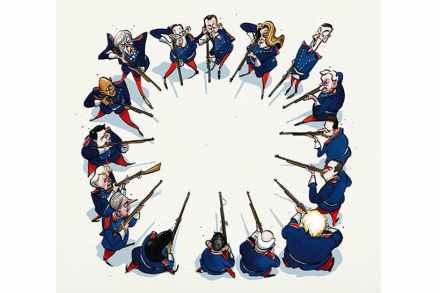
UPDATE: 48 letters of no confidence have now been reached. It's been four long weeks since the last rebellion against Theresa May, when the ERG and Brexiteers fell short of the numbers they needed to trigger a leadership election. Now, it's being reported that Tory MPs have had enough, and are once again submitting letters of no confidence to the chairman of the 1922 committee, Graham Brady. Speculation is rife that the total number of letters has already been reached this evening. Once 48 letters have been submitted, a confidence vote will be triggered. But before them, Brady is likely to let the PM know in private first, to give her the chance to resign before any confidence vote takes place.
From our UK edition
The Spectator is responsible for many coinages. One of the most significant came in 1968, when an article by our 24-year-old music critic, Michael Nyman, appeared with the headline ‘Minimal Music’ (reprinted below). It was a wry joke about music that was more experimental than strictly minimal but it stuck and a musical style that, whatever you think of it, has rarely been matched in influence or reach was born. Walking home from the Fugs’ concert, organised by the Middle Earth at the Round House last week, I was shocked by the 4 a.m. silence — by its awesome superiority to a lot of modern music, and by its unfamiliarity.

From our UK edition
Sleeping on the streets Sir: Mark Palmer claims that ‘homelessness is hardly a top government priority’ (‘Home truths’, 1 December). I was disappointed to read this, given the ambition of this government to make rough sleeping a thing of the past. As I have said previously in this magazine, we are committed to supporting people off the streets and have committed £1.2 billion to tackle all forms of homelessness. We are working tirelessly to end rough sleeping by 2027 and have outlined our long-term plan — backed by £100 million — to get people into a safe and secure home where they can rebuild their lives.
From our UK edition
Big defeats Could the vote on the Brexit deal set a record for a government defeat in the Commons? Aside from opposition day motions and other votes where nothing substantive is at stake, the post-1945 record is shamefully held by MPs who voted against the Major government’s attempt to limit pay rises for MPs (motion lost by 215 votes). Other hefty defeats (with the margin of defeat): 1978 (Labour, Jim Callaghan) Opposition amendment demanding income tax basic rate be cut from 34% to 33%, 108 votes.} 2014 (Coalition, David Cameron) Under-occupancy rules for social housing, 75 votes. 1978 (Labour, Jim Callaghan) Clause on Wales devolution referendum, 72 votes. 1975 (Labour, Harold Wilson) Disclosure of government economic forecasts, 71 votes.
From our UK edition
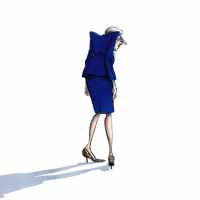
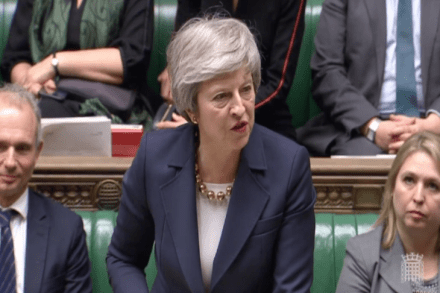
On Tuesday, MPs will face something rare: a Commons motion which really does deserve to be described as momentous. It will set Britain’s place in Europe and in the world for years to come. The vote will place an especially heavy burden on Conservative MPs, for they have the power to inflict a hefty defeat on their own government, an administration which has no majority and which governs thanks only to a confidence and supply agreement with the DUP. It is all too easy to see where defeat on Tuesday could lead: to the collapse of the government, a general election and the arrival of Jeremy Corbyn in Downing Street. Theresa May’s deal has been rejected by MPs on the left and the right, by radicals and moderates.

From our UK edition
Home Political hobbyists speculated on the future of Brexit if the government fell, if a new Conservative leader was chosen, if a general election was called or if a second referendum was held. Debates were tabled over five days, in prospect of a Commons vote on 11 December on the withdrawal agreement from the EU to which Theresa May, the Prime Minister, had agreed. She told the Commons that it would allow Britain to negotiate, sign and ratify new trade deals from the moment it left next March (even if none could be implemented until the end of the transition period, 31 December 2020 at the earliest, or by any given date, if the backstop came into operation).

From our UK edition
From our UK edition
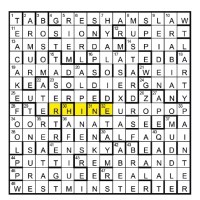
The two people were Prince RUPERT (12) of the Rhine, born 1619 in PRAGUE (6) and died 1682 in WESTMINSTER (48), a SOLDIER (23); and REMBRANDT (45) van Rijn, born 1606 in LEIDEN (9) and died 1669 in AMSTERDAM (13), a PAINTER (33). RHINE (in the eighth row) was to be shaded. First prize John Fahy, Thaxted, Essex Runners-up C.V. Clark, London WC1; C&A Snelson, Leyburn, N.
From our UK edition
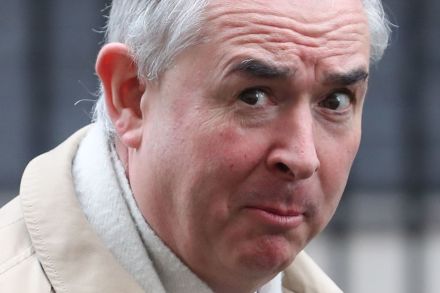
The Government has published its Brexit legal advice, a day after it was found in contempt of Parliament for refusing to do so. Here's the full text: Legal Effect of the Protocol on Ireland/Northern Ireland Introduction This note sets out my advice on the question I have been asked as follows: What is the legal effect of the UK agreeing to the Protocol to the Withdrawal Agreement on Ireland and Northern Ireland in particular its effect in conjunction with Articles 5 and 184 of the main Withdrawal Agreement? I note that the Withdrawal Agreement, of which the Protocol on Ireland/Northern Ireland (Protocol) forms part, is yet to be finalised. My advice is based, therefore, on an evolving text, which I have had to consider rapidly in light of the fluid situation.
From our UK edition
The Government has been defeated three times in key votes in Parliament this afternoon. Its an ominous sign for Theresa May ahead of the vote on her Brexit plan a week today. Here is the full list of Tory MPs who went against the Government: Grieve amendment: This hands more power to MPs in the event that May's Brexit plan gets voted down, by effectively allowing them to have a say on what the PM's Plan B should be.
From our UK edition
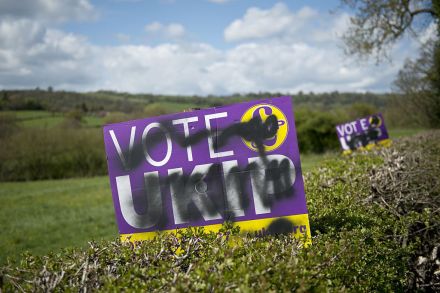
There has never been a more pressing need for a home for Brexit voters disillusioned by the spectacle of recent events. Yet Ukip, under a leader fixated by EDL founder Tommy Robinson, has marched to a place where very few Leave voters wish to go. When I left Ukip last week, what caused the biggest stir was the fact that it was not to sit as an independent but to join the SDP. Many political journalists did not know that the party still existed, let alone that it has been Eurosceptic for many years. But the party has been growing fast over the past few months as the more moderate elements of Ukip – along with some determined Labour and Tory leavers – have sought a centre-ground party that will campaign to honour the referendum verdict.
From our UK edition
The Irish border Sir: Contrary to the assertion that the Irish border ‘only hit the headlines’ after Leo Varadkar became Taoiseach in June 2017, as Liam Halligan claims (‘Irish troubles’, 24 November), the negative impact of Brexit on the peace process and the Good Friday Agreement was clearly signalled during the referendum campaign itself, including by the Irish government and by two former British prime ministers, Sir John Major and Tony Blair. There was no discontinuity in policy when Leo Varadkar succeeded Enda Kenny as Taoiseach, as reflected in the latter’s statement in February 2017. ‘The Irish government will oppose a hard border… This is a political matter, not a legal or technical matter.
From our UK edition
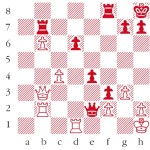
Black to play. This is a variation from Caruana-Carlsen, World Championship (Game 10), London 2018. The black queen is trapped but Carlsen had planned an ingenious counter. What is it? Answers via email to victoria@spectator.co.uk by Monday 3 December (please note early closing date). There is a prize of £20 for the first correct answer out of a hat. Please include a postal address and allow six weeks for prize delivery.
From our UK edition
While some may doubt Donald Trump’s claim to be a friend of Britain’s, his intervention in the Brexit debate this week has been timely and depressingly accurate. The deal that Theresa May has brought back from Brussels, and which she will put before the Commons on 11 December, is indeed a good deal for the European Union. Brussels retains control over the British economy but no longer has to deal with the British in its various voting procedures. Britain agrees not to become more competitive through regulatory reform, and its chances of striking trade deals are slim. So Trump was merely saying, in his usual offhand manner, what other world leaders have been thinking. His thoughts are echo-ed in Australia, which had been looking forward to doing a trade deal with the UK.