The Spectator

Playing chicken | 6 June 2019

From our UK edition

Why is it that free trade, which almost everyone agrees is good when conducted with other European countries, suddenly becomes something to be feared when it is proposed with the United States? What is it about American chicken which means that Britons who eat it happily enough when they are on holiday are supposed to fear it when it is imported? And if Americans can offer world-class, well-priced medical services to Britain through the National Health Service, how is that a threat to our social fabric? On his state visit to Britain this week, President Donald Trump reiterated his desire to do a ‘comprehensive’ trade deal with Britain. Given that we are leaving the EU in order to make our own way in the world, this is a prospect that ought to be welcomed.

Portrait of the week | 6 June 2019

From our UK edition

Home President Donald Trump of the United States made a state visit to the United Kingdom, avoiding protesters by arriving at Buckingham Palace by helicopter. He brought quite a few of his family, visited Westminster Abbey and was given halibut and lamb at a state banquet. Proposing a toast, the Queen said: ‘After the shared sacrifices of the second world war, Britain and the United States worked with other allies to build an assembly of international institutions to ensure that the horrors of conflict would never be repeated.’ Trump joined the Queen in ceremonies to commemorate D-Day.

to 2408: End of the Line

From our UK edition

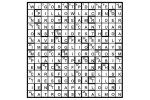
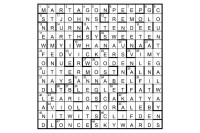
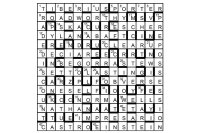
Unclued lights are TSAR (12) NICHOLAS (5A), his son ALEXEI (33), and his predecessors PETER (3) and CATHERINE (20) THE GREAT (23), BORIS (35) GODUNOV (21) and IVAN THE (6) TERRIBLE (43).

Letters | 30 May 2019

From our UK edition

Leavers only, please Sir: Your leading article (‘The end of May’, 25 May) correctly calls for the Conservative party to establish itself as ‘unequivocally the party of Brexit’. The meltdown at the EU elections confirmed this is now the only course of action open to it, if it wishes to survive. Conservative MPs should show they have finally woken up to reality. They need to send the membership two candidates with impeccable Leave credentials, and who are not in the current cabinet. Placing any Remain-tainted candidates on the shortlist would display MPs’ continuing contempt for the party’s activists, supporters and donors. It would also show a curious lack of interest in their own job security.

The Trump card

From our UK edition

The day after Britain voted to leave the European Union, Donald Trump arrived by helicopter at Turnberry, his golf course in Scotland. The financial markets were in crisis and David Cameron had resigned in a panic. The Dutch Prime Minister, Mark Rutte, said that Britain had ‘collapsed: politically, monetarily, constitutionally and economically’. The then candidate (still not even party nominee) Trump put it differently. ‘You just have to embrace it,’ he said. ‘It’s the will of the people. I love to see people take their countries back.’ Perhaps his advice should have been taken more seriously. Huge numbers of people, including many Americans, think that Trump is unfit for the office of president. But why do so many support him?

Portrait of the week | 30 May 2019

From our UK edition

Home The Brexit party, led by Nigel Farage, received 5,248,533 votes (out of 17,199,701 cast) in the European parliament elections, securing 29 seats — more than twice the seats won by the Conservatives (in fifth place, down from 19 seats in 2014 to four now) and Labour (down from 20 seats to ten) put together. The Liberal Democrats, with 3,367,284 votes, pushed Labour into third place by winning 16 seats (up from one). The Greens won seven seats (up from three). The Yorkshire party secured more votes than the right-wing English Democrats did in the whole country. The Animal Welfare party received more votes than the Women’s Equality party. Ukip won no seat and nor did Change UK. The turnout was 36.9 per cent, the second highest since the elections began in 1979.

Full list: the MPs backing the Tory leadership candidates

From our UK edition

The Tory leadership has two stages: MPs will choose two finalists from what might be more than a dozen candidates, a process that should take about ten days. Then the final two will embark on a five-week campaign to win over the 125,000 Conservative Party members.  If Boris Johnson makes it into the second stage, it is widely predicted that he will be selected by local members – making the first part of the race crucial. Coffee House will be tracking which Conservative MPs are backing which leadership candidates in the race. As the number of entrants in the field reduces, expect big swings as MPs switch their allegiances once their favourites have been knocked out.

Letters | 23 May 2019

From our UK edition

Nigel’s nakedness Sir: Rod Liddle is right to be wary of the hubris that Nigel Farage, the Brexit party leader, is beginning to show (‘The Brexit party delusion’, 18 May). His wish to smash the mould of British politics clearly shows that he expects his disciples to follow him into the promised land. The Andrew Marr interview and a recent Question Time appearance showed that under close questioning Farage gets rattled and resorts to dismissing his opponents and shouting them down. When will the public realise that this emperor has no clothes? Stan Labovitch Windsor, Berks Nato expansion Sir: Alan Judd writes of the ‘allegedly broken promise not to enlarge Nato following the collapse of the Soviet Union’ (‘Disputes over Putin’, 18 May).

Portrait of the week | 23 May 2019

From our UK edition

Home The country went to the polls to elect Members of the European Parliament and express its loathing for the two main political parties. On the eve of polling, Theresa May, the Prime Minister, appealed for MPs’ support for the Withdrawal Agreement Bill to be introduced shortly, saying that it would contain a provision for a vote on another referendum. In response, those she meant to woo reacted with hostility. The 1922 Committee had promised to have another little word with her about resigning after the bill’s fortunes became clear. Lord Heseltine had the Tory whip removed after saying he would vote for the Lib Dems in the EU elections.

Barometer | 23 May 2019

From our UK edition

Milkshakes and other missiles What can the man who threw a milkshake over Nigel Farage in Newcastle expect as a punishment, from past precedent? — Tony Blair was struck by a tomato in Bristol in 2001. His attacker was given a two-year conditional discharge. — In the same year, John Prescott had an egg thrown at him in Wales. The attacker was punched in the face by Prescott. — In 2004 Tony Blair had a condom full of purple-dyed flour thrown at him in the House of Commons. The assailant was given a two-year conditional discharge. — In March, a man was jailed for 28 days for throwing an egg at Jeremy Corbyn.   Eurovision failures Did the UK come last in Eurovision because of Brexit?

to 2406: Heptad

From our UK edition

The group is ‘Les Nabis’ (anagram of ALBINESS (18)). Its members were VALLOTTON, DENIS, ROUSSEL, RANSON, SÉRUSIER, BONNARD and VUILLARD. The seminal work was THE TALISMAN (appearing diagonally from row thirteen). THE TALISMAN was to be shaded.

Barometer | 16 May 2019

From our UK edition

Royal name games Will more children be called Archie following the birth of the Duke and Duchess of Sussex’s son? How have other names fared after being picked by royalty? — George was the 6th most popular boy’s name in 2012, the year before Prince George was born. In 2014 it fell to 18th. — Charlotte was the 17th most popular girl’s name in 2014, the year before Princess Charlotte was born. In 2016 it rose to 15th. — Louis did not make the 50 most popular boys’ names in 2017, the year before Prince Louis was born, although Louie was 36th. We haven’t got figures for a full year since his birth last April, but it failed to make the top 50 in 2018. — Archie was the 15th most popular boy’s name in 2018.

Letters | 16 May 2019

From our UK edition

Labour’s fence-sitting Sir: James Forsyth writes that Mrs May and Mr Corbyn are ‘not, in fact, that far apart’ (‘May’s compromising position’, 11 May). To many, the Labour left is simply playing its very old game of sitting on the fence over the EU. The electorate have spotted it, and Labour paid for it in the local elections. Some of us are old enough to remember Harold Macmillan’s withering mockery of the Labour attitude to the then Common Market in the early 1960s. It recalls the words of the old song: ‘She didn’t say yes and she didn’t say no; she didn’t say stay and she didn’t say go!’ The reason for Labour’s contorted behaviour was the same then as now.