The Spectator

Full list: the MPs backing Boris Johnson’s deal

From our UK edition

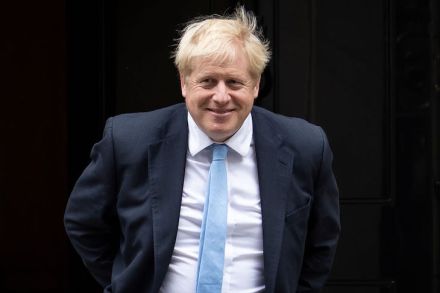
After a remarkable turnaround, Boris Johnson succeeded in brokering a Brexit deal with the European Union last week. Now, he has the difficult task of navigating it through the House of Commons. On Saturday, Boris Johnson pulled a vote on his deal, after MPs backed Oliver Letwin's amendment, which forced the government to ask for an extension, even if a Brexit deal had been backed by the House of Commons. On Monday, the government will therefore hold a new meaningful vote on the deal to begin the ratification process. To win the vote, Boris needs the backing of 320 MPs – a majority in Parliament. There are currently 288 Tory MPs in the Commons which means the PM needs the support of 32 non-Tories if he wants to hit that magic target of 320.

Text of Boris’s letter to EU: ‘an extension would be damaging to us all’

From our UK edition

Boris Johnson has written a (signed) letter to the EU saying that a Brexit delay 'would damage the interests of the UK and our EU partners'. To comply with the Benn Act, the Prime Minister has also sent an (unsigned) letter formally requesting a Brexit extension. Here is the full text of both letters: 10 DOWNING STREET LONDON SW1A 2AA THE PRIME MINISTER Dear Donald, It was good to see you again at the European Council this week where we agreed the historic new deal to permit the orderly withdrawal of the United Kingdom from the European Union on 31 October. I am deeply grateful to you, President Juncker and to all my fellow European leaders for the statesmanship and statecraft which enabled us to achieve this historic milestone.

Come on Arlene: Why the DUP should back Boris’s deal

From our UK edition

That the DUP was going to prove pivotal in Brexit negotiations was inevitable from the early hours of 9 June 2017, when it became clear that Theresa May had failed to secure an overall majority and that no other opposition party would countenance an electoral pact with the Conservatives. In many ways, the DUP’s powerful position has not been a bad thing. With Irish Taoiseach Leo Varadkar intent on using Brexit as a means of drawing Northern Ireland closer to the republic – and the EU prepared to throw its whole weight behind him – the involvement of the DUP has ensured that the interests of unionists have not been trampled upon. Until Wednesday morning it seemed that the DUP would support Boris Johnson’s Brexit deal, which was still in the process of negotiation.

How violent are our jails?

From our UK edition

Parliamentary days Could one of parliament’s longest sessions be followed by one of its shortest? — The shortest was between 14 September and 25 October 1948, when Clement Attlee’s government prorogued parliament in order to forestall efforts by the House of Lords to frustrate the Parliament Bill. The ruse was successful and the bill, which limited the ability of the House of Lords to delay legislation, became law the following year. While it lasted six weeks, there were only ten sitting days in that parliament. — This week we may have six days, including the highly unusual Saturday sitting. So, unless parliament is prorogued for a general election before next Friday, this session will have sat as long as that of 1948.

Letters: Shoots should be about quality, not quantity

From our UK edition

Bad sport Sir: At last a respected member of the shooting community has popped his head above the parapet. Patrick Galbraith has had the courage to express the view that many of us from the ‘bygone sporting era’ hold, but have either been too afraid of the commercial consequences, or too idle, to go public (‘Dangerous game’, 12 October). The shooting fraternity has done an awful job of educating newcomers about what constitutes a great day out. It has allowed quantity to prevail over quality. It has failed to ensure that appreciation of the ‘craic’ and the environment are an essential element of the experience. Like all activities, when you do it to excess, you draw unwelcome attention.

The vindication of Boris Johnson’s Brexit strategy

From our UK edition

The Brexit deal agreed with the EU is a spectacular vindication of the Prime Minister’s approach: to go back to Brussels with the genuine prospect that Britain would leave with no deal on 31 October. The EU started off by saying it would never reopen the withdrawal agreement, but with a no-deal Brexit back in prospect, compromise — and thus a deal — has been possible. And yes, parliament has said it would force the Prime Minister to ask for an extension of EU membership; but No. 10 said it would find a way to not do so. It seems that this was enough to focus minds in Brussels. Boris Johnson's deal is the opposite to that struck by Theresa May in that the more you look at it, the better it seems.

Portrait of the week: Brexit uncertainty, Turkey in Syria and a Chinese threat

From our UK edition

Home Brexit teetered from uncertainty to uncertainty. Parliament had been summoned to sit on Saturday 19 October to debate what Boris Johnson, the Prime Minister, had brought back from a European Union summit. He had held talks before the week began with Leo Varadkar, the Taoiseach of Ireland, at Thornton Manor in the Wirral, from which optimistic noises emerged. Margaret Atwood, 79, from Ottawa, and Bernardine Evaristo, 60, from Eltham, shared the Booker Prize. The Queen wore the George IV diadem at the State Opening of Parliament instead of the heavy Imperial State Crown.

A paradise of postcards

From our UK edition

From The Spectator, 15 July 1922:   It is true that things so small as postcards cannot give one the splendour and glory of a great statue or a great canvas; but, all the same, their smallness is one of their virtues. A man fond of such things, riding across the Syrian Desert, on the camel tracks in the Sudan, or in Mesopotamia, or making some journey in West or East Africa, in Rhodesia, or on the North-West Frontier of India, or wherever there are wastes to pass and duties to be done, might easily thrust two or three of these little packets into his pocket or his saddle-bags.

Letters: Remainers lost – and Richard Dawkins needs to accept that

From our UK edition

Deny Remainers oxygen Sir: Your correspondent Richard Dawkins seems to have a very tenuous grasp of logic for an academic (Diary, 5 October). He excoriates a referendum on the grounds that in the run-up the voters may have been misled. There is one choice between two alternatives, and the supporters of each outcome will do their best to persuade. Both may be less than truthful. Yet he adores a general election with five or six candidates hawking their conflicting and unfulfillable manifestos — all of them those pillars of veracity, politicians. Let us be frank. Since the shock result of 2016 we have listened to the whines of the EU fanatics for more than three years until they have become extremely boring. Please do not lend your valuable pages to giving them yet more oxygen.

A slice of history: how did Britain’s pizza industry begin?

From our UK edition

A slice of history Pizza Express is to undergo financial restructuring, leading to fears that it could go under. How did the pizza industry in Britain begin? — The first record of an Italian restaurant was the Italian Eating House off Leicester Square, opened in 1803, though it is not known whether or not it served pizza. — The Olivelli restaurant in Store Street, Bloomsbury, opened in 1934. Early documents found on the premises included a recipe for margherita pizza. — Pizza Express was the first chain of pizza restaurants in Britain, its first branch opening in Wardour Street in 1965. — Pizzaland opened its first branch in 1970. It was bought out and its branches converted to Pizza Hut in 1996.

The last Brexit heave

From our UK edition

The past few months have been characterised by high drama which, for all the excitement, has resolved nothing. We are back in a familiar cycle: posturing, bluster and a last-minute burst of Brexit talks. It's possible that Boris Johnson will emerge with a deal and declare triumph by 31 October: he has always regarded this as possible, even likely, no matter how high the odds are stacked against it. But it's just as likely that this will all end in failure. If Britain does end up leaving the EU without a deal, the moment when such an outcome became inevitable will be traced back to Tuesday’s telephone call between Boris Johnson and Angela Merkel. In that call, according to No.

to 2426: Her love

From our UK edition

The unclued lights relate to SUPERMAN (6D), his alter ego CLARK KENT (26A), nickname (the) MAN OF STEEL (8), planet KRYPTON (27), city METROPOLIS (18), employer (the) DAILY PLANET (35/16) and arch-enemy LEX LUTHOR (22). The title, as well as giving wordplay for HERO, suggests LOIS LANE, who appears hidden in row 4.   First prize Ian Skillen, Cambuslang, Glasgow Runners-up  Frank Anstis, Truro, Cornwall; Mrs R.J.C.